
 Whenever President Muhammadu Buhari and his party, the All Progressives Congress chant ‘change’, do not focus on the ordinary dictionary definition but wait for their official meaning of change. Nkiruka Okoh writes
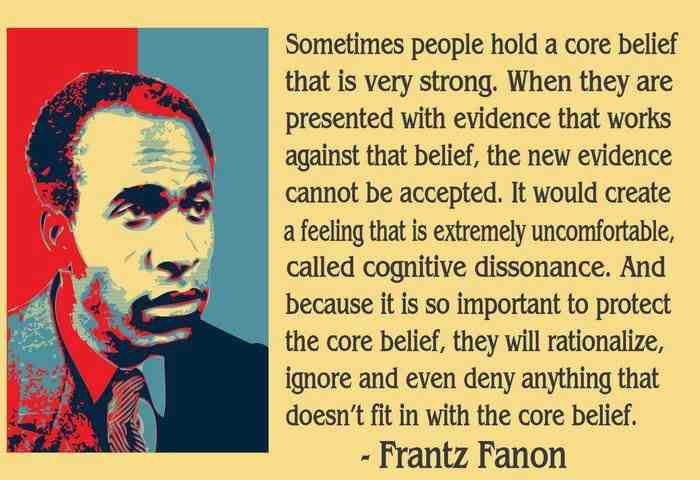
If a poll was taken on the most used word in the vocabulary of Nigerians in 2015, Change will take the cake. While the word itself portrays positivity – a deviation from the norm – activities leading to and post the 2015 general election in Nigeria have somewhat mangled the true meaning of the word and have swapped it to mean collective amnesia.
The brains behind the Nigerian concept of “change” only preach it, but show disdain to the attitudinal attributes required to bring about enduring change. For these advocates of change, where your belief system or your opinion differs from the perceived acceptable behaviour by the ruling party, you automatically are a part of the opposition, an enemy of the new Nigerian order and most definitely, corrupt. The followers of the change crusade on their part have embraced well packaged falsehoods as a way of life.
They have crowned well known villains, heroes of a new democratic order and yet, yearn for change. The brand of change peddled is one where you automatically become a changed man, devoid of sins when you can defect from the opposition, with just the right amount of fanfare, bad thrashing of your previous party and swearing allegiance to the new order. Your sins automatically are forgiven.
Sadly, Nigerians are left to become spectators in the entire charade and our reward is the occasional opportunity to applaud. We applaud the insignificant and make them milestones. We praise two months of electricity after the new government comes in and remain mute when the rest of the months reclines into darkness, claiming that the rot left by the previous administration is deep seated to be fixed.
We celebrate the ‘claims’ of closure by law enforcement agencies on fuel stations that refuse to sell at the government approved rates and remain mute, when we see the long queues at the fuel station; we are ready to endure the queues, after all PDP is not in power. The people have been sold on a change that does not exist and they can’t seem to see or better still have become numbed by unfolding events.
In a twisted plot, we know the change is a mirage but we will rather hold on to collective amnesia than deny our economy is gradually winding to a halt. The naira remains weak. We have inconsistent policies that are unfavorable to international investors and do nothing to encourage the local investors. Little wonder, the looming chaos in the stock market.
When Lord Lugard stated in “The Dual Mandate in 1926” that “In character and temperament, the typical African of this race-type is a happy, thriftless, and excitable person – lacking in self-control, discipline, and foresight,” he wasn’t too far from the truth.
He goes on: “Naturally courageous, courteous and polite, full of personal vanity, with little sense of veracity… His thoughts are concentrated on the events and feelings of the moment, and he suffers little from the apprehension for the future, or grief for the past… He lacks the power of organisation, and is conspicuously deficient in the management and control alike of men or business. He loves the display of power, but fails to realise its responsibility… Perhaps, the two traits which have impressed me as those most characteristic of the African native are his lack of apprehension and his (in)ability to visualise the future.”
Possibly, Lugard understood Nigerians better then, than we do now. A nation so blessed with resources and intellect yet so cursed with visionless leadership; a people so blessed with culture and heritage yet so cursed with almost no national identity.
A Ghanaian will first identify as a Ghanaian, a Russian as a Russian but the average Nigerian is quick to say: ‘I am of blah blah tribe’. We play the quota system card, cry foul when one of “our own” doesn’t get a role; marginalise ourselves and are subconsciously tribalistic about almost everything, to our own detriment.
It doesn’t just apply to the ruling class. We see clear cases of our differences on social media, through memes, jokes. It has become a culture. We are quick to stereotype ourselves with sad truths that emphasise our flaws just for laughs, rather than unite to bring about conscious change. Even on the social media platform, where you have an opinion that largely differs from the approved opinion, you are tagged a wailer.
The current administration that fought so hard to take control of governance has almost no strategy on how to deliver Nigeria to a sustainable path. Where are the grand policies APC had when they were the opposition party? Why are they not being implemented? In the local political circle, we are re-engaging the same tired names; in the international circles, we are visiting the same countries that will not bat an eye lid if Nigeria implodes.
Some of the arguments we have heard is that we are reaping the fruits of the 16 years PDP was in power, then it brings up the question, who were these politicians in PDP, where are they now? Of course, we know they now form the bulk of the leadership of APC. After all, in the political parlance, there are no common friends, only common interests.
Leadership especially for a country like Nigeria requires making tough decisions, decisions that will sometimes be against the leader’s personal beliefs or sustaining selfish traditions for the greater good of the Nation – decisions that will promote our national identity and unify the Nigerian people.
For instance, we can privatise the refineries, sell them off to people that can effectively manage them, rather than incur cost on maintenance (and paying off marketers) when the refineries are currently producing at zero capacity. That action alone would meet a large percentage of national consumption while saving at least 10% of foreign exchange used per year.
It goes beyond wielding the stick of anti-corruption against select individuals in the opposition and leaving the “converts” who have embraced change to roam free. While integrity is a good trait for a leader, it is not a silver bullet to deliver the albatross that the Nigerian society has become for itself. To claim that Nigeria is gradually becoming the Nigeria of our dreams is currently a fallacy. The Nigerian people really want change, just not the brand currently being peddled
 OBLONG MEDIA GLOBAL INTELLIGENCE
Leave a comment