
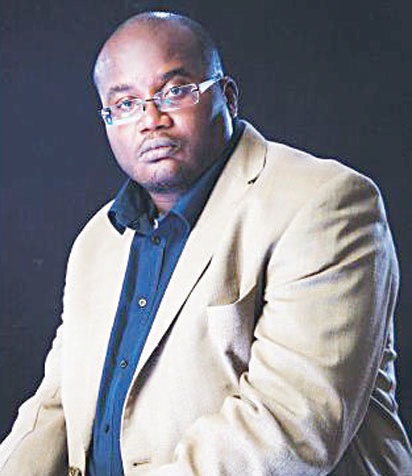
APART from the ordinary issues language experts and others know about English, what other thing is the language known for or can be used. This has been the contentious issue until, Toluwalase Oladimeji presents yet another incremental instalment to the corpus of culminated knowledge with his work tagged English, the Language of the Gods. In the well researched paper that took the author to various places, the script writer and researcher took many students and language experts further in their understanding of this global lingua franca as he tries to unlock the secret behind ancient Egypt’s nomenclature, tracing its root to an unexpected linguistic provenance.
English is the language of aviation, commerce, Internet, pop music and sports. But for Toluwalase Oladimeji however, these are certainly not what make the English tick as a linguistic heritage and an ever evolving means of communication. But that English is perhaps the secret code of ancient Egypt’s nomenclature, as he believes, is a plus for a language that many thought had reached its zenith as the single most internationally accepted means of communication. The author, a seasoned researcher bent on proving his worth, by use of different sources presents evidence to shore up his claim of an enduring linguistic handshake across the Mediterranean. Through consultation with ancient Egyptian priest, he provided a list of the names of Egypt’s ancient rulers, the Pharaohs, which he provides along with their English translation.
According to the work, the key to appreciating the relationship between the names and their translation is in the pronunciation and context. For any informed linguist, this is one point that leaves no ground for argument. Again by virtue of his translation and evident symbolism he makes an interesting find, A Yoruba Queen Tiye (Taiye). Oladimeji writes “Queen Tiye wore a twin uraei head-dress. This is a very important symbol as Tiye (Taiye) means the ‘first of twins’ in Yoruba language, Nigeria. The twin head-dress she wore was therefore a symbolic representation of the fact that she was a twin.” According to Oladimeji’s discovery, it was not just the Pharaohs – or a few of them – alone who shared this English heritage. Even their gods and the queens did, as, all appear “in spoken or broken English,” including common words, phrases and concepts, which all betray their English root upon translation or re-pronunciation as they describe the personality and disposition of each of the deities and human figures. For the author, a few examples will not be enough to suffice: Ahmose-Nefertari (I-Must-Never-Tarry), Amenophis (A-Man-of-Peace), Thoth (Thought) and Horus (Horrors).
He did not stop there, he also provided an alphabetically arranged table, decoded that shows the Egyptian, English and its descriptions of 250 translated names. In the well researched work, Tolu profiles deity after deity and Pharaoh after Pharaoh to drive home his message, and proves and substantiates facts confirmed through empirical findings, discredits others it is convinced stand on feet of clay, while touching even on the subject of the final place of rest of the Bible’s revered apostles of faith.
In a bid to convince the readership of English, the Language of the Gods that his findings are real and not mere linguistic coincidences, the author, makes effort to shed light on the link between the names and their meaning in relation to the bearers’ unique personalities and qualities. And to also prove that, he explains the methodology and cites similar examples of the interplay of other words in modern English. In doing this however, he does not lay claim to perfection, as he notes that this process leaves room for margin of error.
Tolu through this work has succeeded in presenting relevant facts that will satisfy the curiosity about Egypt’s legendary Pharaohs and also to meet face to face with the relics of their past, such as, a sight of the mummies, a feel of the pyramids etc. He also highlights the fact that there is more to Egypt than being a mere melting pot of cultures and a fascinating museum of the distant past. Oladimeji’s English, the Language of the Gods, a well researchered piece, rich in information and other materials that will assist researchers and students of History in their future assignments is on http://www.toluoladimeji.com
Though, it is piece that is likely to generate heated scholarly debate of biblical proportion. But , in all, the author has demonstrated that he is an authority in the field of research research. I recommend it to all who may like to know more about the subject matter.
 OBLONG MEDIA GLOBAL INTELLIGENCE
Leave a comment