
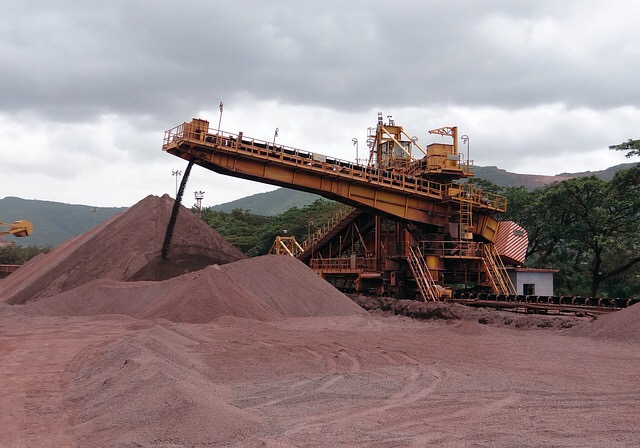
When Aliko Dangote, Nigeria’s billionaire industrialist, revealed his plan to buy potash and phosphate from Congo Brazzaville and Morocco respectively, he was painting the grim reality in the Nigerian mining sector. Both minerals, which would serve as raw materials for his planned fertilizer plant, are available in commercial quantities in Nigeria, particularly in the northern part of the country but they are left unexploited.
Geologists observe that potash, a key input in fertilizer production, is found in four northern states in Nigeria: Sokoto, Borno, Katsina and Jigawa. Phosphate is found in commercial deposits both in Sokoto and Ogun state; they also occur in smaller quantities in Edo and Imo State. As abundant as these minerals are, they are left largely untapped. Dangote Industries and other firms that need them would have no choice but to import them from other African countries, frittering away Nigeria’s scarce foreign exchange. Instead of being an exporter of these resources that the nation is well endowed with, Nigeria is importing them.
Sadly, this captures the state of the Nigerian mining industry, which according to analysts, is worth billions of dollars, but hardly generates any significant revenue to the coffers of the government. The Nigerian mining industry is indeed a sleeping giant. Sunny Ekosin, President, Miners’ Empowerment Association of Nigeria, realized this when he lamented that the nation was losing about N8trillion ($40 billion) annually by not exploiting its gold deposits. “If Nigerians were taking data seriously, assuming we build a database where we have authentic information, in 2012 the Permanent Secretary of the Ministry of Mines and Steel came before the nation and said from precious metals alone, specifically from gold exploitation alone, Nigeria is losing N8 trillion ($40 billion) annually,” he said in an interview with local newspaper Vanguard.
Mining Sector contributes little to Government Revenue
Nigeria has over 40 different types of minerals spread across the country, which could serve as veritable export revenue earners for it, especially iron ore, lithium, limestone and gold. In spite of such potential, the nation’s earnings from the sector are still, at best, paltry. In 2012, the mining sector contributed only 0.02 percent to export revenue earnings of the government, according to the Nigeria Extractive Industries Transparency Initiative (NEITI) and audit report. While the nation earned billions of dollars from oil export, it was only able to earn N31.5 billion ($157.5 million) from the mining industry in 2012. “The solid minerals sector accounted for an average of 0.02 percent of total export earnings for the year 2012. Zinc and lead ores account for more than 48 percent of the solid minerals sector exports,” the NEITI report states, adding that “Government revenues from the solid minerals sector increased from N26.925 billion ($ 134.6 million) in 2011 to N31.449 billion ($157.5 million) in 2012” due to an increase in the production of granite and limestone as the growth of the local cement industry gathered pace.
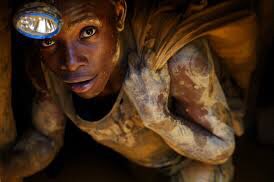
Other nations who have comparable mineral resources as Nigeria are able to earn more from their extractive sector. For instance, the South African mining sector contributes 18 percent of the country’s GDP and over 50 percent of foreign exchange earnings, according to the South African Chambers of Mines. “The sector brings in an annual income exceeding 330 billion Rands ($20.3 billion) and accounts for 20 percent of all investment in the country,” it noted in a report.
North is King in Mineral Deposits
Nigeria has many mineral resources that should make it the envy of any nation, 70 percent of which is present in the North, according to the NEITI report. That is why experts agree that if the nation were able to tap all its mineral resources, the Northern part of the country would not need to depend on the oil revenue from the South.
A good case in point is Nasarawa, a Northern state appropriately tagged ‘Nigeria’s home of Solid Minerals’. The state is naturally endowed with many minerals in commercial quantities, including columbite, iron ore, limestone, gemstone sand, topaz to name just a few of more than 30 mineral resources buried in the earth across the state.. Bauchi, another richly endowed state in the North, has metal ores, non-metallic ores and gemstones.
Illegal Mining Still a big headache
One of the major problems facing the nation’s mining sector is the widespread prevalence of illegal mining activities, which funnels money away from government coffers to private pockets. The perpetrators of these crimes are usually artisan or medium scale operators, who exploit minerals without government approval and export them below the market value. Never mind that the Nigeria Minerals and Mining Act of 2007 requires exporter of solid minerals to request permit to export minerals.
Alhaji Sani Shehu, president, Nigerian Miners Association, observed that gold was being exploited substantially by some companies despite government record stating the contrary. “Nigeria has gold; some companies are exploring gold even though there are no clear activities of gold mining in Nigeria. What is clear is that activities of the artisan and small scale miners do not allow for good record keeping but I know that gold is mined in Kebbi, Kogi and Kwara among other states,” he said.
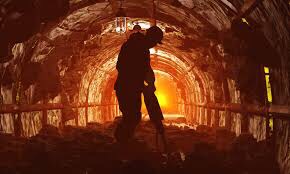
Gold was being exploited substantially by some companies despite government record stating the contrary
The NEITI report supports Shehu’s claim. “Despite the fact that gold and barites were being mined across the nation, there is no record to show that these minerals are among the mined or exported minerals. Further finding shows that barites are mined in Benue and Nasarawa states, they are also purchased by multinational oil companies as drill fluids, [but] despite high activities of miners there are no record of royalty payments,” the report observed.
But that’s not the only ill of illegal mining; perpetrators of such usually do not adhere to health and safety standards. In 2009, illegal gold mining activities led to the deaths of over 400 children and cost the federal government millions of naira in treatment, remediation and the teaching of safer mining practices in Zamfara state.
Reforms That Have Not Borne Fruits
In an attempt to jump-start the sector, the government drew up the Nigerian Minerals and Mining Act 2007 which supplanted the Minerals and Mining Act, of 1999.The Act, which is the principal legislation that regulates the Nigerian mining sector, vested the control, regulation and ownership of all mineral resources in the Federal Government of Nigeria.
The Ministry of Mines and Steel Development also identified seven strategic minerals, namely, Coal, Bitumen, Limestone, Iron Ore, Barites, Gold and Lead/Zinc for speedy development.
However, due to the long period of inactivity and the slow implementation of the Federal Government’s reform agenda in the sector, multinational corporations have been reluctant to fund major mining projects in the country.
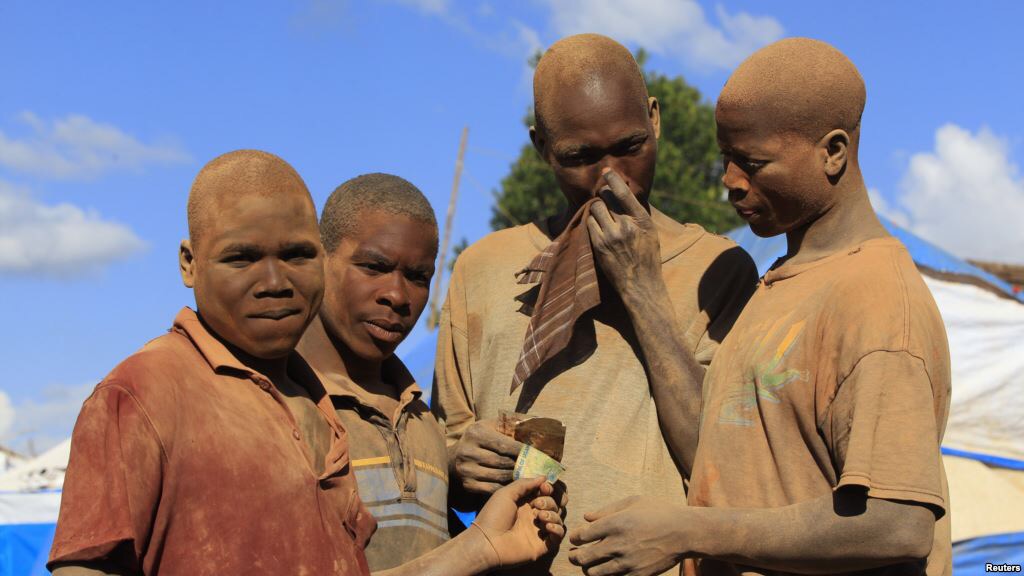
Another major challenge that has muted the reforms in the sector, is the infrastructural problems within Nigeria, particularly electricity supply and road network to sites of mineral deposits.
Organized mining began in Nigeria in 1903 when the Mineral Survey of the Northern Protectorates was created by the British colonial government. By 1940, Nigeria was a major producer of tin, columbite, and coal. However, the discovery of oil in 1956 and the Civil War in the late 1960s hurt the mineral extraction industries, as attention shifted to the black gold. The Dutch disease which Nigeria suffered from then, is yet to be healed. Hopefully, the present government will keep to its promise to focus on solid minerals as part of its economic diversification plan and Africa’s largest economy will once again enjoy the natural resources it has been blessed with.
 OBLONG MEDIA GLOBAL INTELLIGENCE
Leave a comment