
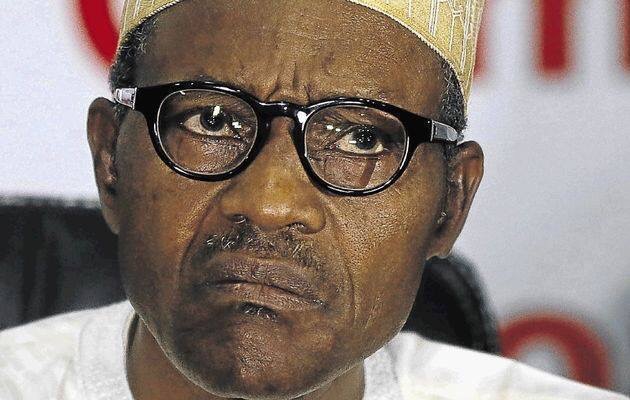
The opening take for this piece is that no matter how hard Buhari fights, no matter how passionate he desires, and no matter how much he injects his much touted political will into system, things can never change in Nigeria for the better unless Nigeria undergoes total restructuring. And no lie or attempt to hide the truth can make up for this.
Millions of Nigerians would love to meet President Buhari and his handlers one-on-one and ask him so many critical questions that bug their minds as the economy bit harder, as businesses fold up, as prices of essential goods flame up, as inflation skyrocket, as acute scarcity of petrol inflict untold hardship on citizens, as the power production hit ground zero, and essential services seem to be grinding to a halt in almost all sectors of the economy. To make matters worse, states can no longer pay salaries nor offset bills for essential services.
Of course, a greater percentage of Nigerians beyond partisan, tribal and political sentiments are aware and fully accept that the country’s current debilitating economic crisis was not created by the Buhari government. It will be unfair to accuse Buhari’s government of being the architect of Nigeria’s economic woes. It is also an outright erroneous judgement for anyone to say that it was ex-president Goodluck Jonathan that created the current economic problems Nigerians are experiencing. It is only someone who lacks the historical knowledge of how Nigeria’s social, economic and political crisis and conflicts began that will accuse Jonathan of solely leading Nigeria to this tragic socio-economic ditch.
Nigeria’s economic, social and political crisis began years back, particularly after the collapse of the quasi confederated governments of the major regions of East, West, North, Midwest, etc. And every government; past and present, military or civilian, must accept fair shares of the blame for destroying Nigeria by commission or omission. The collapse of regional confederation in Nigeria marks the beginning of Nigeria’s tragic descent into the mess we have today.
However, what makes President Buhari’s case an exception is simply because his cardinal campaign promise was that he would fix the mess called Nigeria. He said he would bring criminals and corrupt fellows to book no matter how powerful, rebuild the crumbling economy, end the reign of terror and rebrand Nigeria among the comity of nations. He even promised to make one Naira equal to one US dollar. But now it seems something went amiss. Nigerians did not vote Buhari because he is a professor of economy or a magician. Rather, Nigerians decided to overwhelmingly give Buhari a chance on the credential that he has the much needed political will to fix an age long mess called Nigeria. But let’s forget all that and focus on how the President hid the truth and asked Nigerians the wrong question.
In his keynote address to the participants at the National Economic Summit attended by the members of the national economic council, the President asked Nigerians where the palm oil produce, the cocoa heaps , the cotton folds and the groundnut pyramids have all gone. He asked where we went wrong as a nation.
It was interesting to hear the President’s narrative when he said; “ When I was a schoolboy in the 1950’s the country produced one million tons of groundnuts in two successive years,” “The country’s main foreign exchange earners were groundnut, cotton, cocoa, palm kernel, rubber and all agro/forest resources. Regional Banks and Development Corporations in all the three regions were financed from farm surpluses. In other words, our capital formation rode on the backs of our farmers. Why was farming so successful 60 years ago?”
What a wonderfully right questions from a President who is evidently burning with the passion to get Nigeria back on the same track we walked 60 years ago, or even better. If other Presidents that came before Buhari asked these right questions, surely we would not still be in this mess by now.
However, what is unfortunate about Buhari’s questions and what actually makes the questions wrong is the fact that instead of allowing Nigerians to supply him the right answers, the President deliberately hid the truth and supplied wrong answers to his right questions by himself. And unless the President changes the very mindset that prompted his wrong answers, Nigeria will still be in this same spot even after Buhari has left power. The president said that Nigeria achieved great height in agriculture and rural economy “because there were small scale credits to farmers, while inputs such as fertilizers and herbicides were readily available, complemented by adequate extension services.”
This is not true. It pure lie, in all sense of modesty to the office of the president. The simple truth is that Nigeria did well in the very areas the President mentioned and generally simply because the country ran a regional system of government with quasi confederated socio-political structures. The Ada palm plantations in the East, the Cocoa plantations in the West and The crop and animal productions in the North and Middle Belt were not powered by the Federal government. They were the initiatives of the Premiers and powered by the regional government and their local people who took ownership of these processes and even competed among the regions. The central government just offered little help. Because the lion share of the revenues from agriculture and other local economic ventures by the regional governments and people belonged to these regions while a little was given to the center, it was explainable why these locals took ownership of the socio-economic process that saw Nigeria prosper.
The President also hid the truth when he wondered why states cannot generate income to pay salaries amid dwindling conditions of their local economies. This too is a gaffe on the side of the President.
Mr President sir! You didn’t ask this question as if you have a faint knowledge of the entity called Nigeria in which you have been a former head of state. How can states pay salaries, offset essential services, generate enough revenue to create prosperity for their local population when you are aware that the existing laws do allow states to take ownership of the very processes and factor that are needed to make this possible because of the federal system of government we run?
Such questions and blame can only arise only in a situation where the states are enable by law or the socio-political system to take advantage of the economic potentials around them to grow their local economies, undertake its essential responsibility to the citizens, create prosperity for their people and then remit just a little to the center. And it is only in a situation where the states are allowed to exist as confederated components of the federation.
Nigeria’s cardinal problem which plunged us into this mess is the introduction of the federal system of government in which, even by the Land Use Act, a state cannot even build an independent power plant to supply energy to its local population and even compete with other states.
Under the quasi confederated regional governments, there were laws that allowed the regions and states to grow local economies and motivate their citizens to take full ownership of the processes. So agriculture grew exponentially, including other sectors. But the President believes that “Now we have better tools, better agricultural science and technology, and greater ability to process. With determination we can succeed,” . But it is not true. Determination is not enough to correct what a structural blunder created. Only a restructuring of the Nigeria system can correct the errors. It is time to confederate the states and save Nigeria from its current socio-economic mess.
 OBLONG MEDIA GLOBAL INTELLIGENCE
Leave a comment