
In 1954, 40 years after the 1914 Amalgamation, Colonial Rule, and Independence Struggles, as a part the preparations for the departure of the British from Governance in Nigeria, a decision was reached to adopt a Federal Constitutional Model for the would-be Independent Nigeria in view of the vast ethnolinguistic cum religious diversities of the Territory.
That FEDERATION model, adopted in 1954 became the basis on which the then 3 Regions distilled their various Constitutions between 1957 (Western Region), 1958 (Eastern Region) and the 1959 (Northern Region) which were were subsequently Federated by negotiations to float the Political Union, Nigeria.
It is pertinent to note that these 3 Autonomous Regions, each with its own Constitution, just like different Countries, were offered Independence separately by the British Crown, but following agreements reached in the Lancaster House Conferences in London, in which the Autonomy of each Region would be substantially preserved, they settled to go together into Independence in 1960 as a Federation of 3 Autonomous Regions which created a Central Authority to which they donated some of their Sovereign Powers, to carry out on their joint behalves, some functions as delegated by the Federating Regions, each of which contributed 15% of their Revenue towards the upkeep of that Center.
No decision concerning the Federation was taken by that Center except the Regions first approved same.
It is therefore self-evident that Nigeria, as One Independent Country, was founded on the basis of a Federation Model in which the Central (Federal), Government was a creation of the Regions and had only such powers and resources as donated and contributed by the Regions.
Everything worked well in the 11 years between 1954 and 1965 as each Region developed at its own pace, using mostly its own resources, owning and working its assets, and contributing the agreed 15% towards the upkeep of the Federal Government and to enable it perform the limited functions delegated to it by the Regions.
There was a healthy rivalry in which the Regions competed in who would outdo the others in developmental strides.
The then Western Region under the able Leadership of Chief Obafemi Awolowo, led the pack, scoring many firsts. The Eastern Region under Dr M.I Okpara, gave a hot chase, so much as to emerge the fastest developing economy of the so-called Third World in that era which included the Asian Tigers of today.
The Northern Region under Sir Ahmadu Bello buckled up and tried really hard to chase after these other two Southern Regions in everything good, thus, for instance, establishing the Ahmadu Bello University in Zaria when the West had set up the University of Ibadan and the East, University of Nigeria, Nsukka.
That was the golden era for the Nigerian Federation. There were of course several teething problems as to be expected in the uncharted voyage of self- governance.
Suddenly in January 1966, young idealistic military officers led by Major Chukwuma Kaduna Nzeogwu stormed the political arena and sacked the the Governments of the time, killing the Heads of both the Federal and two of the Regional Governments. These young military officers however, did not get at the reins of powers as their action was truncated, landing the reins of governance into the hands of the then Military High Command led by Major-General Johnson Aguiyi-Ironsi who was the General Officer Commanding the Nigerian Army.
Being the Military Officer he was, Ironsi sought to restore some kind of order in the troubled polity by enacting the Unification Decree No 34 of 1966 which Centralized Governmental powers in the Supreme Military Council which he headed. This, for those who already read some Igbo Agenda into the failed coup of January 1966, became a confirmation of the Igbo intention to swallow the rest if Nigeria and so had to be stooped.
As the dust settled around the tumultuous events of January 1966, the demographics of the killings created an impression that it was all an Igbo-driven intervention and so by July 29th 1966, Northern Military Officers, led by Major Murtala Mohammed, staged a very bloody revenge counter-coup in which Ironsi and a large number of Igbo Officers and men were murdered by their colleagues in cold blood simultaneously across several military locations in the North and the West.
The killings spilled into the towns in a massive hunt for all Igbo people wherever they could be found in the North and the West in what was reported as pogroms against Easterners. Only the bravery of benevolent neighbours saved some of those who would have been killed but who had to immediately run what was basically a precarious gauntlet to find their way back to the East. Many perished in that desperate attempt to get to safety in the East.
Lieutenant-Colonel Yakubu Gowon emerged in the commotion as the new Head of the Federal Military Government, in replacement for the murdered Ironsi.
Curiously, the coup-speech in which Gowon announced their July 29, 1966 intervention was one couched in the language of a Federation that had collapsed in which the North was seceding from the rest if Nigeria, since according to Gowon, all things considered, the basis of the Union was no more. There was the battle cry of ARABA, ARABA (meaning “Let’s share it” in Hausa, referring to the resolve of the Northern Region to secede from Nigeria at that point), all over the place by rampaging Northern elements as they killed and maimed Easterners.
Surviving Easterners fled to the East for safety. The wave of killings continued up North deep into the year 1966 and by September/October 1966, it was clear to the whole world that the Federation of Nigeria had completely collapsed since everyone had had to retreat to his own Region for safety.
The last ditch attempt to revive the Union took place in Aburi, Ghana, January 1967,where the Regional Military Administrations of Nigeria had gone to renegotiate the basis of Nigeria in what became known as the Aburi Accord. This effort was spurned by the Federal Government under Gowon when upon return to Nigeria, it abandoned the agreement which ruled out the use of force by any side in the unfortunate disputations.
Gowon’s Federal Government embarked on the use of force in what it first described as “Police Action” against the Government of Eastern Nigeria, which had on the 30th of May 1967 declared the then Eastern Region as the Republic of Biafra, in a bid to preserve the remnants of its population from the murderous rage of the rest of Nigeria, which continued to parade itself as the “Federal Government of Nigeria” despite the complete collapse of the so-called “Federation of Nigeria” several months before.
That Police Action was what degenerated into a 30-Month War in which over 3million Easterners were killed, mostly children who were starved to death by the deliberate policy of the then Gowon-led Federal Government which had Chief Awolowo as the Vice-Chairman of Gowon’s War Cabinet.
Since the end of that War in January 1970, all efforts to restore the Federal basis of Nigeria had been blocked and frustrated by the Victorious Alliance of the rest of Nigeria against the East, which had gone on to impose a Unitary Constitutional Model by fiat since 1979, reinforced in 1999 as the 1999 Constitution, which to the East is simply the Victory Charter from that War of Genocide against Biafra 1967-1970.
Upon the simultaneous introduction of Sharia by the 12 Contiguous States of the predominantly Muslim North in year 2000 and the escalation of its enforcement which included the establishment of the Hisbah (Sharia Police) and the surreptitious introduction of Boko Haram (whose only demand was the replacement of Democracy with Sharia), the East consulted with the non-sharia rest of Nigeria (which had also come under the murderous jackboots of the Islamic Caliphate operating the forced One-Nigeria since 1966), and the consensus was to dissolve the false Federation of Nigeria as defined by the so-called 1999 Constitution exclusively imposed on all by the Military scions of the Caliphate Colonialists operating under the name “Nigeria”.
The MNN LAGOS DECLARATION OF JUNE 30TH 2011, outlined to the global community, the formations and processes by which the successor-states emerging from the defunct Federation of Nigeria would enter their Independence within their Right to Self-determination via Referendum.
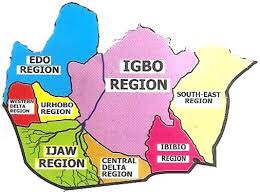
The Lower Niger Congress is driving the process in the Eastern Half of Southern Nigeria and the Referendum for the Lower Niger (so-called South East and South South) is already being processed for 2017.
Visit http://www.lnc-usa.org
Call +234-810-0569448
Tony Nnadi
Secretary-General.
Lower Niger Congress
20th November, 2016.
 OBLONG MEDIA GLOBAL INTELLIGENCE
Leave a comment