
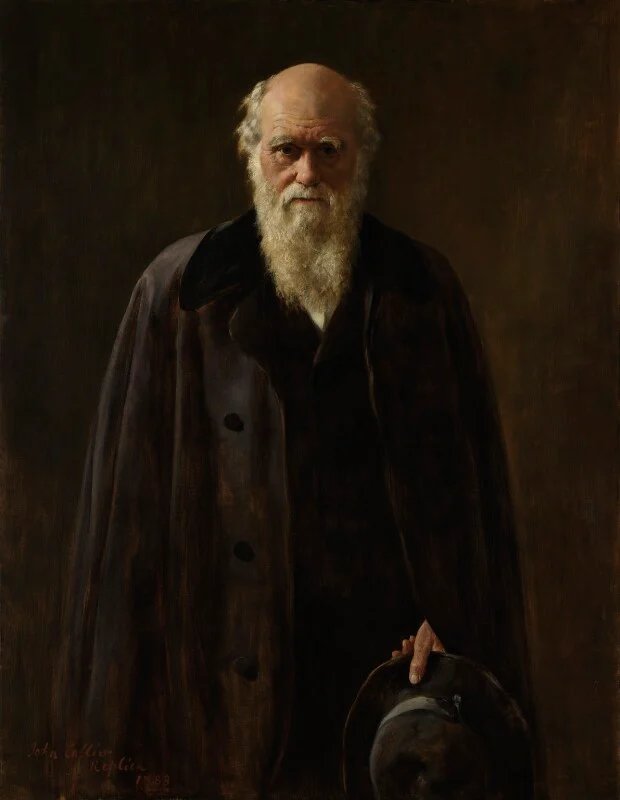
Charles Darwin
Charles Darwin learned of the idea of evolution from his grandfather, Erasmus Darwin, a major figure of the Enlightenment. Erasmus rejected Christianity and adopted the heresy of deism, a belief that states that God simply created the world and set the processes of nature as the clockmaker sets the clock, being separate from His creation, leaving man to be governed by reason and not any of the divine inspirations that we find in the Scriptures. Erasmus Darwin was not just a deist, but an occultist Freemason. In Darwin’s memoirs he writes:
“My father told me two odd stories about bleeding: one was that as a very young man he became a Freemason. A friend of his who was a Freemason and who pretended not to know about his strong feeling with respect to blood, remarked casually to him as they walked to the meeting, ‘I suppose that you do not care about losing a few drops of blood?’ It seems that when he was received as a member, his eyes were bandaged and his coat-sleeves turned up. Whether any such ceremony is now performed I know not, but my father mentioned the case as an excellent instance of the power of imagination, and he distinctly felt the blood trickling down his arm, and could hardly believe his own eyes, when he afterwards could not find the smallest prick on his arm.”
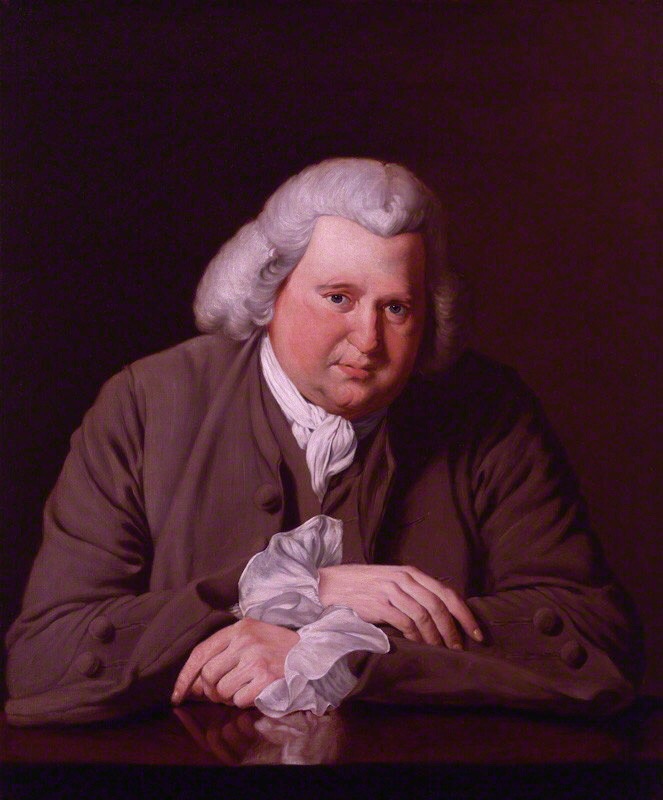
Erasmus Darwin
Before Charles Darwin was even born, Erasmus Darwin wrote in his book, The Temple of Nature, that “mankind arose from one family of monkeys on the banks of the Mediterranean; who accidentally had learned to use the adductor pollicis, or that strong muscle which constitutes the ball of the thumb, and draws the point of it to meet the points of the fingers; which common monkeys do not; and that this muscle gradually increased in size, strength, and activity, in successive generations; and by this improved use of the sense of touch, that monkeys acquired clear ideas, and gradually became men.”
Before Charles Darwin ever wrote on natural selection, Erasmus Darwin wrote that “the strongest and most active animal should propagate the species, which should thence become improved.”
Much of Erasmus’ scientific works were written in the form of poetic, religiously pagan verse, alongside his own commentary on what the verses signified. In these writings he affirmed that all life sprung from the sea and evolved. In his book, The Temple of Nature, he wrote:
“ORGANIC LIFE beneath the shoreless waves
Was born and nurs’d in Ocean’s pearly caves;
First forms minute, unseen by spheric glass,
Move on the mud, or pierce the watery mass;
These, as successive generations bloom,
New powers acquire, and larger limbs assume;
Whence countless groups of vegetation spring,
And breathing realms of fin, and feet, and wing.”
Erasmus then wrote of how mankind, while declaring he is made in the image of God, evolved from microscopic animals:
“Imperious man, who rules the bestial crowd,
Of language, reason, and reflection proud,
With brow erect who scorns this earthy sod,
And styles himself the image of his God;
Arose from rudiments of form and sense,
An embryon point, or microscopic ens!”
Erasmus Darwin was a product of the Protestant Reformation — or rather, the Protestant Revolution —, rejecting Catholic doctrine, such as that of Transubstantiation, while subscribing to deist and mechanical theology. On March 15th, 1790, James Keir, a prestigious chemist of his time, wrote to Erasmus:
“You are such an infidel in religion that you cannot believe in transubstantiation, yet you can believe that apples and pears, c., sugar oil, vinegar, are nothing but water and charcoal, and that it is a great improvement in language to call all these things by one word—oxyde hydro-carbonneux.”
Commentating on this letter, British academic and professor at the University of East Anglia, Rebecca Stott, makes a very interesting observation:
“It was an astute comment. What Keir saw was that Erasmus Darwin was replacing the mystery of the Catholic belief in transubstantiation (the bread being transformed into Christ’s body in the sacrament, the wine into his blood) with his own materialist chemical transubstantiation. It was a dangerous kind of heresy but so disguised as to have gone unnoticed.”
With his mechanical and Protestant theology, filled with a deism projected through the lens of a callous, Masonic, systematic worldview, one that rejected the sublime mystery of the Catholic Faith and imposed a mythological, pagan and pseudo-biological philosophy, it is really of no wonder as to why Erasmus supported the genocide of Catholics, their priests and their governors, in that most diabolical French Revolution. That Erasmus was a Freemason makes this less surprising, since the philosophers who would have provided the ideological framework for the sanguinary revolt, such as Rousseau and Voltaire, were Freemasons. To rival the violence and carnage of the French Revolution is almost an unsurmountable task. Mme. Roland, an adamant supporter of the revolution, whose husband was France’s Minister of the Interior, was herself horrified and recounted the cruelty done by the rebels:
“Women were brutally violated before being torn to pieces by those tigers; intestines cut out and worn as turbans; bleeding human flesh devoured.”
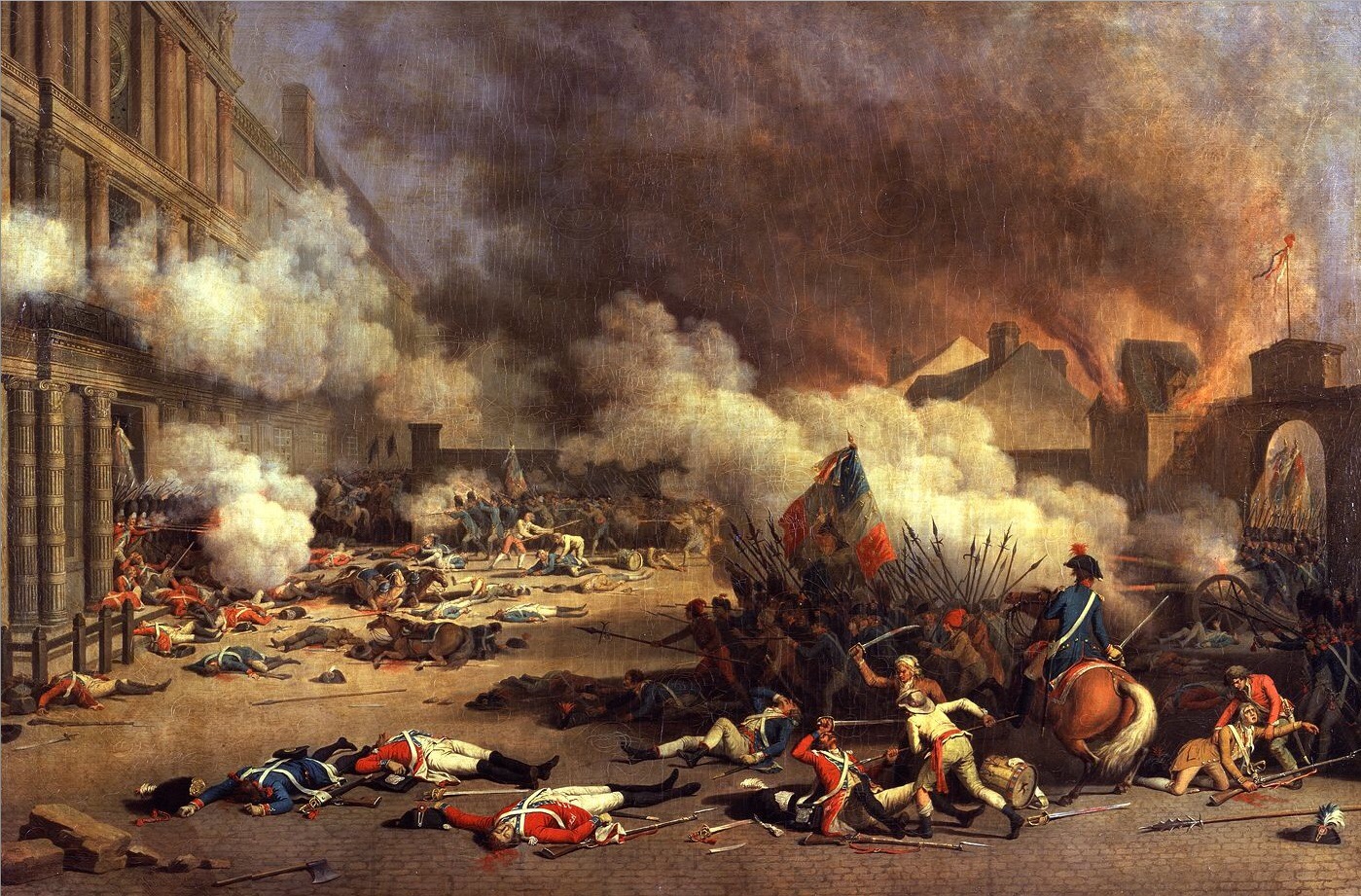
A man was about to be executed, his daughter begged the slaughterers to have mercy on him. The killers murdered another man, drained out some of his blood into a cup and told her, that if she wanted to save her father, she must drink the blood. To save her father’s life, she drunk the blood. The murderers took another woman, and with sadistic pleasure, finished her off by setting a fire between her swollen legs. Within this same time, in the bloody year of 1792, two hundred and fifty priests were rounded up and slaughtered, although they embraced death with joy, leaving one witness to write: “I do not understand, they seemed happy. They went to death as to a wedding.”
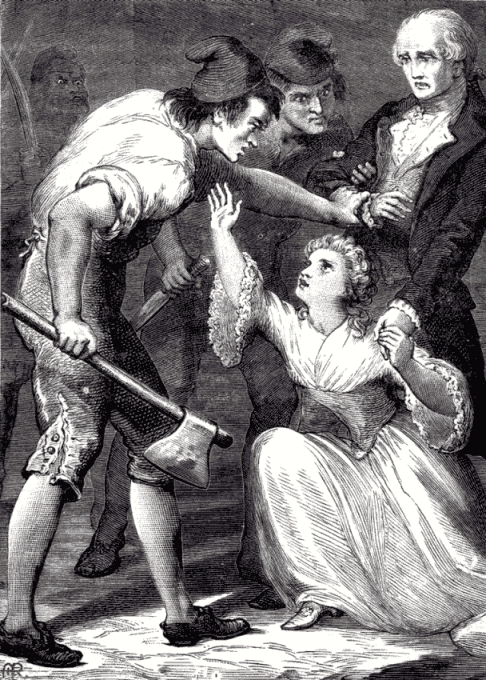
Daughter begs for her father’s life
1794, sixteen Carmelite nuns were brought to the execution stand. One of them asked why they were being executed. The answer was: “foolish attachment to your stupid religious practices,” upon which the nun looked to her fellow monastics and said: “There you are, sisters: we have been condemned for our religion. …What a happiness to die for our God!” They began singing Veni Creator, and the last one to continue the song was to final nun to be beheaded in the guillotine.
Cannibalism, cruelty, massacres, and the genocide of Christians, would have all fit in within the darwinian utopia of Erasmus Darwin, wherein mankind is nothing but creatures evolved from lower oceanic animals. Erasmus Darwin praised the anti-Catholic cause of the revolution in his 1791 book, The Botanic Garden:
“The Warrior, LIBERTY, with bending sails Helm’d his bold course to fair HIBERNIA’S vales;—
Firm as he steps, along the shouting lands, Lo! Truth and Virtue range their radiant bands;
Sad Superstition wails her empire torn,
Art plies his oar, and Commerce pours her horn.
“Long had the Giant-form on GALLIA’S plains.
Inglorious slept, unconscious of his chains;
Round his large limbs were wound a thousand strings
By the weak hands of Confessors and Kings;
O’er his closed eyes a triple veil was bound,
And steely rivets lock’d him to the ground;
While stern Bastile with iron cage inthralls
His folded limbs, and hems in marble walls.
—Touch’d by the The flimsy bonds, and round and round him gazed;
Starts up from earth, above the admiring throng
Lifts his Colossal form, and towers along;
High o’er his foes his hundred arms He rears,
Plowshares his swords, and pruning hooks his spears;
Calls to the Good and Brave with voice, that rolls
Like Heaven’s own thunder round the echoing poles;
Gives to the winds his banner broad unfurl’d,
And gathers in its shade the living world!
Notice how Erasmus refers to the Catholic world: one of “sad superstition” and “Confessors and Kings,” that is, the Catholic Church, Her teachings, Her priests and monarchs. Erasmus Darwin praised the destruction of all of this, as did his Protestant predecessor, Martin Luther. Martin Luther began a revolution against the Catholic Church, and Erasmus simply continued it. The relationship between the Protestant Reformation and the Enlightenment heresy was astutely observed by Anglican theologian and priest, Alister McGrath:
“It was Protestant, rather than Roman Catholic or Eastern Orthodox, theology which was especially open to influence from the new currents of thought which arose from the Enlightenment and its aftermath.”
Several factors were significant in Protestantism’s role in the Enlightenment, but it can all be summarized into one element within the heresy, and that is the very nature of Protestantism itself. The whole of the movement was established to uproot the very authority of the Catholic Church, the cause of which was the fragmented churches scattered about, free to devise their own doctrines and councils, confined within their own distant lands, and infused with no specific theology but the call to rebellion against the Catholic Church.
With no order, comes disorder, and thus there was no centralized authority to impede the spreading of the Enlightenment heresy. Moreover, the Enlightenment heresy was just another theology brought about by rebels amongst other rebels, protestants in the midst of other protestants.
“While the ‘essence of Protestantism’ remains disputed within scholarly circles,” writes McGrath, “there is agreement that a spirit of protest is part of the birthright of the movement. The Protestant predisposition to challenge authority, and the commitment to the principle ecclesia reformata, ecclesia semper reformanda (‘the reformed church must always be the church which is reforming itself’), encouraged a spirit of critical inquiry concerning Christian dogma. This attitude resonated with the ideals of the Enlightenment, leading to an alignment of many Protestant writers with the movement, and a willingness to absorb its methods and outlooks.”
The way in which Protestantism sees the Bible, is the same way that the United States views its Constitution: as a living document, ever changing to the times and trends.
From one rebellion, comes more rebellion. Chaos only births chaos. And so the Enlightenment was just a mere continuation of centuries of rebellion against the Catholic Church and Her teachings. In ancient Israel, God commanded that if controversy ever arose amongst the people, “thou shalt come to the priests of the Levitical race, and to the judge, that shall be at that time: and thou shalt ask of them, and they shall shew thee the truth of the judgment.” (Deuteronomy 17:9) It does not say, “go to the Scriptures,” or to an individual interpretation, but rather, to go to the priests and trust in their authority. The Scripture goes on to say that “he that will be proud, and refuse to obey the commandment of the priest, who ministereth at that time to the Lord thy God, and the decree of the judge, that man shall die, and thou shalt take away the evil from Israel” (Deuteronomy 17:12).
The religious institution established by God, then, is to be the authority, and not the individual. And the fact that God commands that protestors against the priesthood are to be put to death, shows that the Catholic Church was right when She would execute Protestants. When the earliest heretics argued that circumcision was obligatory, they used the Scriptures to prove their point. But the Apostles, still, gathered together in the Council of Jerusalem, and declared that circumcision was not obligatory. To have been a Jew in those days and believe this judgements would have been very difficult, because the heretics had the Scriptures, and the Apostles had their authority. It was those who trusted in the authority of the Apostles — that is, the Church — and not in judaizers’interpretation of the Old Testament, who would have been on the side of Orthodoxy, and not vice-versa. But Protestantism desires to destroy this faith, to revolt and obliterate the Councils and the Fathers of the Church.
The toppling of ecclesiastical authority and the elevation of individualist anarchy, is truly the core of all Protestant thought, and the precursor to the bloody tempest of the Enlightenment reign of terror. One of the most famous thinker of German idealism and the Enlightenment, Georg Wilhelm Friedrich Hegel, who was called a “Protestant Aquinas” by Karl Barth, defined Protestant thinking, bridging it with the Enlightenment individualistic position:
“It is the fundamental principle of the Protestant church that its contract shall rest on the unanimity of all its members, that no one shall be required to enter an ecclesiastical contract whose terms insist on his subjecting his faith to a majority vote. At the start of his great work, Luther did appeal to a free General Council, but the great foundation of Protestant freedom, the Palladium of the Protestant church, was discovered when men refused to appear at a Council and repudiated all part in its proceedings, not because they were assured in advance of losing their case there, but because it would contradict the very nature of religious opinions to decide them by majority vote, and because everyone has the right to settle for himself what his faith is. Thus the faith of every individual Protestant must be his faith because it is his, not because it is the church’s.”
From the gnostics of the Middle Ages, to the Reformation, to the Enlightenment, violent revolt continues like a torrent of blood and carnage, for its trail is crimson and its song is one of confusion. “The Catholic Church as a whole was very critical of the Enlightenment,” writes scholar Gottfried Adam, “whereas the Protestant side was much more open-minded and reacted positively to the educational impetus of the Enlightenment.”
The calls for death of Catholics by Luther are no different than statements made by numerous of the “Enlightenment” thinkers. Martin Luther declared:
“If I had all the Franciscan friars in one house, I would set fire to it, for, in the monks the good seed is gone, and only the chaff is left. To the fire with them!”
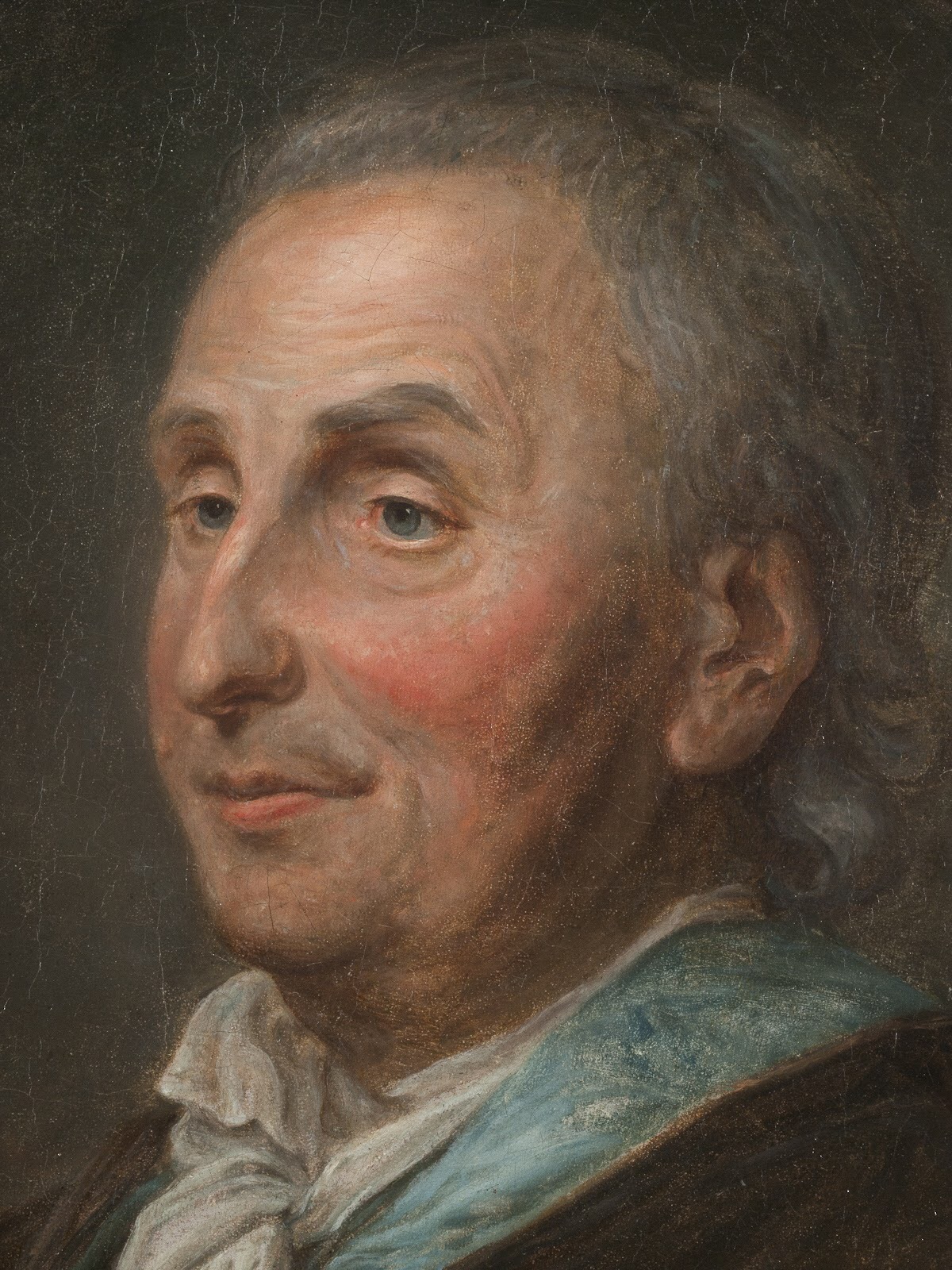
Now compare this sort of talk to that of the Enlightenment writer, Denis Diderot:
“Let us strangle the last king with the guts of the last priest.”
Denis Diderot
In 1540, a series of fires broke out in North and Central Germany. It is said that some persons were apprehended, and under torture, confessed that they were sent by the Pope and the monks. Without any conclusive evidence, Luther immediately used the story as a pretext to foment the slaughter Catholic clergy, saying:
“If this be proved, then there is nothing left for us but to take up arms against the monks and priests ; and I too shall go, for miscreants must be slain like mad dogs.”
It was the anger of the opportunist, and not the anger of the just; it was the anger of those who, on any notice or utterance, on any report, rages like a mad dog. After making his statement, Hieronymus Schurf, a lawyer who was present with Luther, said that it would be most unjust if one is tortured after being accused too hastily, to which Luther said: “This is no time for mercy but for rage!” In a 1520 letter written to Spalatin, Luther wrote:
“The die is cast; the despicable fury or favour of the Romans is nothing to me; I desire no reconciliation or communion with them. … I shall burn the whole of the Papal Laws and all humility and friendliness shall cease.”
Both the Protestant revolution and the Enlightenment led to violence against the Catholic Church. The horrific violence done by the early Protestants on account of the calls for rebellion by Luther and other “reformers,” was well documented by contemporaries of that time. At the Diet of Worms in 1545, the Catholics made this report:
“The Protestants have made themselves masters of churches and monasteries and have driven into misery all who wished to abide by the old faith. They have invaded bishoprics and have been reckless of justice and peace ; have constrained the poor inhabitants to embrace their religion, as, for instance, in the land of Brunswick, where they had no other right than the might of the sword. They trample under foot and oppress everything, and then complain of being themselves oppressed.”
“They are insatiable in their demands and are for ever producing fresh cards to play, at every Diet putting forward fresh claims which they insist on having conceded to them before they will take part in the transactions or vote supplies.”
“Scandals and abuses innumerable certainly existed and were openly flaunted, and were growing worse and worse nowadays, because, owing to the perilous times and the teaching of novel sects and preachers, all good works were being abandoned, and unbelief and contempt for religion was becoming the custom among high and low. Many thousand livings stood vacant and the people were without helm or rudder.”
Carl van der Plassen, a doctor of Cologne, wrote a letter in 1545 to the Diet of Worms in which recounted the horrors done by Protestant leaders and thugs:
“…we must bear in mind all that has happened in Germany since the subjugation of the peasants by the Princes and municipal authorities, all the countless violations of human and Divine law, of the public peace, of property, civic rights, conscience and honour. Let us but reckon up the number of churches and monasteries which have been destroyed and pillaged during these twenty years, and all the accompanying crime and iniquity. And to what purpose have these stolen goods been applied ? What has become of all the Church property, all the treasures ? . . . A new religion has been forced upon the people by might and by stratagem, and they have been forbidden under threat of punishment to carry on the old service of God, with its rites and Christian usages. Is this the vaunted freedom of the Gospel, to persecute and coerce others, to imprison them or drive them into exile ? Everything that was formerly reverenced has now fallen into contempt, with the result that right and property are no longer respected ; the endless disturbances in matters of religion have upset the whole national equilibrium ; discipline, loyalty and respectability have vanished. . . . What misery results from want of clergy and schools even in the lands which have remained Catholic ! Princes and towns, making their boast of the Gospel, have not been satisfied with introducing the new Church system into their own territories, but have invaded the Catholic bishoprics and secular dominions and turned everything topsy-turvy in order to set up their own institutions. The Schmalkalden confederates extend their operations from year to year and grow more and more audacious. At this moment they are actually preaching a war of extermination against the Pope and his adherents. There will be no checking them if the sword of the Emperor is not used to restrain them, as it ought to have been long ago.”
Another Catholic contemporary protests in similar fashion :
“Religion is perverted, all obedience to the Emperor destroyed, justice set aside and insolence of all sorts everywhere encouraged.”
The eminent Protestant historian, Karl Hagen, wrote of the violence and bloodshed called for by Luther against Catholics:
“Even Luther… in his earlier writings, contributed to foster the rebellious felling among the people; for one he actually incited the German nation to bathe itself in the blood of the Papists, and he declared that they would do a thing agreeable to God who would make away with the Bishops, destroy churches and convents!”
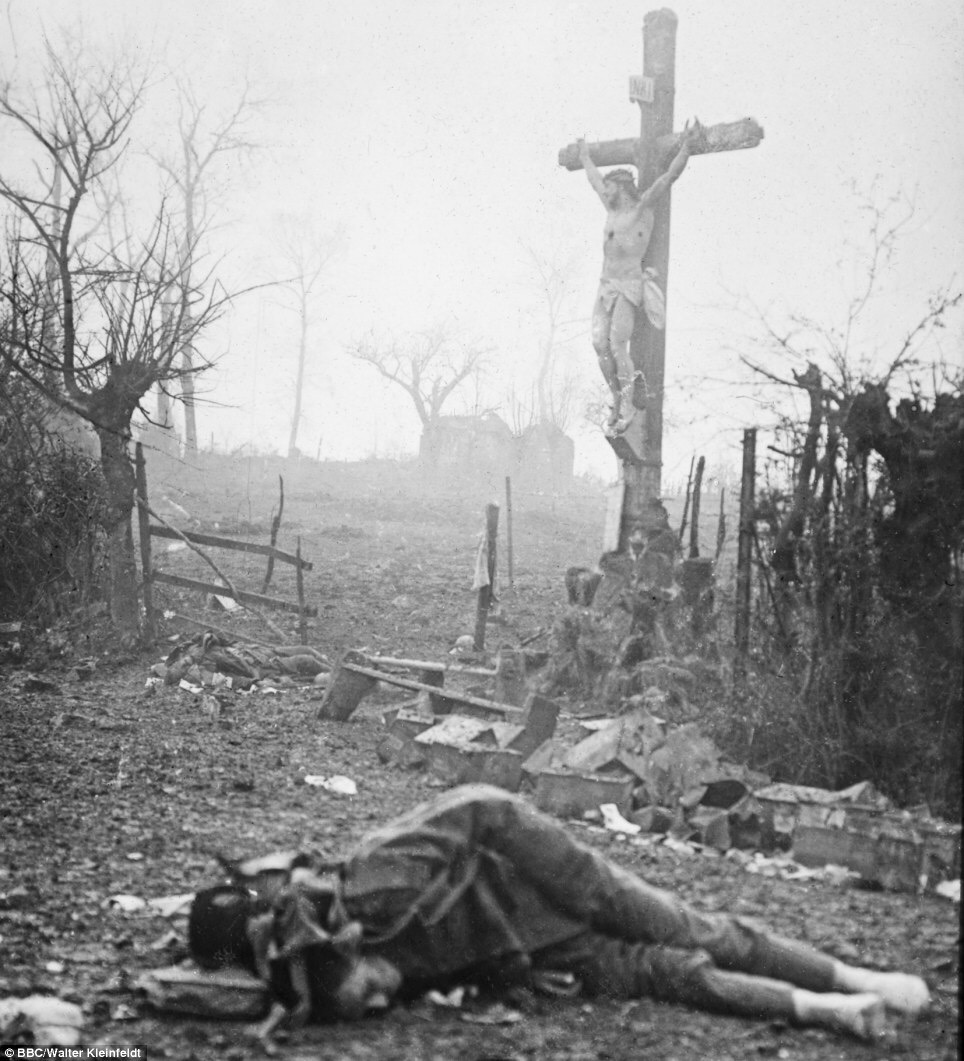
This violent sea of anti-Catholic hatred flooded Europe in modern times, when German troops attacked cathedrals and Catholic monuments. In 1917, during the First World War, Canon William Barry, in the fourth centenary of Luther in London, declared the evils of German soldiers against Catholic Christendom:
“The heart of Luther, German to its last fiber, is beating still in those armies which are attempting to ruin our Western civilization, are attacking our faith as inherited from Christendom of old time. It was Luther, multiplied, like Southey’s monstrous creation, Kehama, into a myriad of furious assailants, that burnt Louvain, shattered Rheims, and desecrated nearly thirteen hundred Catholic churches in its onset, East and West. For negation with arms in its hands cannot fail to be destructive. This “justifying faith” in the virtues of Teutonism, which wrought havoc all round four centuries ago, to-day strikes hard, strikes without pity, at our Christian monuments. It has not spared French cathedrals; it aims, with malice worthy of Luther him-self, at St. Mark’s, Venice. And who believes that it would show mercy to Rome, if it could take the Holy City by assault, now, in November, 1917, any more than it did in May, 1527? Rage knows no law. And it cannot stay to argue. ‘Why should we not wash our hands in the blood of popes and cardinals?’ was Luther’s top note in the diapason of his fury. ‘If any man resists me, him I will smash,’ exclaimed the Kaiser, while Germany heard and trembled. The Teuton ego is feeling, not reason, will rather than law.”
A Crucifix stands amidst the destruction of WW1
Thomas Paine, one of the great prophets for the Enlightenment, praised the French Revolution for its violently intolerant abolishment of the Catholic Church:
“In countries under despotic governments, where inquiry is always forbidden, the people are condemned to believe as they have been taught by their priests. This was for many centuries the case in France: but this link in the chain of slavery, is happily broken by the revolution; and, that it may never be rivetted again, let us employ a part of the liberty we enjoy scrutinizing into the truth.”
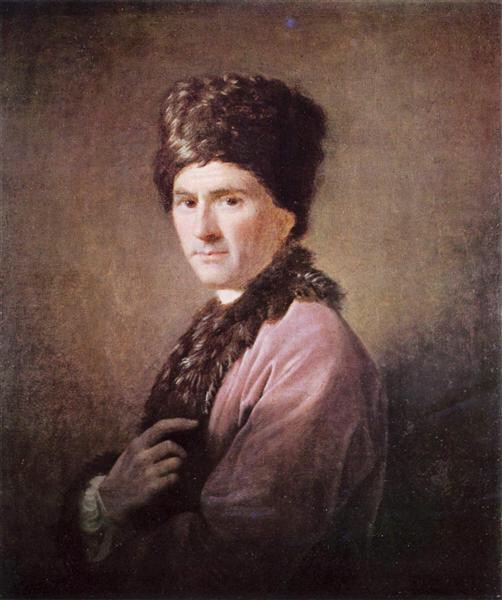
Jean-Jacques Rousseau, another one of the Enlightenment teachers, advocated for the execution and expulsion of all Catholics within his own utopian vision, a vision which became a reality in late 18th century France:
“There is therefore a purely civil profession of faith of which the Sovereign should fix the articles, not exactly as religious dogmas, but as social sentiments without which a man cannot be a good citizen or a faithful subject. While it can compel no one to believe them, it can banish from the State whoever does not believe them–it can banish him, not from impiety, but as an anti-social being, incapable of truly loving the laws and justice, and of sacrificing, at need, his life to his duty. If anyone, after publicly recognizing these dogmas, behaves as if he does not believe them, let him be punished by death: he has committed the worst of all crimes, that of lying before the law. …The existence of a mighty, intelligent, and beneficent divinity, possessed of foresight and providence, the life to come, the happiness of the just, the punishment of the wicked, the sanctity of the social contract and the law: these are its positive dogmas. …Now that there is and can be no longer an exclusive national religion, tolerance should be given to all religions that tolerate others, so long as their dogmas contain nothing contrary to the duties of citizenship. But whoever dares to say: ‘Outside the Church is no salvation,’ ought to be driven from the State”
Jean-Jacques Rousseau
And of course, anyone who says “Outside the Church is no salvation,” is emphatically Catholic.
Voltaire, another teacher who was very significant in forming the ideology for the French Revolution, believed in a form of evolutionism, teaching that Africans were still at a lower state of the evolutionary process. He wrote:
“It is a serious question among them whether the Africans are descended from monkeys or whether the monkeys come from them. Our wise men have said that man was created in the image of God. Now here is a lovely image of the Divine Maker: a flat and black nose with little or hardly any intelligence. A time will doubtless come when these animals will know how to cultivate the land well, beautify their houses and gardens, and know the paths of the stars: one needs time for everything.”
Francois-Rene de Chateaubriand, whose mother and sister were both murdered by the deist rebels, wrote a brief history on how the French revolution commenced, in which he recounts on the nascent stages that led to the violent torrent, on how it was Voltaire and his fellow sophists who influenced it:
“Voltaire renewed the persecution of Julian. He possessed the baneful art of making infidelity fashionable among a capricious but amiable people. Every species of self-love was pressed into this insensate league. Religion was attacked with every kind of weapon, from the pamphlet to the folio, from the epigram to the sophism. No sooner did a religious book appear than the author was overwhelmed with ridicule, while works which Voltaire was the first to laugh at among his friends were extolled to the skies. Such was his superiority over his disciples, that sometimes he could not forbear diverting himself with their irreligious enthusiasm. Meanwhile the destructive system continued to spread throughout France. It was first adopted in those provincial academies, each of which was a focus of bad taste and faction. Women of fashion and grave philosophers alike read lectures on infidelity. It was at length concluded that Christianity was no better than a barbarous system, and that its fall could not happen too soon for the liberty of mankind, the promotion of knowledge, the improvement of the arts, and the general comfort of life.”
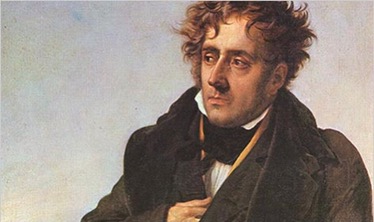
Francois-Rene de Chateaubriand
Thus, Voltaire was one of the contrivers behind the French Revolution. From sophism, sadistic sarcasm, the ridicule of all things holy, the praise of infidelity, came a mountain of carnage and gore. Rousseau and Voltaire both were involved in the occult, being both Freemasons, and both believed in a form of evolutionism (Rousseau held that orangutans could be a lower species of man), and both — like Martin Luther — wanted to see the destruction of the Catholic Church.
www oblongmedia.net
 OBLONG MEDIA GLOBAL INTELLIGENCE
Leave a comment