
Long before Darwin wrote his On the Origin of Species, a Protestant minister of the Anglican Church, Baden Powell, was teaching and promoting evolutionism. He, like Darwin and his predecessors, hated the Catholic Church. In an 1841 speech given at Oxford University, Powell said that the Catholic Church had made “corruptions of the simplicity and purity of the Christian faith,” that it had stemmed from “Successive ages of darkness and general barbarism” and that it was to the Church “that men’s minds were made to bow in abject submission.” Powell praised the cause of Luther and his fellow protestant leaders, saying that the “Reformation cleared away a vast mass of these corruptions.” Most notably, in this same speech, Powell said:
“Let not Protestants, then, forget their main ground of trust. Let them not perplex themselves, and waste their strength in vain disputes on lesser matters; but hold resolutely to the broad principle of the Bible, and every man’s right to search it and think for himself, on which alone the Reformation proceeded, or was, in fact, justifiable. Let them consider well, and remember that, in one word, Protestantism is Scripture.”
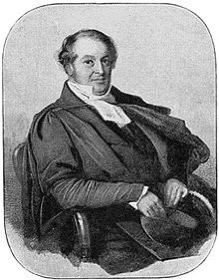 Baden Powell
Observe what he says here, that every man should read the Scriptures and “think for himself,” this is the creed of the “Enlightenment” and all of spiritual and political chaos. To equate the Scripture with Protestantism is to then force the Bible, and the interpretation thereof, to the capricious vicissitudes of mortals, of the ever changing and fleeting trends of people, for the protests of man do not cease, at that which is holy and never changing, man will never cease at trying to force it to submit to his will. Look at what Powell would say later in the same speech:
“The spirit of the Reformation is the spirit of enlightenment and free Scriptural enquiry.”
In other words, the interpretation of the Scripture is enslaved to man’s enquiry, that is, his deviant desire to conform the Bible to the contrivances that he wants to be popular or dominating. As soon as Darwin’s book, On the Origin of Species, came out, Powell did not hesitate to continue the protest against orthodoxy, and force the Bible to conform to evolutionism, writing in 1860:
“that ‘creation’ is only another name for our ignorance of the mode of production… while a work has now appeared by a naturalist of the most acknowledged authority, Mr. Darwin’s masterly volume on The Origin of Species by the law of ‘natural selection’ — which now substantiates on undeniable grounds the very principle so long denounced by the first naturalists, — the origination of new species by natural causes: a work which must soon bring about an entire revolution of opinion in favour of the grand principle of the self-evolving powers of nature.”
Charles Darwin wrote a book, entitled An Historical Sketch of the Recent Progress of Opinion on the Origin of Species, published in 1866, in which he documented numerous of the figures who taught evolutionism, or at least nascent forms of it, before he did. Darwin hailed the Protestant pastor Baden Powell, as one of his predecessors, crediting him as a thinker who had written on natural selection before he did. Darwin wrote:
“The ‘Philosophy of Creation’ has been treated in a masterly manner by the Rev. Baden Powell, in his ‘Essays on the Unity of Worlds.’ 1855. Nothing can be more striking than the manner in which he shows that the introduction of new species is ‘a regular, not a casual phenomenon,’ or, as Sir John Herschel expresses it, ‘a natural in contradistinction to a miraculous process.”
Two of the most central figures in the spreading of evolutionism, Charles Darwin and Alfred Russel Wallace, were both not just influenced, but pulled into concluding evolutionism by a Protestant minister named Thomas Malthus. Utilizing his Protestantism, Malthus interconnected theology with eugenics, writing in his later 18th century work, An Essay on the Principle of Population,
“But the doctrine of life and Mortality which was brought to light by the gospel, the doctrine that the end of righteousness is everlasting life, but that the wages of sin are death, is in every respect just and merciful, and worthy of the great Creator. Nothing can appear more consonant to our reason than that those beings which come out of the creative process of the world in lovely and beautiful forms should be crowned with immortality, while those which come out misshapen, those whose minds are not suited to a purer and happier state of existence, should perish and be condemned to mix again with their original clay. Eternal condemnation of this kind may be considered as a species of eternal punishment, and it is not wonderful that it should be represented, sometimes, under images of suffering.”
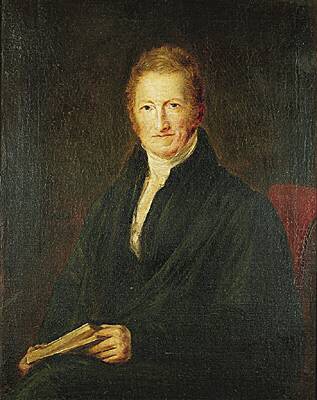 Thomas Malthus
In the 6th edition, published 1826, of this same book, Malthus advocates for the State to enact certain policies that would guarantee that a large amount of people in the society die, such as making streets narrower to force people to be closer, in order to encourage the spread of disease; advocating for poorer people to forsake cleanliness, that way it would liken the chances of them getting sick; establish processes that would ensure that more and more babies die, and penalize doctors for striving to make medicine for diseases:
“It is an evident truth that, whatever may be the rate of increase in the means of subsistence, the increase of population must be limited by it, at least after the food has once been divided into the smallest shares that will support life. All the children born, beyond what would be required to keep up the population to this level, must necessarily perish, unless room be made for them by the deaths of grown persons. It has appeared indeed clearly in the course of this work, that in all old states the marriages and births depend principally upon the deaths, and that there is no encouragement to early unions so powerful as a great mortality. To act consistently therefore, we should facilitate, instead of foolishly and vainly endeavouring to impede, the operations of nature in producing this mortality; and if we dread the too frequent visitation of the horrid form of famine, we should sedulously encourage the other forms of destruction, which we compel nature to use.
Instead of recommending cleanliness to the poor, we should encourage contrary habits. In our towns we should make the streets narrower, crowd more people into the houses, and court the return of the plague. In the country, we should build our villages near stagnant pools, and particularly encourage settlements in all marshy and unwholesome situations. But above all, we should reprobate specific remedies for ravaging diseases; and those benevolent, but much mistaken men, who have thought they were doing a service to mankind by projecting schemes for the total extirpation of particular disorders.”
Before Darwin had his book, On the Origin of Species, published, there was a man who was close to him, who had conceived of the idea of evolutionism, his name was Alfred Russel Wallace, and not only was he an evolutionist, but an occultist as well. Being deeply entrenched in the idea of philosophical biology, Wallace was greatly pulled, while under strong delusion, to read Malthus’ essay on population. He was a diabolically possessed individual, suffering from hallucinations and other dark visions. In his chaotic hallucinations during his stay in the Malay Archipelago, he would begin to imagine that he was having a conversation with Charles Darwin, or times with the French naturalist, Jean-Baptist Lamarck, about evolution and natural selection. “All species have evolved,” Wallace would say in his delusional and shaking voice, with his face covered with sweat, “adapted and mutated. All living organisms have descended from earlier forms.”
While in his hut, Wallace recounted, “somehow my thoughts turned,” he wrote, to Malthus’ book on population, which he had read fourteen years earlier in Leicester. He continued to write in his recounting of this contemplation on Malthus, and how he inspired him in his acceptance of Social-Darwinism:
“it occurred to to ask the question, Why do some die and some live? And the answer was clearly, that on the whole the best fitted survive. From the effects of disease the most healthy escaped; from enemies, the strongest, the swiftest, or the most cunning; from famine, the best hunters or those with the best digestion; and so on. Then it suddenly flashed upon me that this self-acting process would necessarily improve the race, because in every generation the inferior would inevitably be killed off and the superior would remain — that is, the fittest would survive. Then at once I seemed to see the whole effect of this. … The more I thought over it the more I became convinced that I had at length found the long-sought-for law of nature that solved the problem of the origin of species.”
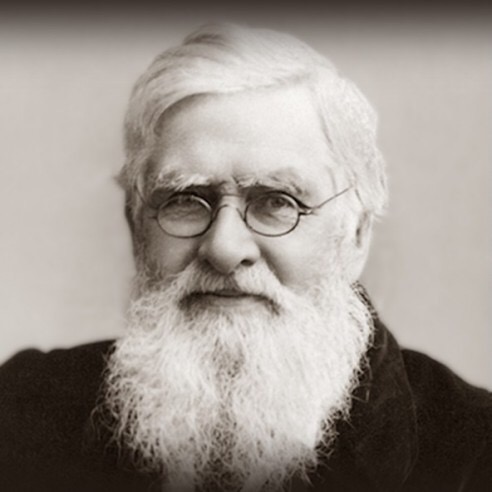 Alfred Russel Wallace
Wallace was also an extreme heretic, following the teachings of David Friedrich Strauss, that the miracles of Christ were merely myths that grew from rumors that naturally were said about all great men of the past.
Other than being a heretic, he was a firm believer in occultism and partook in spiritism, necromancy and the ouija board. He put out a book in 1866 entitled, The Scientific Aspect of the Supernatural. Wallace had one hundred copies of the book printed out, and reserved twenty five copies for his friends. These reserved copies, wrapped with paper, sat in the study of Wallace’s sister, Frances, who was supposed to distribute them to her brother’s friends. But she neglected them for several days, thinking that she would eventually give them away when she had the time. One day she left the study for a few minutes and when she returned she saw that the books were scattered about the room. Frances, frightened, called her friend, Agnes Nichol, who summoned a spirit through a ouija board to seek the answer as to why the volumes had been scattered about. “One for my sister Frances, I have marked it,” said the spirit. Frances picked up a copy and began flipping through the pages. She found red crayon marks on some of the pages and believed that they were made by the spirit. “If you could do this while the book was shut up,” said Frances to the spirit, “you could write my name in this book while it lays under my hands.” She closed the book, and after a few moments she reopened it and found her name, “Frances Wallace,” written on the top of the first page.
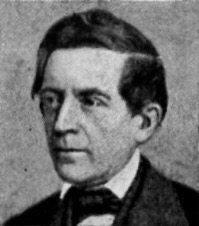 David Friedrich Strauss
In this cursed book, Wallace taught that human evolution is a process that encompasses both biology and spirit; that man is evolving physically and spiritually into a higher being. “Survival of the fittest” was something that entailed both biological evolution and spiritual evolution. A man could not only be superior in his biological evolutionary state, but in his spiritual state as well. He wrote:
“The organic world has been carried on to a high state of development, and has been ever kept in harmony with the forces of external nature, by the grand law of “survival of the fittest” acting upon ever varying organisations. In the spiritual world, the law of the “progression of the fittest” takes its place, and carries on in unbroken continuity that development of the human mind which has been commenced here.”
The “fittest” beings of the human species, to Wallace, progress to a higher, superior spiritual plane than inferior beings. Superiority is not only obtained biologically, but religiously. For Wallace and those like him, the “selected” beings — the “fittest” that is — progress in the evolutionary process into a form of ubermensch, an ideal superior human, high in the sphere of biological fitness, and lofty in his state of intellectual and spiritual disposition, the perfect human who has obtained the impeccable state of consciousness. Both Wallace and Darwin envisaged a utopia caused by the elimination of those deemed “inferior,” and the evolution of the “superior” towards superhumanity; they both lamented that this process was not being facilitated. In 1890, Wallace recounted:
“In one of my last conversations with Darwin he expressed himself very gloomily on the future of humanity, on the ground that in our modern civilization natural selection had no play, and the fittest did not survive. Those who succeeded the race for wealth are by no means the best or the most intelligent, and it is notorious that our population is more largely renewed in each generation from the lower than from the middle and upper classes.”
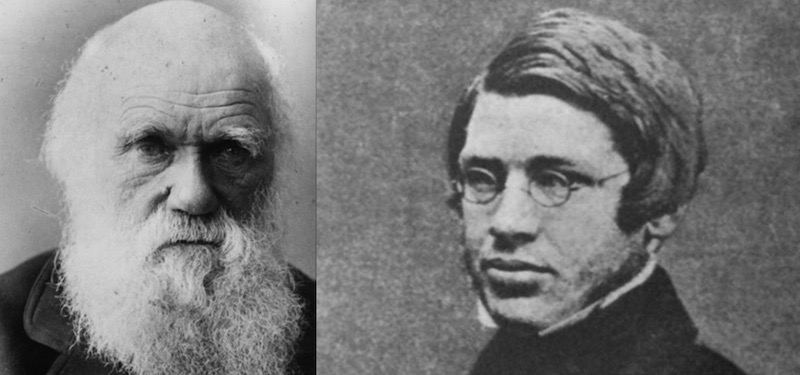 Darwin (left) and Alfred Russel Wallace. Two of the masterminds behind evolutionism, both influenced by the Protestant minister, Thomas Malthus
That Darwin observed that this progression towards a society of perfect humans was impossible without governmental facilitation, shows that the theory of evolution was not advocated on the basis of a sincere desire for truth. For if it was indeed truth, it would take place without humans forcing it. Evolutionism was promoted, not for the cause of truth, but for the seizing of power; for the creation of a dark, dismal, mechanical and despotic society, in which the pompous, filled with a perception of power, conduct genocide on the meek, the humble, the holders of the Faith, the holders of humanity against whom the father of lies is at war. It is not coincidental that evolutionism, within the period of its 19th century conception, was promoted as a religion, as a fortifier for the occult. For all false religion — following its first member, Cain — is about the pursuit of power. So occultism, being utterly bent on domination, coincided with evolutionism with all of its advocation for Darwinism and eugenics. Thus, Charles Johnson, one of the teachers for the occult Theosophical Society in the early twentieth society, said in a lecture in 1928:
“We are immensely indebted to the great teaching of evolution, which Darwin and Alfred Russel Wallace put forward tentatively in 1859. We could hardly have hoped for the success of the Theosophical Movement had not the teaching of evolution preceded by sixteen years the founding of The Theosophical Society in 1875, because we teach — or, to put the matter in its true order, because we first learned, and then tried to convey, the teaching of spiritual evolution, with a far greater scope and larger potency than anything of which Darwin ever dreamed.”
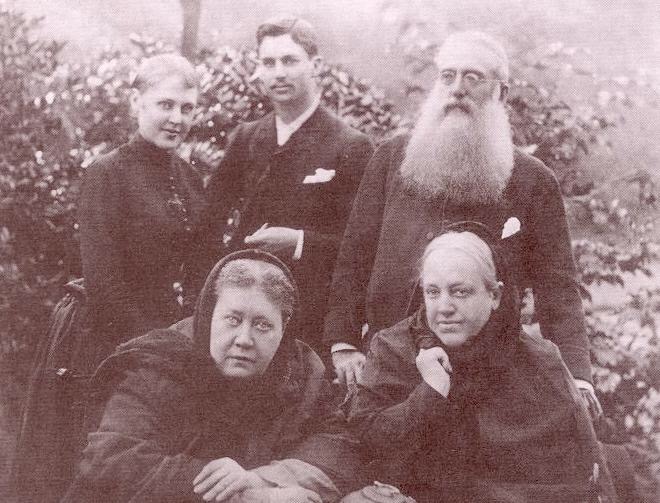 Clockwise from top left: Vera Johnston, Charles Johnston, Henry Olcott, Vera Zhelihovsky, and Helen Blavatsky, all of whom were leaders of the occult, Theosophical Society
Evolutionism simply strengthened occultism, and Protestantism merely led to evolutionism. Lets not forget, it was Thomas Malthus, a Protestant minister, who inspired Alfred Russel Wallace, and it was also this same minister who influenced Darwin on natural selection. As Darwin wrote in his autobiography:
“In October 1838, that is, fifteen months after I had begun my systematic inquiry, I happened to read for amusement Malthus on Population, and being well prepared to appreciate the struggle for existence which everywhere goes on from long- continued observation of the habits of animals and plants, it at once struck me that under these circumstances favourable variations would tend to be preserved, and unfavourable ones to be destroyed. The results of this would be the formation of a new species. Here, then I had at last got a theory by which to work”.
From Protestantism to evolutionism, from one form of anarchy to another. While Darwinism sprung from England, it greatly thrived in Germany, the heartland of Protestantism, and a link between Luther and Darwin was being hailed as the triumph of the Northern European over the Catholic Church of Southern Europe. This was being done by Darwin’s German colleague, Ernst Haeckel.
 OBLONG MEDIA GLOBAL INTELLIGENCE
Leave a comment