
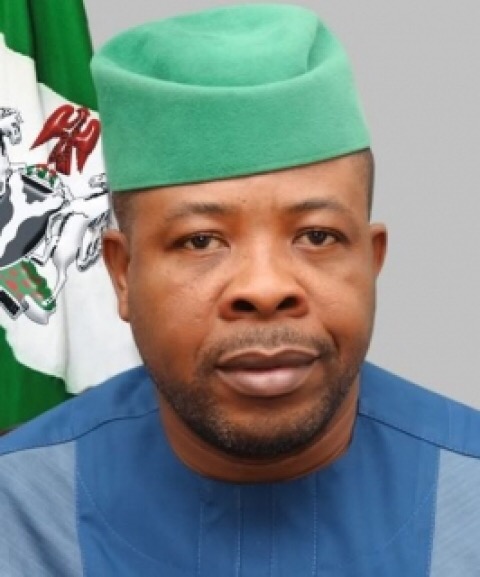
BEING A KEYNOTE ADDRESS BY RT. HON. EMEKA IHEDIOHA CON, KSC, FORMER DEPUTY SPEAKER, HOUSE OF REPRESENTATIVES, AT THE 2017 DIOCESAN SYNOD OF THE DIOCESE ON THE LAKE , CHURCH OF NIGERIA ANGLICAN COMMUNION , AT ST MARY MAGDALENE PARISH, OGUTA, IMO STATE, MONDAY , APRIL 24, 2017
PROTOCOLS
Let me begin this discourse by expressing my profound thanks and deep appreciation to my friend, His Lordship, Rt. Rev Chijioke B.N. Oti Ph.D, his dear wife, the Synod Organizing Committee, the entire clergy and laity of the Diocese on the Lake for the honour of inviting me to give a keynote address to this synod. This offers me an opportunity to once more share my thoughts on another key subject, that captures the yearnings of many people, not only in Imo State or even Nigeria but all over the world, on how best the people who find themselves in positions of leadership can utilize such opportunities to deliver the best services to the greatest number of people at a time, in a given political space.
Before I go any further, let me register, once again, my deep gratitude to the Anglican Communion for the love, support and encouragement I have been showered with in my service to the nation all these years. I am proud to belong to this family of God. I have greatly enjoyed the love, warmth and fellowship of my brothers and sisters in this congregation. For all of that, I remain eternally grateful.
The occasion of a Synod provides an opportunity to take stock, review the activities of the Diocese in the current year and plan for the year ahead. It equally gives the opportunity to enlist the support, participation and contributions of brethren in the running of the Diocese and the Church at large. And while doing all of that, the leadership of this Diocese has added this forum that provides a unique platform to educate synod delegates on the issues that affect the society and the welfare of the ordinary citizens, with a view to bringing the time-tested and proven principles of the word of God to bear on the management of the affairs of human society. By so doing, the church is stoutly rising to one of its primary responsibilities as admonished by our Lord Jesus Christ in Matthew chapter 5 verses 13 to 14 that we must always be “the salt of the earth…, the light of the world…, and a city set on a hill…”
I am immensely delighted that the Diocese on the Lake has always demonstrated unwavering commitment to this charge with the seriousness and courage it deserves.
Instructively, the synod of the Anglican Communion is the “convention” politically speaking or the Supreme Authority of the church, comprising the clergy and laity fully represented from among the parishes of the church within the Diocese. Consequently, this is the most relevant assembly and platform to canvass policy matters. In view of the above, the import of this responsibility is not lost on me.
BACKGROUND
Remarkably, on 31ST October, last year, I delivered a Keynote speech at the 2016 Synod of the Diocese of Isi Mbano. In that paper, I spoke on “Restoring the confidence of the citizens in the political leadership in Nigeria, – a case study of Imo state”. I however cautioned myself to resist the temptation of using that platform to do a critique of the obvious mal-administration in our state. My primary objective was to provide the government of the day the opportunity to hear from the people, gauge their opinions regarding their style of governance and its several programmes and perhaps match them with its campaign promises, if any. This is the legitimate responsibility of the people and an opportunity to have a say on how they are governed and how the commonwealth is being expended for the greater benefit of our people.
Expectedly, after my presentation, there was a consensus of opinion that the truth cannot be suppressed or at best glossed over, and that indeed our state deserves better governance than what we have today. The patriotic intention of my presentation (which was to make the government more responsive, transparent and better positioned to deliver public goods) was rather misinterpreted by their uninformed errand boys.
Characteristically, these hirelings called me names, threatened and challenged me to show my public service credentials. Of course, my record of service is a public document and I am confident and proud about my accomplishments in my different public capacities, As a responsible citizen of Imo state, it is my duty, as well as my constitutional obligation to hold government accountable. No amount of intimidation or blackmail will deter me from regularly “speaking truth to power” and periodically availing our people the privilege of my informed positions on issues of mutual concern. As our people say, an elder does not sit by and watch a goat suffer in labour while still in tethers.
THE ROLE OF THE POLITICAL CLASS IN THE DEVELOPMENT PROCESS
I took time to consider the topic assigned to me; “The role of the political class in realising the collective dreams of justice, equity, fairness and financial accountability in Imo State”. I found the choice of the words ‘political class’ very interesting. I want to believe that the choice was deliberate, because what we are used to hearing is the ‘political leaders’, which shifts the responsibility for leadership to only the elected or appointed political office holders at every point in time.
The ‘political class’ encompasses all the key players and stakeholders whose collective actions shape or determine the direction any society goes. It is therefore the right domain in which the responsibility of effective leadership and management of the affairs of any society can be deposited.
Please permit me, therefore, to define the ‘political class’ as the collective of all individuals who, through their activities, in words and actions, exercise considerable influence on the society or sections of it and ultimately dictate the direction the society goes at a given time. Under this broad definition are included the elected or appointed political office holders currently in office (Political Leadership); Senior career Civil and Public Servants; Leaders of Political Parties; former Elected or Appointed Political Office Holders; Opinion Leaders; Traditional Rulers; Religious Leaders; Leaders of Civil Society and Community-Based Organizations; Labour Leaders; Leaders of Women and Youth Organizations; Teachers; Career Politicians; etc. For the purposes of this discourse, I will put the Political class in two categories, namely; the Political Leadership and the rest of the Political Class.
Your Grace, My Lord Bishops, the clergy, my Lord Chancellor, Registrars, Distinguished delegates, Ladies and Gentlemen, I think all of us are part of the political class and we collectively share the onerous responsibility of recreating the Imo of our dreams. We have a responsibility to redeem and restore our state from this onerous slide into rapid decadence.
Our responsibilities are at different levels. The bulk of the work lies heavily on the shoulders of the political leadership in the state, namely the elected and appointed political office holders. At the apex is the elected Governor and of course his Deputy, Members of the National and State Houses of Assembly, Commissioners, various political appointees; The Judiciary, Heads of the State Government Parastatals, Agencies and Commissions; Chairmen and Members of the State Government Boards; Senior career civil and public servants; Local Government Chairmen and Councilors; etc.
The state political leadership therefore wields the greatest power and influence in the state and shape determines the general direction of activities. This is because the political leadership has the mandate of the people, via their election or appointment into office and therefore has legitimacy for its actions and decisions. Legitimacy gives it the legal authority to make decisions and take actions on behalf of the people. The Political leadership, most importantly, has access to the state resources or simply put, are the custodians of our commonwealth.
Through this authority, the state political leadership has the capacity to dispense patronage, determine and/or influence the reward criteria and system in the state. Perhaps the biggest strength or advantage the political leadership has is its control of the law enforcement machinery or the coercive force of the state and, of course, the state purse.
This double barrel advantage secures for the political leadership the ‘willing or unwilling loyalty and followership’ of the people.
With the above, the political leadership is placed in a very unique but strong position to galvanize, direct or influence the thinking and actions of the people. If the political leadership channels these enormous advantages it possesses into positive uses, the society becomes the better for it. Visible beneficial projects will be executed, the people will be meaningfully and gainfully engaged in economic activities.
The result will be far more equitable income distribution in the society, such that armed robbery, kidnapping and other social ills will be drastically reduced, if not eliminated. Investment will be encouraged, the economy will be boosted, leading to sustainable development and ultimately there will be peace and security in the society. When, on the other hand the political leadership employs its enormous powers and advantages to negative ends, the direct opposite of the above will be the obvious outcome.
The political leadership also has the additional responsibility of harnessing and putting in concrete policies, the expectations and choices of the people; their eventual implementation and evaluation to ensure that the right mix of public goods are realized for the benefit of Imo people.
Thus under normal circumstances, it is taken for granted that every action, activity or programme of the political leadership originated from a policy decision.
Therefore, the rise and fall of any government and ultimately the wellbeing of the citizenry is dependent on its capacity to initiate the right policies, design the right programmes, faithfully and dutifully implement such programmes and methodically monitor and assess their impact on the citizens.
Invariably, every policy or decision of the political leadership must be the outcome of a rigorous and deeply thought-through process that takes into consideration the immediate and long term benefits and effects of the policies on the people. Hasty, wrong-headed, and I dare say, infantile decisions, pronouncements and, actions by the political leadership in any society have always spelt doom for the ordinary citizen. In our Imo of today, there abound many actions and decisions of the current political leadership in the state that have exposed the hollowness and obvious lack of thoroughness in the thinking process in that Government.
WHERE IS OUR DEAR IMO IN THIS LEADERSHIP MATRIX?
In the past six years of the present administration, our dear state has experienced its most deplorable kind of leadership. A leadership where policy actions are poorly conceived, knee- jacked and implemented with impunity without consideration of their nefarious consequences. There are several actions of the government that could at best be described as ridiculous and despicable.
There is no better way to describe a situation where the government of the day deliberately allowed refuse to accumulate in the most strategically located and busiest street in our state capital for several months ostensibly to punish the citizens for demanding for the right to justice and personal inheritance. In the same vein, at the same period last year ie, during the rainy season, the state government without notice or plan of compensation demolished citizens’ houses and shops without regard to due process.
I must however salute the courage of the Attorney General of the Federation, who recently brought to the open the blatant abuse of power by the Governor, who has severally ignored several valid court judgements against his primitive abuse of power and political recklessness. In the discharge of his constitutional responsibilities the AGF in very clear language advised the Governor of Imo State to respect the judgement of the Court of Appeal and effect the reinstatement of HRH Eze (Dr.) Cletus Ilomuanya, as the Chairman of the Imo Council of Traditional Rulers.
I must also commend the courage and rare display of candour of the APC State Chairman for his apologies over the falsehood that was orchestrated against the royal father during the period of the impasse.
What this has shown is that evil can only endure for a while. Every Christian should as an obligation be Christ-like in and out of power. It is the only way the society can grow and prosper in peace. After all, it is a commonly chorused axiom that power is transient.
Your Grace, My Lord Bishops, Distinguished Synod delegates, Ladies and Gentlemen, continually speaking about the recklessness and crass impunity of the present political leadership in our state is becoming rather debasing ,boring and seemingly monotonous. The major concern is that the political leadership seems rather not prepared to take corrections and change but is rather almost always hasty to haul insults on people helping them to point out positive routes that can put the state on the right path to sustainable growth and development. Sadly, our sister states in the South East have left the Igbo Heartland, in the dust their successes.
Statistically, Imo is reported to have the highest GDP among the South-Eastern states. The fact of the matter is that in reality this rating does not reflect or have any impact on the living standards of the ordinary Imolite. Notably, our state is riding on the natural endowment as an oil-producing and gas-rich state.
On a very serious note, any government unprepared to accept critical appraisal of its policies is bound to make policy blunders. Take for instance, sometime last year we heard that the Imo state Governor proclaimed that civil servants are to come to work for only three days in a week that is Monday, Tuesday and Wednesday. The other two days, i.e. Thursday and Friday were to be used for farming. Furthermore, he decreed that civil servants are no longer to go on annual leaves. So many questions arise from such an ‘innovative’ gubernatorial pronouncement.
1. Did the State Government provide farm lands for the civil servants to cultivate?
2. If the assumption is that civil servants must have family lands, which must then be located in their various home communities, is the state government providing them with transport to and from their villages twice every week? Or are they expected to fund their movements from their salaries that do not come regularly and on time’
3. In this part of the world, with our level of development, farming activities are restricted to only a few months of the year. If a civil servant is to compulsorily spend two days in every week at the farm, what is he expected to do in those months that are naturally non- farming months of the year?
4. We know some civil servants utilize their annual leave to pursue some academic programmes to improve their skills and enhance their prospects in life.
Where does this policy therefore leave such civil servants? Many questions begging for answers. Most importantly, is there an enabling legislation, passed by the Imo State House of Assembly authorizing the executive to implement such a policy?. The point being made here is that such fundamental policy proposal need to be products of deep thoughts and rigorous analysis before sending them for legislative action. I believe we are still part of the Nigerian federation with Federal Civil Servants. By the way, we should remind our Governor that labour matters (minimum wage and collective bargaining) are on the exclusive legislative list, hence no one state can depart from the constitutional provision.
I will always maintain that you cannot give what you don’t have. A purposeful government cannot be run in this haphazard manner Imo state has experienced for six long years now.
While we blame the political leadership in Imo state for all the hardship, the rest of the political class must also share in the blame. All strata of the political class equally play critical roles in the effective management of the affairs of the society. Whilst it is the responsibility of the political Leadership to initiate and implement policies and programmes, it is the rest of the political class that interprets and appraises these policies and holds government accountable. And this is a very critical determining factor for the success or failure of the Government. But whereby the rest of the political class falls short of performing their own part to hold government accountable, the society should live with the consequences of the actions and inactions of the government.
The political class in Imo State must resist the temptations to be cowed or intimidated to abandon its sacred responsibility of holding government to account. When we are afraid to confront our leaders with their failings we are encouraging bad governance which transforms into tyranny, rule of whims and caprices and abridgement of liberty. We must stand up to leadership and speak truth to power.
We have become “ Ranka Dede” compliant, as the popular maxim now appears to be follow and obey the leader without question. What the “leader’ says or directs become the law. What has become of our republican nature?. Even when the Leaders have no opinion on any issue, their equally clueless followers look out for ‘the body language’ of their Leaders. So, in most of the cases, the reactions, opinions and responses of the people to the policies, programmes and actions of the government are, essentially, the thinking of their ‘leaders’.
Certainly, no government can succeed, in the real sense of the word, without the active participation of the people, the individuals who control or influence the thinking. Reactions and responses of the people hold the key to the success of the government. Unfortunately, most of the people who constitute the political class are often driven by their personal and parochial political, social and economic interests. Herein lies our dilemma in Imo State.
We have found ourselves in a quagmire.
Our politics is still very much personal-interest driven. The majority of our leaders, on every side, have not been able to rise above ‘self’ to work for the good of the people. The society also has not sufficiently encouraged selfless service and patriotism on the part of political leaders. The expectations and demands made on political office holders by the society are such that can only be met through means that are but clean and legitimate. That is why the political class across board have no consensus on what constitutes impropriety in the running of government viz-a -viz distribution of patronage. This accounts for why one individual in position of authority could outrightly pocket bail-out loans, Paris Club debt payback and local government funds and play with it as he likes while the political class line up for patronizing handouts. Where then, is the moral authority to question the actions and inactions of government?
Perhaps, I should use this medium to salute the courage of the State chapter of the Independent Newspaper Proprietors’ Association in the state for demanding accountability in respect of the above and have their refusal to be compromised or bullied. Quite frankly, this is their duty as the Fourth Estate of the realm. But I have chosen to commend them as courage is today in short supply in our state.
THE WAY FORWARD
How can the entirety of the political class work together to guarantee improved living conditions for the ordinary people? A way out can be found if both the political leadership and the rest of the political class act with a sense of patriotism and sincerity of purpose in their undertakings. Some of us, whom many people look up to for direction, when we talk or do certain things, we must always be conscious of the fact that our actions and words define and propel the reactions of those who are loyal to us. For example, whatever my Lord Bishop stands on this pulpit to say will have significant impact on the congregation. The same goes for our traditional rulers, and all other opinion leaders in our various communities. The privilege we have as leaders also demands from us a commensurate sense of responsibility to act in ways and manners that will always be in the best interest of those we lead and the society at large.
The Imo state of our collective dreams where justice, equity, fairness and financial accountability will be upheld is very possible if we can collectively demand and insist on it from ourselves as the political class. We must insist on having only the right individuals elected into positions of leadership. We must resolve to place competence, capacity, integrity, community spirit, requisite experience, track record, high moral standing and the fear of God above our personal, group or primordial interests in choosing or supporting individuals who aspire to leadership positions.
Those of us in the political class who are more or less the moral compass and conscience of the society must have the courage to tell those in leadership positions the truth at all times, without fear or favour. Every society gets the kind of leadership it deserves. We must be very clear in our minds about what we want for our society. Is it empty demagoguery and bare-faced lies? Is it theatrics and grand standing? Is it shadow chasing and daylight robbery? Is it emptiness and shallowness without any evidence of past achievements and experience in responsible leadership? What do we want as a people?
Here in Imo, one of the major reasons we are where we are today, in terms of the kind of political leadership that we are unfortunately forced to contend with, is the unbridled greed, insincerity, lack of character, and outright betrayal by people who were expected to work together as leaders. It was unfortunate that some individuals, fully aware of their incapacities, continued to insist that they must be the ones to lead, to the detriment of the people. And as a result, our dear Imo State was traded a lemon for an apple. So, we are collectively suffering the punishment for our short sightedness. Thank God we are almost more than half way gone in serving that punishment. And like the Christians that we are, we are confident that “this affliction will not arise yet again”.
This is our dear Imo State, blessed with abundant human and material resources. Men and women, who have excelled in every field of human endeavour.
I am talking of People who have proved their mettle in leadership at various levels in Nigeria and the world over. We therefore cannot be condemned to a leadership that only provides a reference in ineptitude, derision, ridicule, cluelessness, unaccountability and visionlessness.
All over the world, times are changing. The children and youths are beginning to ask questions. They are getting increasingly frustrated with our lack of capacity to take on the challenges of today and the future with the resolute commitment it deserves. They are beginning to take the laws into their hands. We must be ready to accept full responsibility for their errors of judgment and consequent actions, if we continually fail to give them the leadership they deserve and are earnestly yearning for.
My heart bleeds, seeing that what has been hindering us as a people in this state is not what we cannot afford. Simply principled, focused, people-minded, integrity-driven and experience-led leadership; which is not alien to us in this part of the world. There was once a Sam Mbakwe who led this State. We saw what this state became during his reign. Our people have continued to remember the Sam Mbakwe days with crushing nostalgia. Achike Udenwa governed our state with honesty, defining a democratic path, respecting the principles of separation of powers and rule of law, while Ohakim had big ideas and furthered the democratic culture. Why should our yesterday continue to outshine our today? That is not biblical and cannot remain our portion. I ask these questions not because I have always offered to lead the charge, to recover the Imo our fathers built with their sweat. The Imo State they want to see again in their life time. That is not too much to ask. We must make this pledge to ourselves, our children and our fathers who have gone ahead of us, that we shall rise as individuals and as a people, to remove the reproach of spectacularly ineffectual, purposeless and undirected leadership. We must together with one voice say, never again!
In conclusion, I need to remind us that the attainment of justice, equity, fairness and accountability in Imo State, will remain elusive so far as our constitution, the very instrument of our federation is applied in breach and until the legislature indisputably oversight the executive for necessary checks and balances, while the judiciary interprets the law without fear and favour. Perhaps at this point I must submit that to get the agenda and benchmark for good governance in the future, only persons with verifiable legislative experience can aspire to govern our state. This has become necessary if we must avoid desecration of well-established culture of democratic governance.
I thank you for this wonderful opportunity.
 OBLONG MEDIA GLOBAL INTELLIGENCE
Leave a comment