
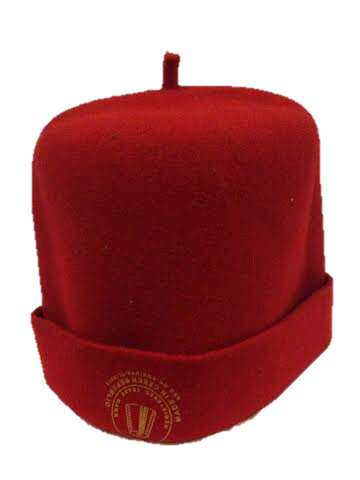
Culturally, the Igbos are a very diverse group with different clans, families, subcultures, and subgroups. However, the customs are similar with local varieties. Although there are disagreements about the origins of the Igbos, there is a consensus that they originated from Nri in Anambra State of Nigeria. The language of the Igbos is Igbo or Ibo. It is one of the largest spoken languages in Africa, with Hausa and Yoruba. Igbo speaking people are divided into five geographically based subcultures-Northern Igbo, Western Igbo, Southern Igbo, Eastern Igbo and Northeastern Igbo. Not as urbanized as the Yoruba, they live in multitudinous villages, fragmented into small family groups. They do not have hereditary chiefs like the the Yoruba or Hausa/Fulani. Every Igbo more or less is his or her own master. The Igbos operate the “Umunna System”, which emphasizes the patrilineal heritage, rather than the matrilineal. Some of the important Igbo cities include, Onitsha, Enugu, Umuahia, Aba, Asaba, Abakaliki, Owerri, Nsukka.
In commerce, the Igbos are a mobile, vividly industrious people who have spread all over Nigeria and Africa as traders and small merchants. In countries like Gabon, Ivory Coast, Equatorial Guinea, Sierra Leone, Togo, and Gambia, Igbo traders predominate in retail trade. Most Igbos are clannish, despite their individualism and hold closely together in non Igbo communities. They are often very unpopular in the communities they live in, because they push very hard to make money and often dominate the retail business in alien communities. In his book, the Brutality of Nations, Dan Jacobs describes the Igbos “as ambitious, dynamic and progressive people whose education and abilities did not endear them to those among whom they lived. Even during British rule, there were massacres of Igbos in Northern Nigeria-in Jos in 1945 and in Kano in 1953. The Igbos have acquired the sobriquet, Jews of Africa”.
Education is highly emphasized and given priority in Igboland. Converted to Christianity by Catholic, Anglican and Presbyterian missionaries, they took up self improvement with such enthusiasm, that by the 1960’s, the Igbos had the highest percentage of doctors, lawyers, engineers, physicists, and teachers than any other ethnic group in Africa. Because of the abundant educational talent in Igboland many newly independent African nations recruited them to fill vacancies in their civil service. The first American style university built in Africa was in Igboland-the University of Nigeria at Nsukka. Its founder, Dr. Nnamdi Azikiwe was a graduate of Lincoln University in Pennsylvania. The Igbos and the Yorubas are the most educated ethnic group in Africa.
Politically, the Igbos are very effervescent and volatile. According to author Dan Jacobs “for Britain and for the British civil servants who continued to work in the Northern Region, the Igbos have always been a troublesome element in the federation, a people with a democratic tradition who are not easily controlled. Many British were glad to see them out of a central position in the federation, as were those who had driven them back to their homeland and those who now held the civil service and other jobs they had left”. The Igbos had been the most ardent advocates of a united Nigeria. Upon independence in 1960, an Igbo, Dr Nnamdi Azikiwe-American educated- became the first President and Governor General, while another Igbo, Aguiyi Ironsi became the first indigenous military chief. Leadership of most of the elite universities in Nigeria were also occupied by the Igbos.
Following the military coup of January 1966, which the Igbos were accused of initiating, Aguiyi Ironsi, an Igbo, became President and Supreme Commander of the armed forces. Tensions rose very high in the country resulting in the massacre of Igbos in May 1966. In July 1966, a Hausa/Fulani/Tiv inspired military coup overthrew Ironsi’s regime and a terrible massacre of the Igbos began in earnest. This led to the secession of the former Eastern Nigeria and the declaration of the Republic of Biafra. This eventually led to the civil war.
 OBLONG MEDIA GLOBAL INTELLIGENCE
Leave a comment