
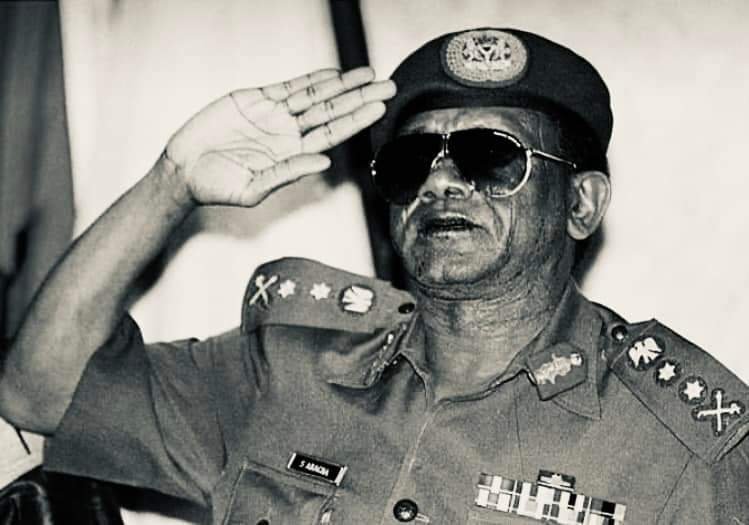
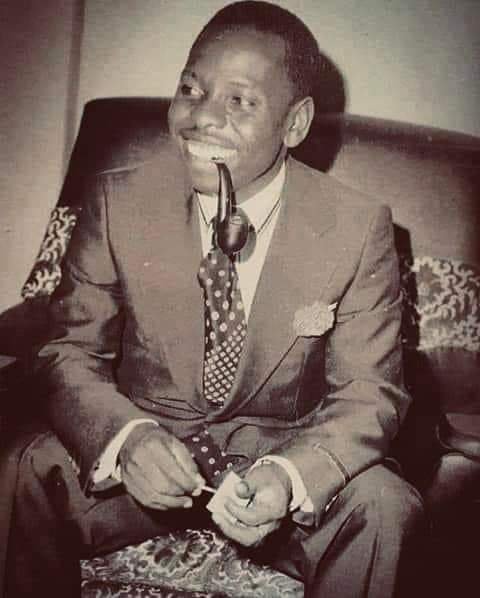
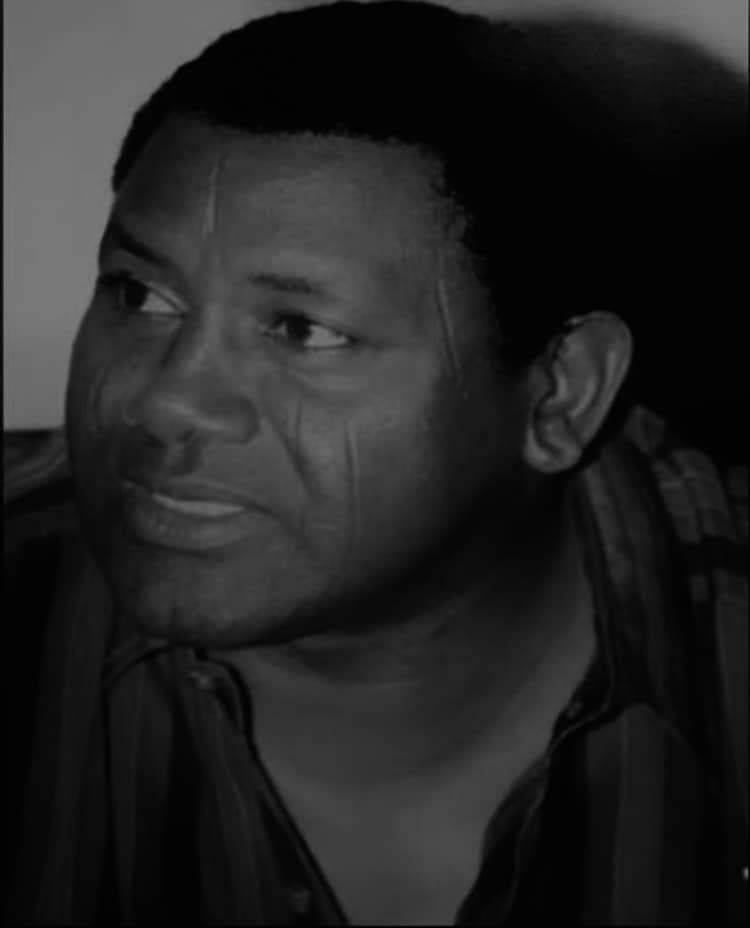
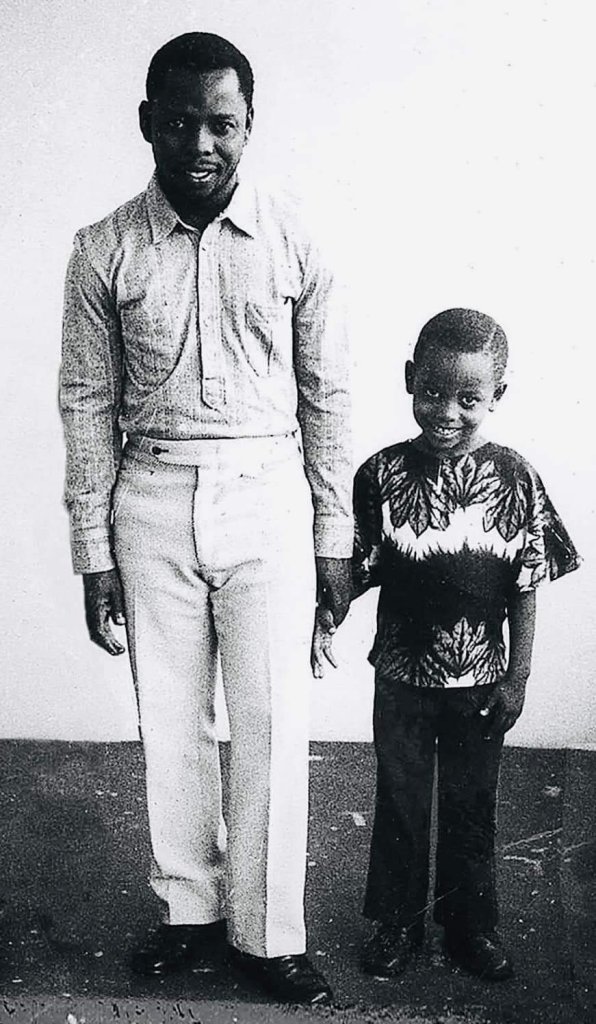
It is well known that the Abacha dictatorship—spurning widespread local and international appeals for clemency—hanged Ken Saro-Wiwa, the renowned writer and activist for minority rights and environmental justice, on 10 November 1995. However, General Sani Abacha and Ken Saro-Wiwa shared a much longer history that dated back to the late 1970s when they both lived, as neighbours, on Nzimiro street, Port Harcourt. In the agonising months leading up to the execution, Ken Wiwa unsuccessfully tried to mobilise international intervention to save the lives of his father and fellow Ogoni activists—Baribor Bera, Saturday Dobee, Nordu Eawo, Daniel Gbokoo, Barinem Kiobel, John Kpuinen, Paul Levula, and Felix Nuate. In his memoir, published in the aftermath of this tragic event, Ken Wiwa worked through his trauma and embarked on a voyage of self-discovery by grappling with the complicated legacy of his father. In the following excerpt, he recalls his early association with Ibrahim Abacha—General Sani Abacha’s eldest son, who was his childhood friend in the 1970s—and attempts to unravel the ruthless personality of the military dictator who hanged his father: I
“There was a sense that something was coming to an end around Amadi Flats in 1977. We were preparing to move out of 11 Nzimiro [street, Port Harcourt]; my childhood friends Tombari and Edward had already left, and I had started to hang around with Suleiman and Ibrahim, who lived next door at 9 Nzimiro. I lost touch with Suleiman and Ibrahim after we moved, but my memory of those childhood friendships would return to haunt me. If I pause the tape of my life in the middle of 1977 and fast-forward to the night of May 21, 1994, it is the night my father was arrested after the riot in which four Ogoni were killed. One of the murdered men is Chief Edward Kobani, the father of Edward and Tombari. And Gen. Sani Abacha, the man who would later authorize my father’s execution for his alleged role in the chiefs’ murders, is Ibrahim’s father.” II
“Nigeria has a reputation for being bigger and brasher than every other country in Africa, and it is in keeping with that billing that the country has had more military coups than any other on the continent [sic]. And it is a truism that every military dictator is more vicious, more notorious than the last. A new dictator has to establish his authority and notoriety, and he must do so in the only language that dictators understand—repression. It is the iron law and first rule of dictatorship, and no one understood this better than Abacha. When he seized power, Abacha declared war against his opponents, against the people, against civil society. Against everyone. Insecure, paranoid, and deeply secretive, Abacha was a Kanuri, a minority ethnic group in northern Nigeria.” III
“When he joined the army he was patronized by his peers, who felt that the dim, taciturn, and uncharismatic officer did not have the right qualities to progress through the ranks. Abacha narrowly escaped being court-martialed in the early 1970s, when he was stationed in Port Harcourt after the civil war. The story I heard was that he executed a civilian in cold blood at the airport. Army top brass only decided to spare Abacha because they needed to maintain their quota of Kanuri officers in the army. For much of his early military career, Abacha was a peripheral figure who carried out his duties quietly and efficiently. He acquired a reputation as a ruthless officer who was feared as much for his secrecy as his cunning. All of this made him a valuable officer to have on your side when it came to the Machiavellian business of coup plotting.” I
V
“Abacha was involved in every successful coup in Nigeria from 1976. His was the voice that announced the coup that ended the country’s second experiment with democracy in 1983, and he was defense minister in the subsequent regime. He sat out his role as trusted and able deputy for ten years, nursing a chip on his shoulder, coveting his leader’s job, waiting like Macbeth for his chance. When Babangida decided to annul the 1993 elections, Abacha sensed his time was at hand. He went along with the contraption of the interim government until he couldn’t resist the lure of power any longer.” V
“Once Abacha had achieved his ambition, he set about terminating all his rivals, real and imagined. He retired or eliminated all the officers who had underestimated and humiliated him during his silent ascent up the ranks. He drove a coach and horse through the law to eliminate his opponents; serving and retired generals were arrested, tried and sentenced to death for alleged coup plotting. He cast his net wide, trapping newspaper editors and opposition leaders in a phantom coup plot. Chief Abiola, an obvious threat to Abacha as the presumed winner of the 1993 election, was arrested. Abiola’s senior wife and most outspoken defender, Kudirat, was gunned down by hired assassins in broad daylight. So was Pa Alfred Rewane, the leader of NADECO, a coalition of democratic groups opposed to military rule. Newspapers were shut down, and scores of journalists detained and harassed; many of Nigeria’s leading figures fled into exile.” VI
“Nobody was safe from Abacha’s paranoia. Wole Soyinka escaped only after he was tipped off that Abacha had sent his death squads for him. He was a cliche of a dictator who was even thought to have killed his own son (the rumour was that he was behind the plane crash that killed Ibrahim in 1996). There are also rumors that when the heat was on his regime, he resorted to a Rasputin-like figure, a marabout who encouraged him to perform human sacrifices to ward off the evil spirits trying to remove him from power. I was informed by a very sober civil servant who worked inside Abacha’s cabinet that bodies were found on the grounds of Aso Rock, the presidential residence, a year after Abacha’s death.” •
SOURCE:—Ken Wiwa, ‘In the Shadow of a Saint: A Son’s Journey to Understand His Father’s Legacy’ (South Royalton, VT: Steerforth Press, 2001).
 OBLONG MEDIA GLOBAL INTELLIGENCE
Leave a comment