
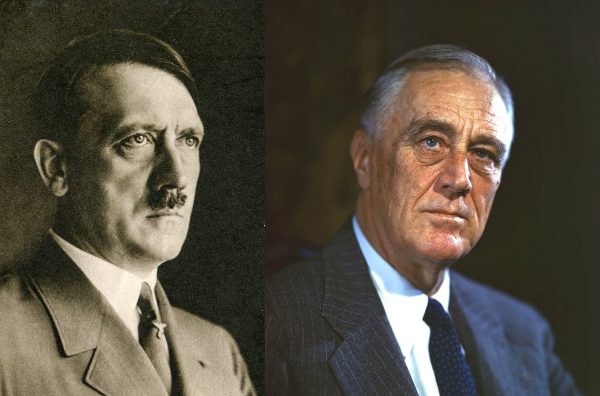
“Much of the current political legitimacy of today’s American government and its various European vassal-states is founded upon a particular narrative history of World War II, and challenging that account might have dire political consequences.”—Ron Unz
Question 1: Hitler
Let’s start with Hitler. In the West it is universally accepted that:
Hitler started WW2
Hitler’s invasion of Poland was the first step in a broader campaign aimed at world domination
Is this interpretation of WW2 true or false? And, if it is false, then—in your opinion—what was Hitler trying to achieve in Poland and could WW2 have been avoided?
Ron Unz—Until the last dozen years or so, my views on historical events had always been fairly conventional, formed from the classes I’d taken in college and the uniform media narrative I’d absorbed over the decades. This included my understanding of World War II, the greatest military conflict in human history, whose outcome had shaped our modern world.
But in the years after the 9/11 Attacks and the Iraq War, I’d grown more and more suspicious of the honesty of our mainstream media, and begun to recognize that history books often merely represent a congealed version of such past media distortions. The growth of the Internet has unleashed a vast quantity of unorthodox ideas of all possible flavors and since 2000 I’d been working on a project to digitize the archives of our leading publications of the last 150 years, which gave me convenient access to information not easily available to anyone else. So as I later wrote:
Aside from the evidence of our own senses, almost everything we know about the past or the news of today comes from bits of ink on paper or colored pixels on a screen, and fortunately over the last decade or two the growth of the Internet has vastly widened the range of information available to us in that latter category. Even if the overwhelming majority of the unorthodox claims provided by such non-traditional web-based sources is incorrect, at least there now exists the possibility of extracting vital nuggets of truth from vast mountains of falsehood. Certainly the events of the past dozen years have forced me to completely recalibrate my own reality-detection apparatus.
As a consequence of all these developments, I published my original American Pravda article a decade ago, which contained that passage. In that article I emphasized that what our history books and media told us about the world and its past might often be just as dishonest and distorted as the notorious Pravda of the vanished USSR.
At first, my focus had been on more recent historical events, but I soon began doing a great deal of reading and investigation into the history of World War II as well, gradually realizing that a large fraction of everything I’d always accepted about that war was completely incorrect.
Perhaps I shouldn’t have been too surprised to discover this. After all, if our media could lie so blatantly about events in the here and now, why should we trust it on matters that had happened long ago and far away?
I eventually concluded that the true history of World War II was not only quite different from what most of us had always believed, but was largely inverted. Our mainstream history books had been telling the story upside-down and backwards.
With regard to Hitler and the outbreak of the war, I think an excellent starting point would be Origins of the Second World War, a classic work published in 1961 by renowned Oxford historian A.J.P. Taylor. As I described his conclusions in 2019:
Hitler’s final demand, that 95% German Danzig be returned to Germany just as its inhabitants desired, was an absolutely reasonable one, and only a dreadful diplomatic blunder by the British had led the Poles to refuse the request, thereby provoking the war. The widespread later claim that Hitler sought to conquer the world was totally absurd, and the German leader had actually made every effort to avoid war with Britain or France. Indeed, he was generally quite friendly towards the Poles and had been hoping to enlist Poland as a German ally against the menace of Stalin’s Soviet Union.
The recent 70th anniversary of the outbreak of the conflict that consumed so many tens of millions of lives naturally provoked numerous historical articles, and the resulting discussion led me to dig out my old copy of Taylor’s short volume, which I reread for the first time in nearly forty years. I found it just as masterful and persuasive as I had back in my college dorm room days, and the glowing cover-blurbs suggested some of the immediate acclaim the work had received. The Washington Post lauded the author as “Britain’s most prominent living historian,” World Politics called it “Powerfully argued, brilliantly written, and always persuasive,” The New Statesman, Britain leading leftist magazine, described it as “A masterpiece: lucid, compassionate, beautifully written,” and the august Times Literary Supplement characterized it as “simple, devastating, superlatively readable, and deeply disturbing.” As an international best-seller, it surely ranks as Taylor’s most famous work, and I can easily understand why it was still on my college required reading list nearly two decades after its original publication.
Yet in revisiting Taylor’s ground-breaking study, I made a remarkable discovery. Despite all the international sales and critical acclaim, the book’s findings soon aroused tremendous hostility in certain quarters. Taylor’s lectures at Oxford had been enormously popular for a quarter century, but as a direct result of the controversy “Britain’s most prominent living historian” was summarily purged from the faculty not long afterwards. At the beginning of his first chapter, Taylor had noted how strange he found it that more than twenty years after the start of the world’s most cataclysmic war no serious history had been produced carefully analyzing the outbreak. Perhaps the retaliation that he encountered led him to better understand part of that puzzle.
Numerous other leading scholars and journalists, both contemporaneous and more recent, have come to very similar conclusions, but they too often suffered severe retaliation for their honest historical assessments. For decades William Henry Chamberlin had been one of America’s most highly-regarded foreign policy journalists, but after he published America’s Second Crusade in 1950, he vanished from most mainstream publications. David Irving quite possibly ranks as the most internationally successful British historian of the last 100 years, with his seminal books on World War II receiving enormous critical praise and selling in the millions; but he was driven into personal bankruptcy and narrowly avoided spending the rest of his life in an Austrian prison.

By the late 1930s Hitler had resurrected Germany, which had become newly prosperous under his rule, and he had also managed to reunite it with several separated German populations. As a result, he was widely recognized as one of the most successful and popular leaders in the world, and he hoped to finally settle the Polish border dispute, offering concessions far more generous than any of his democratically-elected Weimar predecessors had ever considered. But Poland’s dictatorship instead spent months rejecting his attempts at negotiations and also began brutal mistreatment of its German minority, finally forcing Hitler into declaring war. And as I discussed in 2019, provoking that war may have been the deliberate goal of certain powerful figures.
Perhaps the most obvious of these is the question of the true origins of the war, which laid waste to much of Europe, killed perhaps fifty or sixty million, and gave rise to the subsequent Cold War era in which Communist regimes controlled half of the entire Eurasian world-continent. Taylor, Irving, and numerous others have thoroughly debunked the ridiculous mythology that the cause lay in Hitler’s mad desire for world conquest, but if the German dictator clearly bore only minor responsibility, was there indeed any true culprit? Or did this massively-destructive world war come about in somewhat similar fashion to its predecessor, which our conventional histories treat as mostly due to a collection of blunders, misunderstandings, and thoughtless escalations?
During the 1930s, John T. Flynn was one of America’s most influential progressive journalists, and although he had begun as a strong supporter of Roosevelt and his New Deal, he gradually became a sharp critic, concluding that FDR’s various governmental schemes had failed to revive the American economy. Then in 1937 a new economic collapse spiked unemployment back to the same levels as when the president had first entered office, confirming Flynn in his harsh verdict. And as I wrote last year:
Indeed, Flynn alleges that by late 1937, FDR had turned towards an aggressive foreign policy aimed at involving the country in a major foreign war, primarily because he believed that this was the only route out of his desperate economic and political box, a stratagem not unknown among national leaders throughout history. In his January 5, 1938 New Republic column, he alerted his disbelieving readers to the looming prospect of a large naval military build-up and warfare on the horizon after a top Roosevelt adviser had privately boasted to him that a large bout of “military Keynesianism” and a major war would cure the country’s seemingly insurmountable economic problems. At that time, war with Japan, possibly over Latin American interests, seemed the intended goal, but developing events in Europe soon persuaded FDR that fomenting a general war against Germany was the best course of action. Memoirs and other historical documents obtained by later researchers seem to generally support Flynn’s accusations by indicating that Roosevelt ordered his diplomats to exert enormous pressure upon both the British and Polish governments to avoid any negotiated settlement with Germany, thereby leading to the outbreak of World War II in 1939.
The last point is an important one since the confidential opinions of those closest to important historical events should be accorded considerable evidentiary weight. In a recent article John Wear mustered the numerous contemporaneous assessments that implicated FDR as a pivotal figure in orchestrating the world war by his constant pressure upon the British political leadership, a policy that he privately even admitted could mean his impeachment if revealed. Among other testimony, we have the statements of the Polish and British ambassadors to Washington and the American ambassador to London, who also passed along the concurring opinion of Prime Minister Chamberlain himself. Indeed, the German capture and publication of secret Polish diplomatic documents in 1939 had already revealed much of this information, and William Henry Chamberlin confirmed their authenticity in his 1950 book. But since the mainstream media never reported any of this information, these facts remain little known even today.
I discussed these historical events at great length in my 2019 article:
Question 2: The London “Blitz”
Germany launched the “Blitz” on England in order to terrorize the British people into submission. Do you agree with this or were there other factors involved which have been omitted in western history textbooks? (Like Churchill’s bombing of Berlin?)
Ron Unz—Once again, this standard account of World War II is largely the opposite of the truth. In that era, the aerial bombardment of urban centers far behind military lines was illegal and considered a war crime, with Hitler having absolutely no intention of attacking Britain’s cities in that way.
Indeed, the German leader had always had favorable views toward Britain and also believed that the preservation of the British Empire was in Germany’s strategic interest since its collapse would create a geopolitical vacuum that might be filled by a rival power.
After Germany attacked Poland, Britain and France declared war. The Polish army was defeated in just a few weeks, and Hitler then offered to withdraw his forces from the Polish territories they had occupied and make peace, but the two Western powers vowed to continue the war until Germany was crushed. Little fighting occurred until spring of 1940 when the Germans finally attacked and defeated the huge French army, seizing Paris and knocking France out of the war.
The British forces were evacuated at Dunkirk and there’s quite a lot of evidence that Hitler deliberately allowed them to escape as a face-saving gesture rather than ordering them captured. He followed his victory in France by offering extremely generous terms to the British government, making no demands against them and instead proposing a German alliance, including military support for protecting the security of their worldwide empire. Hitler naturally believed that they would accept such an attractive offer and end the war, which he assumed was essentially over.
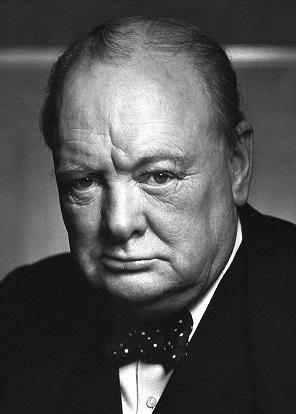
Several of the top British leaders seemed eager to make peace on Hitler’s generous terms, and according to the evidence found by renowned British historian David Irving, Prime Minister Winston Churchill himself seemed willing to do so before changing his mind and pulling back. Churchill had spent decades seeking to become Prime Minister, and Irving plausibly argues he realized that losing a disastrous war within weeks of finally achieving that position would have rendered him a laughingstock in the history books.
But given Britain’s military defeat on the Continent and the very generous terms Hitler was offering, Churchill faced a huge problem in persuading his country to continue a war that was widely regarded as lost. Therefore, he began ordering a series of bombing raids against the German capital, an illegal war crime, hoping to provoke a German response. This led Hitler to repeatedly warn that if they continued bombing his cities, he would be forced to retaliate in kind, and he finally did so. Since the British public was unaware that their own government had initiated the campaign of urban bombing, they regarded those retaliatory German aerial attacks as monstrous, unprovoked war crimes, and just as Churchill had hoped, they became fully committed to continuing the war against Germany.
Irving and others explain all these important facts in their books, and a riveting Irving lecture summarizing his information is still available on Bitchute after having been purged from Youtube.
Irving is a crucial source for much important information on the war and in 2018 I explained why the results of a high-profile lawsuit against Deborah Lipstadt had demonstrated that his historical research was extremely reliable:
These zealous ethnic-activists began a coordinated campaign to pressure Irving’s prestigious publishers into dropping his books, while also disrupting his frequent international speaking tours and even lobbying countries to bar him from entry. They maintained a drumbeat of media vilification, continually blackening his name and his research skills, even going so far as to denounce him as a “Nazi” and a “Hitler-lover,” just as had similarly been done in the case of Prof. Wilson.
That legal battle was certainly a David-and-Goliath affair, with wealthy Jewish movie producers and corporate executives providing a huge war-chest of $13 million to Lipstadt’s side, allowing her to fund a veritable army of 40 researchers and legal experts, captained by one of Britain’s most successful Jewish divorce lawyers. By contrast, Irving, being an impecunious historian, was forced to defend himself without benefit of legal counsel.
In real life unlike in fable, the Goliaths of this world are almost invariably triumphant, and this case was no exception, with Irving being driven into personal bankruptcy, resulting in the loss of his fine central London home. But seen from the longer perspective of history, I think the victory of his tormentors was a remarkably Pyrrhic one.
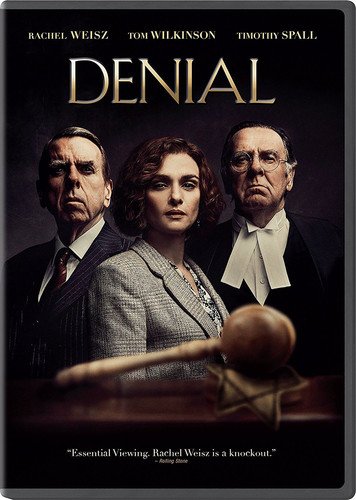
Although the target of their unleashed hatred was Irving’s alleged “Holocaust denial,” as near as I can tell, that particular topic was almost entirely absent from all of Irving’s dozens of books, and exactly that very silence was what had provoked their spittle-flecked outrage. Therefore, lacking such a clear target, their lavishly-funded corps of researchers and fact-checkers instead spent a year or more apparently performing a line-by-line and footnote-by-footnote review of everything Irving had ever published, seeking to locate every single historical error that could possibly cast him in a bad professional light. With almost limitless money and manpower, they even utilized the process of legal discovery to subpoena and read the thousands of pages in his bound personal diaries and correspondence, thereby hoping to find some evidence of his “wicked thoughts.” Denial, a 2016 Hollywood film co-written by Lipstadt, may provide a reasonable outline of the sequence of events as seen from her perspective.

Yet despite such massive financial and human resources, they apparently came up almost entirely empty, at least if Lipstadt’s triumphalist 2005 book History on Trial may be credited. Across four decades of research and writing, which had produced numerous controversial historical claims of the most astonishing nature, they only managed to find a couple of dozen rather minor alleged errors of fact or interpretation, most of these ambiguous or disputed. And the worst they discovered after reading every page of the many linear meters of Irving’s personal diaries was that he had once composed a short “racially insensitive” ditty for his infant daughter, a trivial item which they naturally then trumpeted as proof that he was a “racist.” Thus, they seemingly admitted that Irving’s enormous corpus of historical texts was perhaps 99.9% accurate.
I think this silence of “the dog that didn’t bark” echoes with thunderclap volume. I’m not aware of any other academic scholar in the entire history of the world who has had all his decades of lifetime work subjected to such painstakingly exhaustive hostile scrutiny. And since Irving apparently passed that test with such flying colors, I think we can regard almost every astonishing claim in all of his books—as recapitulated in his videos—as absolutely accurate.
In the 1940s, there was a purge of antiwar intellectuals and pundits similar to the purge of critics of US policy in social media today. Can you briefly explain what happened, who was targeted, and whether the first amendment should apply in times of national crisis?
Ron Unz—Around 2000, I began a project to digitize the archives of many of our leading publications of the last 150 years and I was astonished to discover that some of our most influential figures from the years prior to World War II had been “disappeared” so completely that I’d never heard of them. This played a major role in my growing suspicions that the standard narrative I’d always accepted was false, and I later described the situation using the analogy of the notorious historical lies of the old Soviet Union:
I sometimes imagined myself a little like an earnest young Soviet researcher of the 1970s who began digging into the musty files of long-forgotten Kremlin archives and made some stunning discoveries. Trotsky was apparently not the notorious Nazi spy and traitor portrayed in all the textbooks, but instead had been the right-hand man of the sainted Lenin himself during the glorious days of the great Bolshevik Revolution, and for some years afterward had remained in the topmost ranks of the Party elite. And who were these other figures—Zinoviev, Kamenev, Bukharin, Rykov—who also spent those early years at the very top of the Communist hierarchy? In history courses, they had barely rated a few mentions, as minor Capitalist agents who were quickly unmasked and paid for their treachery with their lives. How could the great Lenin, father of the Revolution, have been such an idiot to have surrounded himself almost exclusively with traitors and spies?
But unlike their Stalinist analogs from a couple of years earlier, the American victims who disappeared around 1940 were neither shot nor Gulaged, but merely excluded from the mainstream media that defines our reality, thereby being blotted out from our memory so that future generations gradually forgot that they had ever lived.
A leading example of such a “disappeared” American was journalist John T. Flynn, probably almost unknown today but whose stature had once been enormous. As I wrote last year:

So imagine my surprise at discovering that throughout the 1930s he had been one of the single most influential liberal voices in American society, a writer on economics and politics whose status may have roughly approximated that of Paul Krugman, though with a strong muck-raking tinge. His weekly column in The New Republic allowed him to serve as a lodestar for America’s progressive elites, while his regular appearances in Colliers, an illustrated mass circulation weekly reaching many millions of Americans, provided him a platform comparable to that of an major television personality in the later heyday of network TV.
To some extent, Flynn’s prominence may be objectively quantified. A few years ago, I happened to mention his name to a well-read and committed liberal born in the 1930s, and she unsurprisingly drew a complete blank, but wondered if he might have been a little like Walter Lippmann, the very famous columnist of that era. When I checked, I saw that across the hundreds of periodicals in my archiving system, there were just 23 articles by Lippmann from the 1930s but fully 489 by Flynn.
An even stronger American parallel to Taylor was that of historian Harry Elmer Barnes, a figure almost unknown to me, but in his day an academic of great influence and stature:
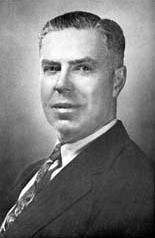
Imagine my shock at later discovering that Barnes had actually been one of the most frequent early contributors to Foreign Affairs, serving as a primary book reviewer for that venerable publication from its 1922 founding onward, while his stature as one of America’s premier liberal academics was indicated by his scores of appearances in The Nation and The New Republic throughout that decade. Indeed, he is credited with having played a central role in “revising” the history of the First World War so as to remove the cartoonish picture of unspeakable German wickedness left behind as a legacy of the dishonest wartime propaganda produced by the opposing British and American governments. And his professional stature was demonstrated by his thirty-five or more books, many of them influential academic volumes, along with his numerous articles in The American Historical Review, Political Science Quarterly, and other leading journals.
A few years ago I happened to mention Barnes to an eminent American academic scholar whose general focus in political science and foreign policy was quite similar, and yet the name meant nothing. By the end of the 1930s, Barnes had become a leading critic of America’s proposed involvement in World War II, and was permanently “disappeared” as a consequence, barred from all mainstream media outlets, while a major newspaper chain was heavily pressured into abruptly terminating his long-running syndicated national column in May 1940.
Many of Barnes’ friends and allies fell in the same ideological purge, which he described in his own writings and which continued after the end of the war:
Over a dozen years after his disappearance from our national media, Barnes managed to publish Perpetual War for Perpetual Peace, a lengthy collection of essays by scholars and other experts discussing the circumstances surrounding America’s entrance into World War II, and have it produced and distributed by a small printer in Idaho. His own contribution was a 30,000 word essay entitled “Revisionism and the Historical Blackout” and discussed the tremendous obstacles faced by the dissident thinkers of that period.
The book itself was dedicated to the memory of his friend, historian Charles A. Beard. Since the early years of the 20th century, Beard had ranked as an intellectual figure of the greatest stature and influence, co-founder of The New School in New York and serving terms as president of both The American Historical Association and The American Political Science Association. As a leading supporter of the New Deal economic policies, he was overwhelmingly lauded for his views.
Yet once he turned against Roosevelt’s bellicose foreign policy, publishers shut their doors to him, and only his personal friendship with the head of the Yale University Press allowed his critical 1948 volume President Roosevelt and the Coming of the War, 1941 to even appear in print. Beard’s stellar reputation seems to have begun a rapid decline from that point onward, so that by 1968 historian Richard Hofstadter could write: “Today Beard’s reputation stands like an imposing ruin in the landscape of American historiography. What was once the grandest house in the province is now a ravaged survival”. Indeed, Beard’s once-dominant “economic interpretation of history” might these days almost be dismissed as promoting “dangerous conspiracy theories,” and I suspect few non-historians have even heard of him.
Another major contributor to the Barnes volume was William Henry Chamberlin, who for decades had been ranked among America’s leading foreign policy journalists, with more than 15 books to his credit, most of them widely and favorably reviewed. Yet America’s Second Crusade, his critical 1950 analysis of America’s entry into World War II, failed to find a mainstream publisher, and when it did appear was widely ignored by reviewers. Prior to its publication, his byline had regularly run in our most influential national magazines such as The Atlantic Monthly and Harpers. But afterward, his writing was almost entirely confined to small circulation newsletters and periodicals, appealing to narrow conservative or libertarian audiences.
In these days of the Internet, anyone can easily establish a website to publish his views, thus making them immediately available to everyone in the world. Social media outlets such as Facebook and Twitter can bring interesting or controversial material to the attention of millions with just a couple of mouse-clicks, completely bypassing the need for the support of establishmentarian intermediaries. It is easy for us to forget just how extremely challenging the dissemination of dissenting ideas remained back in the days of print, paper, and ink, and recognize that an individual purged from his regular outlet might require many years to regain any significant foothold for the distribution of his work.
I’d written those last words in June 2018 and ironically enough, sweeping social media purges and shadow-banning soon engulfed many present-day dissenters, greatly reducing their ability to distribute their ideas.
Most Americans believe that the German people were treated humanely following the end of hostilities and that the Marshall Plan helped to rebuild Europe. Is that an accurate account of what actually took place?
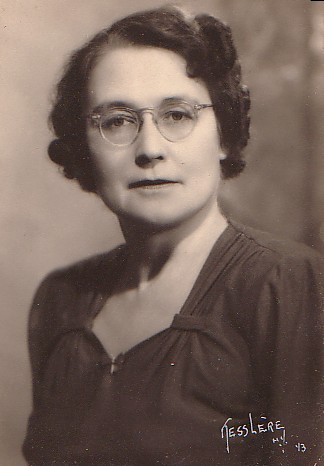
Ron Unz—Although long forgotten today, Freda Utley was a mid-century journalist of some prominence. Born an Englishwoman, she had married a Jewish Communist and moved to Soviet Russia, then fled to America after her husband fell in one of Stalin’s purges. Although hardly sympathetic to the defeated Nazis, she strongly shared Beaty’s view of the monstrous perversion of justice at Nuremberg and her first-hand account of the months spent in Occupied Germany is eye-opening in its description of the horrific suffering imposed upon the prostrate civilian population even years after the end of the war.
In 1948 she spent several months traveling around Occupied Germany, and the following year published her experiences in The High Cost of Vengeance, which I found eye-opening. Unlike the vast majority of other American journalists, who generally took brief, heavily-chaperoned visits, Utley actually spoke German and was quite familiar with the country, having frequently visited it during the Weimar Era. Whereas Grenfell’s discussion was highly restrained and almost academic in its tone, her own writing was considerably more strident and emotional, hardly surprising given her direct encounter with extremely distressing subject matter. Her eyewitness testimony seemed quite credible, and the factual information she provided, buttressed by numerous interviews and anecdotal observations, was gripping.
More than three years after the end of hostilities, Utley encountered a land still almost totally ruined, with large portions of the population forced to seek shelter in damaged basements or share tiny rooms in broken buildings. The population regarded itself as being “without rights,” often subject to arbitrary treatment by occupation troops or other privileged elements, who stood completely outside the legal jurisdiction of the regular local police. Germans in large numbers were regularly removed from their homes, which were used to billet American troops or others who found favor with them, a situation that had been noted with some outrage in Gen. George Patton’s posthumously published diaries. Even at this point, a foreign soldier might still sometimes seize anything he wanted from German civilians, with potentially dangerous consequences if they protested the theft. Utley tellingly quotes a former German soldier who had served occupation duties in France and remarked that he and his comrades had operated under strictest discipline and could never have imagined behaving toward French civilians in the manner that current Allied troops now treated German ones.
Some of Utley’s quoted claims are quite astonishing, but seem solidly based on reputable sources and fully confirmed elsewhere. Throughout the first three years of peacetime, the daily food ration allocated to Germany’s entire civilian population was roughly 1550 calories, approximately the same as that provided to the inmates of German concentration camps during the war recently ended, and it sometimes dropped far, far lower. During the difficult winter of 1946-47, the entire population of the Ruhr, Germany’s industrial heartland, had only received starvation rations of 700-800 calories per day, and even lower levels were sometimes reached.
Influenced by hostile official propaganda, the widespread attitude of Allied personnel towards ordinary Germans was certainly as bad as anything faced by the natives living under a European colonial regime. Time and again, Utley notes the remarkable parallels with the treatment and attitude she had previously seen Westerners take towards the native Chinese during most of the 1930s, or that the British had expressed to their Indian colonial subjects. Small German boys, shoeless, destitute, and hungry, eagerly retrieved balls at American sporting-clubs for a tiny pittance. Today it is sometimes disputed whether American cities during the late 19th century actually contained signs reading “No Irish Need Apply,” but Utley certainly saw signs reading “No Dogs or Germans Allowed” outside numerous establishments frequented by Allied personnel.
Based on my standard history textbooks, I had always believed that there existed a total night-and-day difference in the behavior toward local civilians between the German troops who occupied France from 1940-44 and the Allied troops who occupied Germany from 1945 onward. After reading the detailed accounts of Utley and other contemporaneous sources, I think my opinion was absolutely correct, but with the direction reversed.
Utley believed part of the reason for this utterly disastrous situation was deliberate American government policy. Although the Morgenthau Plan—aimed at eliminating half or so of Germany’s population—had been officially abandoned and replaced with the Marshall Plan promoting German revival, she found that many aspects of the former actually still held sway in practice. Even as late as 1948, huge portions of the German industrial base continued to be dismantled and shipped off to other countries while very tight restrictions on German production and exports remained in place. Indeed, the level of poverty, misery, and oppression she saw everywhere almost seemed deliberately calculated to turn ordinary Germans against America and its Western allies, perhaps opening the door to Communist sympathies. Such suspicions are certainly strengthened when we consider that this system had been devised by Harry Dexter White, later revealed to be a Soviet agent.
She was especially scathing about the total perversion of any basic notions of human justice during the Nuremberg Tribunal and various other war crime trials, a subject to which she devoted two full chapters. These judicial proceedings exhibited the worst sort of legal double-standards, with leading Allied judges explicitly stating that their own countries were not at all bound by the same international legal conventions which they claimed to be enforcing against German defendants. Even more shocking were some of the measures used, with outraged American jurists and journalists revealing that horrific torture, threats, blackmail, and other entirely illegitimate means were regularly employed to obtain confessions or denunciations of others, a situation that strongly suggested a very considerable number of those condemned and hanged were entirely innocent.
Her book also gave substantial coverage to the organized expulsions of ethnic Germans from Silesia, the Sudatenland, East Prussia, and various other parts of Central and Eastern Europe where they had peacefully lived for many centuries, with the total number of such expellees generally estimated at 13 to 15 million. Families were sometimes given as little as ten minutes to leave the homes in which they had resided for a century or more, then forced to march off on foot, sometimes for hundreds of miles, towards a distant land they had never seen, with their only possessions being what they could carry in their own hands. In some cases, any surviving menfolk were separated out and shipped off to slave-labor camps, thereby producing an exodus consisting solely of women, children, and the very elderly. All estimates were that at least a couple million perished along the way, from hunger, illness, or exposure.
These days we endlessly read painful discussions of the notorious “Trail of Tears” suffered by the Cherokees in the distant past of the early 19th century, but this rather similar 20th Century event was nearly a thousand-fold larger in size. Despite this huge discrepancy in magnitude and far greater distance in time, I would guess that the former event may command a thousand times the public awareness among ordinary Americans. If so, this would demonstrate that overwhelming media control can easily shift perceived reality by a factor of a million or more.
The population movement certainly seems to have represented the largest ethnic-cleansing in the history of the world, and if the Germany had ever done anything even remotely similar during its years of European victories and conquests, the visually-gripping scenes of such an enormous flood of desperate, trudging refugees would surely have become a centerpiece of numerous World War II movies of the last seventy years. But since nothing like that ever happened, Hollywood screenwriters lost a tremendous opportunity.
Utley’s extremely grim portrayal is strongly corroborated by numerous other sources. In 1946, Victor Gollanz, a prominent British publisher from a Socialistic Jewish background, took an extended visit to Germany, and published In Darkest Germany the following year, recounting his enormous horror at the conditions he discovered there. His claims of the appalling malnutrition, illness, and total destitution were supported by over a hundred chilling photographs, and the introduction to the American edition was written by University of Chicago President Robert M. Hutchins, one of our most reputable public intellectuals of that era. But his slim volume seems to have attracted relatively little attention in the American mainstream media, although his somewhat similar book Our Threatened Values, published the previous year and based upon information from official sources had received a little more. Gruesome Harvest by Ralph Franklin Keeling, also published in 1947, helpfully gathers together a large number of official statements and reports from major media outlets, which generally support exactly this same picture of the first few years of Germany under Allied occupation.
During the 1970s and 1980s this distressing topic was taken up by Alfred M. de Zayas, who held a Harvard Law degree and doctorate in history, and served a long and illustrious career as a leading international human rights lawyer long affiliated with the United Nations. His books such as Nemesis at Potsdam, A Terrible Revenge, and The Wehrmacht War Crimes Bureau, 1939-1945 especially focused on the massive ethnic cleansing of the German minorities, and were based on great quantities of archival research. They received considerable scholarly praise and notice in major academic journals and sold hundreds of thousands of copies in Germany and other parts of Europe, but hardly seem to have penetrated the consciousness of America or the rest of the English-speaking world.
In the late 1980s this smoldering historical debate took a remarkable new turn. While visiting France during 1986 in preparation for an unrelated book, a Canadian writer named James Bacque stumbled upon clues suggesting that one of the most terrible secrets of post-war Germany had long remained completely hidden, and he soon embarked upon extensive research into the subject, finally publishing Other Losses in 1989. Based upon very considerable evidence, including government records, personal interviews, and recorded eyewitness testimony, he argued that after the end of the war, the Americans had starved to death as many as a million German POWs, seemingly as a deliberate act of policy, a war crime that would surely rank among the greatest in history.

Bacque’s discussion of the new evidence of the Kremlin archives constitutes a relatively small portion of his 1997 sequel, Crimes and Mercies, which centered around an even more explosive analysis, and also became an international best-seller.
As described above, first-hand observers of post-war Germany in 1947 and 1948 such as Gollanz and Utley, had directly reported on the horrific conditions they discovered, and stated that for years official food rations for the entire population had been comparable to that of the inmates of Nazi concentration camps and sometimes far lower, leading to the widespread malnutrition and illness they witnessed all around them. They also noted the destruction of most of Germany’s pre-war housing stock and the severe overcrowding produced by the influx of so many millions of pitiful ethnic German refugees expelled from other parts of Central and Eastern Europe. But these visitors lacked any access to solid population statistics, and could only speculate upon the enormous human death toll that hunger and illness had already inflicted, and which would surely continue if policies were not quickly changed.
Years of archival research by Bacque attempt to answer this question, and the conclusion he provides is certainly not a pleasant one. Both the Allied military government and the later German civilian authorities seem to have made a concerted effort to hide or obscure the true scale of the calamity visited upon German civilians during the years 1945-1950, and the official mortality statistics found in government reports are simply too fantastical to possibly be correct, although they became the basis for the subsequent histories of that period. Bacque notes that these figures suggest that the death rate during the terrible conditions of 1947, long remembered as the “Hunger Year” (Hungerjahr) and vividly described in Gollancz’s account, was actually lower than that of the prosperous Germany of the late 1960s. Furthermore, private reports by American officials, mortality rates from individual localities, and other strong evidence demonstrate that these long-accepted aggregate numbers were essentially fictional.
Instead, Bacque attempts to provide more realistic estimates based upon an examination of the population totals of the various German censuses together with the recorded influx of the huge number of German refugees. Applying this simple analysis, he makes a reasonably strong case that the excess German deaths during that period amounted to at least around 10 million, and possibly many millions more. Furthermore, he provides substantial evidence that the starvation was either deliberate or at least enormously worsened by American government resistance to overseas food relief efforts. Perhaps these numbers should not be so totally surprising given that the official Morgenthau Plan had envisioned the elimination of around 20 million Germans, and as Bacque demonstrates, top American leaders quietly agreed to continue that policy in practice even while they renounced it in theory.
Assuming these numbers are even remotely correct, the implications are quite remarkable. The toll of the human catastrophe experienced in post-war Germany would certainly rank among the greatest in modern peacetime history, far exceeding the deaths that occurred during the Ukrainian Famine of the early 1930s and possibly even approaching the wholly unintentional losses during Mao’s Great Leap Forward of 1959-61. Furthermore, the post-war German losses would vastly outrank either of these other unfortunate events in percentage terms and this would remain true even if the Bacque’s estimates are considerably reduced. Yet I doubt if even a small fraction of one percent of Americans are today aware of this enormous human calamity. Presumably memories are much stronger in Germany itself, but given the growing legal crackdown on discordant views in that unfortunate country, I suspect that anyone who discusses the topic too energetically risks immediate imprisonment.
To a considerable extent, this historical ignorance has been heavily fostered by our governments, often using underhanded or even nefarious means. Just like in the old decaying USSR, much of the current political legitimacy of today’s American government and its various European vassal-states is founded upon a particular narrative history of World War II, and challenging that account might have dire political consequences. Bacque credibly relates some of the apparent efforts to dissuade any major newspaper or magazine from running articles discussing the startling findings of his first book, thereby imposing a “blackout” aimed at absolutely minimizing any media coverage. Such measures seem to have been quite effective, since until eight or nine years ago, I’m not sure I had ever heard a word of these shocking ideas, and I have certainly never seen them seriously discussed in any of the numerous newspapers or magazines that I have carefully read over the last three decades.
In assessing the political factors that apparently produced such an enormous and seemingly deliberate death toll among German civilians long after the fighting had ended, an important point should be made. Historians seeking to demonstrate Hitler’s tremendous wickedness or to suggest his knowledge of various crimes committed during the course of the Second World War are regularly forced to sift tens of thousands of his printed words for a suggestive phrase here and there, and then interpret these vague allusions as absolutely conclusive declarative statements. Those who fail to stretch the words to fit, such as renowned British historian David Irving, will sometimes see their careers destroyed as a consequence.
But as early as 1940, an American Jew named Theodore Kaufman became so enraged at what he regarded as Hitler’s mistreatment of German Jewry that he published a short book evocatively entitled Germany Must Perish!, in which he explicitly proposed the total extermination of the German people. And that book apparently received favorable if perhaps not entirely serious discussion in many of our most prestigious media outlets, including the New York Times, the Washington Post, and Time Magazine. If such sentiments were being freely expressed in certain quarters even before America’s actual entrance into the military conflict, then perhaps the long-hidden policies that Bacque seems to have uncovered should not be so totally shocking to us.

Question 5: The Pearl Harbor Attack
Was Japan’s attack on Pearl Harbor unexpected or was it preceded by numerous US provocations that compelled Japan to respond militarily?
Ron Unz—On December 7, 1941, Japan’s military forces launched a surprise attack against our Pacific Fleet based at Pearl Harbor, sinking many of our largest warships and killing more than 2,400 Americans. As a result, America was suddenly propelled into World War II and that date “lived in infamy” as one of the most famous in our national history.
At the time, nearly all ordinary Americans regarded the Japanese attack as a shocking, unprovoked bolt-from-the-blue, and for more than 80 years, our mainstream history books and media coverage have reinforced that strong impression. But as I explained in 2019, the actual facts are entirely different:
From 1940 onward, FDR had been making a great political effort to directly involve America in the war against Germany, but public opinion was overwhelmingly on the other side, with polls showing that up to 80% of the population were opposed. All of this immediately changed once the Japanese bombs dropped on Hawaii, and suddenly the country was at war.
Given these facts, there were natural suspicions that Roosevelt had deliberately provoked the attack by his executive decisions to freeze Japanese assets, embargo all shipments of vital fuel oil supplies, and rebuff the repeated requests by Tokyo leaders for negotiations. In the 1953 volume edited by Barnes, noted diplomatic historian Charles Tansill summarized his very strong case that FDR sought to use a Japanese attack as his best “back door to war” against Germany, an argument he had made the previous year in a book of that same name. Over the decades, the information contained in private diaries and government documents seems to have almost conclusively established this interpretation, with Secretary of War Henry Stimson indicating that the plan was to “maneuver [Japan] into firing the first shot”…
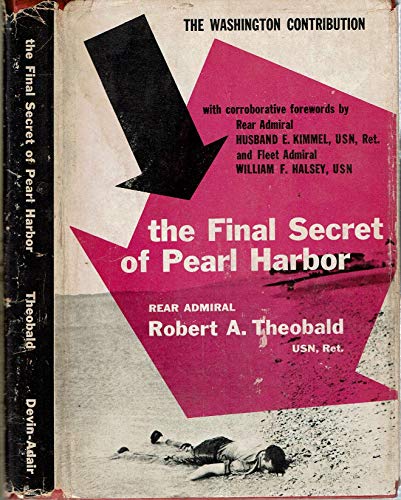
By 1941 the U.S. had broken all the Japanese diplomatic codes and was freely reading their secret communications. Therefore, there has also long existed the widespread if disputed belief that the president was well aware of the planned Japanese attack on our fleet and deliberately failed to warn his local commanders, thereby ensuring that the resulting heavy American losses would produce a vengeful nation united for war. Tansill and a former chief researcher for the Congressional investigating committee made this case in the same 1953 Barnes volume, and the following year a former US admiral published The Final Secret of Pearl Harbor, providing similar arguments at greater length. This book also included an introduction by one of America’s highest-ranking World War II naval commanders, who fully endorsed the controversial theory.
In 2000, journalist Robert M. Stinnett published a wealth of additional supporting evidence, based upon his eight years of archival research, which was discussed in a recent article. A telling point made by Stinnett is that if Washington had warned the Pearl Harbor commanders, their resulting defensive preparations would have been noticed by the local Japanese spies and relayed to the approaching task force; and with the element of surprise lost, the attack probably would have been aborted, thus frustrating all of FDR’s long-standing plans for war. Although various details may be disputed, I find the evidence for Roosevelt’s foreknowledge quite compelling.
Last year I further extended these arguments:
Mike Whitney Interview with Ron Unz June 12th 2023
To be continued
 OBLONG MEDIA GLOBAL INTELLIGENCE
Leave a comment