
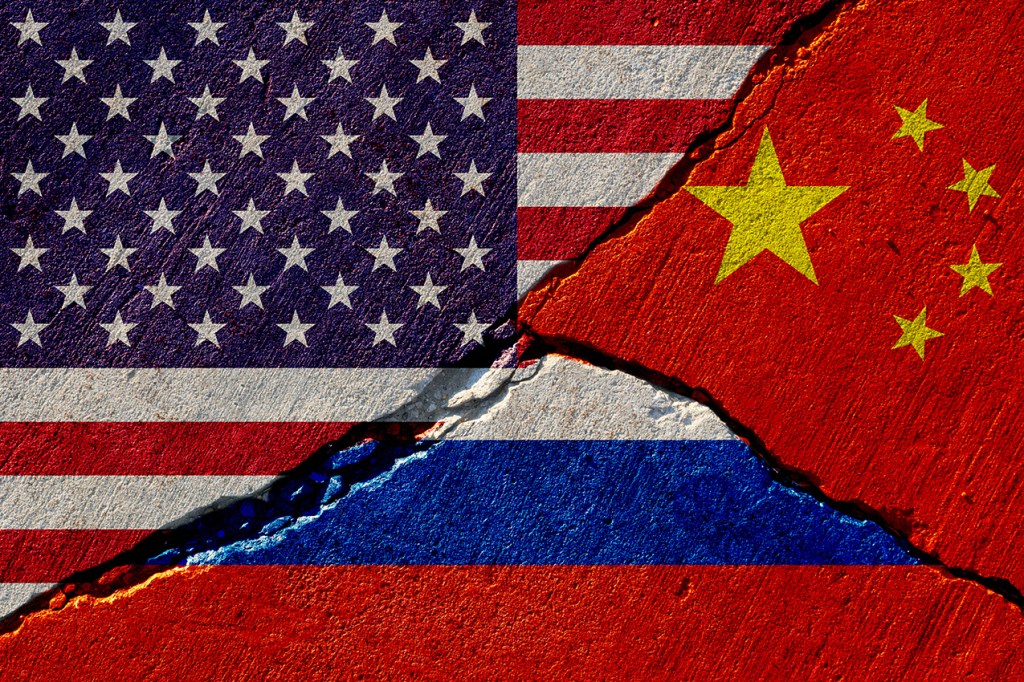
The downsizing of the US Army was accompanied by a massive reduction in weapons and equipment stocks. In America itself, the situation was not as radical as in Europe, where in some cases entire categories of military equipment disappeared. But in absolute terms, given the scale of the military, the reductions were huge – thousands of tanks, planes, artillery pieces, hundreds of ships, millions of tons of ammunition, and other military property items were sold or liquidated.
This did not give rise to any political or military fears, since in the first post-Soviet years, Russia expressed no desire to replace the USSR as the “preferred enemy” of Washington. China did not seek any confrontation either, but only strived to effectively fit into the global economy which then provided it with rapid industrial growth and technological advancement. And apart from Moscow and Beijing, Washington did not have any potential rivals at all.
It must be noted, however, that some experts assumed that this situation could change in the coming decades. For example, back in 1997, US diplomat George Kennan warned that the expansion of NATO was a major mistake that could radically worsen relations between Russia and the United States in the future. The authors of the 1997 issue of Quadrennial Defense Review (QDR) also said that “In the period beyond 2015, there is the possibility that a regional great power or global peer competitor may emerge. Russia and China are seen by some as having the potential to be such competitors, though their respective futures are quite uncertain.”
However, at the time, these warnings sounded too vague, and the prospects for their implementation were too remote to have a significant impact on the planning and decision-making processes in Washington. As a result, by the 2010s, when the rivalry between the great powers resumed, the Americans and their closest allies found themselves unprepared for it.
 OBLONG MEDIA GLOBAL INTELLIGENCE
Leave a comment