
Nigerians can make fun of anything. In Nigeria, there is a model of the Toyota Camry car that is derisively referred to as “BIG FOR NOTHING!”
A reviewer stated that that brand of car is called “Big for Nothing” because “it is a Camry whose interior is considered unnecessarily spacious and filled with ‘nothing”. Nigeria, the most populous black country in the world with a landmass estimated to be a total area of 923,770 km² (356,669 mi²) and a total coastline of 853 km of cannot afford to be a big for nothing country.
Nigeria is richly blessed with human and material resources yet Nigeria is a country of many paradoxes, contradictions and oxymora- all man made. Nigeria is an oil producing country, yet petroleum products are either scarce or overpriced.
Apart from oil, Nigeria is also richly endowed with a variety of other natural resources, precious metals and stones, yet Nigeria is an import dependent economy. Nigeria is a very rich country of poor nationals.
According to the Nigeria Bureau of Statistics (abbreviated as “NBS”), Nigeria is now home to 133 million poor people. This NBS report has also led the International Human Rights Commission (abbreviated as “IHRC”) to raise alarm to the effect that “the nation’s economic situation is a recipe for crisis”.
Nigeria is also referred to as a “sleeping giant”. According to Collins Dictionary, “If you refer to someone or something as a sleeping giant, you mean that they are powerful but they have not yet shown the full extent of their power.” Nigeria celebrated her 63rd independence only yesterday (counting from 1st October 1960).
The significance of Independence Day is that it marks the freedom of the country from British or colonial rule. Apart from the symbolic fanfare of Independence Day celebration activities, that day is used to assess the successes recorded, the problems and prospects of the country because nation building is a continuum.
A 63 year old person is a complete adult. A fool at forty, they say is a fool forever. What is the scorecard or record of Nigeria after 63 years of self-government? That is the main thrust of this intervention.
Nigeria may be observing her political independence from the colonial masters but Nigerian citizens are not observing it with fanfare or at all. Why does Nigeria’s 63rd independence day celebration not being marked with elation or pageantry by the average citizens? Is there anything to celebrate about Nigeria by Nigerians? Verifiable data show that Nigeria is a rich country of poor nationals. This is absurd. In the Brookings Report 2018, Nigeria was reputed to be the poverty capital of the world; the sixteenth least peaceful country in the world in the Global Peace Index 2018; the third most terrorised country in the world based on the Global Terrorism Index 2018.
Currently, Nigeria’s Human Development Index (the “HDI” is a United Nations measurement of the level of global and national development trajectories) is one of the lowest in the world.
This has been attributed “to the country’s poor social infrastructure, high income inequality, oil-dependence, institutionalised corruption, high prevalence of diseases among the youths (male and females), and increased political unrest”.
According to section 15(1) of the Constitution of the Federal Republic of Nigeria, 1999 as amended, the motto of the Federal Republic of Nigeria shall be “Unity and Faith, Peace and Progress.”
Contrary to this mantra and without pretentious jingoism, Nigeria is a nation at war with itself. Nigerians are disunited with many not having faith in the country. There is peace of the graveyard as most parts of Nigeria are threatened by insurgency, banditry, kidnapping, and other forms of insecurity.
From independence till date, little progress has been made in all critical sectors of human activity-civil, political, economic, social and cultural.
Political campaigns and promises have from 1960 till date centered on provision of roads, light and water.
Accumulated misrule has exposed Nigeria as a sleeping giant – sort of big for nothing country. This is not arguable. Late Chinua Achebe in the epic book “The Problem with Nigeria”, written in 1983, was unapologetic that that “the only trouble with Nigeria is the failure of leadership, because with good leaders Nigeria could resolve its inherent problems such as tribalism; lack of patriotism; social injustice and the cult of mediocrity; indiscipline; and corruption.” Nigerian leaders have been accused of embarking on what may be called “One step forward, two steps backwards”. Nigeria’s governance style is characterised in the main by policy somersaults, lack of vision and patriotism. How can anyone govern a country or plan effectively when there is no reliable national census figure? The many troubles of Nigeria have prompted critics to query whether Nigeria is a country or a nation? Against the pernicious effects of tribalism, nepotism and ethno-religious fault lines, many are quick to ask- is Nigeria worth dying for?
After 63 years of independence, Nigerians pay scant regard to the key requirements of nationhood and nation building. Patriotism is taught. No one is born a patriot. How many Nigerians remember that the national constitution imposes duties on all citizens? It is expressly provided in section 24 of the Constitution of the Federal Republic of Nigeria, 1999 as amended that it shall be the duty of every citizen to-
(a) abide by this Constitution, respect its ideals and its institutions, the National Flag, the National Anthem, the National Pledge, and legitimate authorities;
(b) help to enhance the power, prestige and good name of Nigeria, defend Nigeria and render such national service as may be required;
(c) respect the dignity of other citizens and the rights and legitimate interests of others and live in unity and harmony and in the spirit of common brotherhood;
(d) make positive and useful contribution to the advancement, progress and well-being of the community where he resides;
(e) render assistance to appropriate and lawful agencies in the maintenance of law and order; and
(f) declare his income honestly to appropriate and lawful agencies and pay his tax promptly.
These duties of the citizen are obeyed more in breach than observance. Sadly, many argue that this is so because government has not lived up to its constitutionally assigned responsibility of providing the enabling environment for the citizens to discharge their duties. A hungry man is an angry man. Nigerians are hungry and live under various forms of existential threats notwithstanding that section 14(2)(b) of the Constitution of the Federal Republic of Nigeria, 1999 as amended provides unequivocally that the security and welfare of the people shall be the primary purpose of government. How long more will Nigeria continue to be rudderless? What can the present leaders do in the face of looming nationwide strike? This threatened strike by organised labour, if embarked upon will definitely worsen the economic woes, insecurity concerns, dilapidated and non-existent infrastructure, impassable and insecure roads, dirty airports, hospitals without medical equipment and trained personnel, schools that have become the lot of Nigeria.
Truth be told, Nigeria’s scorecard at 63 is nothing to write home about given that there is massive unemployment, suffocating hardship and complete elimination of the middle class. It is tragic that at 63, Nigeria cannot organise free, fair and credible elections. How about observance of rule of law, due process and democracy at all levels of government as required by the national constitution? In sum, there is compelling need to rework, rejig and restructure Nigeria. Nigeria in its present form is not working and will not work. Albert Einstein said “Insanity is doing the same thing over and over again and expecting different results”. Nigeria must be comprehensively discussed with an open mind by all citizens and relevant stakeholders. Only genuine political will to do all the needful by leaders can redeem Nigeria in its present form. Chinua Achebe did not mince words when he said that “The trouble with Nigeria is simply and squarely a failure of leadership.”
Nigeria’s unique diversities can be harnessed fully for her greatness. Going forward, leaders at all levels (executive and legislature) must live by example and eschew corruption and ostentatious lifestyles at the expense of the suffering masses. Sincere, altruistic and patriotic leadership at all levels of Government can help recover Nigeria from its present sorry state. After 63 years of its political independence, Nigeria cannot afford to be “a big for nothing country.
There is nothing to be happy about Nigeria’s 63rd Independence anniversary but all hopes are not lost.
A new normal is possible!
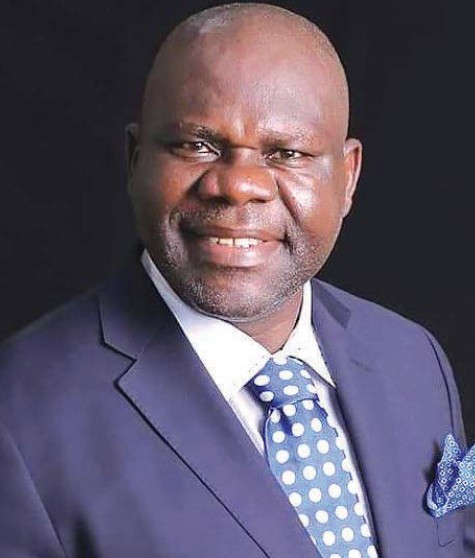
Prof Obiaraeri, N.O.
 OBLONG MEDIA GLOBAL INTELLIGENCE
Leave a comment