
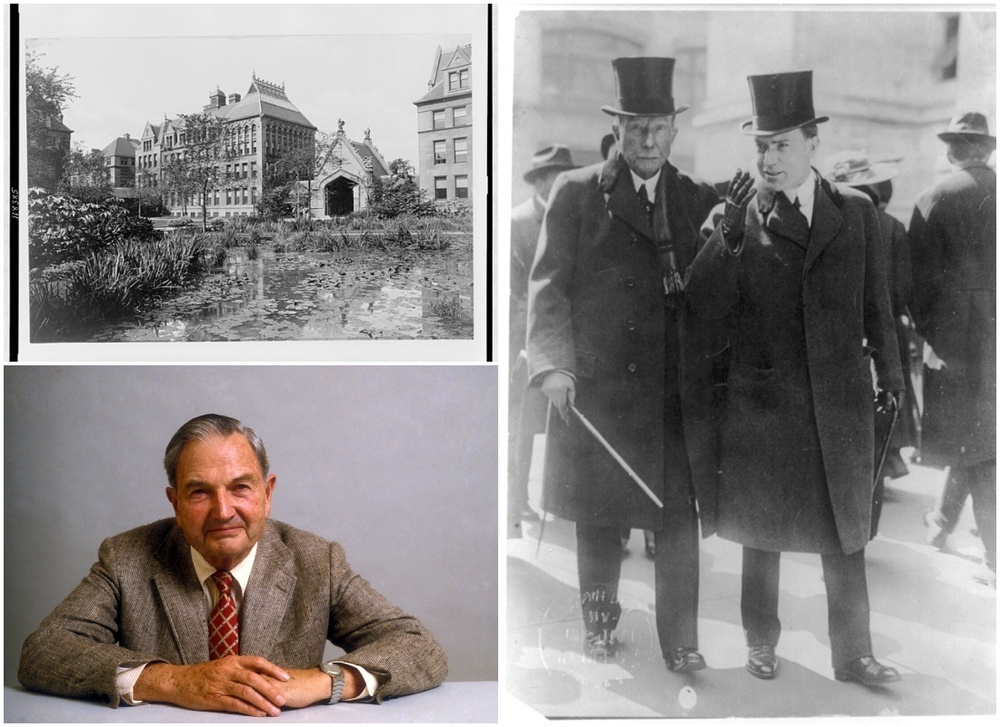
The Rockefeller name has become synonymous with money, symbolized by the richest individual in history, John D. Rockefeller, who left a staggering net worth of $1.4 billion. Yet, beneath this wealth lies a history of tragedy and controversy. Let’s delve into the captivating saga of the Rockefeller family…
A Fine Father Figure
Born in 1810, William A. Rockefeller, father to John D. Rockefeller, was a man of meager means. Though he was savvy, his dishonorable business practices and subsequent bad reputation caused the family to struggle financially.
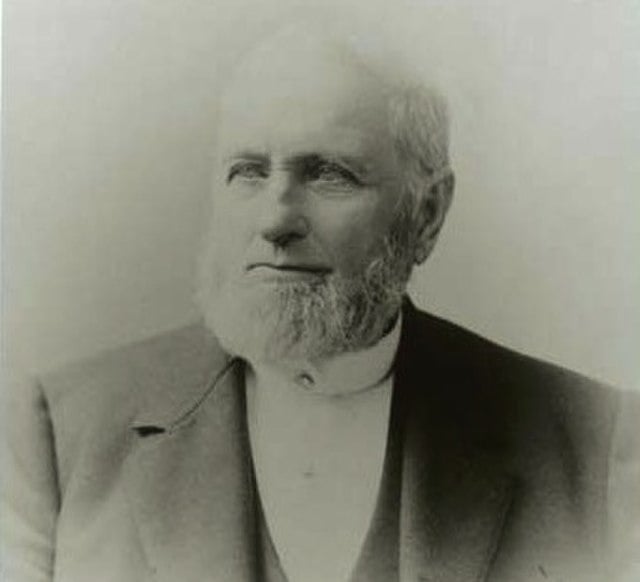
Without an actual trade to rely on, William Rockefeller worked as a traveling salesman, faking ailments such as being deaf and mute in order to push the “miracle remedies” he sold. Quickly dubbed “Devil Bill”, he went under a pseudonym named Dr. William Livingston who specialized in ears and eyes. A true con man, he convinced his wife that they needed to hire a housekeeper, who was actually his mistress and one true love. While living under the same roof, he and the housekeeper had two illegitimate children.
A Billionaire Is Born
While living in Richford, New York, William and his wife welcomed their son, John D. Rockefeller to the world on July 8, 1839. This was the couples’ second child, as their daughter, Lucy, was born just one year prior. By this time, William was surrounded by a multitude of unfavorable rumors stating that he was a thief, a crook, and a gambler. The family had no choice but to move.
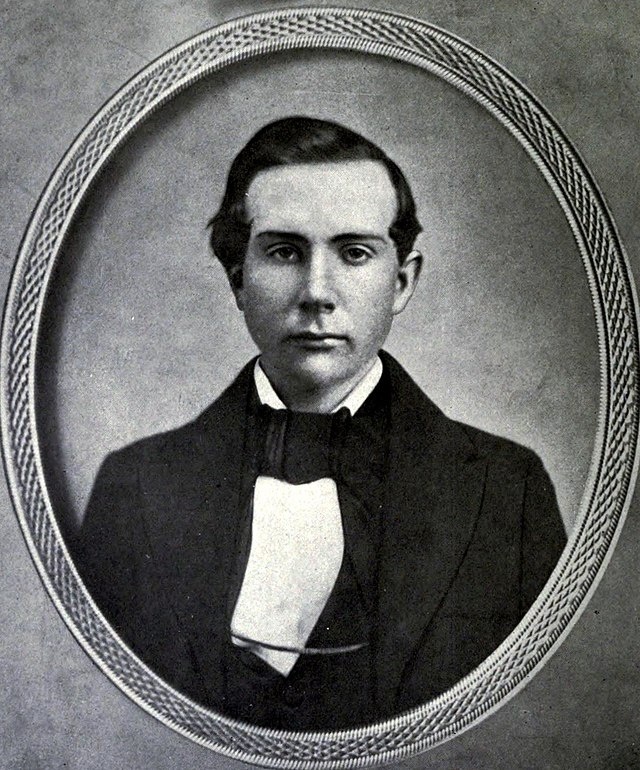
They moved from place to place, each time having to uproot once again due to William’s scandalous lifestyle. Finally in 1853, when John was 14-years-old, the family was able to settle in Strongsville, Ohio so he could attend and graduate from high school. He attended the first free public high school west of the Alleghenies called Central High School in Cleveland.
An Ambitious Fellow
The second of six children with a father who could not hold down a job, John showed just how ambitious and industrious he was when he became a teenager. After trying his hand at selling fruits and vegetables, he landed his first official job as an assistant bookkeeper for Hewitt & Tuttle at the young age of 16.
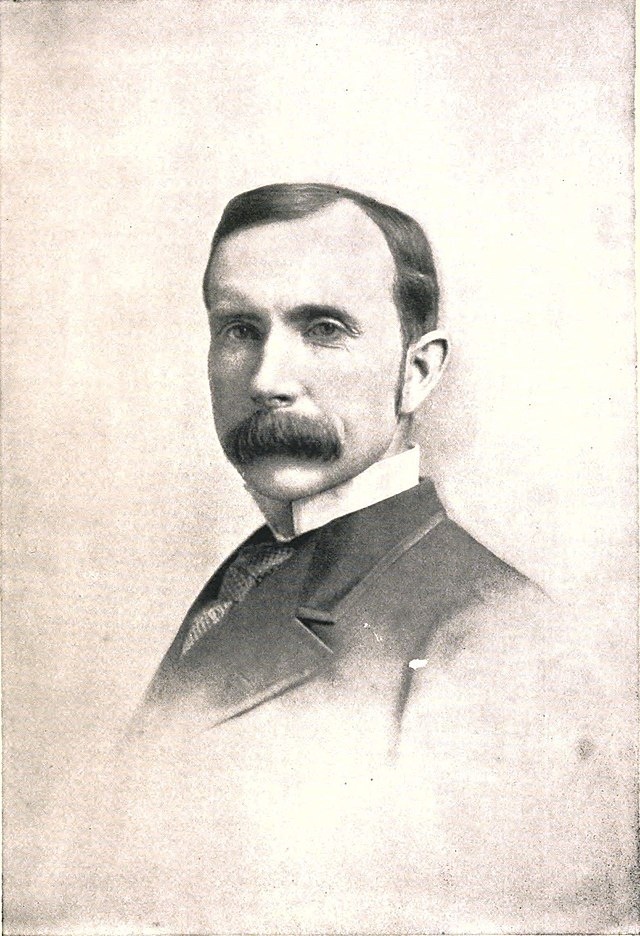
After four years on the job, John D. Rockefeller had saved $2,000 and formed a partnership with Maurice B. Clark. The two founded a commission merchant company that specialized in grains, hay, and meat. This venture grossed $450,000 within its first year of business. By age 20, he formed a produce business partnership to feed the Union troops during the Civil War which earned him $250,000. With his newfound fortune, he and his partners entered the oil business by founding Andrews, Clark & Co.
Perks of Being Rich
During the Civil War, men of all ages were called upon to fight for both the Union army and the Confederate army. Though John D. Rockefeller was a firm standing abolitionist, he had absolutely no desire to insert himself on the front lines. In an effort to exonerate himself from active duty, he requested an exemption from enlistment, stating that he was the sole provider for his family.
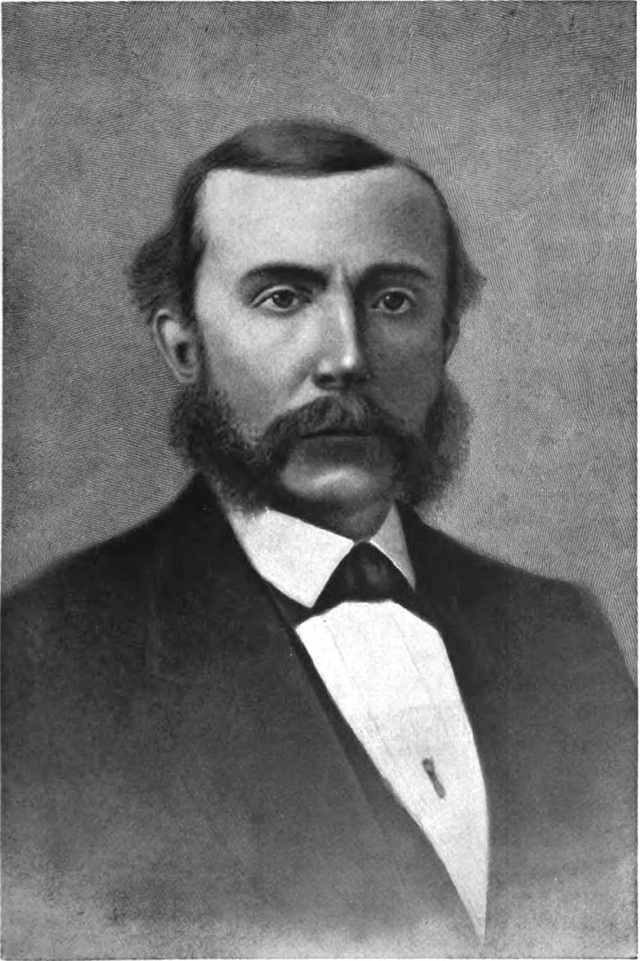
When the Union granted his exemption, he still felt the need to extend his help monetarily by paying men to join the cause and fight on his behalf. Deemed as acceptable solely for the rich, Rockefeller was sure to express remorse regarding his decision to avoid active duty, all the while profiting off of his commodities sold to the war effort.
Right Place, Right Time
Towards the end of the Civil War, Cleveland had become an integral hub for logistics. Even so, due to the rapid rate of oil production in Pennsylvania, John D. Rockefeller made the decision to open an oil refinery near Pittsburgh in 1863 by cashing out his shares in the produce partnership. Because of the oil boom, his refinery became the largest in the region within just two years.
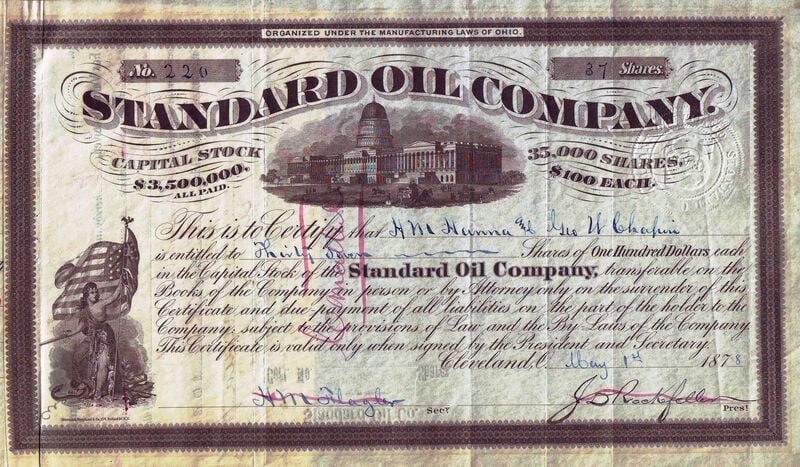
With his rapid success, John D. Rockefeller knew that the oil business was a gold mine. By 1870, he and his business partners incorporated the Standard Oil Company using $1 million earned from his Pennsylvania refinery as capital. Using his prowess for streamlining operations during a time of economic growth, the company’s profit margins consistently grew from day one. His immediate success, coupled with his generous earnings, motivated him even further to begin a takeover strategy that would become both controversial and historical.
Partnerships Alleviate Competition
Within just two years, Standard Oil had expanded significantly, controlling the majority of refineries throughout the Cleveland area. In order to alleviate any potential competition and to control the transport of his oil, John D. Rockefeller knew that he had to forge a partnership with the railroad companies as well as purchase additional pipelines and oil terminals.
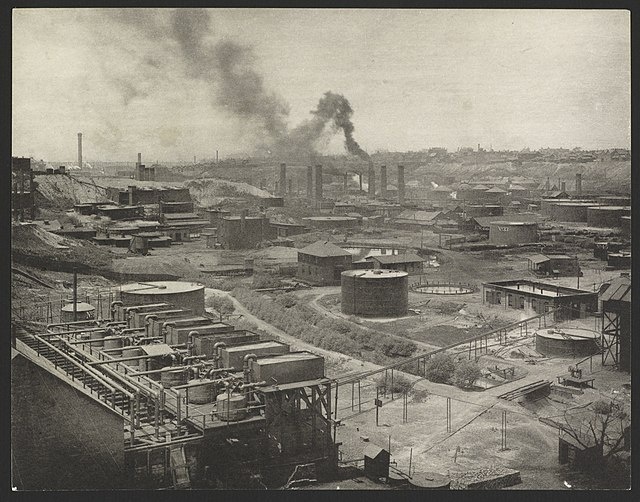
In addition to his new partnerships and acquisitions, he also began purchasing land to prevent rival companies from starting their own private transportation system. In doing so, Standard Oil substantially tightened their grasp on the industry resulting in little to no competition whatsoever.
Scandalous Scheme Leads to a Massacre
In 1871, John D. Rockefeller, along with multiple railroad lines, founded the Southern Improvement Company. In writing, the company’s intention was to alleviate the competitive rate wars that existed between the rail lines and evenly distribute the oil traffic between the Pennsylvania Railroad, the Erie Railroad, and the New York Railroad as well as limit the amount of oil produced.
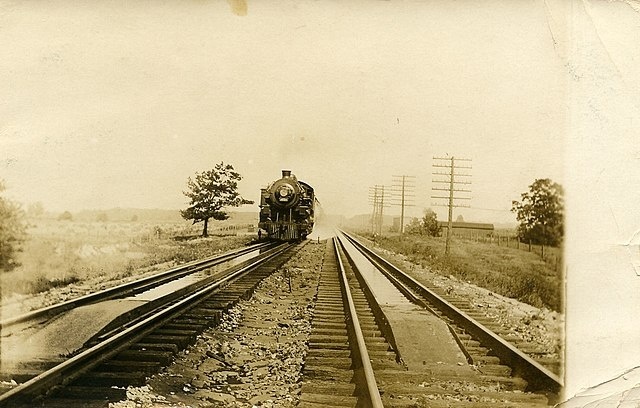
In all actuality, the Southern Improvement Company turned out to be a scheme that brought unwanted attention from the government due to the scandalous relationships formed between the railroads and big business, aka John D. Rockefeller. Throughout the company’s existence which only lasted one year, John D. Rockefeller was able to swoop in and purchase 22 of the 26 refineries in Cleveland due to their lack of transportation. These acquisitions would later become known as “The Cleveland Massacre”.
Keep Your Friends Close, Your Enemies Closer
By 1879, John D. Rockefeller was one of the wealthiest men in the United States and controlled nearly 90% of the country’s refineries. With a goal to control the oil industry throughout the US and the world, his savvy and somewhat questionable tactics at times terrorized his competitors and betrayed his alliances.
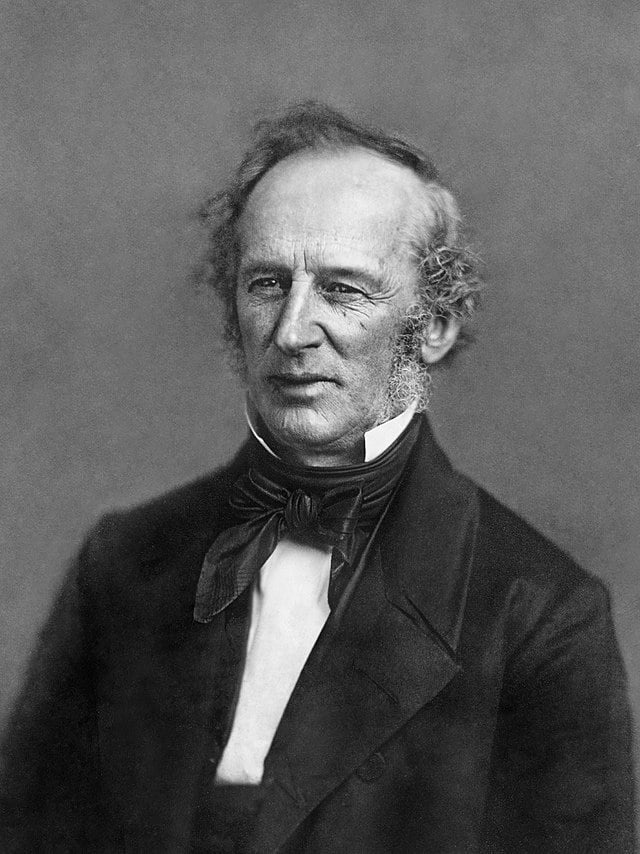
Earlier in his career, Rockefeller formed an alliance and partnership with railroad and shipping tycoon, Cornelius Vanderbilt. In order for them both to profit, John D. Rockefeller promised the transportation mogul exclusive rights to ship his product in exchange for a lower rate. What Vanderbilt did not realize was how rapidly Standard Oil would grow. By the time he had requested that the price be renegotiated, Rockefeller had invested in his own pipeline, essentially ruining any chance for Vanderbilt to profit. The transportation tycoon passed away just a few years later.
The Big Apple
While the city of Cleveland had served him well, in 1883 John D. Rockefeller decided it was time to take on the Big Apple. He moved his family to New York and began construction on the Standard Oil Building. The chosen site was at 26 Broadway, the same location as the former home of the head of the U.S. Treasury, Alexander Hamilton.
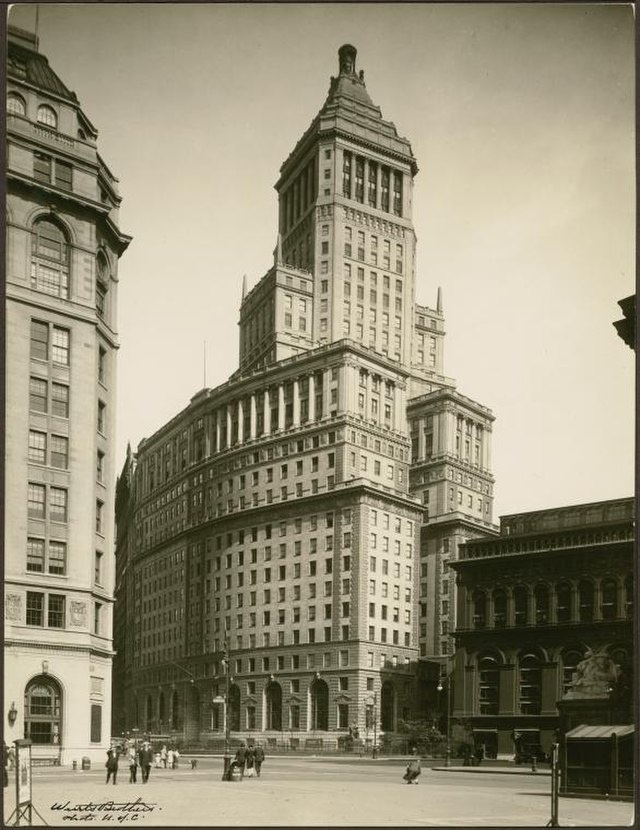
The original structure was nine stories tall but after several renovations and expansions, it is now 31 stories and has become one of New York City’s official landmarks. Though the Rockefeller family sold the building in the 1920s, it is still known to this day as The Standard Oil Building.
A Battle With Congress
John D. Rockefeller’s rise to power did not go unnoticed. By the late 1880s, his wealth as well as his questionable business practices caught the eye of some members of the United States Congress. By creating numerous divisions of his company under the Standard Oil umbrella, John D. Rockefeller had come to monopolize multiple markets.
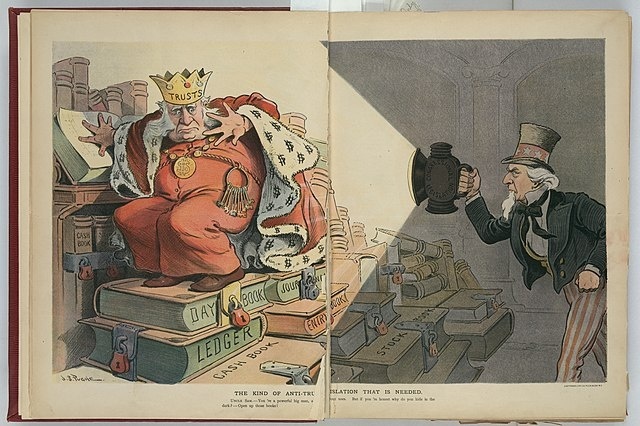
His critics in Congress were of the firm belief that creating a monopoly in any enterprise would undermine competition and be detrimental to American capitalism. Because of these concerns, Congress introduced the Sherman Antitrust Act in 1890, making any attempt to monopolize commerce in the United States illegal. Just two years after the Act was introduced, the Ohio Supreme Court ruled that Standard Oil was in violation of the new law. Because of these findings, John D. Rockefeller was forced to dissolve the company and acquire new management for all of his subsidiaries.
Find a Workaround
Even with Congress breathing down his neck, John D. Rockefeller refused to relinquish power. In an attempt to show that he was being compliant with the Sherman Act, he created a board to make it appear as though there were additional shareholders and decision-makers. Unbeknownst to Congress, the company’s hierarchy was still intact with all of the inner workings of each division being handled by a board led by John himself.
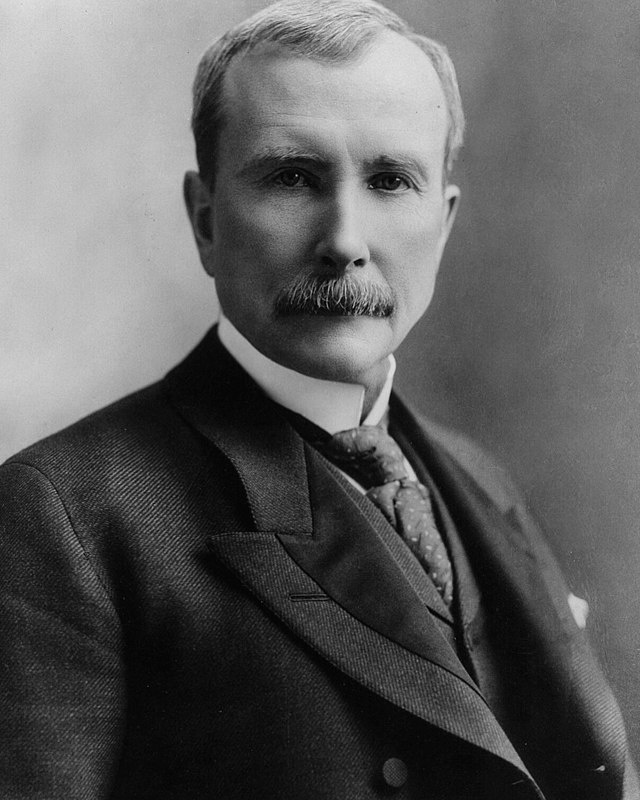
Rockefeller seemed to have found a workaround. He continued running things under the guise of a board for nine years but perhaps became too confident. In a bold move, he once again compiled each of his companies into one holding group causing Congress to intervene and force the company to dissolve once more.
Stress or Not?
Having every business transaction scrutinized by Congress could cause any tycoon to suffer from stress. Rockefeller was no different. He endured many stress-related symptoms including moderate depression, digestive issues, and hair loss after his tussle with the government.
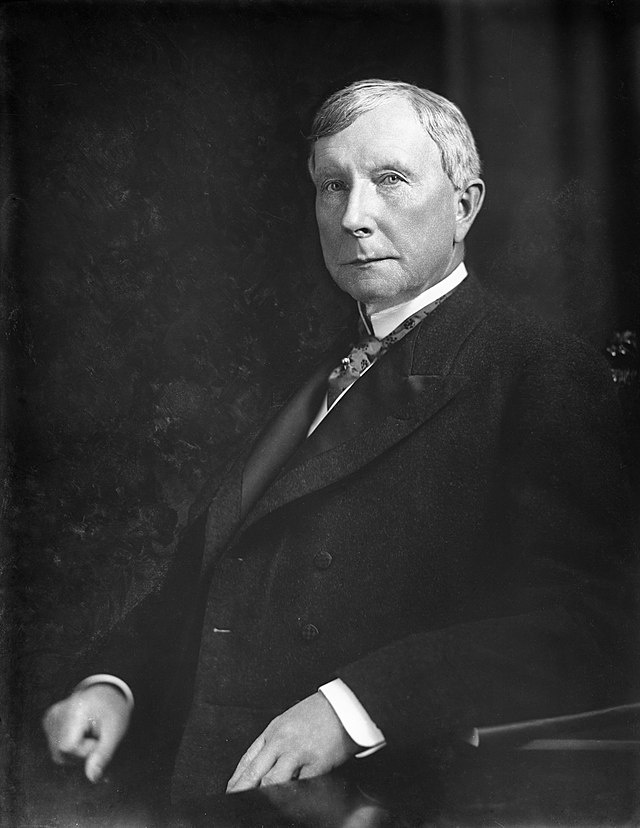
While the depression and digestive troubles were truly the results of his anxiety, his hair loss was not. When he was in his 50s, John D. Rockefeller was diagnosed with alopecia, a disease that causes the immune system to attack the hair follicles, causing extreme hair loss. After going bald and losing his eyebrows, Rockefeller invested in wigs of different lengths to appear as though he was getting haircuts.
A Charitable Man
While John D. Rockefeller may seem like a self-serving man consumed by greed, in all actuality, he was quite charitable and kind. Even though he was one of the richest men in the world, he never forgot what it was like to struggle to feed his family. Because of this, he wanted to share the wealth.
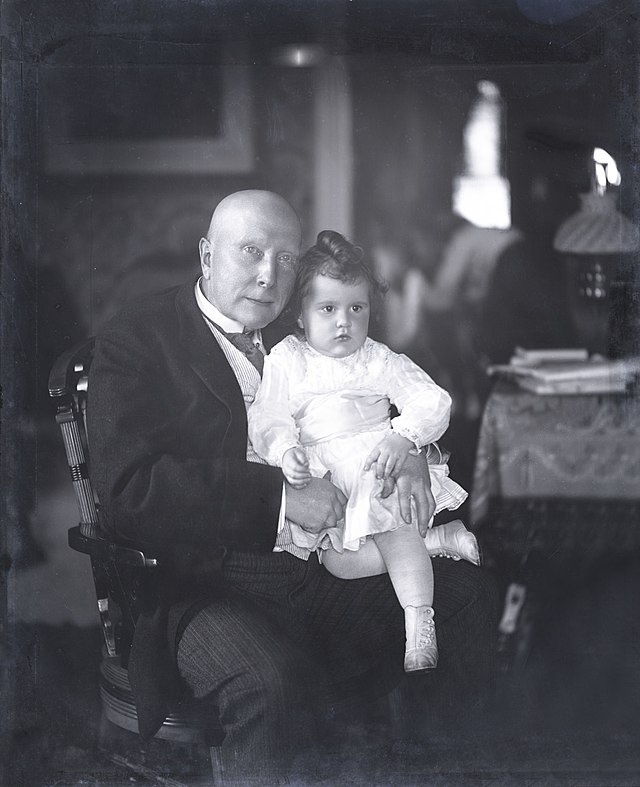
No matter where he was going, John D. Rockefeller would carry on his person a bag of dimes which he would happily hand out to anyone he met. He was not concerned about their social status nor their financial status as he gave dimes to children as well as fellow millionaires such as Samuel Firestone of Firestone Tires. It is estimated that in total, he handed out over $35,000 worth of dimes in his lifetime.
See a Problem? Fix It
In the early 20th century, the Rockefeller family dedicated their time and efforts to philanthropy, so when they discovered that 40% of all Southerners had become infected by hookworm, they quickly came to their aid. Hookworm is a parasite that causes those infected to suffer from anemia and exhaustion as well as stunted growth so the long-lasting effects could have been extraordinary.
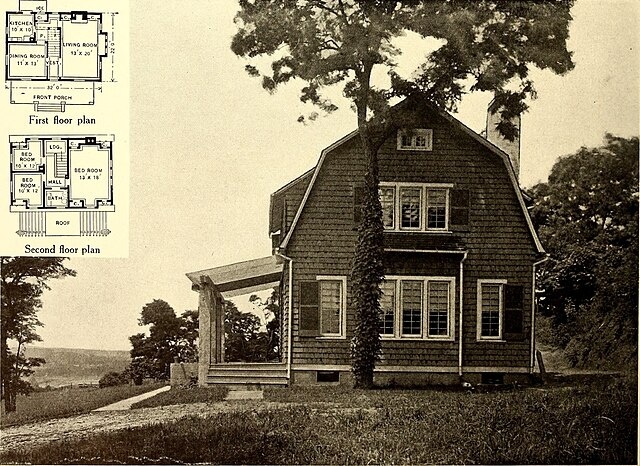
In 1910, in an effort to combat the outbreak of infections, John D. Rockefeller donated $1 million to the Rockefeller Sanitary Commission to map high-risk areas, treat those who were infected, and improve the sanitation efforts in the communities. Since his intervention, hookworm has remained under control and can only be found in very rural areas of the Deep South.
Behind Every Great Man….
John D. Rockefeller, though having a brilliant mind for business, could not have become as successful as he was without the support and advice from his wife, Laura Spelman. Married in 1864, Spelman was also a philanthropist as well as an abolitionist who was passionate about higher education for women.
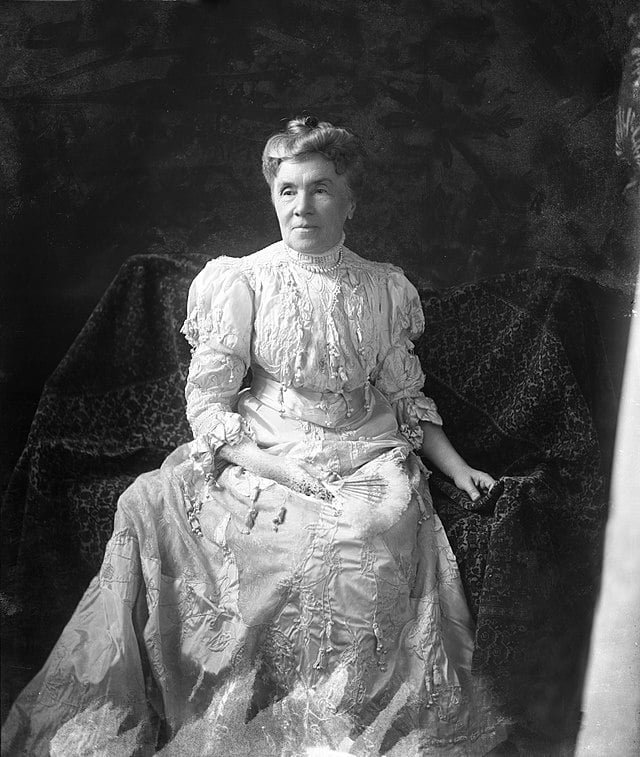
In 1882, the wealthy couple began donating ample amounts of money to an Atlanta Baptist Female Seminary, a college that was founded to educate black women during a period in history when other institutions forbade them from entering their grounds. After two years of hefty donations, the college changed its name to Spelman College in honor of Laura Spelman and her generosity.
Two Fine Institutions
While John D. Rockefeller is largely known for his role in creating a flourishing American economy, it should also be mentioned that because of his philanthropic work and generous charitable donations, The Rockefeller Institute for Medical Research and the University of Chicago were both founded.
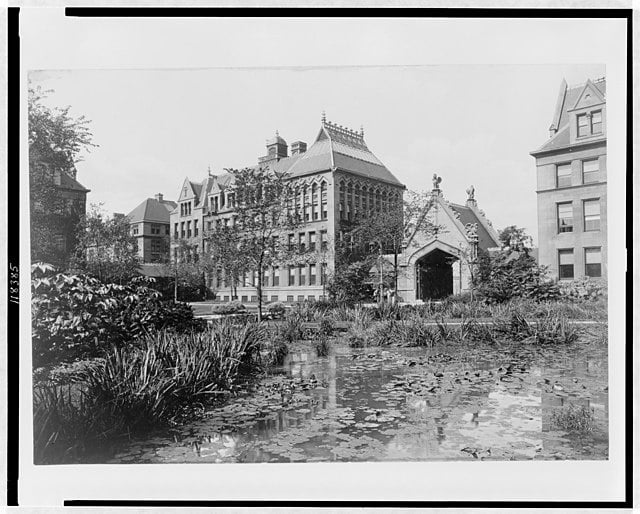
In 1890, he donated $600,000 to assist in funding the establishment of the University of Chicago, whose iconic chapel bears his name. In 1901, John D. Rockefeller founded The Rockefeller Institute for Medical Research in an attempt to encourage the study of diseases so that they may be prevented. Since its inception, scientists and medical staff have transformed biochemistry and medical treatments for numerous afflictions affecting people around the world.
Ahead of His Time
In an effort to support secondary and higher education in the United States regardless of race, sex, or creed, John D. Rockefeller established the General Education Board in 1902. Their goal was to promote education for all, at all levels, including the meagerly funded black schools in the South.
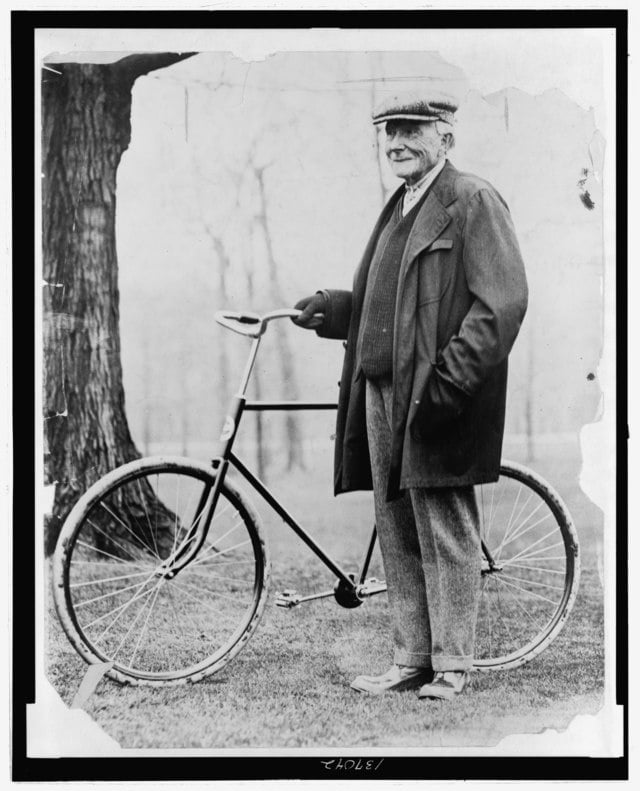
He went one step further in 1913 when he created the Rockefeller Foundation to “promote the wellbeing of mankind throughout the world”. Since its inception, it has not failed at reaching its goal. With millions upon millions of dollars donated, the foundation has improved public health, promoted education, and has enhanced the arts as well as scientific and medical advancements.
The Philanthropy Started Young
While John D. Rockefeller has oftentimes been criticized for his less than conventional business practices and rumored misgivings, his charitable nature cannot be disputed. Since a child, he was convinced that a man of means has a duty to help others, so much so that he began donating his own funds ever since he received his very first paycheck as a teenager.
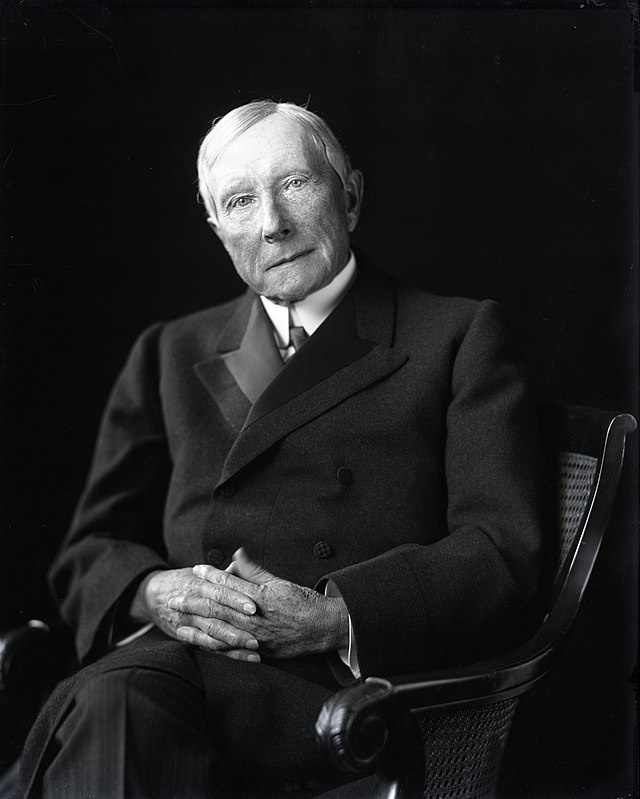
As a teenager, each time he received a paycheck, he would donate a portion of it to his local Baptist church, the African-American church, and the Sunday School. Throughout his life, he firmly believed that “the rich man shouldn’t die rich, the rich man should die having done good things with the wealth that he has created”.
A Quiet Stance
While John D. Rockefeller rarely hid his social stances, when it came to his support of Prohibition, his participation was done so behind closed doors. Perhaps he opposed the use of alcohol because of his father’s drunken antics or he was standing in solidarity with his wife, Laura, who was the founding member of the Women’s Christian Temperance is up for debate.
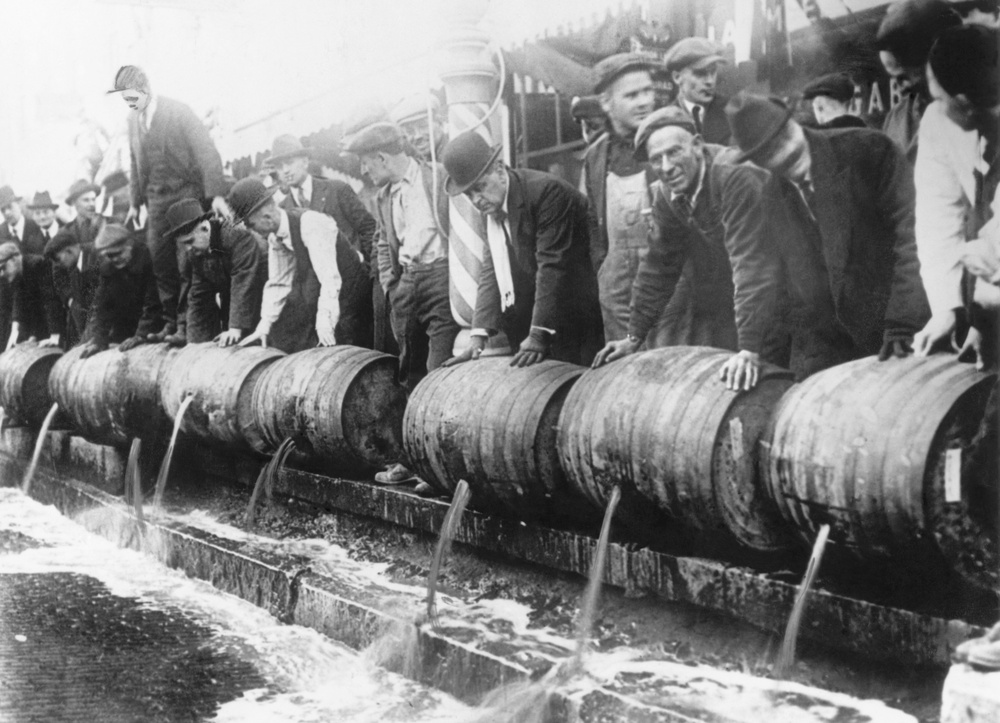
Either way, it was his huge donation that the WCTU used to pass the 18th Amendment and the Volstead Act. Many speculated later that he funded Prohibition for his own financial gain, however, the fact that he never drank a lick of alcohol nor smoked an ounce of tobacco suggests that he considered both to hold no value.
A Life Worth a Biography
Because of his unprecedented success and charitable donations, the Rockefellers authorized a biography to be written about the patriarch in the 1930s. At the time, they asked the future Prime Minister and successful writer, Winston Churchill, to author it. Churchill reluctantly agreed but requested that the family extend him a $250,000 advance on the project.
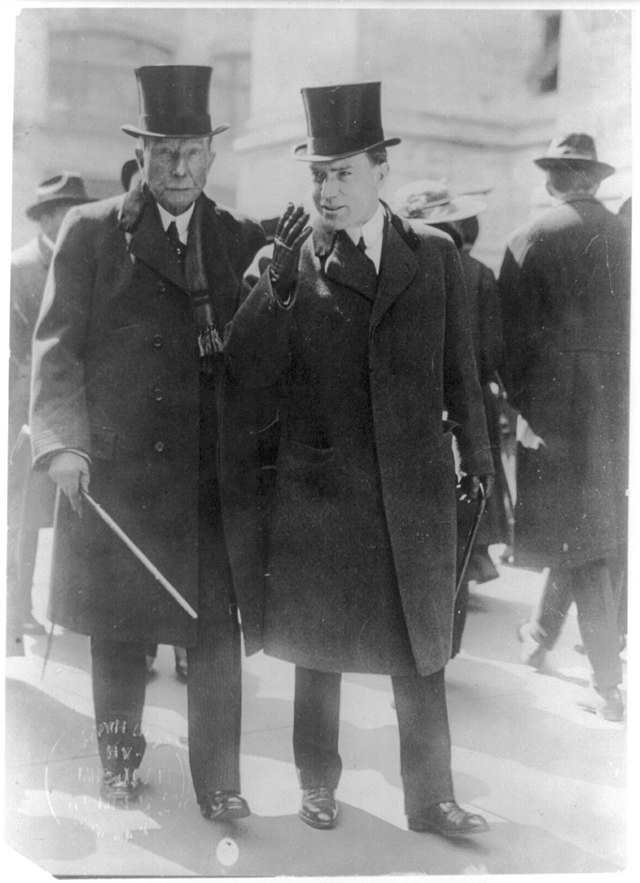
Whether they were offended or not, the family respectfully declined and hired a Colombia University historian named Allan Nevins to do the honors instead. Certainly, they are one of the wealthiest families in the world and could have afforded the advance, however, they are also financially savvy and $250,000 was too steep a price tag.
The Death of a Tycoon
John D. Rockefeller lived a full life, dying of atherosclerosis in 1934 just two months shy of his 98th birthday. Because of his longevity, he actually outlived his life insurance policy earning him an additional $5 million dollars from his payout.
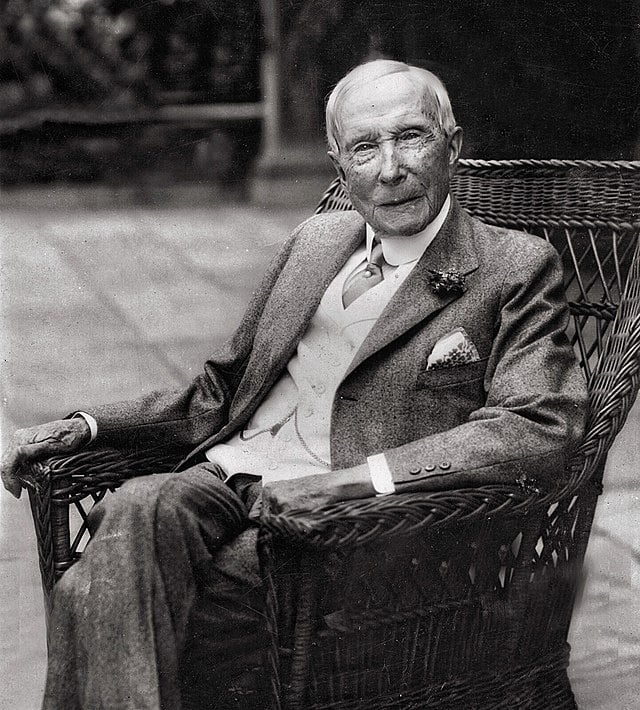
Upon his death in 1934, Rockefeller was worth an estimated $1.4 billion. While that in itself is astounding, the fact that he maintained that level of wealth throughout his life is a testament to his intelligence and work ethic. Granted the billionaires of today may be worth more than John D. Rockefeller when he passed, however, that comparison is based on actual dollars as opposed to the percentage of the national GDP. For example, in 2019 Jeff Bezos was worth 0.006% of the total GDP whereas Rockefeller was worth an incredible 2%.
A Chip Off the Old Block
John D. Rockefeller and Laura Spelman had five children together, four daughters and one son. Their youngest, John Jr. was born on January 29, 1874, and grew up idolizing his father though he was relatively unphased by his immense wealth.
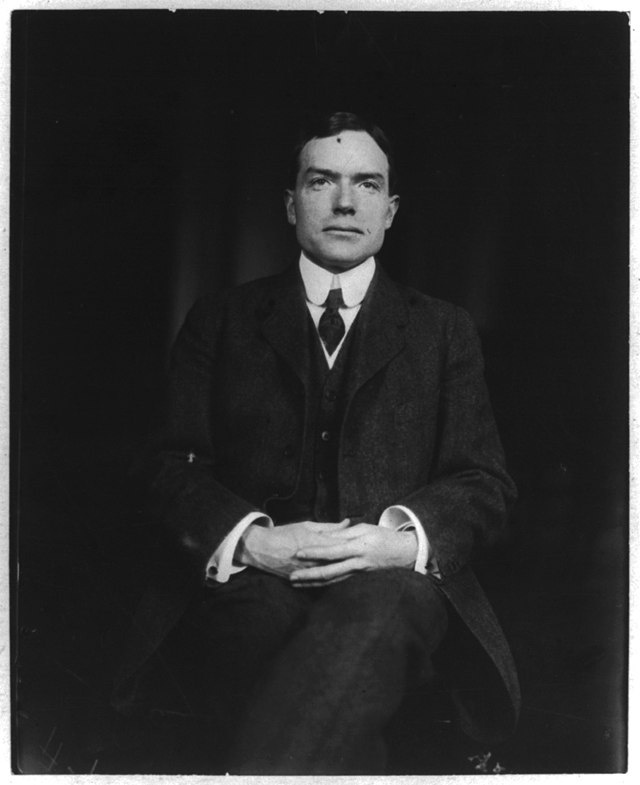
Fueled by the desire to follow in his father’s footsteps, John Jr. joined him as a director at Standard Oil headquarters after graduating from Brown University. At the time, the company was in disarray due to the consequences of the Sherman Act, and the chaotic restabilizing left John Jr. feeling dissatisfied and yearning for a change of scenery. He made the decision to leave Standard Oil in order to focus his energy on real estate and philanthropy instead.
A Miner Dilemma
By 1913, John Jr. was a 40% shareholder and sat on the board of a Rockefeller-owned company called Colorado Fuel and Iron (CF&I). In September of that year, 11,000 coal miners working for CF&I went on strike to protest unfair wages, dangerous working conditions, and mistreatment from their employer. The company responded by evicting the miners and their families from the homes, leaving them to live in tents throughout the winter while continuing to strike.
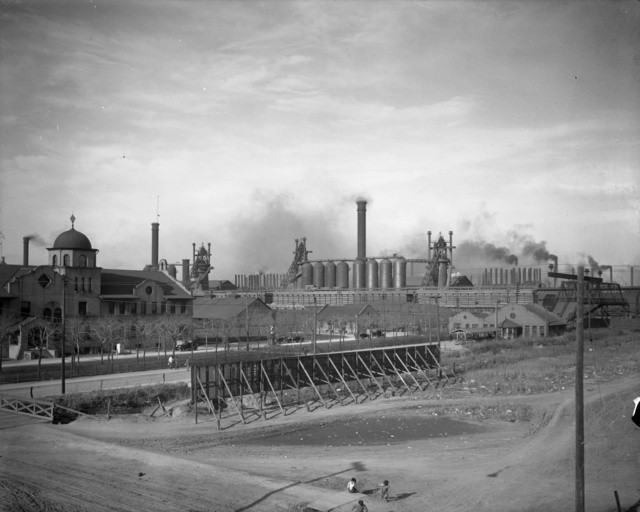
In an attempt to intimidate the miners into forfeiting the strike, the Rockefeller-owned CF&I requested the National Guard to descend upon them in their tent colony near Ludlow, CO. Sadly, the miners had no defense against the guardsmen who began randomly shooting those trying to flee. At least 20 men, women, and children were killed that day.
A Much Needed Change
Because of his affiliation with CF&I, John Jr. was targeted with much of the blame regarding the tragedy that occurred in Ludlow. The heir to the Rockefeller fortune was summoned to testify in front of the Commission on Industrial Relations and afterward, attempted to make amends by visiting the miners and their families in person to address their grievances.
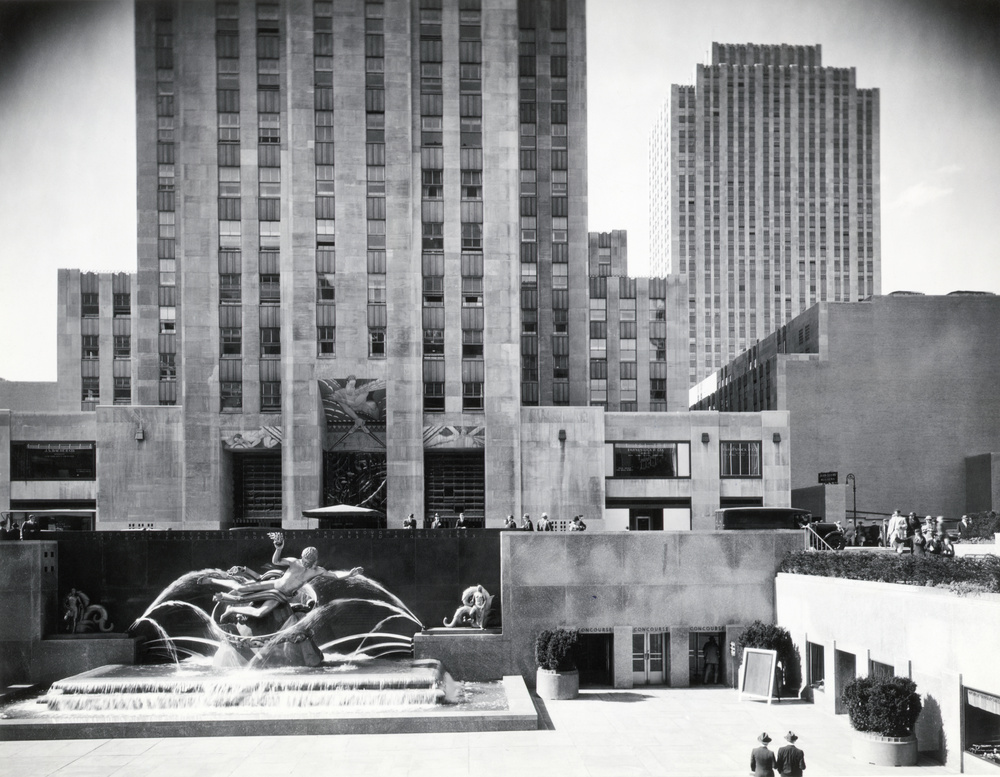
The scandalous affair prompted John Jr. to pour himself into his philanthropic work in an attempt to rebuild his reputation through charitable contributions. He left the industrial industry altogether and, instead, invested in real estate. He donated the land that would become the site for the United Nations headquarters, created the famous Rockefeller Center, and devoted his time to restoring Colonial Williamsburg.
A Strong Family Bond
By 1930, John Jr. had become a majority stockholder in Chase Bank, restored Colonial Williamsburg, constructed Rockefeller Center, donated land for the United Nations headquarters, purchased land that would become Grand Teton State Park, and along with his wife, opened the Museum of Modern Art.
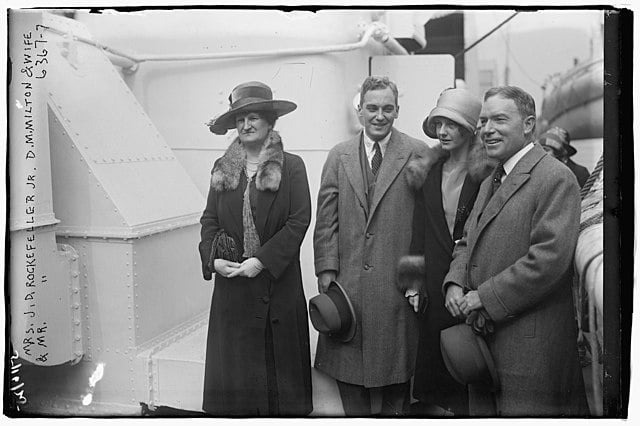
While all of these incredibly generous accomplishments certainly made an imprint on the world, his most important contribution was his children. His oldest, Abby Rockefeller, dedicated herself to philanthropic work and preferred anonymity. Her five brothers, however, quickly made favorable reputations for themselves throughout the realms of politics, business, and philanthropy.
John III
John Jr.’s namesake and the eldest of the five boys was John III. After graduating with honors from Princeton University, he embarked on a trip around the world which would become the inspiration for his future endeavors. He devoted himself to philanthropy as well as foreign affairs. Inspired by his love for the Asian countries, he created the Asia Society, reconstituted the Japan Society, and founded the Council on Economic and Cultural Affairs.
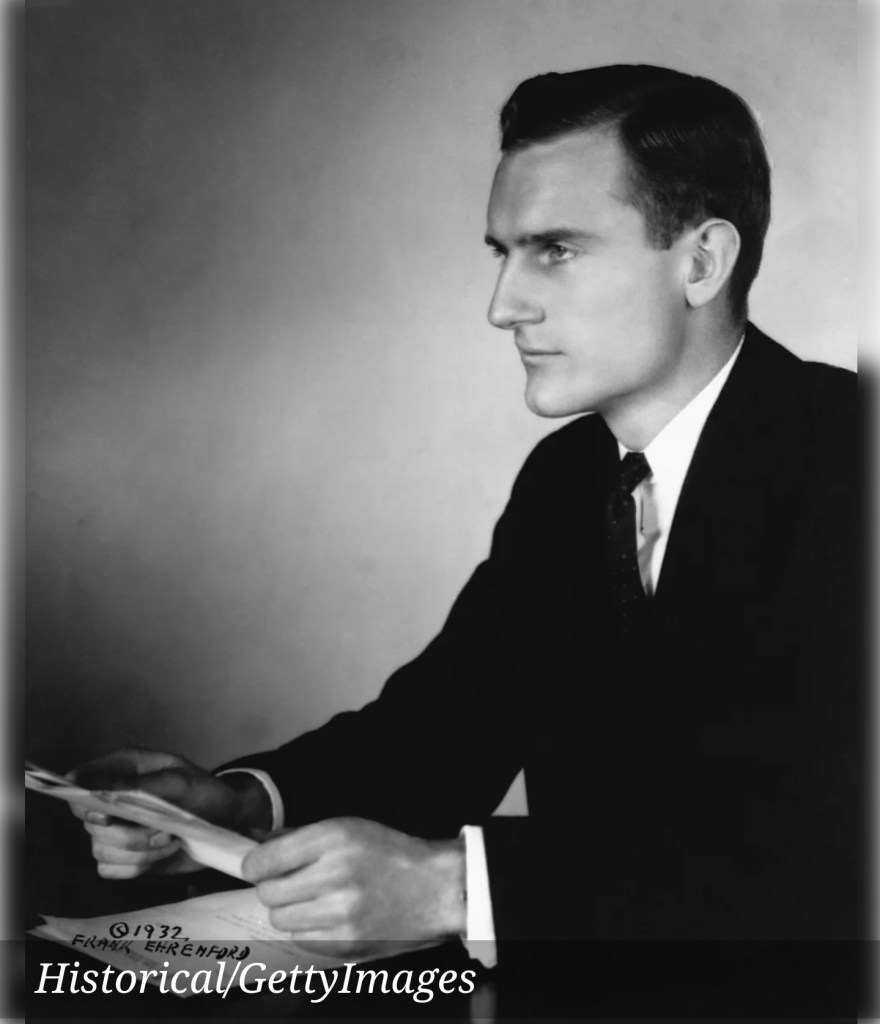
John III also created the Population Council to address the worldwide issue of overpopulation, the first organization to do so. As a means to support performing arts, he created the iconic Lincoln Center in Manhattan. In his lifetime he was also responsible for founding and funding multiple NGOs prior to his fatal car crash in 1978.
Nelson
Nelson Rockefeller was motivated from childhood to do great things, claiming to his father that he would one day become President of the United States when he was just a boy. Though his father tried to instill in him the values of humility and modesty, his motivation made him the most high profile of John Jr.’s children.
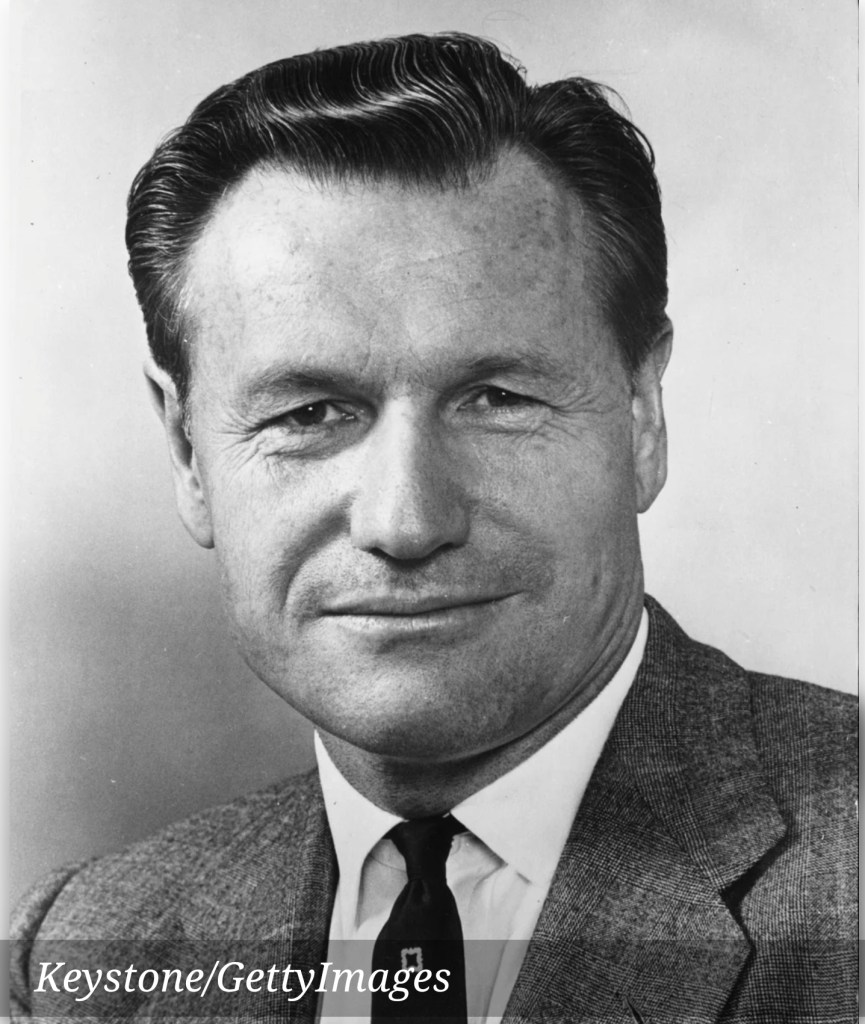
While his career started out in the banking industry with Chase Manhattan, he went on to head up the development of Rockefeller Center during a period of economic decline. Still chasing his childhood dream, Nelson entered into politics, winning the election for Governor of New York in 1953. He served an impressive four terms as Governor prior to becoming the Vice President of the United States under President Gerald Ford between 1974 and 1977.
A Scandalous Death
After serving as the 49th Governor of New York for 14 years, Nelson Rockefeller became the Vice President of the United States despite his rather unorthodox reputation with women. During a period of time when divorce was considered taboo, Nelson ended his marriage to his first wife in 1963. That same year, he married his second wife who was 18 years his junior.
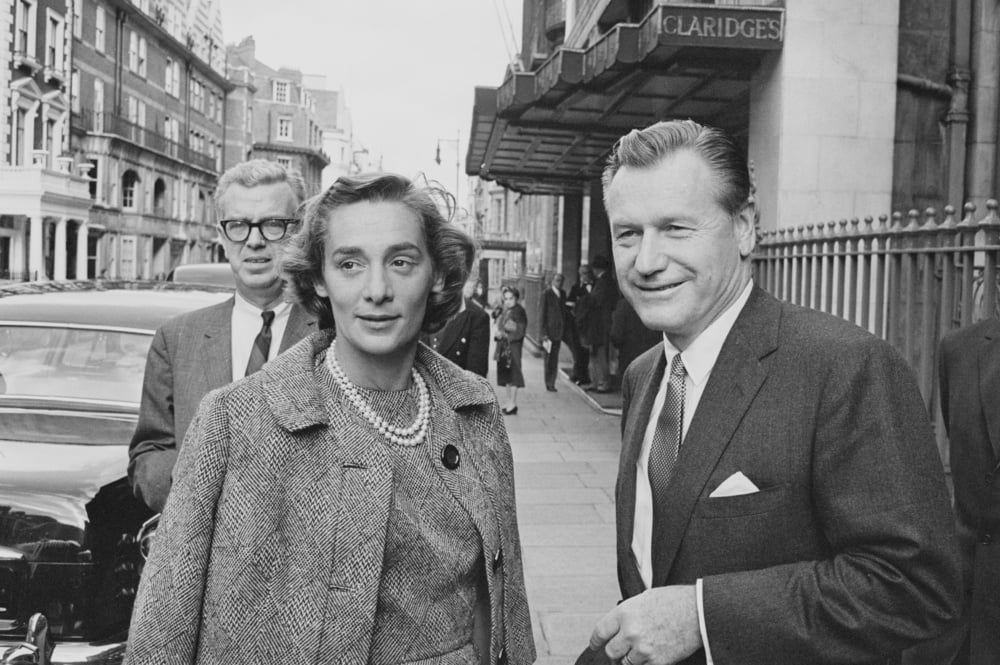
Because of his somewhat scandalous divorce, his new marriage to a younger woman, and his rumored extramarital affairs, Nelson was labeled a womanizer throughout his political career. It seems he carried that label to his death. In 1979, Nelson died of a heart attack. The initial reports from the media stated that he died at his desk, however, they soon issued a correction stating that he was found dead at the home of a 25-year-old aide with whom he was having an affair. While his wife contested the report, his aide confirmed it was true.
Laurance
Out of all of John Jr.’s children, Laurance was the visionary. He made a huge impact on the Big Apple as a venture capitalist on Wall Street. During his career on the New York Stock Exchange, he demonstrated his rare talent and a keen sense of knowing what would be successful and what would fail.
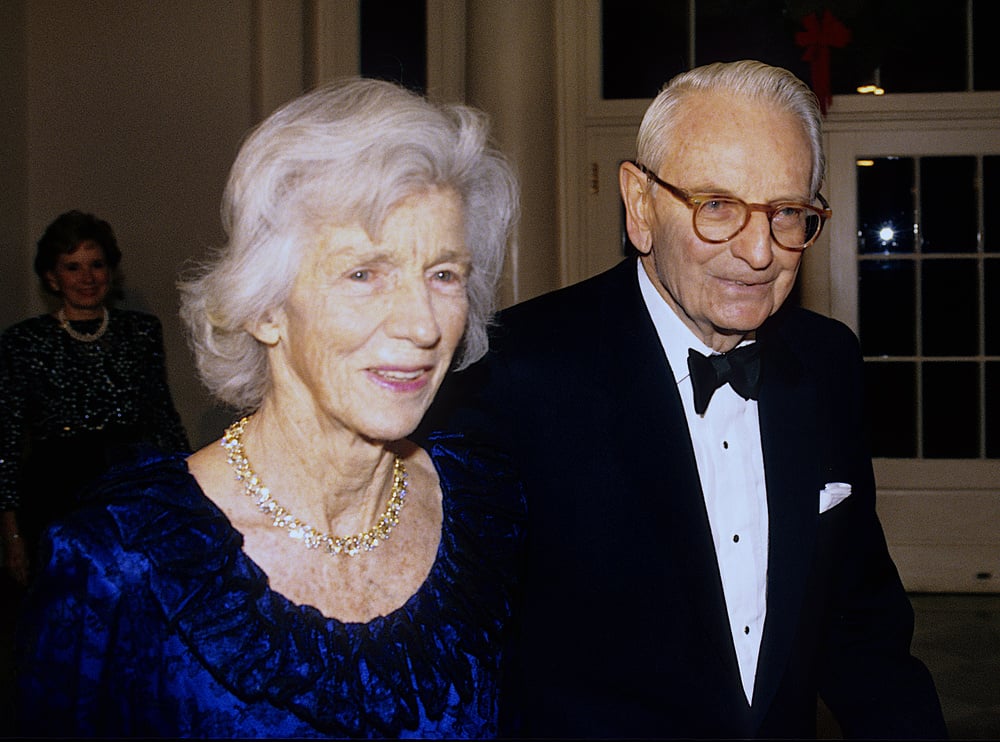
Laurance was a start-up’s dream as he invested in hundreds of them ranging from biotechnology to electronics to computers to aviation. His early investments in Apple and Intel alone are prime examples of his prowess in the trade. In addition to his Wall Street success, Laurance was also a dedicated environmentalist who was instrumental in numerous conservation efforts as well as establishing multiple national parks throughout the United States.
Winthrop
Winthrop Rockefeller was a humble and modest man who did not want to rely on his family’s clout and wealth to ease into a career. Instead, he went to the root of the family business and started out as an apprentice working in the oil fields.
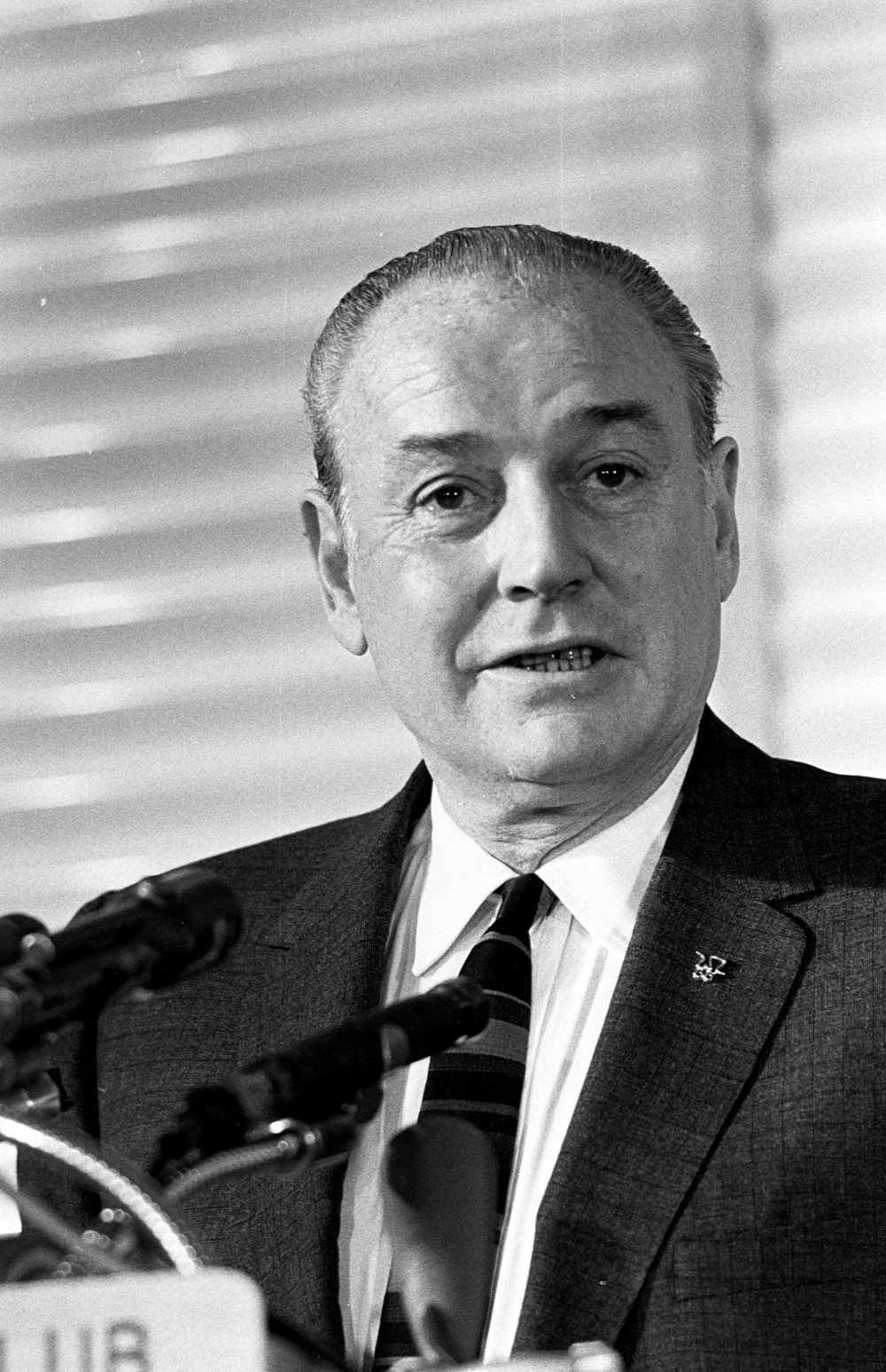
At the end of the Second World War, in an effort to encourage cultural and economic change in the South, Winthrop went into politics serving as the Governor of Arkansas from 1967 to 1971. While some of his cultural changes were unwelcomed in the South, such as integrating the schools, he became well respected for his additional reforms such as the state’s first minimum wage, the freedom of information law, and stricter insurance legislation.
David
The baby of the family, David, also became a powerful figure in the New York Stock Exchange after graduating from the London School of Economics and gaining a Ph.D. from the University of Chicago.
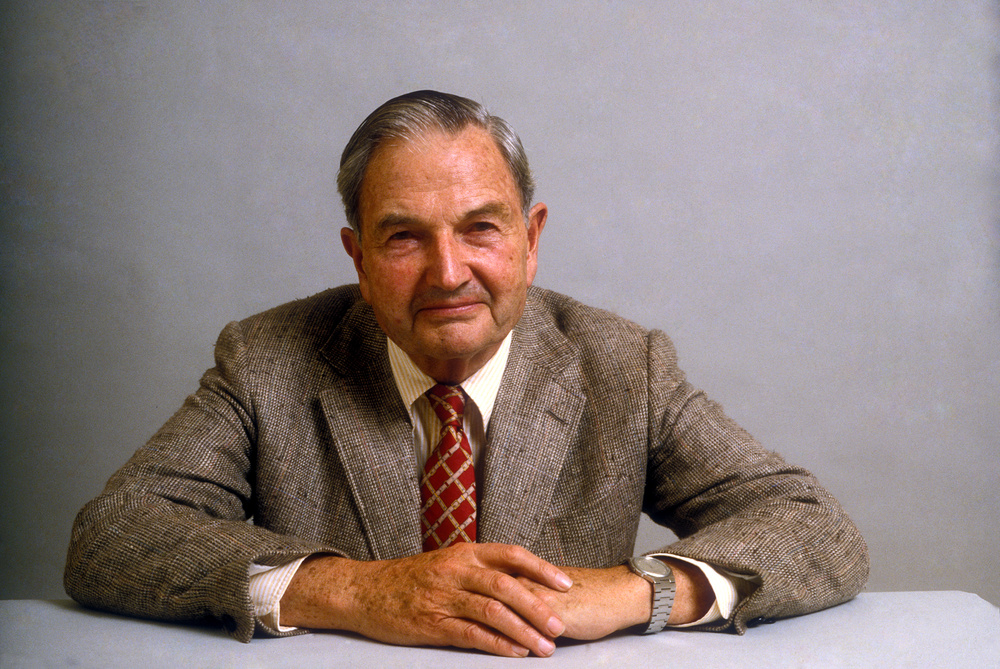
He dabbled in the political arena when he landed a job writing letters for the Mayor of New York, however, his political aspirations expired due to the Second World War. Instead of using his family name and wealth to avoid enlisting, David entered into the US Army as a private and soon rose to the rank of Captain during his service. He served in North Africa and France, establishing political and economic intelligence units, and then served as the assistant military attache at the American Embassy in Paris.
Post War Career Change
When David returned from the war, he made a career change by joining Chase Manhattan Bank, a company his family had been tied to for generations. Because his uncle, Winthrop Aldrich, was chairman of the bank and his father and grandfather were its main shareholders, it was assumed by the employees that David was a spoiled child riding on his family’s coattails.
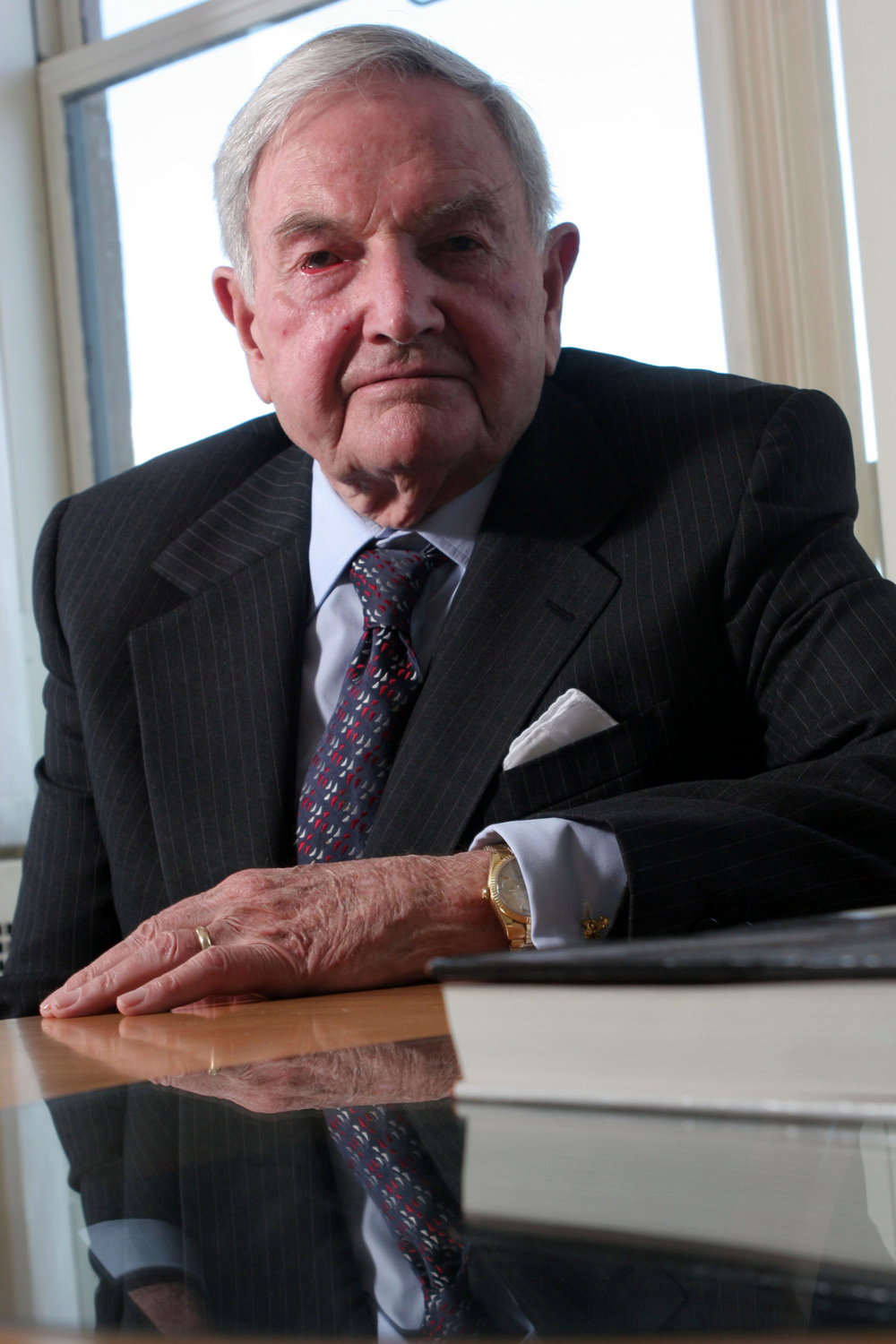
That assumption did not last long though, as he proved himself quite quickly to be a hard-working, everyday guy. He rode the subway to work with his peers, comprehensively learned the business, and pulled his weight with tasks at hand. Because of his hard work and dedication, he was promoted to co-CEO in 1960 and then CEO in 1969.
Chase Manhattan Expansion
As CEO, David concentrated his efforts on utilizing his worldwide contacts to increase the bank’s foreign presence. He expanded the foreign branches from 11 to 73, making Chase Bank the first stateside institution to open branches in both China and Russia.
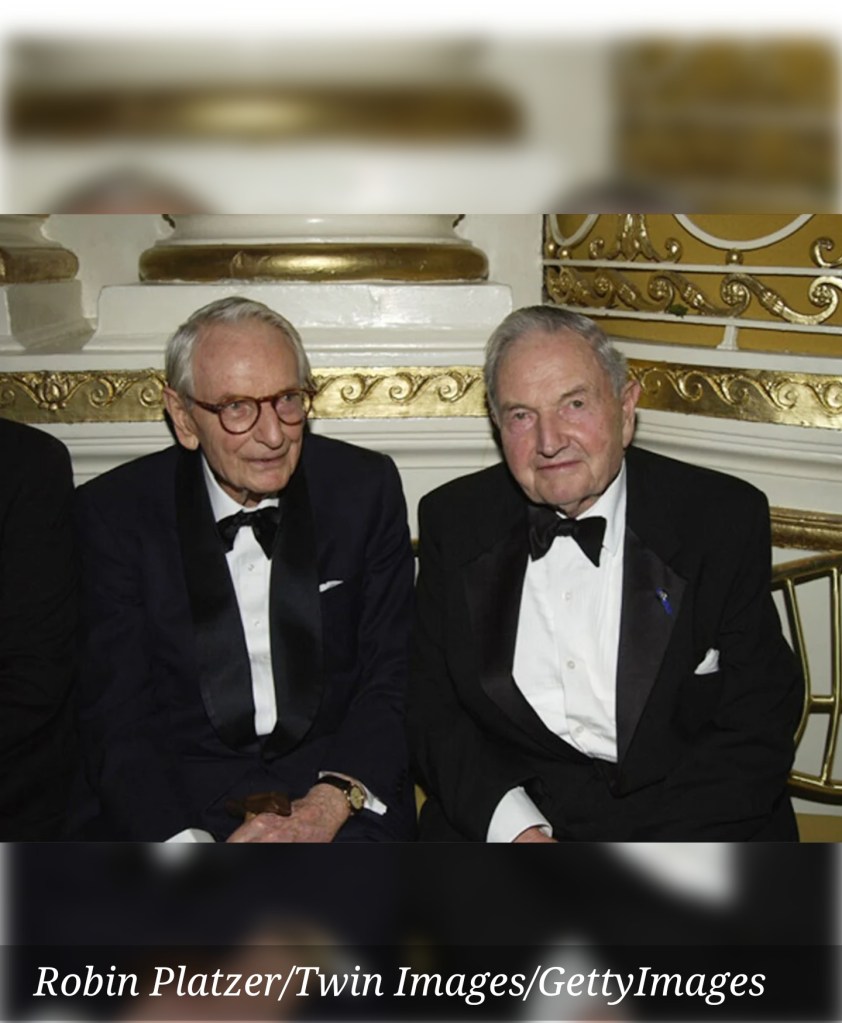
With his global presence secured, David began to make internal changes in the company. He established its first human resources department as well as its planning and marketing departments alongside manager, Peter Drucker. David worked diligently to improve Chase Manhattan as well as the banking sector until he retired in 1981. When comparing the company’s worth from the time he started his career in 1946 to the time he retired in 1981, it was noted that Chase Manhattan went from a $4.8bn institution to a $76.2bn institution.
Passed Away
David Rockefeller died at the astounding age of 101! He died in his sleep at his New York home in March 2017. A year before, at his 100 birthday, he donated 1000 acres to the state of Maine.
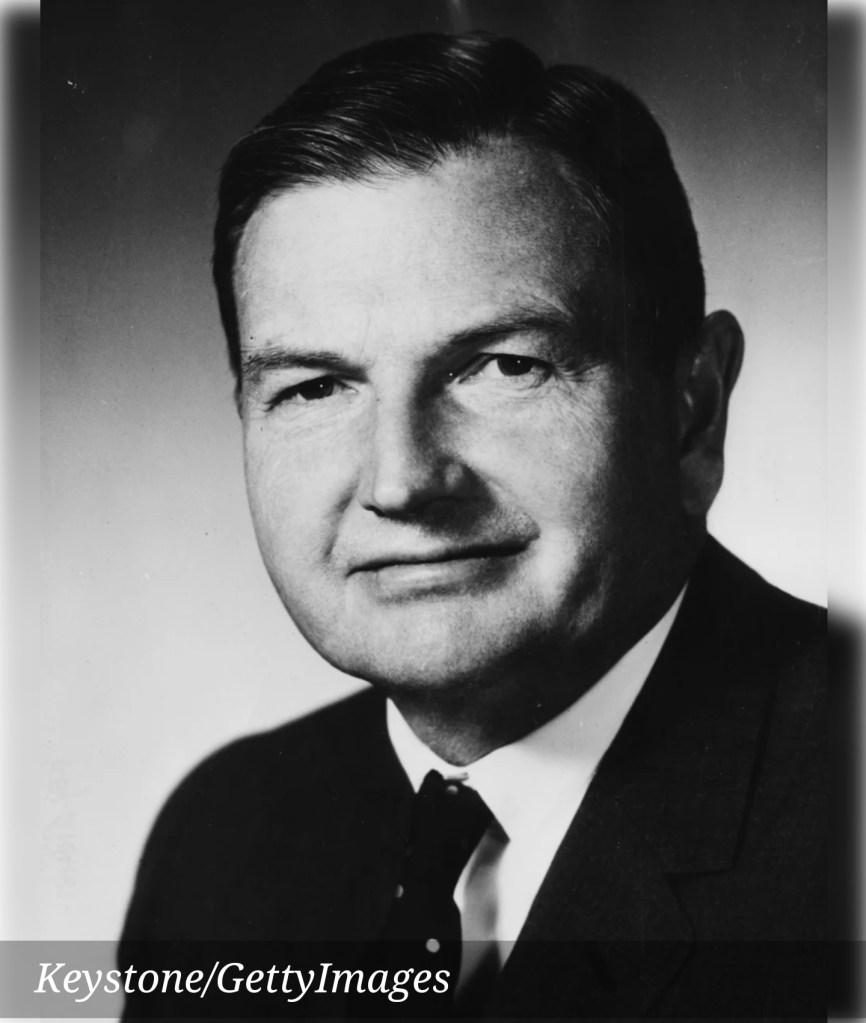
His most famous quote was: “American capitalism has brought more benefits to more people than any other system in any part of the world at any time in history. The problem is to see that the system is run as efficiently and as honestly as it can be.”
A Coup for Humanity
During World War I, the Rockefeller Foundation offered help to what was presented as a “Public Health Movement” in Sao Paulo, Brazil. Unbeknownst to them, the movement was actually geared towards exterminating the poor, the disabled, and those of mixed African descent.
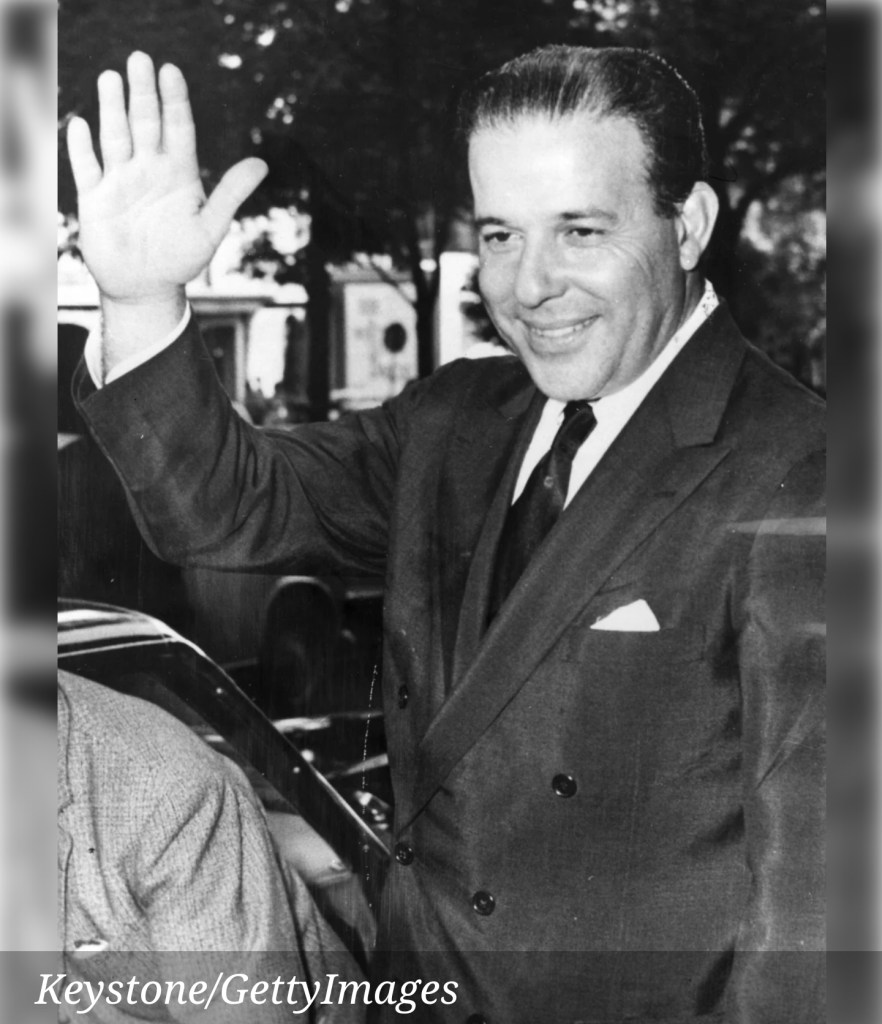
When David Rockefeller was employed at Chase Manhattan Bank in the 1960s, he publicly declared João Goulart, Brazil’s leader at the time, as an unacceptable candidate for dealings with the US banking system. In 1962, he convinced the Rockefeller Group to invest $12 million into the Brazilian elections in an effort to support the anti-communist candidates which consequently backed the coup that removed Goulart from office.
A Tragedy Takes Three Lives
While it may seem that the Rockefeller family has been bombarded with only good fortune, in fact, they have faced their fair share of tragedy as well. The first occurred in 1951 when the great-niece of John D. Rockefeller, Winifred Emeny, killed her two children as well as herself by carbon monoxide poisoning.
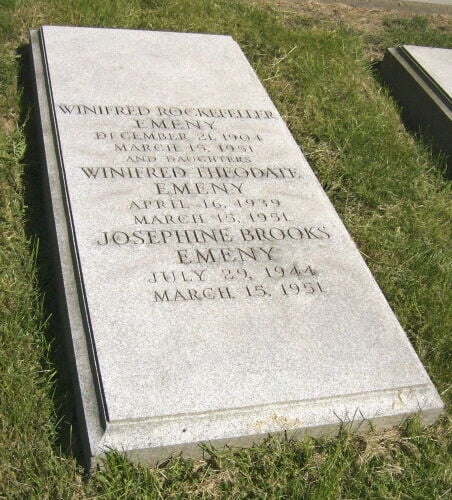
A popular socialite in Greenwich. CT, Emeny shocked the community and her family with her actions on March 15, 1951. She placed her daughters, Josephine, age six, and Winifred, age 12, in the backseat of one of her cars, sealed up the garage doors, and started the engines of both vehicles. She then laid on the cement floor in between both cars and died. The family maid discovered all three bodies and contacted the authorities.
A Tragic Disappearance
On November 19, 1961, the fifth son of Nelson Rockefeller, Michael, disappeared after his catamaran tipped over off the coast of New Guinea. The 23-year-old photographer was working as a trustee for the Museum of Primitive Art and had made the trip in search of indigenous art. When the catamaran capsized, Michael volunteered to attempt to swim to shore in search of help for his fellow passengers. Sadly, he was never seen again.
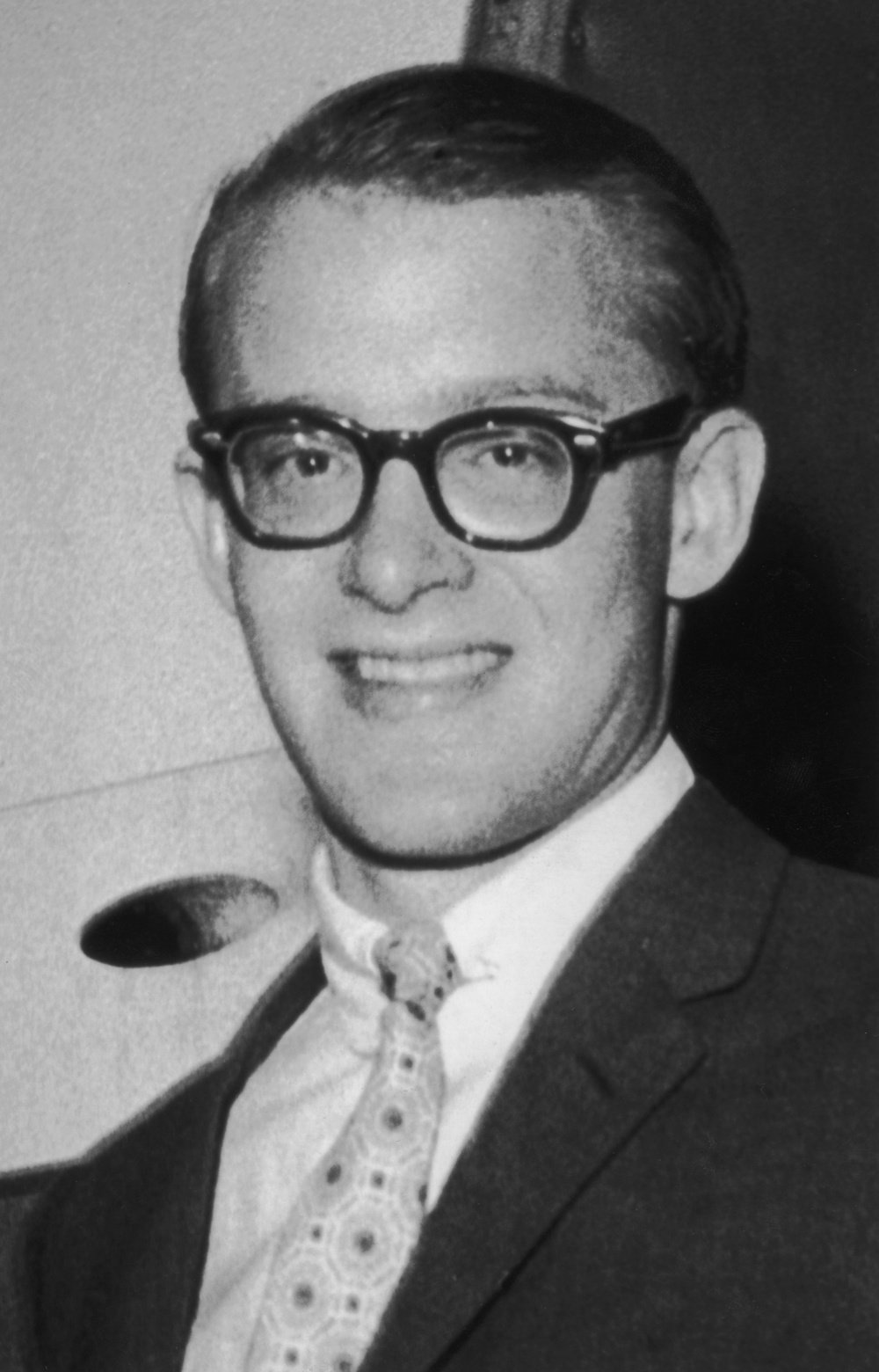
While his death is officially listed as drowning, the actual events remain a mystery. Some have suggested that he could have been attacked by a shark or a crocodile while others suspect a much darker fate. In the region where the accident occurred, there are multiple small islands that are home to indigenous, cannibalistic tribes who are fiercely territorial. A month after his disappearance, a Dutch priest who is allowed on the islands questioned the men from the Otsjanep tribe to see if they had seen Michael. They readily admitted that they had killed and eaten a man matching his description.
A Tragic Car Crash
The namesake of his father and grandfather, John D. Rockefeller III was tragically killed in a head-on collision in Mt. Pleasant, NY on July 10, 1978. At the time of his death, the 72-year-old philanthropist was the oldest living Rockefeller left in the family. The accident occurred just 12 miles north of the family’s sprawling estate, Kykuit.
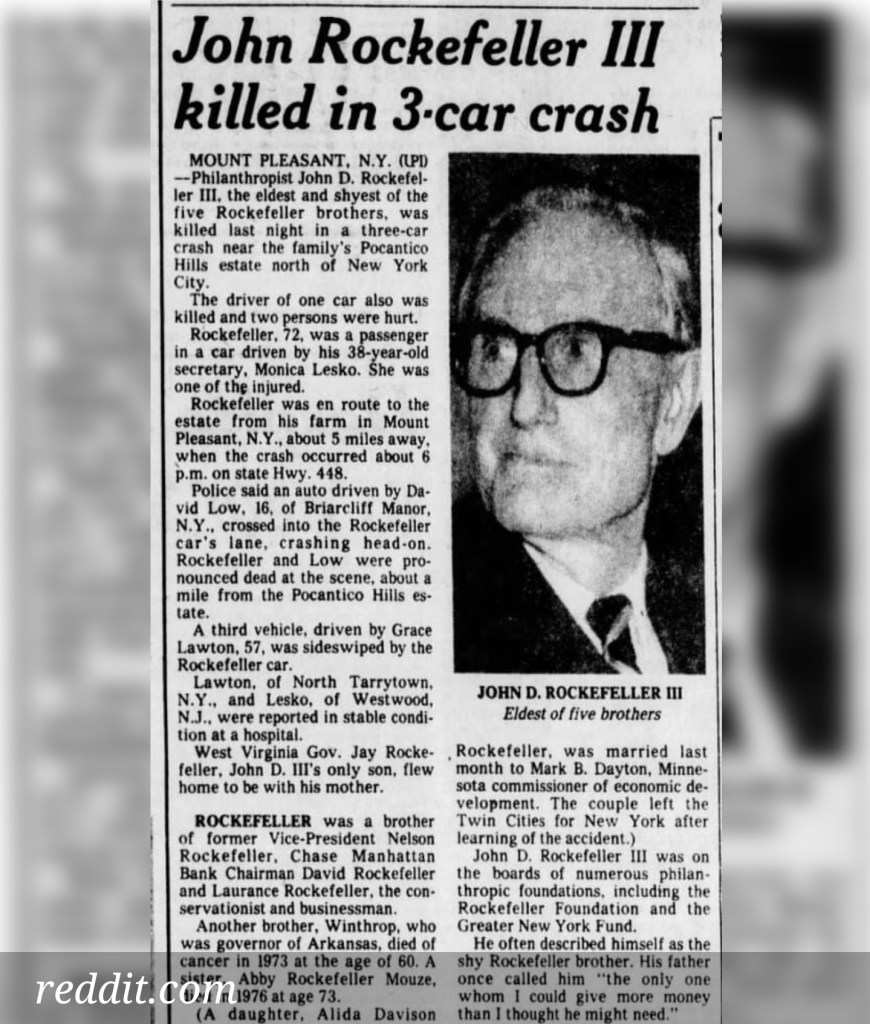
John D. Rockefeller III was being driven by his secretary when a 16-year-old driver strayed from his lane on a blind curve and hit their car head-on. Both Mr. Rockefeller and the young driver perished in the accident. The secretary luckily survived.
A Tragic Plane Crash
Son of the billionaire banker, David Rockefeller, Dr. Richard Rockefeller chose the path of philanthropy instead of business. A physician by trade, he served as chairman of the United States Advisory Board of Doctors Without Borders and dedicated his later life to establish worldwide methods of treatment for those suffering from PTSD.

On June 12, 2014, after visiting the family estate for his father’s 99th birthday, the experienced pilot took off from Westchester County Airport departing the runway in a dense fog and light rain. Within ten minutes, the ground crew had lost contact with him and notified authorities. They found the plane crashed less than one mile from the airport. He was just 65 years old.
From Riches to Ruin: the Tumultuous Story of the Astor Family
The Astor family is one of the richest families ever to inhabit the United States of America. They thrived during a time of great prosperity and optimism for the country and spread themselves into every aspect of society from politics to real estate. In fact, they owned such an impressive amount of property across New York after relocating there in the 19th century that they might as well have owned the place, earning the nickname “landlords of New York”.
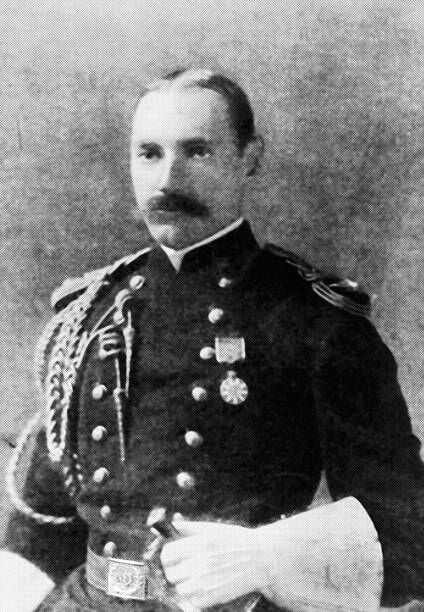
John Jacob Astor is still one of the wealthiest men to have ever lived. But with the highest highs come low lows, and the Astor family has been through its own fair share. From tragic deaths to financial scandals, take a look at where one of the world’s wealthiest dynasties has ended up…
The Beginning of the Astor Family Bloodline
The Astor family roots can be traced back to Giovan Asdour, born in 1595, and Gretta Ursula Asdour, born in 1589 in Italy. Unlike their descendants, it’s said that they came from “nothing”. The family eventually made its way to Germany where Johann Jakob Astor was born in 1763.
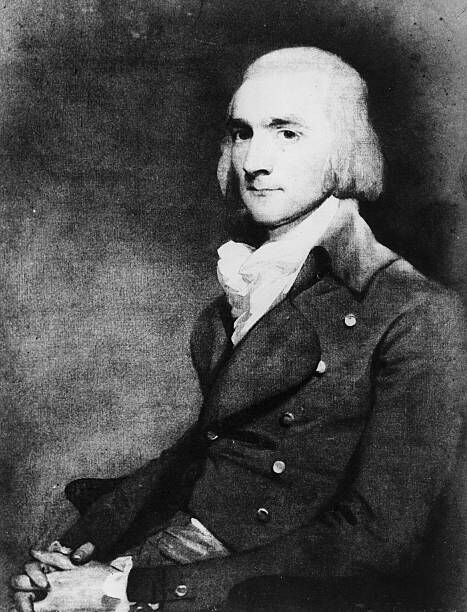
Johann worked for his father as a dairy salesman along with his three brothers. After his oldest brother, George, set off to live in London to work in the woodwind instrument business, Johann would join him at age 16 and change his name to John Jacob. But clarinets wouldn’t hold the interest of the ambitious young John for long.
John Jacob Astor Dreamed of Sailing to North America
John Jacob had always dreamed of sailing, and by 1783 at the end of the Revolutionary War, he set off on his voyage in the hopes of settling down in North America. He found his way to Baltimore, Maryland where he began a relationship with his landlady’s daughter, Sarah Cox Todd, and married her in 1785. She would eventually become what he called “the best business partner any man ever had,” and he supposedly even paid her $500/hour for her hard work.
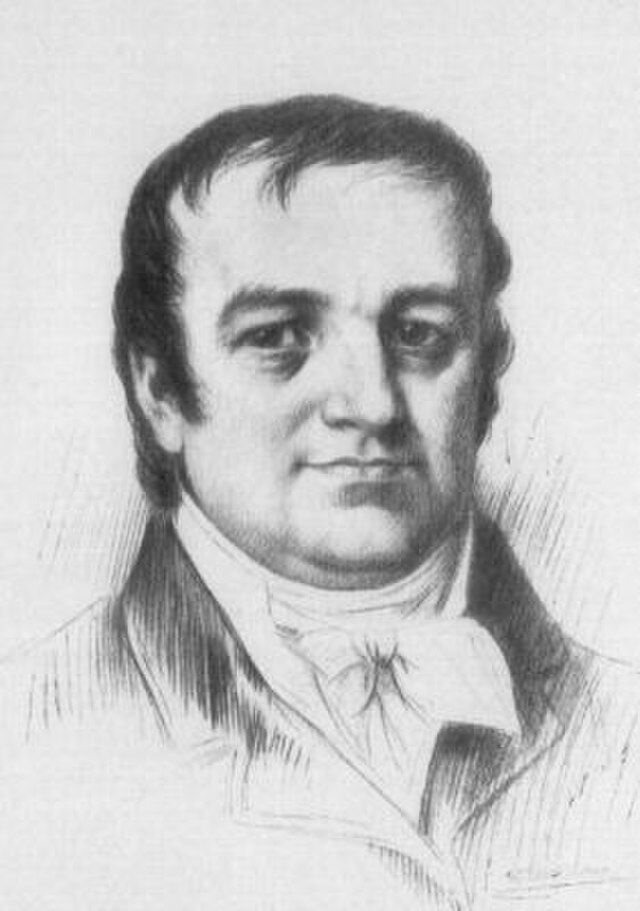
The riches of the burgeoning fur trade called his name, and John eventually started his own business buying hides from Native Americans, turning them into furs in his own operation, and then selling them for an enormous profit. So enormous, in fact, that by 1800, he was worth $250K (~$6M today) and was one of the biggest names in the industry. It was also around this time that he began to buy real estate in what would soon be one of the busiest harbor cities in the world: New York City.
The Astor Family Dynasty
John Jacob was a true American patriot despite having been born with German blood. He would eventually become the government’s biggest war bondholder by funding arms for the War of 1812. The irony is that his money-making fur trading was directly disrupted by the war that he himself funded; to make up for his lost profits, he would eventually join the illegal opium trade.
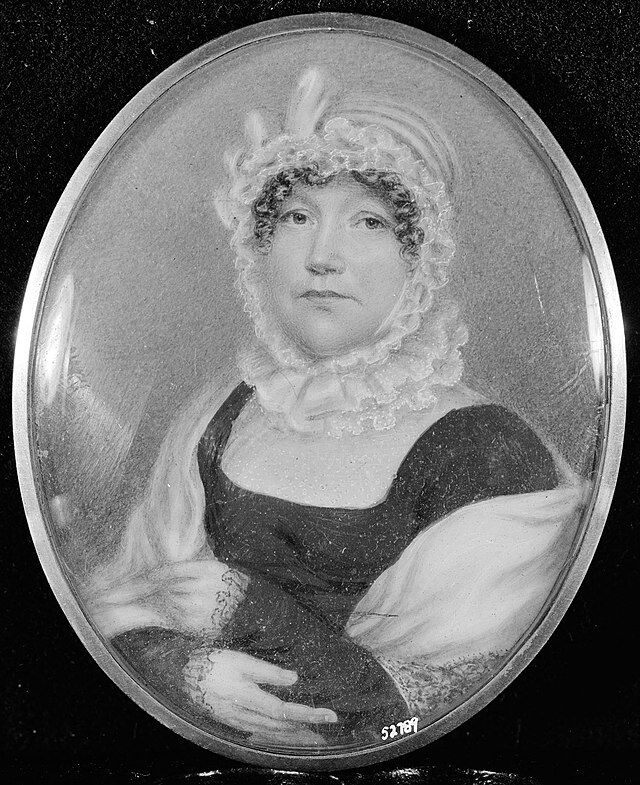
Thanks to the combined efforts of his businesses, by his death in 1848 at age 84, he was the richest man in America with wealth equivalent to almost 1% of the GDP of the United States (comparable to Jeff Bezos today). And while his wealth would trickle down among his and Sarah’s eight children, it would be thanks to his son William Backhouse Astor that the family wealth would continue to grow and the Astor family dynasty would carry on.
William Backhouse Astor Made an Even Bigger Fortune
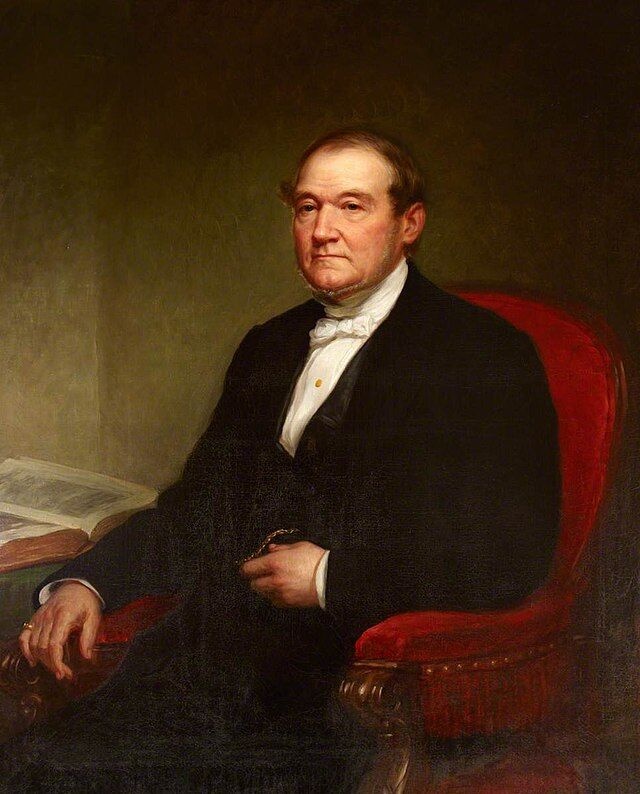
William Backhouse Astor might have achieved many things in his life, but inheriting most of his father’s fortunes was by far his most rewarding. He carried on the family baton from his father when it came to real estate and continued buying more property in and around New York, especially around the areas of Central Park. By 1867, he supposedly owned up to 720 homes and had expanded his business interests into coal, railroad, and insurance.
Though John Jacob and William Backhouse both also exhibited generous charitable sides, William’s sons, the next generation of Astors, seemed to have lost their minds a bit due to their monumental wealth. Disturbing evidence would surface surrounding scandalous family affairs, leading to major court battles.
Family Disputes, Scandals, and Bitter-Sweet Revenge
William’s two most prominent sons were John Jacob Astor III (born 1822) and William Backhouse Astor Jr. (born 1829). But an argument among their families would lead to a permanent schism in the family.
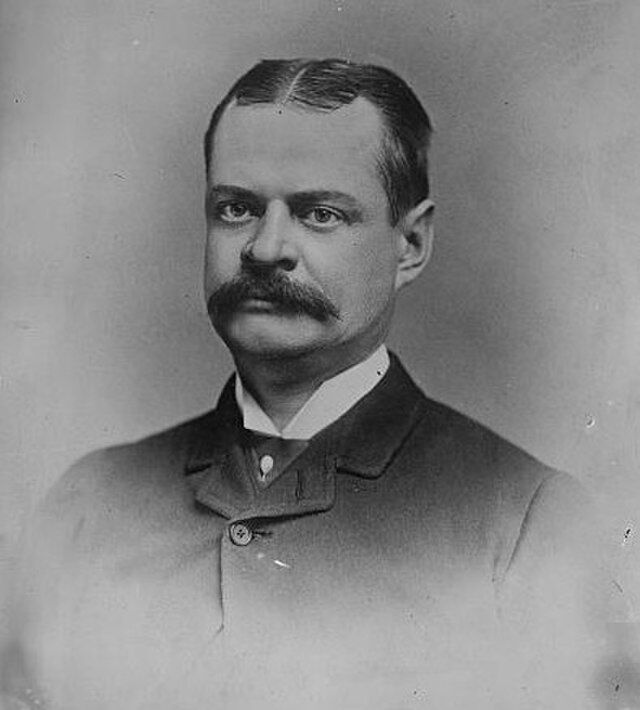
Both John III and William Jr.’s wives carried the Astor name, but after John III’s wife Charlotte died, William Jr.’s wife, Lina, declared she was now to be known as “Mrs. Astor.” This was a problem for John III’s son, William Waldorf Astor, who thought that as the son of the elder brother, his branch of the family took precedence and that his wife should be the official “Mrs. Astor”. But Lina wouldn’t be so easily dissuaded, and William Waldorf would take some very petty revenge on her.
Petty Is As Petty Does
The families of the two brothers had lived in neighboring houses on 5th Avenue for years. But after John III died and Lina still refused to give up the title of Mrs. Astor, William Waldorf knocked down his family’s home and began construction of a 13-story hotel on the site…right next door to his Aunt Lina. Constant construction and an influx of tourists eventually forced her to move farther uptown, which was – humiliatingly – where the ‘new money’ families were also living.
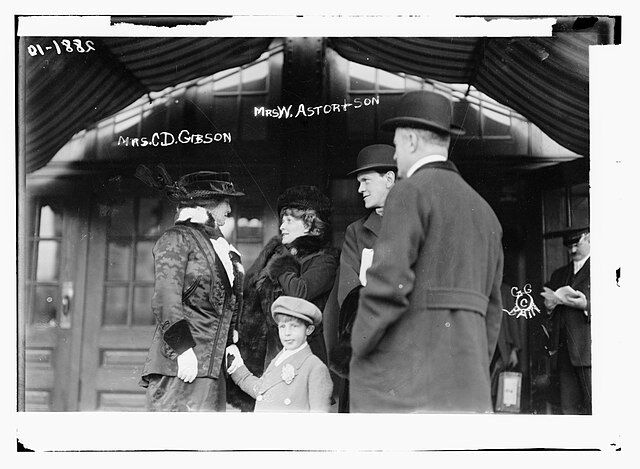
And this wasn’t the end of the hotel. Lina’s son, John IV, also decided to knock down the family home…and build a competing hotel right next to that of his cousin that would be 16 stories to William’s 13. The names of these hotels? The Waldorf and the Astoria. They would eventually both be combined into the legendary Waldorf-Astoria, which in turn would be knocked down in 1929 and replaced by none other than the Empire State Building.
The British Branch Is Born
Due to never-ending family feuds with his aunt and cousin, William Waldorf Astor relocated to London during the last decade of the 1800s, labeling America as “no longer a fit place for a gentleman to live”. He landed himself the rank title of Viscount in 1917 and would eventually come to own Hever Castle, the childhood home of Anne Boleyn, which he would painstakingly restore to today’s glory.
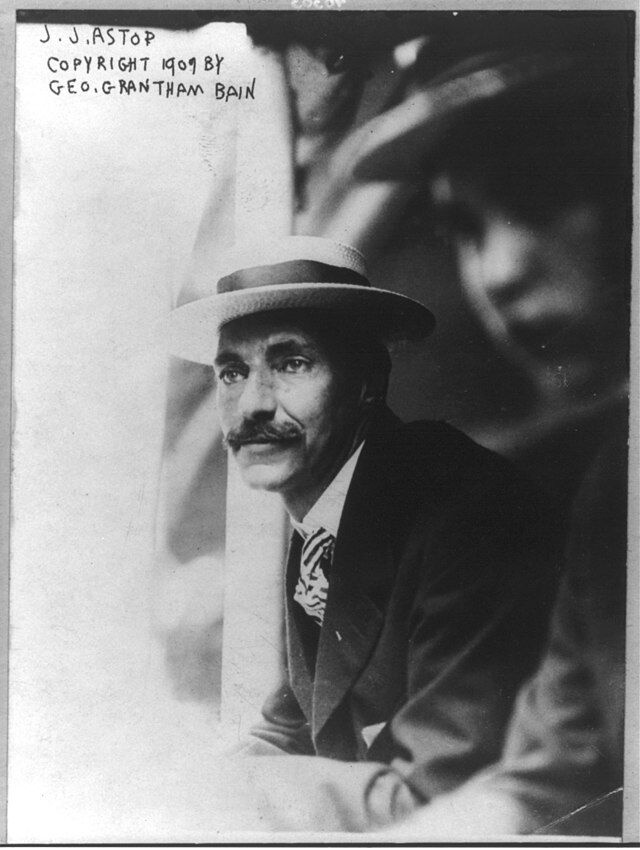
Back in America, his cousin John IV was making a fortune in hotels, but his legacy would be equal parts scandalous and tragic – and cut short.
Scandal Sets Sail
John IV had married socialite Ava Lowle Willing in 1891 and had two children, William Vincent and Ava, with her. But shockingly, the two would divorce in 1909 – a massive scandal for the time. Adding to that was the fact that the 47-year-old John IV shortly thereafter announced he was getting married again…to an 18-year-old.
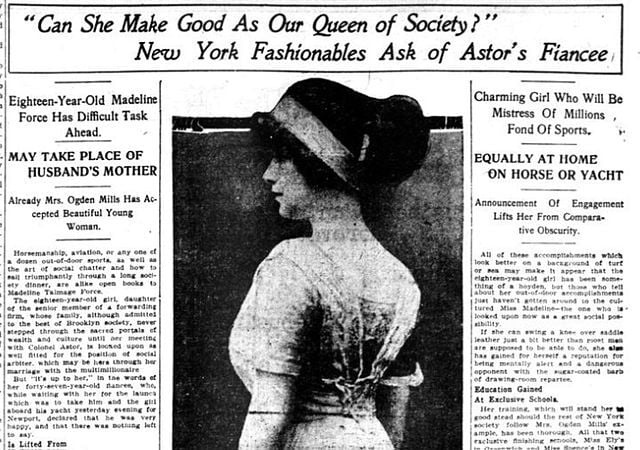
His new wife, Madeleine Talmage Force, wanted them to take a long honeymoon until the gossip died down back home, and so the couple journeyed across Europe and Egypt, where Madeleine fell pregnant. Insisting that her child be born in the United States, Madeleine and John IV boarded a ship back to New York on its maiden voyage with their butlers, nursemaids, and a personal maid. The name of the ship was the RMS Titanic.
Tragedy Strikes
When they boarded the Titanic, John IV and Madeleine were the richest people on the ship. When the iceberg was struck, John IV seemed to not take the damage seriously, telling his wife they would be safer staying put: “We are safer here than in that little boat.” But when it was apparent the situation had become dire, they made their way to the lifeboats where John was denied entry to boat #4 with Madeleine. He told her, “You are in good hands and I will meet you in the morning.”
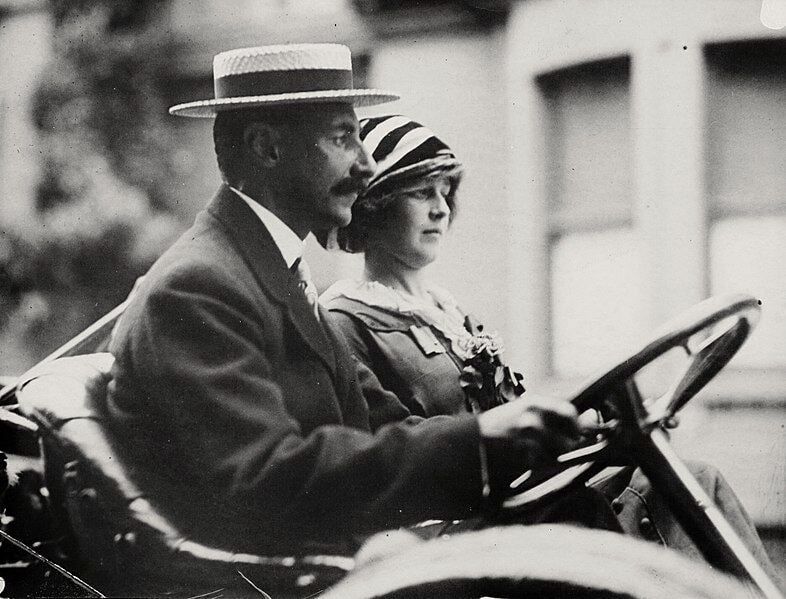
He was last seen alive just 30 minutes before the ship disappeared beneath the waves, smoking a cigarette on the deck; his body was one of the few recovered from the wreck and was identified by his clothing: “Blue serge suit; blue handkerchief with ‘A.V.’; belt with gold buckle; brown boots with red rubber soles; brown flannel shirt; ‘J.J.A.’ on back of collar.” Madeleine survived and gave birth to John Jacob Astor VI (who would be known as the “Titanic baby”) on August 14th, 1912.
Not-So Brotherly Love
Madeleine had inherited relatively little of John IV’s fortune when he died on the Titanic, with the bulk of it going to his elder son Vincent. William Vincent Astor had hated his stepmother Madeleine from the moment she married his father, and his feelings towards his half-brother were no less antagonistic.
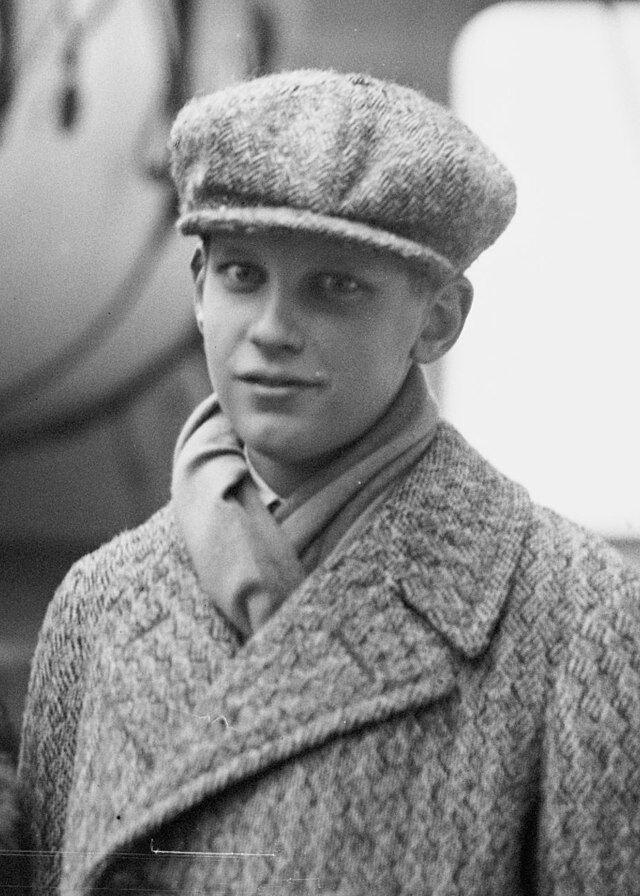
Vincent died without an heir in 1959 at age 67 of a heart attack, and declined to leave anything to his brother, about which John VI said that he had “had the legal, not the moral, right to keep all the money.” It seems he felt justified in demanding morality, because he promptly sued Vincent’s widow for the inheritance, claiming Vincent had been mentally incompetent when writing his will due to the effects of alcoholism. He claimed his widow had swayed him into leaving her and their charitable foundation the money by bringing her husband alcohol to his hospital room. So, just who was this widow?
Brooke Astor’s Turbulent Times
In 1953, Vincent Astor divorced his second wife, Mary Cushing. He supposedly refused to grant her the divorce until she had found him a suitable replacement; enter Roberta Brooke Russell, who would call him “Captain” and become his partner in philanthropy. About the notoriously difficult person she married, Brooke would say, “He had a dreadful childhood, and as a result, had moments of deep melancholy. But I think I made him happy. That’s what I set out to do…I would make him laugh, something no one had ever done before. Because of his money, Vincent was very suspicious of people. That’s what I tried to cure him of.”
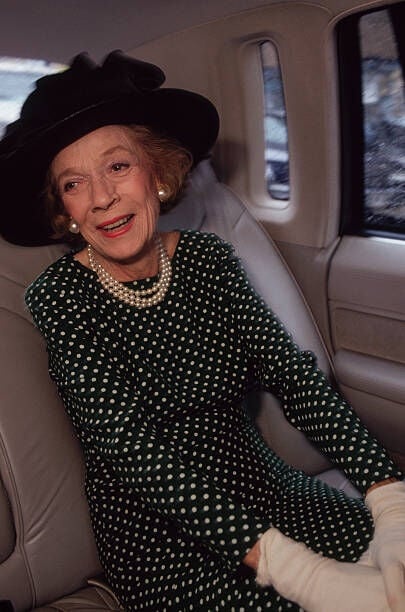
After she was sued by John VI, Brooke would eventually settle with him for a measly $250K. So what happened to the rest of the fortune?
Brooke Astor’s Son Accused of Abuse
In 2006 when Brooke was 104, a story emerged that there was a feud between her son, Anthony Marshall, and her grandson, Philip Marshall, over her wellbeing and care. Though Anthony had been Brooke’s guardian. Philip was suing to remove him as such, claiming elder abuse and theft. In fact, when Alzheimers-stricken Brooke had been brought to the hospital, she was described as being in “deplorable” condition. She died in 2007 at the age of 105.
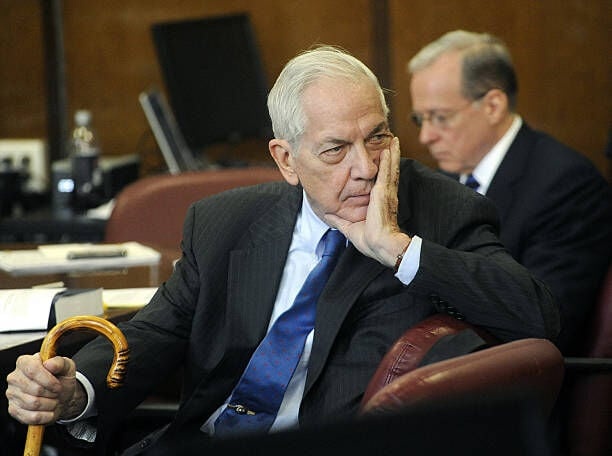
The same year, several charges were brought against Anthony Marshall, including grand larceny, scheming to defraud, falsifying business records, and conspiracy in taking over his mother’s $192M fortune. He was convicted on grand larceny charges in 2009 and was sentenced to 1-3 years in prison.
Was Justice Served?
Anthony Marshall passed away at the beginning of his sentence in 2014 at the age of 90, leaving his $14.5M inheritance to his widow, Charlene Marshall, who was famously nicknamed Miss Piggy. He disinherited Philip, who received just $1M from his grandmother’s estate but said, “We saved my grandmother and that was my goal. And if it was at the cost of anything I was ever to inherit, I just don’t care.”
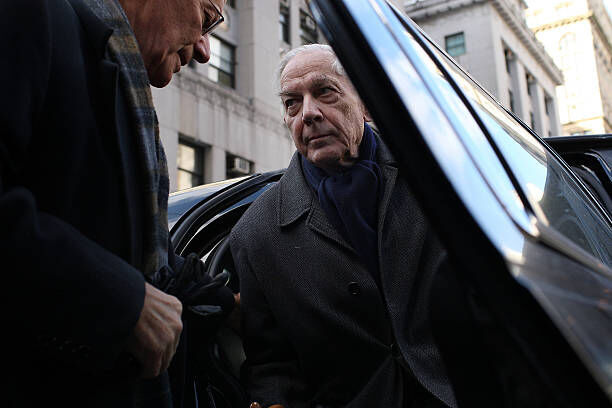
As for the bulk of the fortune, in 2011, Brooke’s estate came under scrutiny by the IRS, which demanded payment of $62M. Appeals are still in motion.
The Brutal Truth Behind the Astor Family’s Centuries of Wealth
Today, all that remains are dilapidated houses and fractions of what once were some of the most beautiful and luxurious mansions in the world. Alexandra Aldrich is one of the last remaining Astor family blood relatives – the great-great-great-great-great-granddaughter of John Jacob Astor. Aldrich and her family revealed the horrors to The New York Post along with shocking images of life on the Astor family properties.
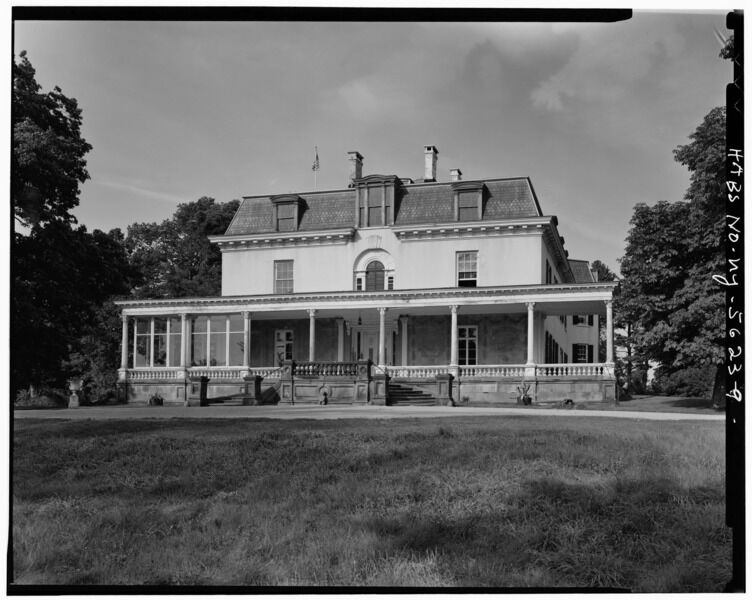
They claim that their biggest secrets were that of the poverty they now endured. One of their houses known as Rokeby in Hudson Valley is a 43-bedroom house built in 1815. It has been owned by the Astor family for almost 180 years, but it has now finally been separated from its glory as the wealth has all depleted.
“Whatever Its Condition, My Family Will Never Sell the Grandiose Property.”
The 420-acre estate is now a crumbled-up mess with cracks in the walls and roof. The Aldrich family are the 10th generation Astor heirs, but there is no more money left to fix anything. The house is now used for tours of which Aldrich’s uncle only spews lies to save them the embarrassment. The Aldrichs have been living on this property for several years but have been sharing three tiny bedrooms with her family on the third floor.
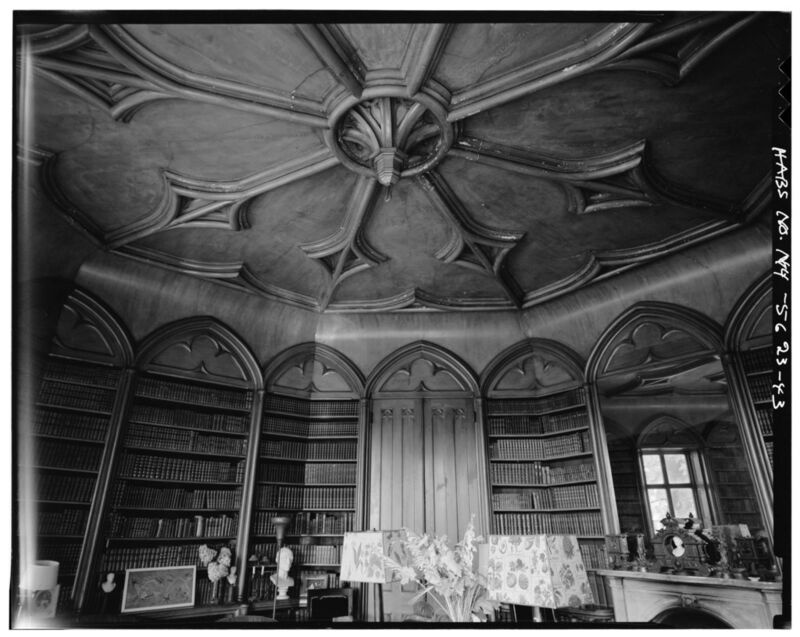
Unfortunately, it is only bound to crumble even further as the remaining family members refuse to sell it nor do they have any Astor family funds left to revive it. Aldrich’s uncle and his family lived in spacious areas on the first floor, while Aldrich and her family were banished to the servant’s quarters due to the decision in ownership so many years back.
 OBLONG MEDIA GLOBAL INTELLIGENCE
Leave a comment