
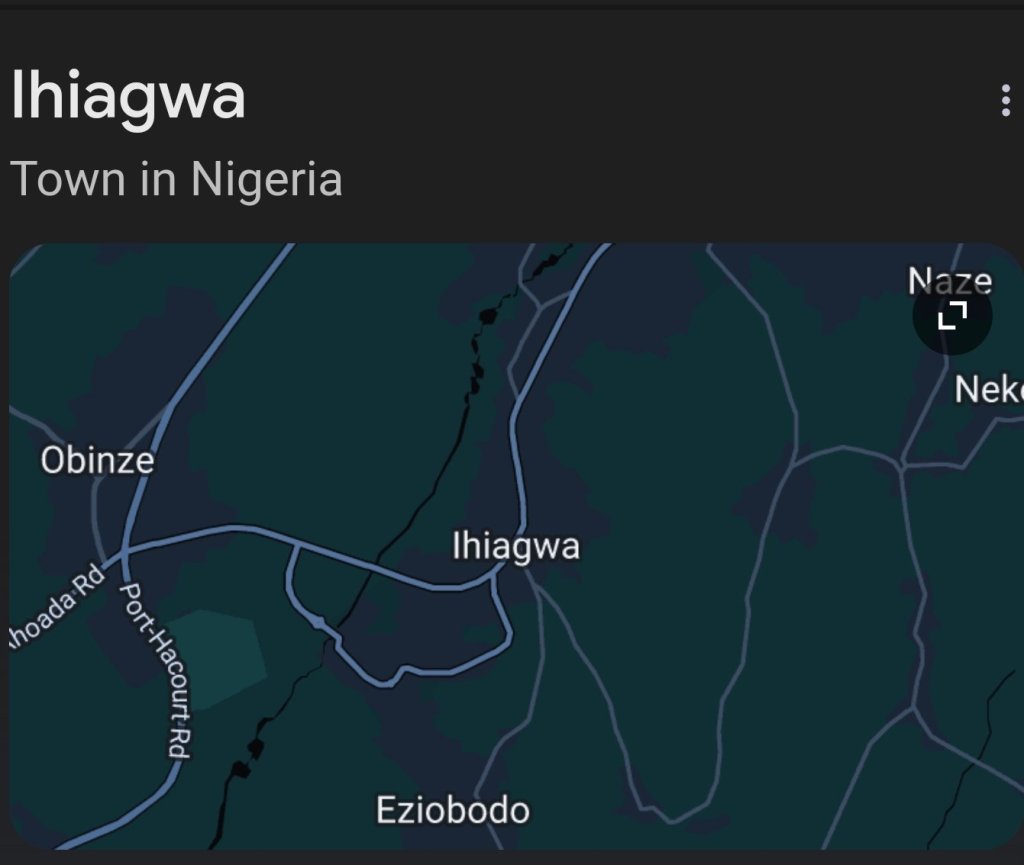
Ihiagwa ófó asato, nestled in Imo State, Nigeria, is a vibrant tapestry of cultural heritage. Home to approximately ten thousand inhabitants, the town pulsates with a rich blend of Igbo ethnic traditions and modern dynamics.
Comprising eight lively villages, Umuelem, Umuchima, Mboke, Nkaramochie, Iriamogu, Aku/Umuokwo, Ibuzo, and Umuezeawula, Ihiagwa exudes a sense of unity while embracing its diversity. These villages form two autonomous communities, each led by an Eze, the traditional head, fostering a sense of cohesion and administration.
Historically, Ihiagwa maintains the role of “Aguzieafors,” entrusted with maintaining the calendar for neighboring communities and marking important cultural events like the revered new yam festival.
Education stands tall with the Federal University of Technology Owerri (FUTO) as a beacon, shaping Ihiagwa’s academic landscape. The bustling ‘Nkwo Ukwu’ market and the kinship symbol of ‘Uzi na Aboshi’ further highlight the town’s vibrant community life.

The cultural heartbeat echoes through various expressions, the rhythmic beats of ‘Obiwuruotu’ dance, the ogbudu amogu, Igba ndi eze and the prominence of Christianity through revered institutions like St. Micheals Catholic Church, Saint Johns Anglican Church, and the Baptist Church.
Surrounded by neighboring towns and villages such as Nekede, Eziobodo, Obinze, Naze, and Obibiezena, the Otamiri River gracefully weaves through Ihiagwa’s landscape, contributing to its beauty and vitality.

The Otamiri watershed, covering about 10,000 square kilometers, experiences an annual rainfall of 2,250 to 2,500 millimeters, but faces challenges due to soil degradation and inefficient waste management, affecting the river’s purity.

Culturally, music and masquerades, like the Akataka and Agaba groups, have shone a spotlight on Ihiagwa. The Obiwuruotu dance group, founded in the early 1980s, marked its presence with spectacular performances for three decades, extending its influence across Imo State and beyond.
The town’s social and political evolution, post-civil war, saw the emergence of a central leadership structure with the appointment of the first Nnaochie in 1977. Eze John Anozie Ngoka, born in the 1900s, brought missionary influence and sterling qualities to his reign, fostering peace and progress.
However, internal strife, notably succession disputes following Eze Ngoka’s passing, gave rise to intra-communal conflicts. The absence of a recognized leader led to the emergence of warlords, creating disunity and a prolonged succession crisis.
Urbanization, catalyzed by the establishment of academic institutions, brought challenges like infrastructural inadequacies, population strains, and social vices. The presence of federal institutions significantly increased the town’s population, leading to a demand for improved infrastructure.
Despite these challenges, Ihiagwa’s resilience remains its hallmark. The town continues to address societal issues, seeking a balance between preserving its cultural roots and adapting to modernity’s demands.
By Duruebube Uzii na Abosi
Chimazuru Nnadi-Oforgu
#oblongmedia
 OBLONG MEDIA GLOBAL INTELLIGENCE
Leave a comment