
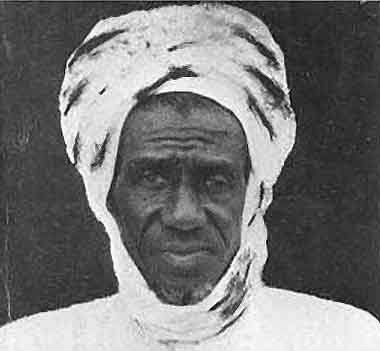
Alhassan Dantata, born in 1877 in Bebeji, Kano Emirate, was a prominent Northern Nigerian trader and the wealthiest man in West Africa at the time of his death in 1955. He was involved in trading kola nuts and groundnuts and was a key distributor of European goods, supplying large British trading companies with raw materials and having business interests in the Gold Coast (now Ghana).
He was born into an established Agalawa trading family. His father, Abdullahi, inherited wealth and status from his own father, Baba Talatin, who had moved the family to Kano from Katsina. Abdullahi was a recognized Madugu, dealing in Kano-dyed cloth, cattle, slaves, and kola for cowries with the European traders on the coast. His parents, Abdullahi and Amarya, were wealthy traders in their own right. After his father’s death around 1885, Dantata was raised by an old slave woman named Tata, which led to his nickname “Dantata,” meaning “son of Tata.”
Dantata’s early education was in a Qur’anic school in Bebeji. His father’s wealth seemingly vanished, forcing him to support himself through hard work and savings. The Kano Civil War (1893-1894) and the British invasion of the Emirate (1902) greatly impacted his life. Dantata and his brothers were captured and sold as slaves but managed to regain their freedom and return to Bebeji. He later pioneered a new trading route through Accra, Ibadan, Lagos, Kumasi, and Sekondi, diversifying his trade in 1906 to include beads, necklaces, and European cloth. This innovation significantly contributed to establishing his wealth and future.
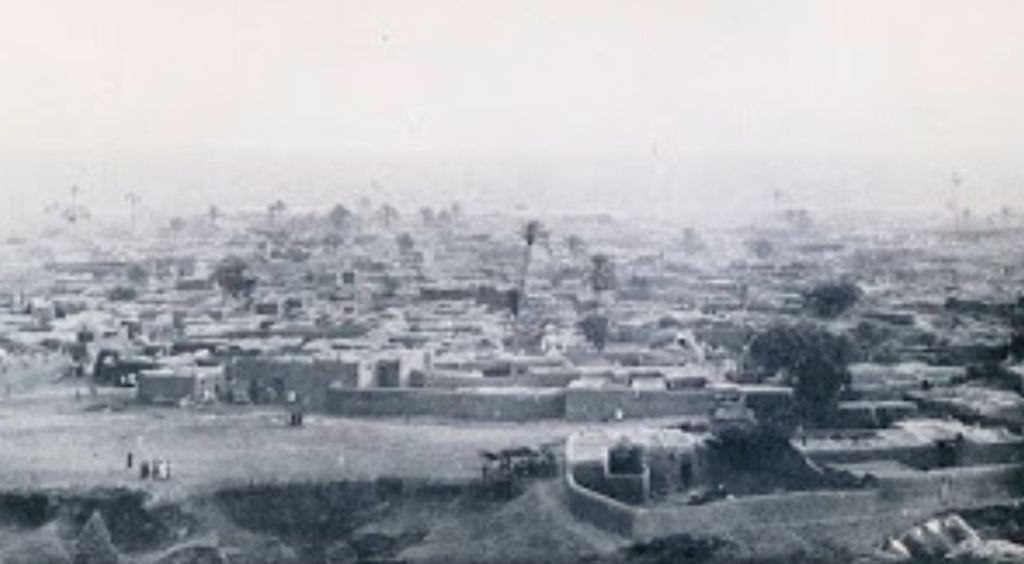
Dantata eventually settled in Kano during the reign of the British-appointed Emir Abbas (1903-1919). In 1912, he capitalized on the European interest in groundnut exports, leveraging his English-speaking ability and accumulated capital to dominate the groundnut purchasing business in Kano. He was known for his excellent financial management, frugality, and direct involvement in his business operations.
In 1929, Dantata became the first businessman in Kano to operate a bank account, depositing 20 camel loads of silver coins in the British Bank of West Africa (now First Bank of Nigeria). He became a key groundnut buyer for the Niger Company and later the United Africa Company (U.A.C.).
His business interests were not limited to groundnuts; Dantata traded in cattle, kola, cloth, beads, precious stones, grains, and rope. His influence in the kola nut trade was so significant that entire trains from the Western Region were dedicated to his nuts alone.

He maintained a house in Bebeji and later built his first house in Kano after the British restored confiscated lands to the Agalawa families. He was known for his hardworking, frugal nature, and excellent financial management skills.
Dantata was a socially responsible employer, hiring a diverse workforce, including Igbo, Yoruba, and Hausa, whom he treated as extended family members. He even took care of their marriage expenses and provided housing for some.
In addition to his trading ventures, Dantata was a visionary entrepreneur. He co-founded the Kano Citizens’ Trading Company for industrial ventures and played a pivotal role in establishing the first indigenous textile mill in Northern Nigeria. He was also appointed a director of the Railway Corporation, indicating his influence in various economic sectors.
Despite his wealth, Dantata led a simple life, adhering strictly to his Islamic beliefs. He never transacted business with women directly, delegating this role to his wife, Umma Zaria, and her network of agents. He was a devout Muslim, performing Hajj, paying Zakat, and belonging to the Qadiriyya brotherhood. His lifestyle was unpretentious, marked by modest clothing and a simple diet.
Dantata’s relationship with the Kano community was harmonious. He respected fellow merchants, avoided conflicts, and maintained good relations with local authorities. He enjoyed good health throughout his life, a testament to his simple lifestyle.
Dantata’s business empire expanded to include cattle, cloth, beads, precious stones, grains, and rope. In the 1920s, he made a significant pilgrimage to Mecca and met George V in England, setting a tradition of financing pilgrimages for Muslims, which continues among his descendants.
Politically, Dantata was not a politician but maintained close ties with both the colonial government and the emirs of Kano. In 1950, he was appointed as a Councillor in the emir’s council, the first non-royal to hold such a position.
In August 1955, sensing his end, Dantata summoned his chief financial controller and children, advising them to sustain the family business and uphold unity. He passed away three days later, on August 17, 1955, and was buried in his house in the Sarari ward of Kano. He was survived by eighteen children, and his estate was divided according to Islamic law. Among his descendants are notable figures like Aliko Dangote, the richest man in Africa.
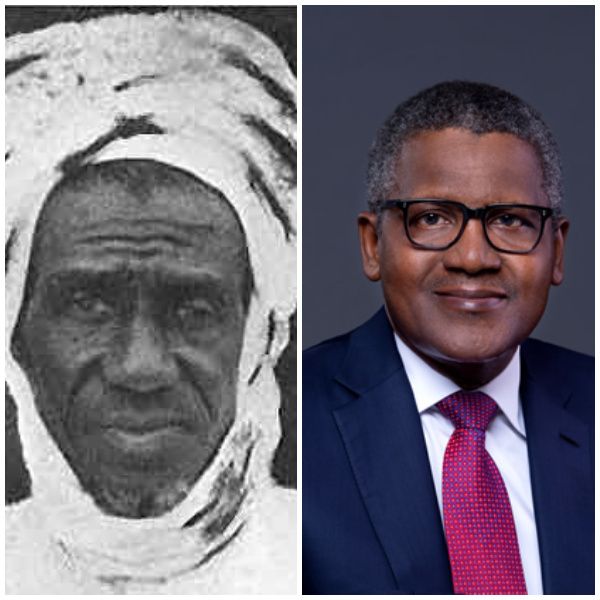
Alhassan Dantata’s legacy is a testament to his entrepreneurial spirit, financial acumen, and commitment to his community and family, setting a standard for business and philanthropy in West Africa. He was known for his philanthropic efforts, especially in northern Nigeria, encouraging and financing many to go into business. He is also the great-grandfather of Aliko Dangote, the wealthiest person in Nigeria and Africa.
 OBLONG MEDIA GLOBAL INTELLIGENCE
Leave a comment