
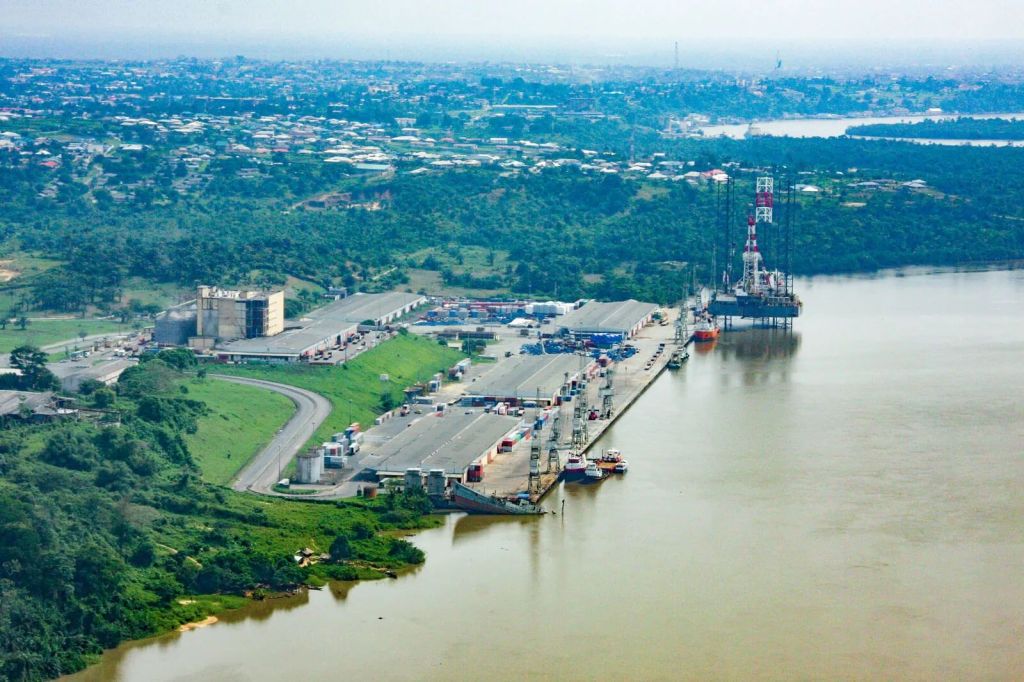
Many countries of the world do not have multiple seaports. Fortunately, Nigeria is blessed with many natural harbors, jettys and ports. Sadly, we are not taking advantage of this blessing.
Why are the Port Harcourt, Ogurugu, Calabar, Warri and Koko seaports and airports underutilized?
Note, however, that the Intels’ Onne port in River state is Nigeria’s best run and perhaps the most active ports in the country. The Intels’ Onne seaport is a privately-run seaport within the same region as the abandoned ports.
According to the Nigeria Bureau of Statistics, in 2017, the cargo throughput on Nigeria seaport was highest at Onne Port.
In that year, the Onne Port had cargo throughput of 25,836,246 (while inward was 1,947,347, outward was 23,888,899).
This was followed by Apapa Port with 18,909,238 (inward was 17,523,313, while outward was 1,385,925)
Tin Can Island Port was third with 15,520,925 (inward was 14,623 and outward was 1,385,925).
Meanwhile, the other seaports – Port Harcourt, Warri, Calabar – struggled with very poor cargo throughput.
Please note that these almost comatose seaports are within the same axis as the high-performing Onne port.
So, what really is the excuse for the neglect of the seaports at Port Harcourt, Warri and Calabar?
The argument for opening up the seaports, river ports, airports, and jettys in eastern Nigeria is compelling and multifaceted. Nigeria, unique in its underutilization of these critical infrastructures, stands at a crossroads where the revitalization of these assets can serve as a pivotal catalyst for widespread economic and social rejuvenation.
long years of neglect/policy is what has brought about the situation we have today in the Eastern ports. As a result, a lot of service companies have created service chains on the back of Lagos dominance which makes Lagos ports much more functional and attractive to shipping companies.
The tale of the abandoned Ogurugu Airport and Sea-Jetty is a poignant reminder of lost potential and the consequences of neglecting vital infrastructural projects. Situated in the coastal town of Ogurugu, Uzo-Uwani local government area of Enugu State, these facilities once served as significant commercial and transport hubs.

Statistics shows that business activities at Calabar Port has been at its lowest ebb for over many years, supposedly due to the shallow draught of the channel that NPA claims restricts access to smaller vessels and barges. This supposedly led the NPA to enter into joint venture agreements with the Calabar Channel Management Company Limited in 2014, to dredge the channel, which was originally 6 meters to 10 meters draught.
It is also alleged that beyond dredging, Calabar Port has a big problem, which has to do with the locating the port in a place that does not have the natural attributes of a seaport.
The port supposedly has 120 kilometres of high sea meandering channel that makes dredging difficult, such that after dredging, in six months, the NPA will need to dredge it again with same funds. This the allege makes Calabar to lack economic viability that would encourage NPA to invest in it.

NPA also alleged that it is not economically viable to get 10 metres draught in Calabar and maintain it consistently, even though, this was possible in the pre-concession era when NPA was the master stevedore in charge of cargo handling at ports, but today there are terminal operators.
Key Arguments for Revitalization:
1. Crucial Economic Gateways:
Seaports and airports are not just transit points but vital economic arteries. They play a pivotal role in handling cargoes and passengers, providing essential services to ships, offering safe harbor during adverse weather, fueling industrial development, and serving as integral components of the transportation network.
2. Overcoming Infrastructure Challenges:
Presently, these ports face limitations due to narrow river channels, shallow drafts, and aging infrastructure. Resolving these issues through measures like dredging and modernization is critical to allow the accommodation of larger vessels and to rejuvenate maritime business.
3. Security and Operational Enhancements:
Addressing security concerns through collaboration with entities like the Nigerian Navy and establishing Marine Police units, alongside operational improvements such as dredging projects and the installation of advanced navigation systems, is crucial. These efforts will make ports more secure, appealing to shipping lines, and streamline trade processes.
4. Economic Growth and Stability:
The rejuvenation of these ports promises to stimulate economic growth in the region, combat insecurity, address youth restlessness, and tackle unemployment. The transformational potential of Calabar, Portharcourt and Warri ports, the abandoned ogurugu airport and sea jetty and Onitsha river port as regional hubs for South South and Southeast is immense, fostering maritime logistics and regional trade.
5. Stakeholder Engagement:
The Nigerian Ports Authority’s (NPA) engagement with local communities and stakeholders is vital. This cooperative approach is essential for enhancing port operations and maximizing their usage by importers and exporters.
The Multiplier Effect of Opening Up Ports:
1. Boost in Trade and Commerce:
Enhanced port facilities will lead to an upsurge in import and export activities, benefiting local regions and the nation.
2. Job Creation:
Port expansion and modernization will generate employment in construction, logistics, port operations, and related sectors.
3. Economic Diversification:
By improving eastern seaports, Nigeria can diversify its economic base, reducing over-reliance on certain sectors or regions.
4. Industrial Development:
Efficient port services will likely spur industrial growth in the region, particularly in sectors like shipping, manufacturing, and processing.
5. Infrastructure Advancements:
Port development is often accompanied by improvements in surrounding infrastructure, enhancing overall connectivity and transport efficiency.
6. Regional Economic Upliftment:
Enhanced port activities can drive the overall development of their regions, leading to improved infrastructure, living standards, and business investment.
7. Foreign Investment Attraction:
Modern, efficient ports are magnets for foreign investors, bringing in additional capital and expertise.
8. Market Expansion and Competitiveness:
Better port facilities can reduce shipping costs and times, making Nigerian products more competitive internationally.
9. Increased Government Revenue:
More trade through these ports means higher revenue from duties and taxes, which can be reinvested in public services.
10. Supply Chain Efficiency:
Improved operations at these ports can lead to more efficient supply chains, reducing business costs and benefiting consumers through lower prices and better product availability.
In essence, revitalizing these ports, along with related airports and jettys, is a strategic move that could significantly advance Nigeria’s economic development, enhance regional connectivity, and boost the efficiency of the nation’s maritime and air transport sectors. It’s a path that promises substantial rewards for the country’s socio-economic landscape.
By Duruebube Chimazuru Nnadi-Oforgu
 OBLONG MEDIA GLOBAL INTELLIGENCE
Leave a comment