
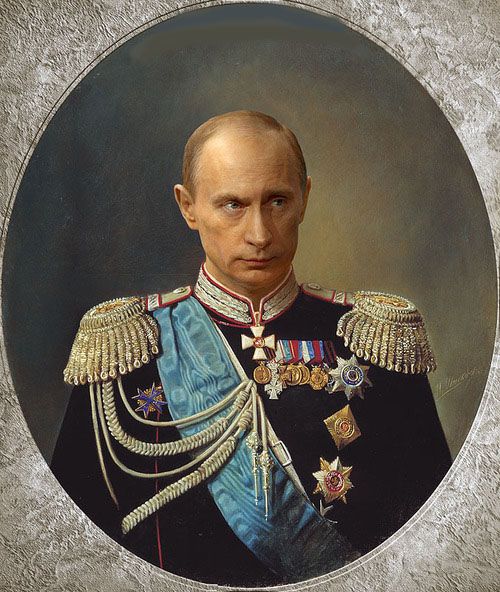
‘Indispensable’ president has successfully positioned himself as the living embodiment of Russia before his inauguration on Tuesday.
When President Putin struts through the Kremlin’s gilded doors at his glittering inauguration ceremony in Moscow on Tuesday, he will be met by loyal members of the political and religious elite who portray him as the living embodiment of Russia.
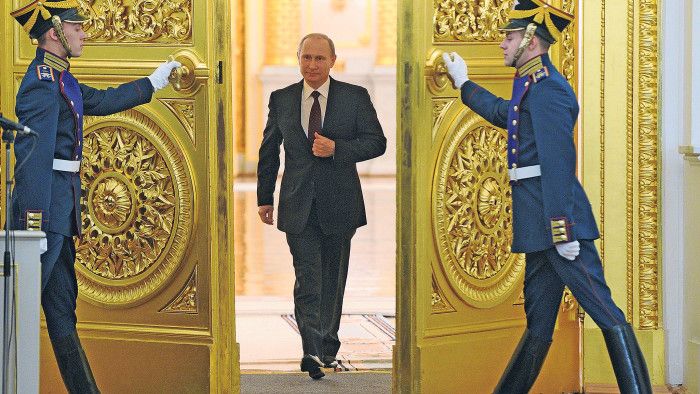
Not since Joseph Stalin, the Soviet tyrant, has a leader in Moscow established such a powerful cult of personality. A modern-day tsar in all but name, Putin has ruled Russia for 24 years and shows no signs of surrendering power — at least not voluntarily.
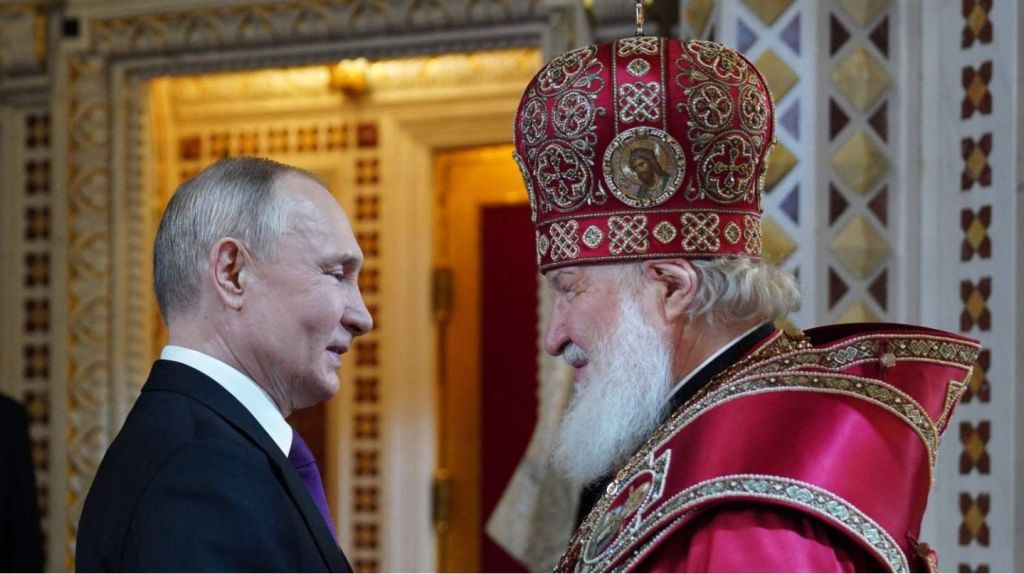
Vyacheslav Volodin, the chairman of the Russian parliament, has said: “If there is Putin, there is Russia. If there is no Putin, there is no Russia.” Patriarch Kirill, the head of the Russian Orthodox Church, a key Kremlin ally, has hailed Putin’s rule as a “miracle of God” and described his murderous invasion of Ukraine as a holy war against “Satanic” forces.
After securing a new six-year term at rubber-stamp presidential elections in March Putin will overtake Stalin as Russia’s longest-serving ruler since Catherine the Great if he sees out this fifth term. Under Russia’s constitution, which was rewritten in 2020 to extend his term limits, he can remain president until at least May 2036, when he will be 83.
With his return to the presidency in 2012 after four years as prime minister, Putin began to think of himself as indispensable, Fiona Hill, a former White House expert on Russia, said.
“He can’t imagine himself anywhere away from the presidential throne. And neither can other people around him — they can’t imagine anybody else being in that position,” she said.
After the death — or alleged murder — of Alexei Navalny, the opposition leader, in a harsh Arctic prison, and the plane crash that killed Yevgeny Prigozhin, the mercenary leader who launched an armed rebellion against Moscow last year, there are few viable, or at least visible, threats to Putin’s grip on the keys to the Kremlin.
In Ukraine, his army is making steady advances after a row in the US Congress over military assistance for Kyiv handed Moscow the upper hand on the battlefield. Putin’s confidence is also likely to soar even higher if Donald Trump is re-elected US president in November.
“Trump is in the same mode of a strongman leader. And it may be that Putin’s going to be dealing with an America that’s more like the other places he deals with — China, Hungary, and [President] Erdogan’s Turkey. For him, it will be a much better fit,” said Hill, who advised the Trump administration and testified at the former president’s impeachment hearings.
Hill also said that Trump believed Russia and Ukraine were essentially the same country because many Ukrainians spoke Russian as a first language. “When Putin expresses the idea that Ukraine is not a real country, Trump would be inclined to agree,” she said.
“I tried to explain to Trump, you know, that the United States is not part of England or that Canada is not or Australia or New Zealand or other English-speaking countries are not, but the whole idea seemed to be kind of lost on him. He was of the view that ‘what’s the difference? they all speak Russian’.”
It has been a long, violent journey for Putin, one that has taken him from a cold-water flat in postwar Leningrad to the Kremlin, where he commands the world’s biggest stockpile of nuclear warheads.
Russian officials have made numerous threats to use nuclear weapons since the start of the war in Ukraine, while Moscow announced on Monday that it would hold drills to practice the deployment of battlefield nuclear missiles.
Although it is common to describe relations between Russia and the West as being at their lowest since the Cold War, some historians say that things have never been so bad. “I think they are much worse than they were during the Cold War,” said Sergey Radchenko, a prominent historian of the era and the author of To Run the World: The Kremlin’s Cold War Bid for Global Power. “[Back then] there was a lot of diplomatic interaction, and an understanding by the two sides of what the other may or may not do. Back channels were operating very well. There was espionage, but no effort to harm the other country’s diplomats. And both sides had an overarching vision: avoiding the Third World War. I don’t know how much of this vision remains today.”
An investigation alleged last month that Kremlin agents had been targeting American diplomats and intelligence officials with sonic energy weapons that cause nausea and hearing loss, among other ailments.
Putin’s presidential inaugurations through the ages: in 2000, 2004, 2012 and 2018 Putin’s presidential inaugurations through the ages: in 2000, 2004, 2012 and 2018
There are also concerns about Putin’s state of mind.
President Zelensky, the Ukrainian leader, this week called Russia a country “where insanity reigns,” while Maria Pevchikh, the head of Navalny’s FBK anti-corruption group, has described Putin as “a very resourceful psychopath”.
Gleb Pavlovsky, who advised the Kremlin from the 1990s until 2011, told The Sunday Times at the start of the war in Ukraine that Putin was unrecognisable from the leader he once knew. “He didn’t have this mania about Ukraine, at least not to this degree, during his first two presidential terms,” he said.
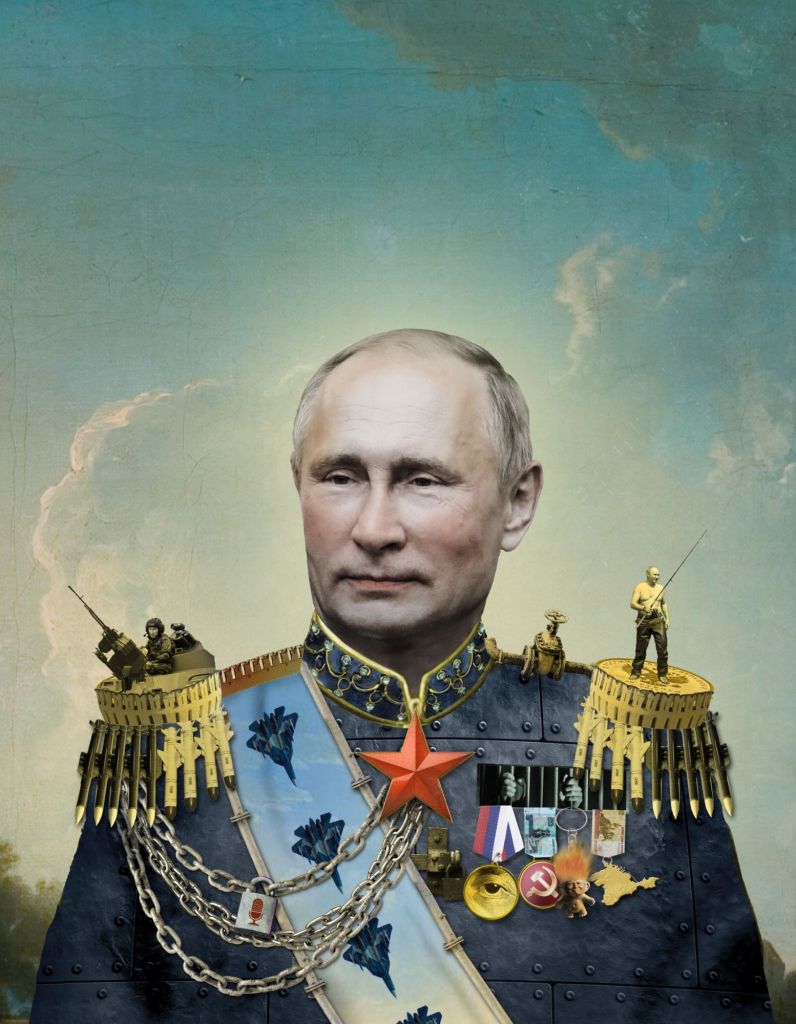
Putin spent much of the pandemic ensconced at his Novo-Ogaryovo residence near Moscow, where his few regular contacts consisted largely of fellow hardliners from his inner circle such as Nikolai Patrushev, the chief of Russia’s powerful national security council.
Patrushev, a former KGB operative who has known Putin for decades, is notorious for his belief in conspiracy theories: last year, for example, he alleged that the United States was seeking to conquer Russia because it wanted to relocate its citizens to Siberia after the explosion of a supervolcano at Yellowstone Park that would render North America uninhabitable. He is also believed to have been one of the few Russian officials who knew in advance about the decision to launch a full-scale invasion of Ukraine. Nikolai Petrov, an analyst at Chatham House, said Patrushev most likely feeds Putin ideas from old-school hardliners in the intelligence services. “He controls an important channel of Putin’s link with the outside world,” he told Novaya Gazeta Europe, an exiled Russian opposition website.
Putin’s ruthlessness when dealing with his foes is thought to stem in part from a fear that his life could be at risk if he is forced from power. He is believed to be haunted by the grisly fate of Colonel Gaddafi, the Libyan dictator who was killed by his own people in 2011.
Gaddafi’s death at the hands of rebel forces after western intervention in Libya happened months before massive protests over vote fraud erupted in Moscow, posing one of the biggest threats to Putin’s rule to date. “After what happened to Gaddafi, Putin started to wonder about his own safety,” Hill said.
Although Russia is not a communist state and Putin is more in thrall to the temptations of capitalism than the works of Karl Marx and Vladimir Lenin, his rule has seen the return of Soviet-style political repression and strict state control over media.
Unlike many of his peers, Putin did not experience the dramatic democratic reforms that swept the Soviet Union in the late 1980s under Mikhail Gorbachev. As his twin policies of glasnost (openness) and perestroika (political and economic reforms) took hold, banned books and films became available and Soviet state television aired satirical shows that asked, “Was Lenin a mushroom?”, as well as bizarre psychic healing sessions.
Putin, however, was based in Dresden, East Germany, a hardline Communist state that was deeply hostile to the changes taking place in Moscow. Residents of most East German cities could pick up western TV broadcasts, but this was not the case in Dresden, earning it the nickname “valley of the clueless”.
On his trips back to his rapidly changing motherland, Putin would later recall, he found it difficult to “get used to reality”.
His presidency has arguably been one long attempt to reshape reality to a form that is more of his own liking, irrespective of the consequences for Russia, Ukraine and the world.
Marc Bennetts
Monday May 06 2024, The Times
https://www.thetimes.co.uk/article/vladimir-putin-inauguration-2024-russian-president-term-87x6xlnmj
 OBLONG MEDIA GLOBAL INTELLIGENCE
Leave a comment