
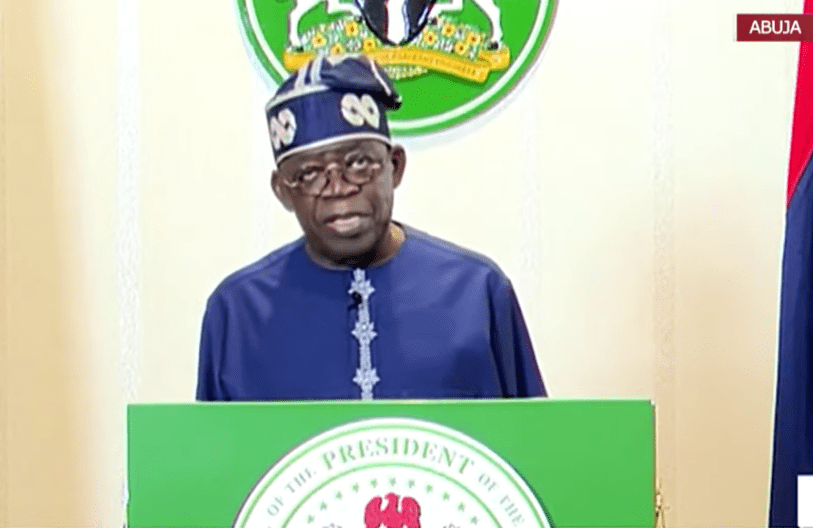
Following President Bola Tinubu’s recent speech, widespread disappointment and frustration has engulfed most Nigerians. Many had hoped the speech would uplift their spirits and address the nation’s pressing issues and provide a clear path forward. Instead, it left a significant portion of the populace feeling disillusioned and alarmed.
The speech highlighted the deep disconnect between those in power and the people they are supposed to serve. Crucial topics such as ethnic tensions, obvious nepotism, government waste, and the unsustainable cost of a bicameral legislature and maintaining 36 mostly unproductive states were conspicuously absent. Additionally, the president failed to provide concrete plans for price control mechanisms, tackling unemployment, restructuring the armed forces and police to tackle insecurity, or measures to reduce fuel prices and transport costs.
There was also no mention of concrete convincing plans to realistically update education and healthcare other than paying lip service.
The president’s delivery of the speech compounded the disappointment. Observers noted numerous mistakes, raising serious concerns about his experience and competence to handle the highest office in the land. To many, he appeared as someone whose ultimate ambition was merely to hold power, rather than someone driven by a vision to lead and improve the country. This perception was exacerbated by his failure to caution governors on the use of private jets and the mismanagement of public funds. His demeanor did not come across as inspiring or confident, and he often seemed out of touch with the realities faced by ordinary Nigerians.
One glaring omission in the speech was a clear explanation for the necessity of Compressed Natural Gas (CNG) initiatives, especially since the Dangote refinery has come on stream. Nigerians were left puzzled about why there was an urgent need for CNG when the country is poised to benefit from its own refinery. Moreover, the president did not adequately explain the rationale behind the removal of subsidies and the decision to float the naira. These two policies have been disastrous and untimely, plunging Nigerians into severe economic hardship.
Additionally, the president did not address the issue of an overbloated and uninspiring cabinet, nor did he mention the problem of wasteful government spending. This omission has further fueled the frustration of many Nigerians who see the current administration as failing to prioritize efficiency and accountability. The government’s excessive spending and the large, unproductive cabinet are seen as significant contributors to the country’s economic woes.
The president’s performance revealed a lack of thorough preparation by his handlers. This shallow approach to such an important speech was seen as a disservice to the nation. Nigerians are not only disappointed by the content of the speech but also by the apparent lack of seriousness and dedication displayed by their leader. In a time of severe economic and social challenges, citizens expect and deserve a president who is not only knowledgeable but also deeply committed to addressing their concerns with competence and empathy.
Compounding these issues, many Nigerians view the current government as illegitimate due to the controversial manner in which it came to power. This perceived illegitimacy has resulted in a lack of tolerance for the government’s shortcomings, fueling impatience and restlessness that have translated into widespread protests. The sense that the government is not genuinely representative or responsive to the people’s needs has only heightened the urgency for a change in leadership.
Critics from various quarters, including social activists and good governance advocates, have pointed out that the speech failed to address the pressing concerns of the average Nigerian. These include the high cost of living, the forex rate, hikes in food and fuel prices, and overall economic hardship. Many citizens are calling for immediate and practical solutions to these issues.
The disappointment and disillusionment stemming from the president’s speech are reflective of a broader frustration with the current administration. Many Nigerians are calling for a change in the status quo, desiring leaders who are not only experienced but also visionary and capable of delivering tangible improvements to their lives. The recent speech served as a stark reminder of the gap between the government’s promises and the harsh realities faced by the populace.
As Nigeria continues to face significant challenges, the call for competent and dedicated leadership has never been more urgent. The recent speech by President Tinubu has only reinforced the need for a government that truly understands and prioritizes the needs of its people, and is willing to take decisive actions to address the nation’s pressing issues.
Duruebube Uzii na Abosi
 OBLONG MEDIA GLOBAL INTELLIGENCE
Leave a comment