
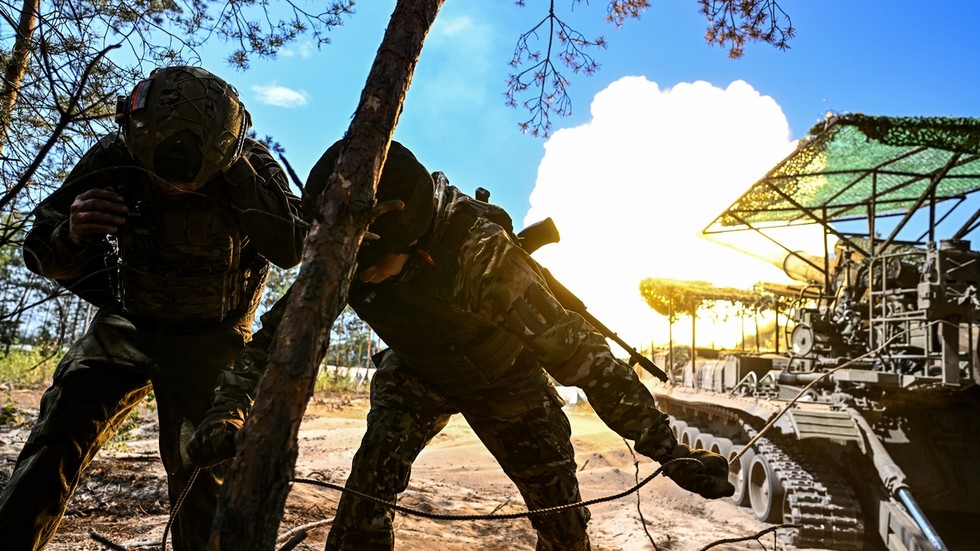
Moscow has rapidly made new gains in Donbass, while Kiev continued its effort to push deeper into Russia’s Kursk Region
The past week in the Russia-Ukraine conflict has seen intensive combat along the front line, with the most active hostility continuing in the border areas of Russia’s Kursk Region, as well as in the Donetsk People’s Republic (DPR), where Moscow troops liberated multiple locations.
The Russian forces have also managed to make new gains in the Lugansk People’s Republic (LPR). The country’s Defense Ministry announced on Wednesday the liberation of Stelmakhovka, a large village located shortly to the east from the border between Russia’s Lugansk and Ukraine’s Kharkov regions.
The heavily fortified village has been serving as the key Ukrainian stronghold in the area, with its fall potentially opening a way for the Russian troops to the Oskol River, located some 15km to the west. Should Moscow’s forces be able to reach it, the Ukrainian forces will end up cut in half in the area, with the potential development likey forcing Kiev’s troops to retreat beyond Oskol, which is flowing from the north to the south across the part of Kharkov Region which is bordering LPR.
Donbass push continues
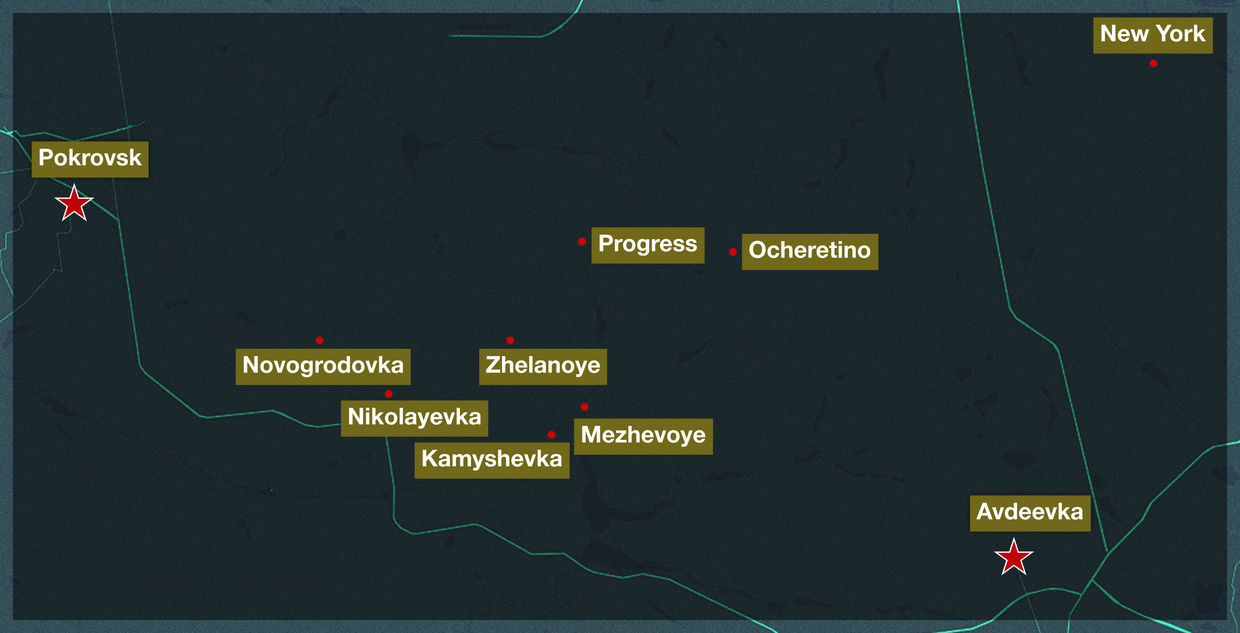
The Russian military has made new gains in DPR, continuing their Advance to the northwest of the town of Ocheretino, once a key logistics hub and a major stronghold for the Ukrainian troops, where they had unsuccessfully tried to stop Moscow’s forces after the fall of Avdeevka early this year.
Over the week, the Russian troops continued westward push in the area while simultaneously expanding their zone of control to the north and the south of their main axis of advance. Namely, the Russian Defense Ministry has announced capture of the villages of Orlovka, Nikolayevka, Kamyshevka and Mezhevoye, located to the southwest of Ocheretino..
The towering spoil tip has been one of the key points for the Ukrainian defenses in the area, given its dominant position over the town itself.
Active hostility have also continued to the northwest of the city of Gorlovka, with the Russian forces advancing on its satellite town of Toretsk (also known as Dzerzhinsk).
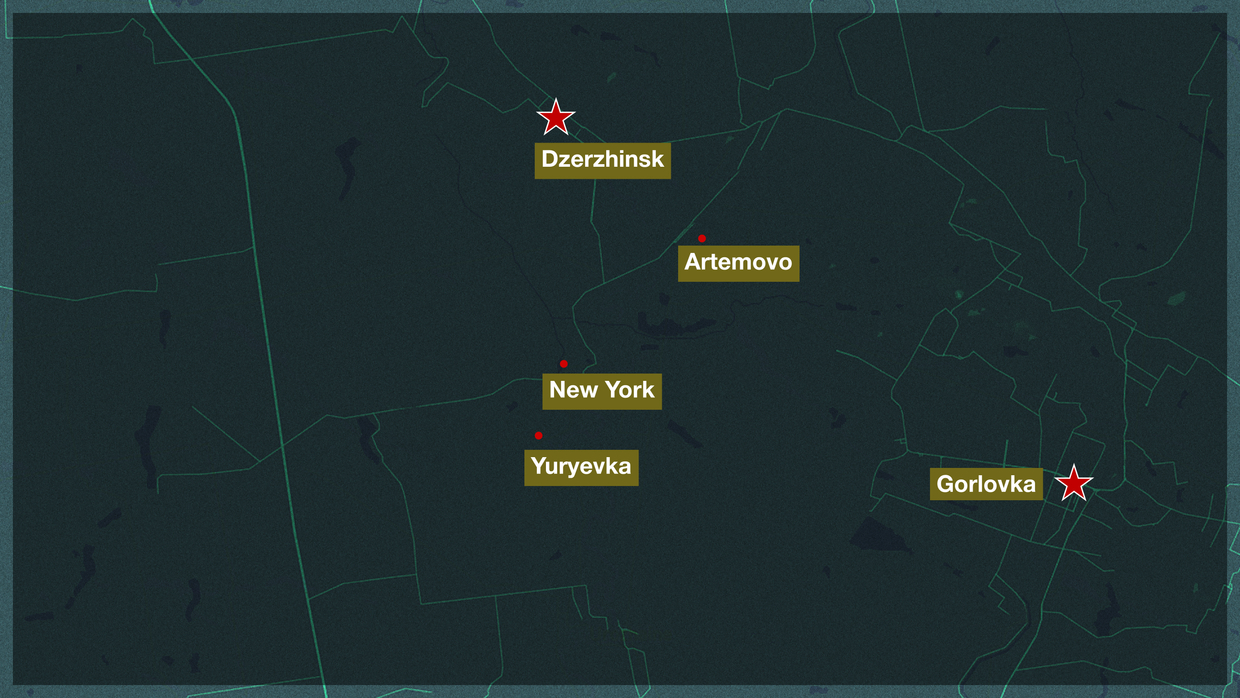
Following the liberation of the village of New York (also known as Novgorodskoye) and Zalizne(Artemovo) last week, the Russian troops forces have reportedly entered Toretsk itself, with active combat continuing inside the town.
The battle of Kursk
Hostilities have been going in the border areas of Russia’s Kursk Region after Kiev launched a major incursion of it earlier this month. While the Ukrainian forces have continued their effort to push deeper into the Russian territory, Moscow has been seeking to push them back while striking rear targets and incoming reserves in adjacent Ukrainian Sumy Region.
The Ukrainian advance has been halted, with the situation effectively turning into an oncoming battle with no distinctive frontline, centered around multiple settlements, including the villages of Korenevo, Kremyanoye, Malaya Lonya, Martynovka, Borki and other locations.
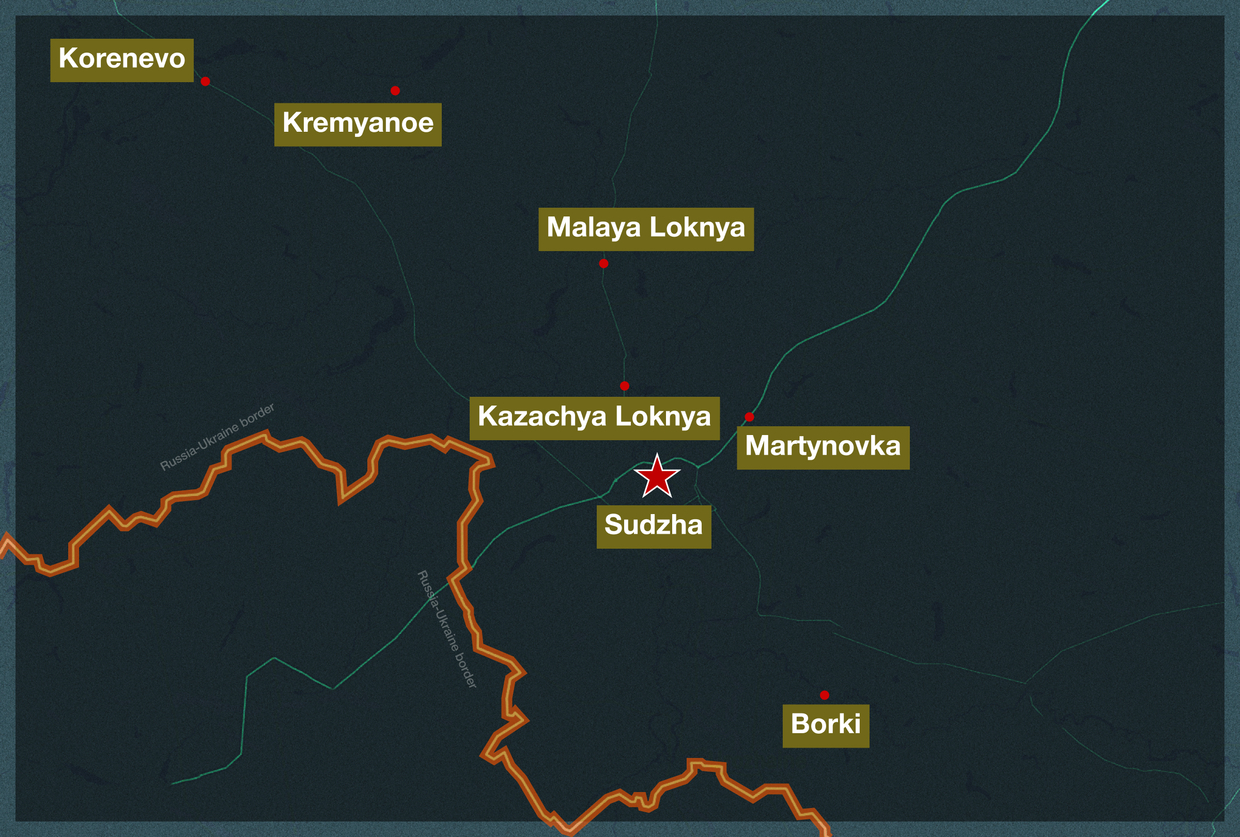
Over the past week, the Ukrainian forces have sustained heavy casualties in the area, with military convoys and smaller infantry groups repeatedly ending up ambushed, while staging areas have been subjected to heavy missile, artillery and aerial strikes.
The Russian military has been apparently actively using FPV kamikaze drones to fend off the attack. For instance, a video shared by Apty Alaudinov, the commander of the Akhmat Special Forces from Russia’s Chechen Republic, shows a Ukrainian convoy ambushed by FPV drones operators with the unit.
According to Moscow’s latest estimates, Kiev’s forces have suffered massive casualties in the attack on Kursk Region, losing more than 7,400 servicemen in just over three weeks, as well as sustained heavy material losses. Namely, up to 74 tanks, 36 infantry fighting vehicles, 64 APCs, as well as some 486 other armored vehicles have been destroyed. Kiev has also lost some high-value assets, including two artillery and one aerial radars, five anti-aircraft launchers, 10 electronic warfare stations and four US-made HIMARS and one M270 MLRS multiple rocket launchers.
Strikes on Ukraine’s critical infrastructure
On Monday, the Russian military conducted a massive strike with ballistic and cruise missiles, as well as kamikaze drones on Ukraine’s critical dual-use infrastructure, namely energy generation facilities used to service Kiev’s military-industrial complex. The attack has become one of the most large-scale ones over the course of the whole conflict.
The Russian Defense Ministry said it has targeted multiple facilities across Ukraine, including electrical substations and gas pumping stations, as well as stockpiles of aircraft munitions, delivered to Kiev by its Western backers.
Hunt for HIMARS systems
The Russian military has continued its effort to find and destroy Ukrainian HIMARS-family multiple rocket launchers, supplied to Kiev by the US and some other Western nations, reporting destruction of several pieces over the week.
Long-touted by Ukrainian propaganda as an ultimate high-precision tool to strike Russian high-value assets, HIMARS-family launchers have been repeatedly used by Kiev to launch indiscriminate attacks deep into the country’s territory. In recent months, however, the systems have seen more actual combat use, providing fire support for troops or striking logistics, presumably due to the exhaustion of Ukraine’s Soviet-calibers multiple rocket launcher systems, both from domestic stock and deliveries from abroad.
On Wednesday, the Russian Defense Ministry reported destruction of two HIMARS launchers in Ukraine’s Sumy Region. The launchers have been apparently used to support Kiev’s forces in Russia’s Kursk Region.
A few days ago, a M270 MLRS, a heavier tracked cousin of HIMARS, has been destroyed in Ukraine’s Nikolayev Region, footage circulating online suggests. The vehicle was discovered by a surveillance drone deep into Ukrainian territory, some 60km away from the frontline near the village of Berezingovatoye.
The powerful blast triggered the detonation of an ammo stockpile, which turned out to be stashed in an agricultural hangar nearby. All the vehicles at the scene ended up destroyed, while the hangar was completely obliterated by the ammunition explosion.
 OBLONG MEDIA GLOBAL INTELLIGENCE
Leave a comment