
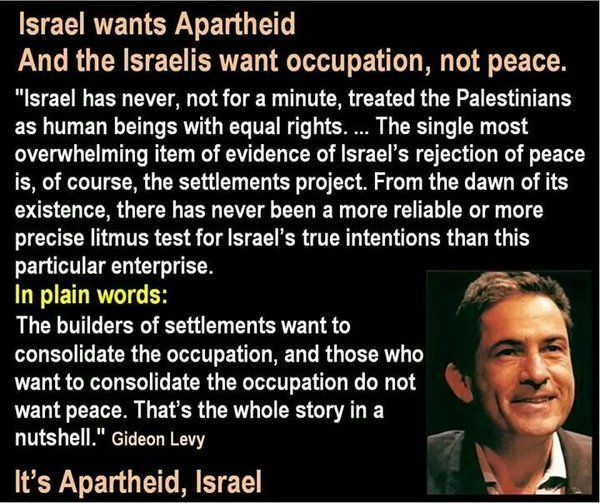
The Israel-Palestine conflict remains one of the most protracted and complex geopolitical struggles in modern history, fueled by deep-rooted historical, religious, and territorial disputes. A particularly contentious issue is the expansion of Israeli settlements in the occupied Palestinian territories, which many, including renowned Israeli journalist Gideon Levy, argue is less about peace and more about solidifying occupation.
Israeli settlements are civilian communities built on land that Israel captured during the 1967 Six-Day War, which includes the West Bank and East Jerusalem. These areas are predominantly inhabited by Palestinians, and under international law, the settlements are considered illegal. Despite this, Israel has continued to expand its settlements, with more than 600,000 Israelis living in these areas as of recent years. This settlement activity is often seen as a direct challenge to the viability of a peaceful resolution to the conflict, particularly the widely supported two-state solution.
Gideon Levy, a prominent voice critical of Israeli policies, argues that the settlement project is a clear indicator of Israel’s broader ambitions. He believes that these settlements are intended to cement Israeli control over Palestinian land, making the prospect of an independent Palestinian state increasingly unrealistic. For Levy and many others, the settlements represent a deliberate effort to maintain dominance, rather than seek genuine peace with the Palestinians.
The use of the term “apartheid” in reference to Israel’s policies is particularly significant. Apartheid, most famously associated with the system of racial segregation in South Africa, involved systematic oppression and discrimination. Critics of Israel’s treatment of Palestinians—ranging from human rights organizations like Amnesty International to Human Rights Watch—have drawn parallels between Israel’s policies and apartheid. They point to the segregation, restrictions on movement, and differing legal systems imposed on Palestinians, particularly in the West Bank. While Israeli settlers live under Israeli civil law, Palestinians in the same territory are governed by military law, leading to vastly unequal rights and privileges.
From Israel’s perspective, the settlements are often justified on grounds of security and historical claims to the land. Many Israelis, particularly those living in the settlements, indoctrinaly believe that the West Bank is part of their biblical heritage, known historically as Judea and Samaria. They argue that relinquishing control over this land would leave Israel vulnerable to attacks, using security concerns as a key reason for maintaining and expanding these communities. Additionally, some Israeli political factions argue that Palestinian leaders have not fully accepted Israel’s right to exist, and therefore any territorial compromise could jeopardize Israel’s safety.
The settlements have been a significant barrier in peace negotiations. The two-state solution, which envisions Israel and Palestine existing as two independent states, has been a cornerstone of most peace efforts. However, the continuous expansion of Israeli settlements makes the prospect of a contiguous and viable Palestinian state increasingly difficult. Critics argue that the settlements reflect a broader strategy to undermine the peace process, consolidating Israeli control over the land and making it impossible for a Palestinian state to emerge.
Levy’s assertion that those who build and support the settlements do not truly seek peace reflects a growing frustration with the situation. In his view, the settlements are not about ensuring Israel’s security but rather about maintaining an occupation that systematically denies Palestinians their rights and freedoms. This, according to Levy, reveals the real intentions behind Israel’s actions in the occupied territories.
The Israel-Palestine conflict remains deeply entangled in a web of historical grievances, territorial disputes, and security concerns. Israel’s fears for its security and its historical connection to the land are significant factors that drive its policies. At the same time, the continuous expansion of settlements and the accompanying restrictions on Palestinian rights have led to serious questions about Israel’s commitment to a peaceful and just resolution.
International efforts to resolve the conflict remain divided. Some advocate for stronger pressure on Israel to halt settlement expansion and renew negotiations for a two-state solution, while others believe the realities on the ground necessitate a new approach. As the settlement project continues, the question of whether it represents a path to peace or a deeper entrenchment of occupation looms large.
The future of the conflict hinges on whether leaders on both sides—and the international community—can find a way to break the cycle of occupation, resistance, and settlement expansion that has defined the region for decades. For now, voices like Gideon Levy’s continue to challenge dominant narratives within Israel, urging for a solution that prioritizes peace and justice for all people in the region.
http://www.oblongmedia.net
#oblongmedia
 OBLONG MEDIA GLOBAL INTELLIGENCE
Leave a comment