
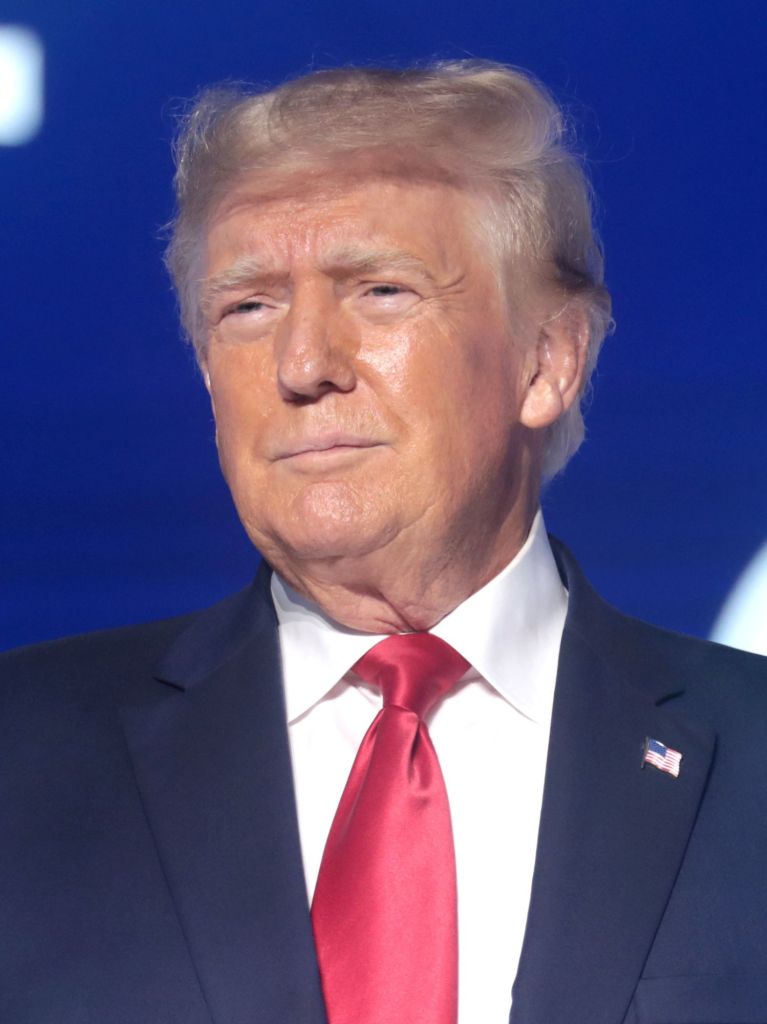
American immigration policy has long been a subject of intense political debate, and Donald Trump’s approach to the issue has brought key tensions to the forefront. Trump’s stance on immigration differs notably from that of the establishment, particularly in its rejection of political correctness, which he views as an impediment to national security and economic stability. His rhetoric and policies, such as the building of a border wall, the travel ban on certain countries, and tightening immigration regulations, reflect his belief that uncontrolled immigration presents a threat to the American economy, national identity, and safety.
The political establishment, including both Democrats and a segment of moderate Republicans, generally promotes immigration policies rooted in inclusivity, diversity, and humanitarianism. Their narrative emphasizes America as a “nation of immigrants,” and they often argue that immigration is beneficial to the economy, citing the need for labor, innovation, and the cultural enrichment immigrants bring.
However, Trump has criticized this perspective as being driven more by political correctness and an ideological commitment to globalism rather than the needs of everyday Americans. He argues that the establishment ignores the costs of uncontrolled immigration—such as job competition, pressure on public services, and, in his view, an increase in crime. In his speeches, he often frames political correctness as a mechanism the elites use to avoid addressing these real concerns. According to Trump, the failure to control immigration properly is an effort to sustain a political system that benefits multinational corporations, Wall Street, and certain liberal elites, while burdening the average American worker.
A central aspect of Trump’s critique of U.S. immigration policy, often not explicitly stated but inferred through his foreign policy positions, is how America has played a role in destabilizing countries, particularly in the Global South. Through wars, covert operations, and economic policies pushed by global institutions like the International Monetary Fund (IMF) and World Bank, the U.S. has contributed to instability and underdevelopment in countries in Latin America, Africa, and the Middle East.
This destabilization, in turn, creates the conditions for large-scale emigration, as professionals and skilled workers from these countries seek better opportunities in America. The brain drain phenomenon, where the intellectual and professional capital of the Global South is siphoned off to boost Western economies, is a recurring outcome of such policies. This dynamic serves America’s interests, as it allows the country to import talent and professionals, particularly in industries such as technology and medicine. The net effect is that the U.S. reaps the benefits of educated and skilled labor from countries it helped destabilize, further perpetuating the inequality between the developed and developing world.
Establishment figures tend to promote the view that immigration is primarily positive, arguing that it fills labor gaps and fosters innovation. They usually frame immigration within a globalist framework that embraces multiculturalism and open borders to some degree. Critics of this approach, including Trump, argue that this stance often ignores the realities faced by low-income American citizens who feel economically displaced by immigrant labor and perceive cultural shifts as alienating.
The establishment’s apologists also tend to downplay the link between American foreign policy and the refugee and migration crises, presenting the U.S. as a benevolent actor rather than acknowledging its role in creating the conditions that force people to leave their home countries. These figures often present themselves as defenders of human rights and portray restrictions on immigration as xenophobic or racist.
In contrast, Trump’s immigration analysis diverges in its emphasis on American self-interest, asserting that the primary concern should be how immigration affects American citizens, rather than how restrictive policies may be perceived by the international community. He views mass immigration as a mechanism by which the establishment creates a perpetual underclass, allowing the elite to profit from cheap labor while displacing American workers and suppressing wages.
An important aspect of immigration under Trump’s lens is its relationship to global capitalism. He often ties immigration to broader critiques of globalism, accusing global institutions, multinational corporations, and establishment politicians of undermining American sovereignty by promoting policies that facilitate the flow of migrants. Trump argues that these flows are destabilizing and work in favor of global capital, allowing corporations to import cheap labor and erode national identities.
Furthermore, Trump’s foreign policy also connects to immigration in that he rejects interventionism, which has been one of the key drivers of displacement and refugee crises. His more isolationist stance on foreign interventions contrasts with the establishment’s frequent use of military force to control regions and resources. In this view, Trump’s policies aim to stabilize regions by disengaging from unnecessary conflicts, thus reducing the flow of refugees to the U.S. and elsewhere.
The American immigration debate, as highlighted by the differences between Trump and the establishment, is not just about border security or humanitarian concerns. It is deeply intertwined with global economics, U.S. foreign policy, and ideological divisions over national identity. Trump’s policies reflect a nationalist and protectionist stance that emphasizes the interests of American workers and national security, whereas the establishment’s approach is more globalist, emphasizing political correctness and humanitarianism, while often sidestepping America’s role in creating the conditions for mass migration. The difference in stance can also be seen as a battle between two visions of America’s place in the world—one independent and self-sufficient, and the other deeply intertwined with global capitalism and multilateralism.
Hon. Chima Nnadi-Oforgu
Duruebube Uzii na Abosi
http://www.oblongmedia.net
#oblongmedia
 OBLONG MEDIA GLOBAL INTELLIGENCE
Leave a comment