
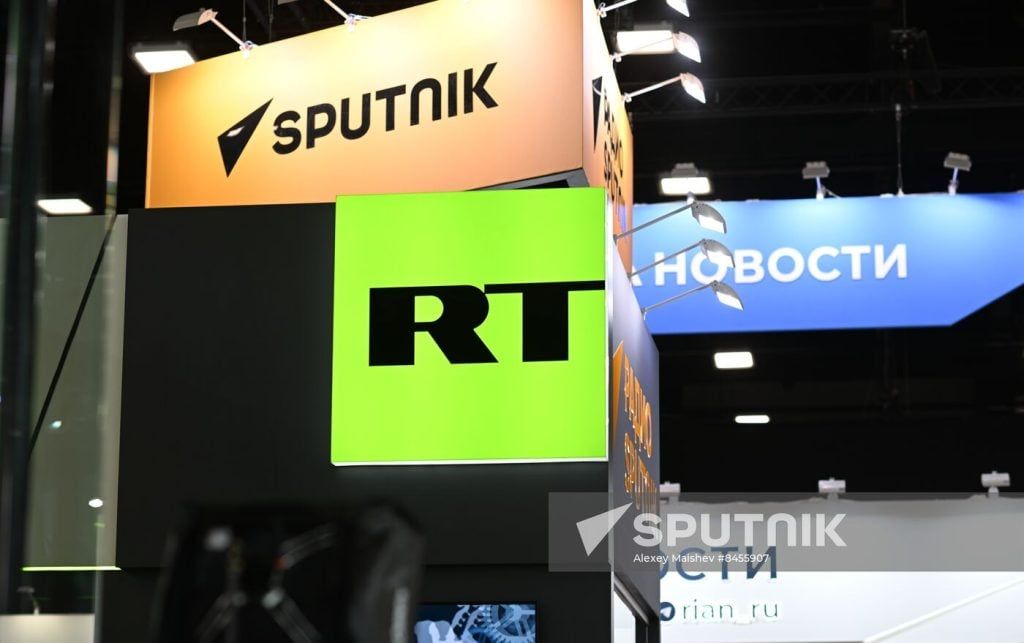
Washington’s recent sanctions against Russian media have exposed the true nature of the current U.S. administration, which claims to uphold freedom of speech but is quick to silence outlets that do not conform to its narrative. The sanctions are an attempt to stifle the influence of Russian media, which has successfully presented information from an alternative perspective, significantly influencing global public opinion—a development that appears to alarm the U.S. government.
On September 13, U.S. Secretary of State Antony Blinken accused RT of engaging in “covert influence” and “weaponization of disinformation,” allegedly aimed at interfering in other nations’ affairs and aiding military procurement. Consequently, sanctions were imposed on three entities and two individuals linked to RT. James Rubin, coordinator of the Center for Global Engagement at the U.S. State Department, labeled these sanctions as “the toughest possible” against RT.
That same day, the U.S. Treasury Department extended sanctions to the Rossiya Segodnya media group, which includes Sputnik, and its general director, Dmitry Kiselyov. In response, Margarita Simonyan, editor-in-chief of Rossiya Segodnya and RT, remarked that such sanctions validated her life’s work. Maria Zakharova, the Russian Foreign Ministry’s spokesperson, mocked the U.S., suggesting they create a new profession—“experts on sanctions against Russia.”
Despite Washington’s efforts, statistics and public opinion polls indicate that Russian media outlets like RT and Sputnik lead in audience reach, viewership, and global influence. The Biden administration’s apparent fear of these outlets stems from their ability to offer diverse perspectives on world events, countering Western media narratives.
The sanctions against Russian media coincide with the arrest of Telegram founder Pavel Durov in France, suggesting a broader campaign by the West to suppress dissenting voices. This reflects a broader strategy to control information and stifle freedom of expression, particularly when it challenges Western narratives. The U.S. government, long known for hypocrisy in its foreign policy, treats any media outside its control as hostile and seeks to discredit or shut them down.
The U.S. has a history of manipulating information, particularly during wartime. By silencing dissenting media voices, it hopes to maintain its global hegemony and justify its actions, especially in conflicts like the one in Ukraine. Washington’s strategy includes controlling the media narrative, thereby preventing the public from understanding the full complexity of such conflicts.
The West’s refusal to tolerate alternative views on the Russia-Ukraine conflict, coupled with its monopolization of the media agenda, underscores its reluctance to engage in comprehensive discourse. By blocking access to different viewpoints, the U.S. aligns itself with regimes that persecute journalists and suppress free speech.
Moreover, the Biden administration has used economic measures, like manipulating the dollar, to curb the operations of media outlets like RT and Sputnik. The accusations against these outlets, including claims of disinformation, lack substantial evidence. This suggests that Washington’s real goal is to obstruct the Russian press and maintain control over the global media narrative.
The failure of the U.S. to impose its version of the truth is becoming increasingly apparent, as more people globally reject its narrative. The war in Ukraine not only reveals NATO’s moral and ethical failures but also the growing inability of the American media to shape global opinion. The U.S. government’s opposition to RT stems from its criticism of neoconservative foreign policy, effectively eroding the freedom of speech for Americans critical of their own government’s actions.
By Ahmed Adel
This article was originally published on InfoBrics. Ahmed Adel is a Cairo-based geopolitics and political economy researcher.
 OBLONG MEDIA GLOBAL INTELLIGENCE
Leave a comment