
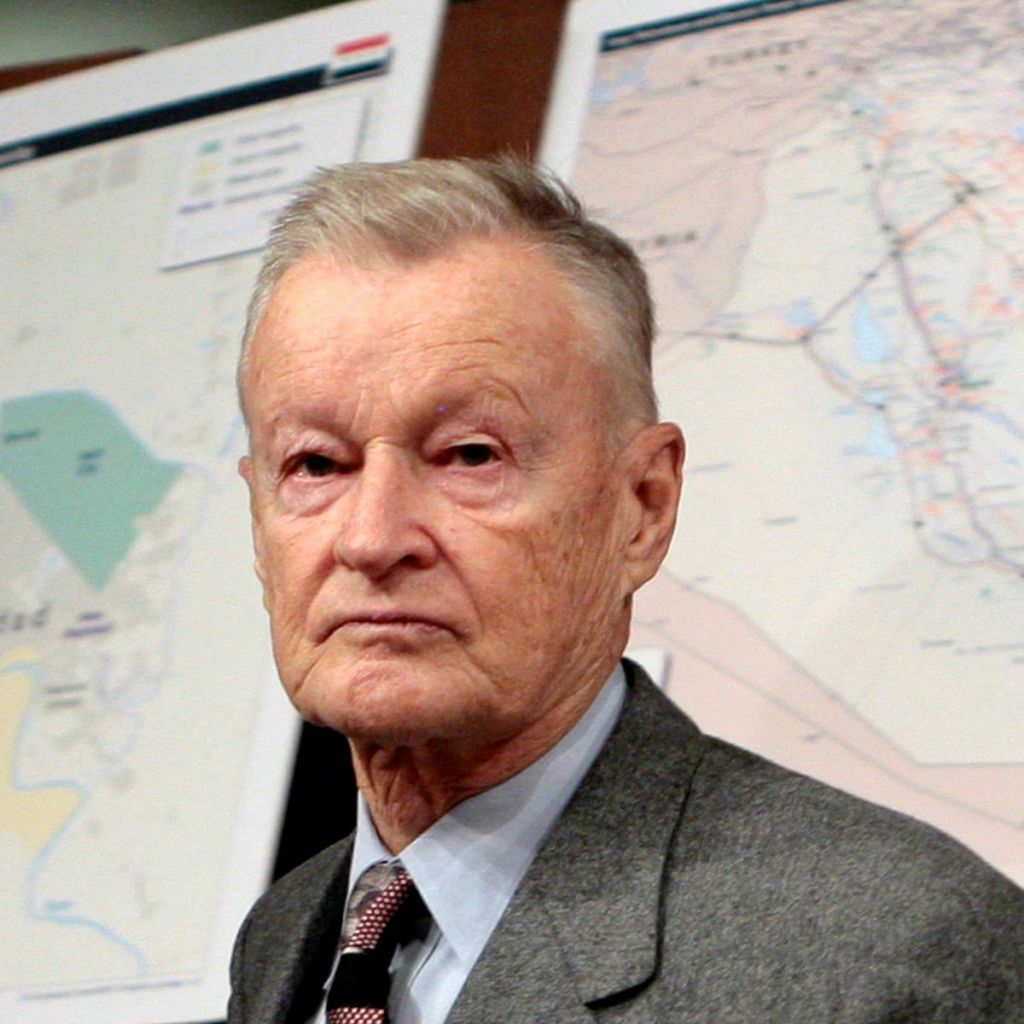
On February 1, 2007, Dr. Zbigniew Brzezinski, former National Security Adviser, delivered testimony before the Senate Foreign Relations Committee, chaired by Senator Joe Biden. His testimony warned about potential U.S. military ambitions concerning Iran and outlined how the Bush administration could fabricate a pretext for war. Brzezinski described a possible scenario where the U.S. would accuse Iran of destabilizing Iraq, leading to a provocation that could justify a so-called “defensive” war. He argued that such a conflict would plunge the U.S. into a deeper quagmire across the Middle East, affecting Iraq, Iran, Afghanistan, and Pakistan.
Brzezinski opened by criticizing the Iraq War as a strategic and moral calamity, undertaken under false assumptions. He emphasized the following points in his testimony:
“A plausible scenario for a military collision with Iran involves Iraqi failure to meet the benchmarks, followed by accusations of Iranian responsibility for the failure, then by some provocation in Iraq or a terrorist act in the United States blamed on Iran, culminating in a quote-unquote ‘defensive’ U.S. military action against Iran that plunges a lonely America into a spreading and deepening quagmire, eventually ranging across Iraq, Iran, Afghanistan, and Pakistan.”
He highlighted how an expanding war could be justified by reinterpreting history, comparing it to past ideological struggles with Nazism and Stalinism. He further criticized this narrative, stating:
“Indeed, a mythical historical narrative to justify the case for such a protracted and potentially expanding war is already being articulated. Initially justified by false claims about WMDs in Iraq, the war is now being redefined as the decisive ideological struggle of our time, reminiscent of the earlier collisions with Nazism and Stalinism. In that context, Islamist extremism and al Qaeda are presented as the equivalents of the threat posed by Nazi Germany and then Soviet Russia, and 9/11 as the equivalent of the Pearl Harbor attack which precipitated America’s involvement in World War II.”
Brzezinski expressed concern over the misuse of history and oversimplification of threats:
“This simplistic and demagogic narrative overlooks the fact that Nazism was based on the military power of the industrially most advanced European state, and that Stalinism was able to mobilize not only the resources of the victorious and militarily powerful Soviet Union but also had worldwide appeal through its Marxist doctrine.”
In a broader critique of U.S. foreign policy, Brzezinski argued that the so-called “war on terrorism” was largely fabricated and that al-Qaeda was an isolated fundamentalist movement, not representative of most Muslims. He pointed out:
“Al Qaeda is an isolated fundamentalist, Islamist aberration. Most Iraqis are engaged in strife because of the American occupation, which destroyed the Iraqi state, while Iran, though gaining in regional influence, is itself politically divided, economically and militarily weak.”
He also criticized the Bush administration’s approach to diplomacy in the region, noting that Iran and Syria had no incentive to cooperate with U.S. efforts to consolidate regional hegemony. Instead, both countries had recently called for regional dialogue, which Brzezinski saw as an opportunity the U.S. should not ignore. He suggested that the U.S. engage in serious regional diplomacy, involving powers like the European Union, China, Japan, India, and Russia to promote stability.
In closing, Brzezinski emphasized the dangers of an indefinite U.S. military presence in Iraq and the wider Middle East. He urged for a political strategy to disengage from Iraq, warning that continued military involvement could lead to an escalating and uncontrollable conflict:
“Escalating the war as a consequence of protracting it is hardly an attractive option for the United States, because before too long, we could be facing a 20-year-long involvement not only in Iraq but Iran, Afghanistan, and Pakistan.”
Brzezinski concluded by calling on the U.S. to reassess its foreign policy and adopt a more constructive and diplomatic approach to resolving conflicts in the Middle East. His testimony underscored the importance of a political solution over prolonged military engagement and warned against the dangerous path the U.S. was on.
The original source of this article is Federal News Service, Senate Foreign Relations Committee
Copyright © Dr. Zbigniew Brzezinski and Prof Michel Chossudovsky, Federal News Service, Senate Foreign Relations Committee, 2024
 OBLONG MEDIA GLOBAL INTELLIGENCE
Leave a comment