
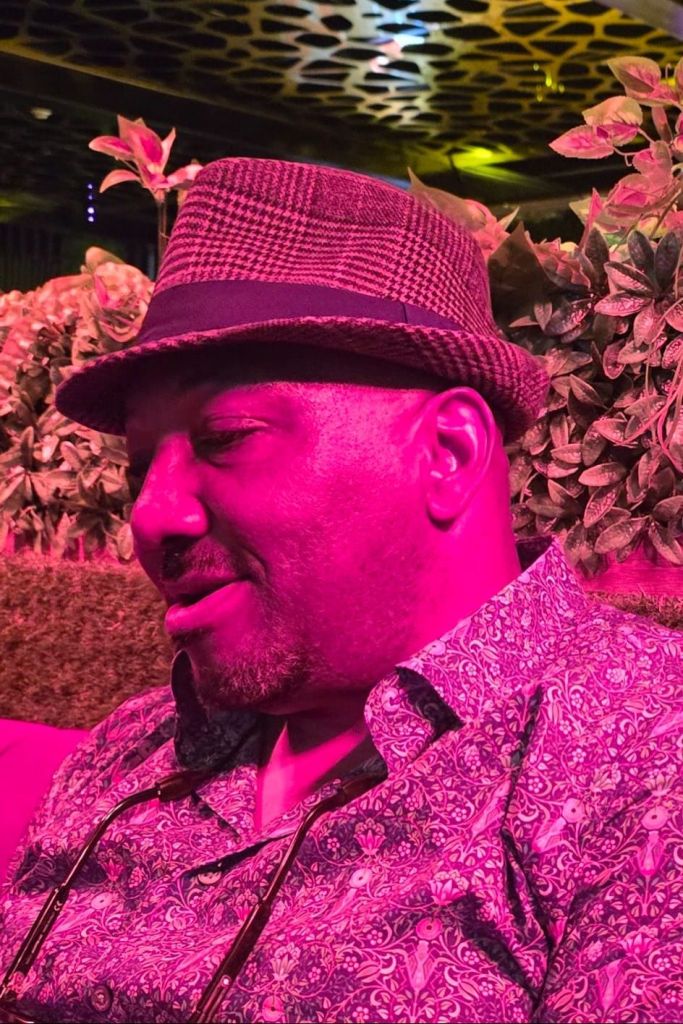
As a contrarian, my perspective is rooted in questioning the popular narratives that most people accept without hesitation. In Nigeria, we are often swept along by the tide of mainstream thought, whether it’s in politics, economics, or social issues. But I believe there’s immense value in swimming against that current, not just for the sake of being different, but because the truth often lies beneath the surface, obscured by the noise of consensus.
Take the issue of fuel subsidies, for example. When the government removed them, many Nigerians accepted the justification that it was necessary for economic reform. But from my contrarian viewpoint, I can’t help but ask deeper questions: Why now? Who stands to gain the most from this? If the subsidy system was flawed, does that mean the only solution is to remove it completely? While everyone else might celebrate the removal as a step toward progress, I see it as an opportunity to dig into the details, to uncover who the real beneficiaries are and whether there were overlooked alternatives that could have eased the burden on ordinary citizens.
My skepticism isn’t born out of cynicism, but rather out of an understanding that popular opinion is often shaped by powerful forces—media, corporations, political interests—each with their own agendas. I’m reminded of the ancient philosophers like Pyrrho, who argued that our senses and perceptions can be deceiving. In our Nigerian context, this deception often plays out in the public discourse, where certain narratives dominate because they are pushed by influential voices. But as a contrarian, I don’t accept these stories at face value. Instead, I look for the perspectives that are being ignored, the voices that are being drowned out. In doing so, I find that there is often more to the story than what is presented to us.
I believe in the marketplace of ideas, but only when it is truly diverse. In Nigeria, our public debate is often dominated by a few loud voices, while more nuanced or dissenting views are sidelined. For instance, when it comes to borrowing from international lenders, the dominant narrative is that Nigeria needs foreign loans to fund development. But my contrarian mind pushes me to question this. What if the long-term consequences of these loans are far more damaging than we’re led to believe? What if, by exploring alternative methods of generating revenue, we could avoid the trap of debt dependency? These are the kinds of questions that the mainstream often avoids, but as a contrarian, I see the value in challenging what most take for granted.
This approach isn’t about being contrary for the sake of it. I’m not interested in opposing popular opinion just to stand out. Instead, I adopt a dialectical method, much like Socrates, by engaging in critical dialogue and rigorous questioning. In a Nigerian context, this might mean questioning our blind loyalty to political leaders. It’s easy to join the bandwagon of support for a popular candidate, but I prefer to dissect their policies, examine their track record, and ask whether they are truly capable of delivering the change we need. I challenge assumptions, not to provoke, but to ensure we are making decisions based on solid reasoning and not just emotional or social pressures.
The power of minority voices resonates deeply with me. In Nigeria, these voices are often dismissed, especially when they go against the grain of what the majority believes. But I see them as valuable sources of insight. When critics questioned the privatization of the power sector, many Nigerians saw them as pessimists standing in the way of progress. Today, as we grapple with ongoing power shortages, those minority voices seem far more prescient. This is why I value dissent, even when it’s unpopular. Just because an idea is not widely accepted doesn’t mean it lacks merit.
Groupthink is a real danger in our society, and I see it play out time and again. When everyone rushes to support a particular political party, policy, or idea, I instinctively step back and ask: What are we missing here? What critical piece of information has been overlooked in our desire for social cohesion or fear of dissent? Contrarianism, to me, is not about being difficult or obstinate. It’s about preventing the errors that come with blindly following the crowd. We’ve seen time and again, both in Nigeria and globally, how groupthink leads to disastrous decisions. My approach is to be the voice that calls for a re-evaluation before we rush headlong into choices that could have far-reaching consequences.
At the heart of my contrarian analysis is the understanding that truth is often complex and multi-faceted. It doesn’t sit comfortably in the hands of the majority, and it rarely emerges without being contested. I embrace the role of the contrarian because it pushes me, and hopefully others, toward a deeper, more accurate understanding of the world around us. This is particularly important in Nigeria, where the stakes are high, and the consequences of poor decisions are felt most acutely by those who have the least power to influence them.
For me, contrarianism is a way to ensure that we’re not trapped in intellectual stagnation. It’s a reminder that, as Nigerians, we must continuously challenge the narratives handed to us, expose the biases and blind spots in popular opinion, and stay committed to the pursuit of truth, however uncomfortable that journey may be.
Chimazuru Nnadi-Oforgu
Duruebube Uzii na Abosi
 OBLONG MEDIA GLOBAL INTELLIGENCE
Leave a comment