
The ongoing conflict in Gaza reflects a fundamental and persistent issue in the Israel-Palestine crisis: the repeated reliance on force rather than a meaningful political resolution. The challenges of colonialism, militarization, and failed post-war strategies—lessons unlearned by past powers—have culminated in a deeply entrenched impasse. Looking through history, from Vietnam to the wars in the Middle East, the core problem isn’t just about territory but the lasting impact of colonial tactics that persist into modern-day conflicts.
Israel’s recent actions in Gaza mirror the historical missteps of its ally, the United States, with both nations entrenched in a “war-as-combat” mentality. This approach, focusing on military might over sustainable political strategies, risks ongoing instability. As General Vo Nguyen Giap remarked about imperialist powers, these “bad students” of history seem destined to repeat it. Both American and Israeli leaderships have approached conflicts with a similar mindset: focusing on subduing opposition through sheer force, neglecting the political intricacies required for lasting peace. Netanyahu’s stance that Israel must “beat them up so it hurts” only deepens the cycle of violence, pushing the region toward an inevitable confrontation rather than a resolution.
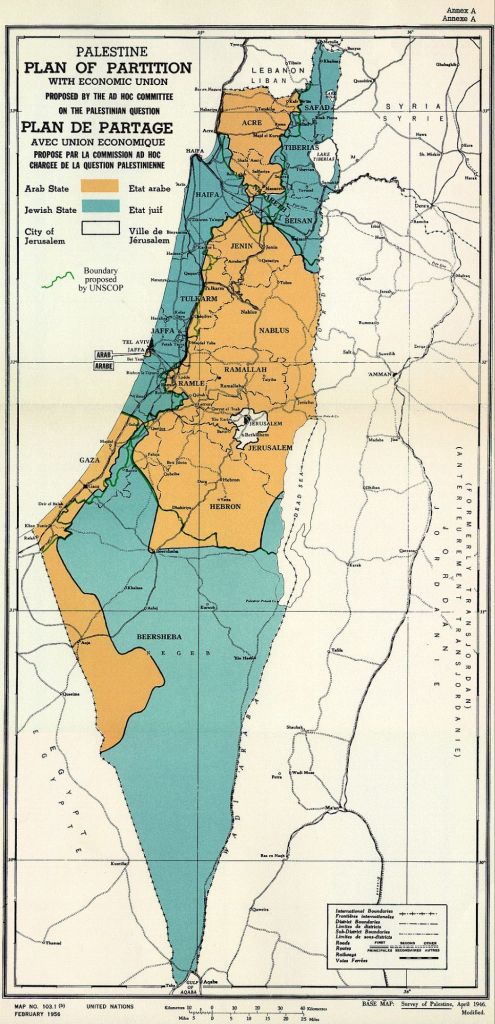
The two-state solution once promised by the Oslo Accords now seems like a distant hope, with its foundation eroded over decades. This model is rapidly losing support as the reality of a single, interwoven society between the Mediterranean Sea and the Jordan River becomes undeniable. As analysts like Edward Said and historians such as Ilan Pappé have argued, a viable alternative could lie in a unified, democratic state where all citizens—Jewish, Muslim, and Christian—enjoy equal rights. This idea isn’t new; figures like Judah Leon Magnes advocated for a bi-national state in the 1930s, warning that attempts to impose a separate Jewish state would lead to perpetual unrest. The early foundations for a two-state division ignored the interdependent reality of Israelis and Palestinians, a reality that remains resistant to borders and barriers.
The demographic and political intertwinement of Israelis and Palestinians suggests that creating two isolated states may never have been a sustainable solution. Even figures such as Meron Benvenisti and Haim Hanegbi foresaw the unsustainability of separation. Given the shared resources, geography, and interdependence, the concept of a singular, integrated state is not only logical but perhaps inevitable. Israeli historian Shlomo Sand has recently emphasized that a single federation or confederation could be the only practical path forward, averting future disasters and creating a shared governance model that recognizes the rights of all people within this contested space.
Beyond mere logistics, there’s an ethical dimension that reinforces the case for a unified state. Historically, Arabs have provided refuge and coexistence to Jewish communities across the Middle East, from the days of the “Pact of Umar” to the Jewish Golden Age in Al-Andalus. This legacy of cooperation was disrupted by the advent of Zionism, which introduced a new paradigm that displaced Palestinians and strained historical relations. Restoring a sense of shared humanity, as expressed by thinkers like Avi Shlaim and Michael Warchawski, could enable Israelis to integrate fully into the region, embracing their place within a diverse Middle Eastern tapestry.
The practical obstacles to achieving a unified, democratic state are formidable, with strong objections on both sides. Palestinians fear further marginalization under Israeli governance, while many Israelis fear a loss of Jewish identity in a bi-national state. However, as the current trajectory continues to reinforce apartheid-like conditions, the unsustainable nature of this division becomes more evident. A lasting solution, though daunting, must transcend these historical grievances and prioritize human rights, equality, and coexistence.
In conclusion, if history teaches us anything, it’s the futility of attempting to secure peace through military might alone. The Israel-Palestine conflict, rooted in colonial legacies and exacerbated by repeated cycles of violence, calls for a fundamentally new approach. The shared history, culture, and geography between Israelis and Palestinians point to a single, democratic state as the only viable solution. Moving beyond division toward a unified political entity could finally create a sustainable peace in the region, honoring the shared humanity that underpins both peoples’ claim to this land.
http://www.oblongmedia.net
#oblongmedia
 OBLONG MEDIA GLOBAL INTELLIGENCE
Leave a comment