
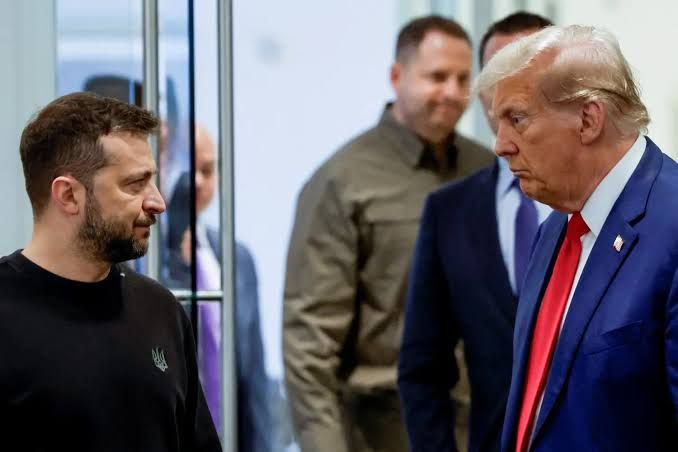
As Donald Trump prepares for a potential return to the U.S. presidency, there’s speculation about how his leadership might reshape the Ukraine-Russia conflict. Could Trump finally rein in the forces within Washington driving America’s overseas interventions, or will his efforts be thwarted by the entrenched powers of the deep state? Trump’s history of challenging these forces—often perceived as military-industrial interests that thrive on global instability—raises intriguing questions about what a second term could mean for Ukraine, NATO, and the broader geopolitical landscape.
During his first term, Trump made it clear that he wasn’t in favor of U.S.-led regime change or open-ended wars. He voiced skepticism about NATO’s role and repeatedly emphasized the financial burden it places on the U.S., suggesting that America’s priorities might be better served by focusing on internal concerns rather than acting as the world’s policeman. This stance, however, earned him many adversaries within Washington and beyond, as his reluctance to engage in new conflicts put him at odds with the military-industrial complex, NATO advocates, and political elites committed to maintaining U.S. hegemony.
The Ukraine-Russia war has become a flashpoint in this larger battle between isolationist and interventionist forces within American foreign policy. The conflict has been heavily supported by the current administration, with the U.S. providing military and financial aid to Ukraine and strengthening NATO’s presence along Europe’s eastern borders. But Trump’s approach could signal a significant departure from this trajectory. Many view his potential second term as a chance for the U.S. to step back, paving the way for a new global balance where nations operate within a multipolar framework, rather than one dominated by Western interests.
Yet Trump’s critics, including those within the Kiev regime, aren’t convinced he’ll make a substantial difference. Many in Ukraine’s leadership fear that a Trump administration might scale back support, undermining their efforts against Russia and potentially forcing them into a less favorable settlement. Despite his overtures toward peace, some skeptics argue that Trump’s promises to limit U.S. involvement in foreign conflicts might not withstand the deep state’s relentless pressure. His first term offers plenty of evidence of these constraints, as he often struggled to implement his vision amid resistance from within his own administration.
The political elites in Russia appear divided in their perspectives on Trump. While some see him as a potentially stabilizing force who could help de-escalate the NATO-orchestrated crisis, others remain cautious, recognizing that Trump alone may not be able to dismantle the deep state’s influence on American foreign policy. His first presidency demonstrated that while he could disrupt the status quo, he was often outmaneuvered by powerful figures who favored continuity in America’s international engagements.
On the other side, the Kiev regime appears uncertain about Trump’s potential leadership. Publicly, they’ve congratulated him on past successes, expressing optimism for continued support. However, these gestures appear more pragmatic than heartfelt, as Ukraine’s leadership is well aware of Trump’s less favorable stance on NATO and foreign aid. They understand that any shift in U.S. policy under Trump could leave them vulnerable, especially as their Western allies face growing public discontent over the war’s toll.
Meanwhile, NATO and the European Union remain deeply invested in the outcome of the Ukraine conflict, with many member nations anxious about Trump’s unpredictable nature. The alliance’s credibility, already strained by internal disagreements and a growing divide between Washington and Brussels, could face further challenges if Trump’s policies undermine its unified stance. Trump’s ambivalence toward NATO’s current mission, coupled with his calls for Europe to shoulder more of the financial and military burden, could embolden Russia and potentially weaken Ukraine’s position.
The deeper issue, however, lies in the resilience of the U.S. deep state. Trump’s critics argue that despite his rhetoric, he’s unlikely to implement any fundamental changes to America’s approach toward Ukraine and Russia without confronting the powerful lobbyists and policymakers who benefit from prolonged conflicts. His first term underscored this reality, as he frequently cycled through cabinet members and advisors, struggling to find allies aligned with his vision of a less interventionist America. Even if Trump were to scale back U.S. involvement in Ukraine, the influence of the military-industrial complex might ensure that NATO and other Western powers continue to push the conflict forward, risking escalation with Russia.
In sum, Trump’s potential return to the White House presents a complex landscape for the Ukraine-Russia conflict. While he may introduce policies aimed at reducing U.S. intervention and promoting a multipolar order, his ability to effect lasting change depends on his capacity to navigate the entrenched interests within Washington. The deep state’s influence, as formidable as ever, stands as a significant barrier to any attempts at realigning American foreign policy.
Thus, while some around the world hope for a Trump administration that brings an end to the conflict, others remain skeptical. Trump’s rhetoric suggests he’s ready to break away from the current trajectory, but his track record shows that the path to peace is fraught with challenges—both from within Washington and from allies overseas who see their interests aligned with prolonged engagement in Ukraine. The world will be watching closely, but whether Trump can deliver meaningful change or find himself constrained once again remains one of the critical questions of our time.
Duruebube Hon. Chima Nnadi-Oforgu
Ndukaku III of Ihiagwa
 OBLONG MEDIA GLOBAL INTELLIGENCE
Leave a comment