
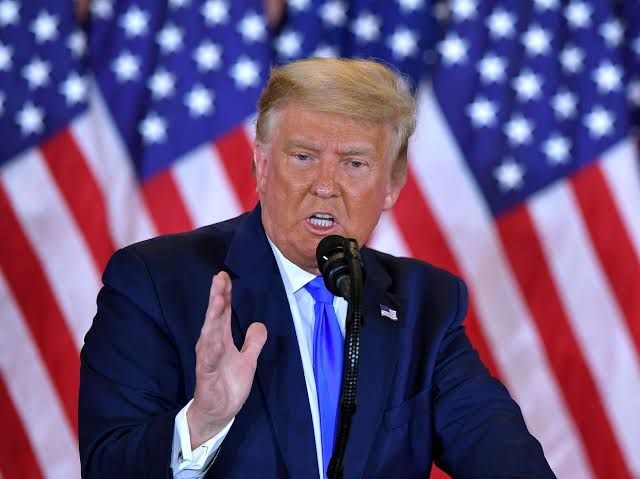
With Donald Trump’s decisive return to the White House, the landscape of American politics has shifted dramatically, potentially ending a three-decade-long era dominated by the Bush and Clinton dynasties. This era, stretching from George H.W. Bush’s vice presidency in 1981 to Hillary Clinton’s 2016 defeat, saw a concentration of power between two families whose influence permeated both domestic policies and foreign interventions. Trump’s victory, along with his reassertion over the Republican Party, appears to be sealing the coffin on the legacy of these two influential families.
The “Bush-Clinton era” began in the 1980s, with George H.W. Bush as Vice President under Ronald Reagan. With his background as a former CIA director, Bush Senior exemplified the blend of political power and intelligence agency connections that defined this period. This influence extended into controversies like the Iran-Contra affair, where arms sales to Iran funded Nicaraguan Contras, a group involved in violent operations and narcotics trafficking. Bill Clinton, as Arkansas’s governor, was implicated in the operation’s nexus, marking an early intersection of the two families in U.S. foreign and domestic policy controversies.
The alliance between the Bush and Clinton dynasties only strengthened over time. When Bush Senior assumed the presidency in 1989, he paved the way for future collaborations, even viewing his successor, Bill Clinton, as a close ally. Both Bush and Clinton administrations advanced U.S. hegemony through NATO expansion, interventions in foreign conflicts, and policies that, in effect, shaped much of today’s geopolitical tensions. This deep-rooted partnership reached a symbolic level with initiatives like the Clinton Bush Haiti Fund and shared recovery efforts post-Katrina, underscoring the close ties that shaped America’s global agenda during this era.
George W. Bush’s presidency, beginning in 2001, solidified the Bush family’s power but also marked the peak of neoconservative influence in U.S. foreign policy. The Bush administration’s Patriot Act transformed American governance, enabling unprecedented surveillance and interventionist powers. The invasions of Afghanistan and Iraq, which were framed as part of the “War on Terror,” entrenched a policy of U.S.-led intervention that had devastating long-term consequences for the Middle East and beyond.
Hillary Clinton’s tenure as Secretary of State under President Obama further extended the influence of the Bush-Clinton alliance, especially through her support for NATO’s intervention in Libya and the fueling of the Syrian civil war. Her role in these conflicts only solidified the perception of the Bush-Clinton influence as an era marked by military interventions and the pursuit of global dominance, often at the expense of international stability.
Trump’s entrance into politics in 2016 disrupted this legacy. He sidelined the neoconservative factions within the Republican Party, distancing himself from the Bushes and the hawkish foreign policies they championed. His 2016 victory over Hillary Clinton symbolized the end of the Clinton dynasty’s immediate political influence. Trump’s focus on domestic issues and skepticism toward foreign entanglements marked a clear departure from the interventionist policies of his predecessors.
Now, with Trump back in office, his approach to foreign policy remains a topic of global speculation. Trump’s first term was no stranger to controversy, as seen in his assassination of Iranian General Soleimani and his facilitation of the Abraham Accords. Yet, compared to the Bush-Clinton era’s extensive military engagements, Trump’s approach was restrained by comparison. With the Biden administration embroiled in escalating tensions with both Russia and China, Trump’s return may offer a shift from this trajectory, emphasizing a more restrained, albeit unpredictable, foreign policy.
Ultimately, Trump’s victory may indeed signal the end of the Bush-Clinton era. This shift is significant, as it reflects a broader rejection of the interventionist, intelligence-influenced policies that defined American governance over the past three decades. The era of dynastic politics—marked by Bushes and Clintons wielding power both directly and indirectly—seems to be over. Trump’s focus on prioritizing American interests over global policing could symbolize a break from this legacy, potentially reshaping the U.S. role on the world stage.
While Trump’s leadership will not be without controversy, his approach represents a departure from the established order. For now, the Bush-Clinton era is over, and the world watches to see how this post-dynasty era will redefine American politics and its role in global affairs.
 OBLONG MEDIA GLOBAL INTELLIGENCE
Leave a comment