
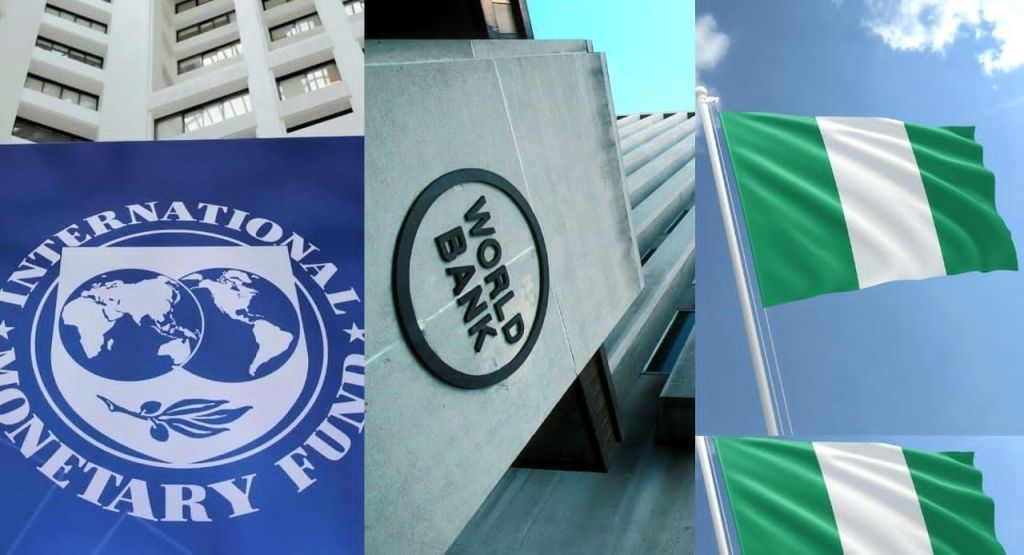
Since Nigeria embraced the International Monetary Fund (IMF) and World Bank’s structural adjustment programs (SAP) in the 1980s, the nation’s economic trajectory has been marred by stunted growth, rising poverty, and increased debt dependency. Despite promises of economic transformation, the policies recommended by these global financial institutions have not yielded the desired outcomes. Here’s a deeper dive into why these policies have failed, supported by examples, data, and potential inward-looking solutions to chart a new course for Nigeria’s economy.
Failures of IMF and World Bank Policies
1. Dependence on Oil Exports
The IMF and World Bank encouraged Nigeria to prioritize oil exports as a major revenue source, but this created a mono-economy vulnerable to global oil price fluctuations. For instance:
In 2020, during the COVID-19 pandemic, crude oil prices plummeted, leading to a 6.1% contraction in Nigeria’s GDP in Q2 of that year.
Oil contributes over 80% of government revenues and 90% of export earnings, leaving other sectors like agriculture and manufacturing underdeveloped.
2. Austerity Measures and Public Sector Cuts
SAPs mandated cuts in public spending, removal of subsidies, and privatization of state-owned enterprises. While this was intended to reduce government deficits, it worsened socioeconomic inequality.
Removal of fuel subsidies under IMF directives in the late 1980s and early 1990s led to skyrocketing transportation and food costs, disproportionately affecting low-income Nigerians.
In 2023, another wave of subsidy removal caused fuel prices to surge by over 200%, with inflation reaching 25.8% in August, exacerbating poverty and eroding purchasing power.
3. Debt Trap
IMF and World Bank loans often came with conditionalities that prioritized debt servicing over investments in critical infrastructure.
As of 2023, Nigeria’s external debt stands at $43.16 billion, with 96% of revenue allocated to debt servicing in 2022, leaving little for development projects.
The “borrow-and-repay” cycle has kept Nigeria reliant on external financing, rather than fostering financial independence.
4. Currency Devaluation
The IMF prescribed frequent devaluations of the naira to make exports competitive. However, this policy has backfired:
From ₦22 to $1 in 1981, the naira now trades at over ₦1,300 to $1 on the parallel market.
Devaluation has increased import costs, spurring inflation and reducing the purchasing power of ordinary Nigerians.
5. Neglect of Local Industries
IMF-backed trade liberalization policies exposed Nigeria’s nascent industries to competition from foreign imports, leading to deindustrialization.
By the mid-1990s, Nigeria’s manufacturing contribution to GDP dropped below 10%, and by 2023, it stood at just 8.9%, according to the World Bank.
Textile and automotive industries that thrived in the 1970s and early 1980s have nearly collapsed due to the influx of cheaper imports.
Inward-Looking Solutions for Nigeria’s Economy
To escape the vicious cycle of dependency and underdevelopment, Nigeria must adopt inward-looking policies that harness its immense potential:
1. Agricultural Renaissance
Agriculture employs over 35% of Nigeria’s population but contributes just 24% to GDP. Nigeria must modernize its agricultural sector, invest in irrigation, mechanization, and storage facilities, and adopt value-added processing to reduce reliance on imported food.
Example: Developing local rice production has proven effective in reducing imports, with domestic rice production increasing by 57% between 2015 and 2020.
2. Industrialization and Value Addition
Nigeria should focus on processing raw materials locally to increase export value and create jobs.
For instance, rather than exporting crude oil, investments in refining capacity (e.g., the Dangote Refinery) could save billions spent on fuel imports and create thousands of jobs.
3. Diversification of Revenue Base
Strengthen non-oil sectors such as ICT, tourism, solid minerals, and creative industries.
Example: Nigeria’s ICT sector, which contributed 18.4% to GDP in 2022, could become a major driver of growth with more government support.
4. Human Capital Development
Invest in education, vocational training, and healthcare to build a productive workforce.
Data from the World Bank shows that Nigeria spends just 1.7% of its GDP on education, far below the global average of 4.4%.
5. Strengthening Local Content
Encourage local production of goods by offering tax incentives, subsidies, and protectionist policies for emerging industries.
Example: The Local Content Act in the oil and gas sector has increased the participation of Nigerian companies in the industry.
6. Eradicate Corruption
Leakages in public funds cost Nigeria an estimated $17 billion annually, according to the United Nations Office on Drugs and Crime (UNODC).
Strengthening anti-corruption agencies and ensuring transparency in governance is critical to freeing resources for development.
7. Focus on Renewable Energy
Nigeria is blessed with abundant solar, wind, and hydro resources. Investing in renewable energy can reduce reliance on imported fuel and electrify rural areas, spurring economic growth.
Example: The Rural Electrification Agency’s solar projects have successfully improved energy access for off-grid communities.
Conclusion
The IMF and World Bank policies have failed to transform Nigeria’s economy because they were designed for quick fiscal stabilization rather than long-term development. Nigeria must chart its own course by prioritizing homegrown solutions, leveraging its resources, and empowering its citizens. The focus should shift from external dependency to self-sufficiency, ensuring that future generations inherit a sustainable and thriving economy. By implementing these inward-looking strategies, Nigeria can break free from the shackles of global financial institutions and realize its full economic potential.
By Hon. Chimazuru Nnadi-Oforgu
Duruebube Ndukaku III of Ihiagwa
 OBLONG MEDIA GLOBAL INTELLIGENCE
Leave a comment