
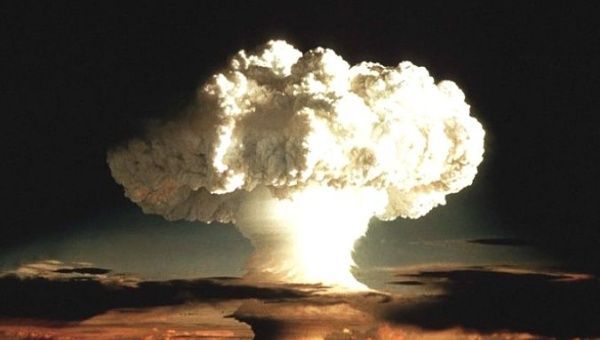
President Biden has authorized Ukraine to deploy U.S.-supplied long-range weapons against Russia, marking a significant escalation in the conflict. These include ATACMS missiles with a range exceeding 300 km, which were promptly launched against targets on Russian territory. Similarly, the United Kingdom has approved Ukraine’s use of Storm Shadow missiles, developed with Italian collaboration through Leonardo Company. In retaliation, Russia employed its new hypersonic Oreshnik missile, equipped with multiple non-nuclear warheads capable of being armed with nuclear warheads, to strike a Ukrainian military aerospace facility.
Russian Warnings and Revised Nuclear Doctrine
Russian Foreign Minister Sergei Lavrov has warned that these actions indicate the West’s intent to escalate the conflict, reminding that President Putin had previously cautioned about a shift in Russia’s strategic posture if such weapon systems were deployed.
On November 19, President Putin signed a decree ratifying revisions to Russia’s nuclear doctrine, underscoring a more aggressive stance. Key points include:
1. Targeting Potential Adversaries: Nuclear deterrence will apply to countries or alliances that perceive Russia as a threat and possess weapons of mass destruction or substantial combat capabilities.
2. Territorial Aggression: Countries hosting foreign forces or providing support for attacks against Russia will also be subject to nuclear deterrence. Aggression by non-nuclear states with nuclear-state backing will be treated as a joint attack.
3. Critical Threats to Sovereignty: Conventional attacks on Russia’s sovereignty, including assaults on Belarus or significant airspace violations, could trigger a nuclear response.
Italy, despite being a non-nuclear state under the Non-Proliferation Treaty, hosts U.S. nuclear weapons aimed at Russia and is therefore a potential target under Russian nuclear deterrence. Similar situations apply to Germany, Belgium, and the Netherlands.
The Growing Risk of Escalation
The Biden Administration, NATO, and the European Union continue to intensify the conflict against Russia while seemingly disregarding the rising threat of nuclear war. These escalations include:
NATO’s Military Drills: A large-scale war exercise is currently underway in Finland, involving 28 countries under U.S. command, including Italy.
EU Defense Bonds: France, Germany, Italy, Spain, and the UK have jointly decided to issue Defense Bonds to bolster the European war industry. European Commission President Ursula von der Leyen has called for €500 billion in military investments over the next decade, including support for Ukraine.
Parallel EU Exercises: The EU plans to conduct its own military drills in Germany to simulate direct conflict scenarios.
Geopolitical Implications
This trajectory risks solidifying the divide between NATO-aligned states and Russia, with nuclear deterrence playing a central role. The urgency behind these actions appears driven by fears that a future Trump administration could reopen negotiations with Russia, potentially altering the current course of the conflict.
As tensions escalate, the focus remains on military posturing rather than diplomatic resolutions, bringing the world closer to the brink of a nuclear confrontation. The growing involvement of European nations, alongside U.S. leadership, highlights the global stakes in this intensifying proxy war.
Without immediate diplomatic interventions, the possibility of a catastrophic escalation becomes increasingly real.
 OBLONG MEDIA GLOBAL INTELLIGENCE
Leave a comment