
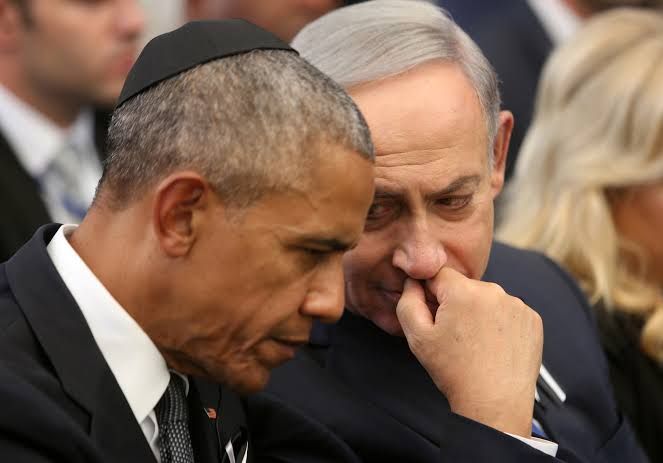
The United States, often working through the CIA and aligned with Israel, has pursued regime change strategies in the Middle East and beyond for decades. These interventions are not only fraught with danger but have left a trail of destabilization, failed states, and human suffering. Syria’s ongoing conflict, fueled by U.S.-led regime change policies during the Obama administration, is one of the starkest examples of these dangers.
Recent Developments in Syria: Assad Reportedly Flees Damascus
Syrian President Bashar al-Assad has reportedly fled Damascus as rebel forces, backed by the United States and Israel, advance into the capital. This development marks a significant shift in the nation’s prolonged conflict. Assad’s wife, Asma al-Assad, along with their three children, is believed to have relocated to Russia approximately a week prior to these events. Additionally, Assad’s two brothers-in-law have reportedly left Syria for the United Arab Emirates.
The rapid progression of U.S. and Israeli-backed rebel forces, including factions linked to al-Qaeda, has led to the capture of key cities such as Aleppo and Homs. Their entry into Damascus, reportedly met with minimal resistance, signifies the disintegration of Assad’s control. This offensive has caused regional upheaval, with neighboring countries like Lebanon and Jordan closing their borders with Syria, fearing the spillover of violence and refugees.
This dramatic shift raises questions about the broader implications of foreign-backed regime change, particularly the empowerment of extremist groups and the destabilization of entire regions.
The CIA’s Role in Regime Change
The Central Intelligence Agency (CIA) has been the linchpin of U.S. regime change operations since its inception in 1947. From Iran in 1953 to Guatemala in 1954, and more recently in Iraq, Libya, and Syria, the CIA has executed covert missions to depose leaders who oppose U.S. strategic interests, often under the guise of spreading democracy. In Syria, the Obama administration’s Timber Sycamore program marked one of the most significant covert operations of the 21st century.
The Syrian Experiment: A Timeline
2011 – The Arab Spring:
Anti-government protests erupted across Syria, inspired by the Arab Spring. What began as peaceful demonstrations escalated into armed conflict. The U.S. quickly seized the opportunity to weaken Bashar al-Assad, a key ally of Iran and Russia, through indirect involvement.
2013 – Timber Sycamore:
The Obama administration launched Timber Sycamore, a CIA-led program that provided arms, training, and intelligence to Syrian opposition forces. By 2015, the U.S. had spent over $1 billion on this program, making it one of the most expensive covert operations in history. Despite this investment, many of these weapons ended up in the hands of extremist groups, including al-Nusra Front, an al-Qaeda affiliate.
2014 – Rise of ISIS:
Amid the chaos, ISIS capitalized on the power vacuum, establishing a caliphate across vast swathes of Syria and Iraq. The U.S. shifted focus to combating ISIS, but the broader goal of removing Assad remained. By this point, the war had already displaced over 11 million Syrians, creating one of the worst refugee crises in modern history.
2015 – Russia Enters the War:
Russian military intervention turned the tide in Assad’s favor, exposing the limitations of U.S. covert operations. By 2016, Assad had regained control of key territories, and the U.S.’s strategy was widely regarded as a failure.
Post-Obama Era and Continuing Implications
The regime change policy in Syria did not end with the Obama administration. Under President Donald Trump, the U.S. maintained military presence in Syria, focusing on securing oil fields and supporting Kurdish forces against ISIS. The Biden administration has continued to operate in Syria, perpetuating the cycle of foreign intervention. Despite shifting rhetoric, the core objective remains the same: to weaken Iranian and Russian influence in the region by destabilizing Syria.
The Role of Israel
Israel’s involvement in Syria’s conflict was driven by its strategic goal of undermining Iranian influence in the region. Through covert operations and targeted airstrikes, Israel sought to weaken Hezbollah and disrupt Iranian supply chains. While these actions were framed as defensive, they further fueled the cycle of violence, complicating peace efforts and solidifying its role as a destabilizing force in the Middle East.
Israel’s support for rebel groups, some of which have ties to extremist factions, highlights the moral ambiguity of its strategy. By prioritizing its immediate security concerns, Israel has contributed to the broader destabilization of Syria and the empowerment of groups that pose long-term risks to regional stability.
The Broader Impact of Rebel Advances
The fall of Damascus to U.S.- and Israeli-backed rebels has broader geopolitical implications. The empowerment of extremist groups within these forces, including al-Qaeda affiliates, threatens to spread instability across the region. The closing of borders by Lebanon and Jordan underscores the fear of further chaos spilling into neighboring nations, while Turkey grapples with the influx of refugees and heightened tensions along its borders.
The Dangers of CIA-Led Regime Change
- Unintended Consequences:
History shows that CIA-led interventions often create more problems than they solve. In Syria, weapons intended for “moderate” rebels frequently ended up with extremists, fueling terrorism and prolonging conflict. A similar pattern emerged in Afghanistan, where U.S.-funded mujahideen groups eventually gave rise to the Taliban and al-Qaeda. - Empowerment of Extremism:
By arming fragmented opposition groups, the U.S. inadvertently strengthened terrorist organizations. The rise of ISIS in Syria and Iraq was a direct byproduct of the chaos unleashed by regime change policies. - Regional Destabilization:
Syria’s conflict has spilled into neighboring countries like Lebanon, Jordan, and Turkey, straining their economies and social fabric. It has also heightened sectarian tensions, particularly between Sunni and Shia factions, exacerbating instability across the Middle East. - Erosion of International Norms:
The U.S.’s disregard for sovereignty in pursuing regime change undermines international law and sets a dangerous precedent. It sends a message that might makes right, emboldening other nations to pursue similar strategies. - Humanitarian Catastrophes:
The cost of regime change is often borne by civilians. In Syria, over half the population has been displaced, and millions remain dependent on humanitarian aid. The infrastructure destruction and economic collapse will take decades to rebuild.
A Warning for the Gulf States
The Gulf States’ alignment with U.S. and Israeli strategies against Iran reflects a shortsighted view. By prioritizing Iran as the region’s primary threat, they ignore the long-term consequences of empowering external powers to dictate Middle Eastern affairs. The instability wrought by Syria’s conflict should serve as a cautionary tale. The real danger lies not in Iran’s regional ambitions but in the unchecked hegemony of the U.S. and Israel, whose interventions have consistently left chaos in their wake.
Conclusion
The Syrian conflict is a testament to the perils of regime change orchestrated by the CIA and its allies. It highlights the human cost, the geopolitical fallout, and the moral bankruptcy of such strategies. The unchecked influence of intelligence agencies like the CIA, coupled with the strategic ambitions of nations like Israel, has created a world where might is often mistaken for right.
As the situation unfolds, the fall of Damascus could mark the beginning of a new and even more dangerous phase of instability in the Middle East. The lesson from Syria is clear: regime change is a blunt instrument that often creates more problems than it solves, leaving instability, extremism, and suffering in its wake. The world must reckon with this reality to forge a path toward genuine stability and peace.
 OBLONG MEDIA GLOBAL INTELLIGENCE
Leave a comment