
Syria, often viewed through the lens of its prolonged conflict, holds significant natural resource wealth that could reshape its economic and geopolitical standing. From substantial natural gas reserves to valuable minerals, these untapped riches are both a blessing and a curse, fueling external interventions and internal divisions.
The country’s natural gas reserves are a key asset, with both onshore and offshore deposits. Onshore, Syria’s central and eastern regions, particularly Homs and Deir ez-Zor, have historically been the heart of its gas production. Before the civil war, Syria produced approximately 316 billion cubic feet of natural gas annually. Offshore, the Levant Basin in the Eastern Mediterranean offers immense potential. Neighboring discoveries in Israel’s Leviathan and Tamar fields suggest that Syria’s maritime boundaries hold similarly vast reserves. Yet, political instability and international sanctions have kept exploration and extraction efforts on hold.
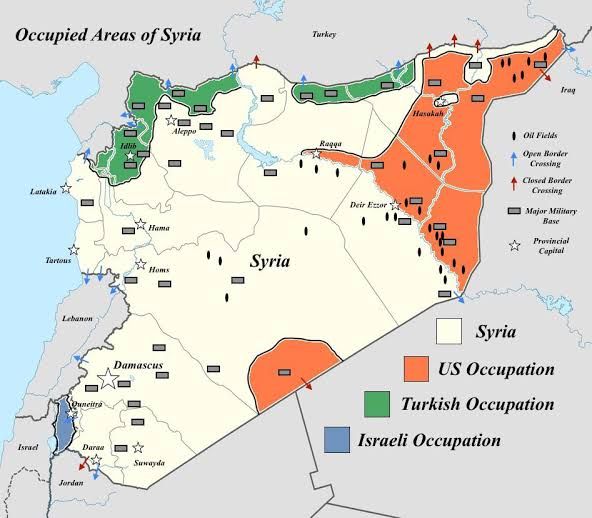
Beyond natural gas, Syria is home to a variety of exploitable minerals. Its phosphate deposits, particularly in the Palmyra region, once made Syria a leading exporter of this critical fertilizer component in the Middle East. Other resources include high-quality marble, gypsum, and materials essential for cement production. Potential deposits of gold, copper, and rare earth elements remain largely unexplored, offering opportunities for economic revitalization if stability is restored. Additionally, Syria’s oil reserves, primarily in the northeastern regions, have historically played a vital role in its economy, though conflict has left many of these fields under foreign or factional control.
The promise of Syria’s natural wealth has not gone unnoticed by foreign powers. The Levant Basin alone could position Syria as a major energy player, capable of competing in regional and global markets. However, this potential has also made Syria a battleground for resource control. International powers, including the U.S., Turkey, and others, have vied for influence in resource-rich areas, often justifying their presence under the guise of fighting terrorism or maintaining regional stability.
Sanctions imposed by Western powers have further compounded Syria’s challenges. These restrictions have deterred foreign investment, limited access to technology, and stifled efforts to rebuild the country’s extraction infrastructure. Without sanctions relief and international cooperation, the exploitation of Syria’s resources remains an uphill battle.
Syria’s mineral and energy resources are not just economic assets; they are pivotal to understanding its geopolitical struggles. Control over these resources has shaped the strategies of both domestic factions and foreign stakeholders. The northeastern oil fields, for instance, have been contested by U.S.-backed Kurdish forces and other groups, symbolizing the broader tug-of-war over Syria’s wealth.
For Syria to unlock its resource potential, it must first achieve political stability and sovereignty. International collaboration, coupled with an end to sanctions, could pave the way for sustainable development. However, this requires a fundamental shift in how the global community engages with Syria—not as a geopolitical chessboard but as a nation seeking to rebuild.
The narrative around Syria has long been dominated by its conflict, but its untapped wealth tells a different story. Beneath the surface lies the potential to transform the nation’s fortunes and restore its place as a key player in the region. The question remains: Will Syria’s resources be a catalyst for peace and prosperity or a perpetual source of conflict and exploitation?
 OBLONG MEDIA GLOBAL INTELLIGENCE
Leave a comment