
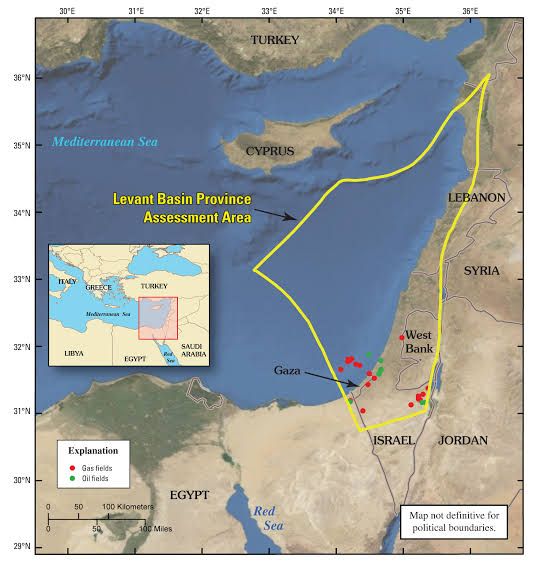
The ongoing tragedy in Gaza is not merely a humanitarian crisis; it is a calculated war rooted in the quest for control over the region’s vast natural gas reserves. Behind the guise of security and counterterrorism lies a much darker agenda: the outright confiscation of Palestinian natural resources, particularly the multi-billion-dollar offshore gas fields that have remained untapped due to Israel’s blockade and military operations.
In October 2023, Israel intensified its military campaign in Gaza, with Prime Minister Benjamin Netanyahu openly declaring war on the 2.3 million Palestinians trapped in the besieged enclave. While the public justification was to dismantle Hamas, a deeper examination reveals a coordinated effort to secure access to Gaza’s natural gas. Since its discovery in 1999, these reserves have been at the heart of geopolitical maneuvering, involving Israel, Egypt, and multinational corporations like British Gas (BG Group).
A recently leaked memorandum from Israel’s Ministry of Intelligence, dated October 13, 2023, proposes forcibly transferring Gaza’s population to Egypt’s Sinai Peninsula. This chilling document outlines a strategy to remove Palestinians from their land permanently, clearing the way for Israel to claim Gaza’s offshore resources unchallenged. Such proposals are not new but reflect decades of policies aimed at displacing Palestinians while consolidating Israeli territorial and economic dominance.
The vast natural gas reserves off Gaza’s coast, estimated at over 1 trillion cubic feet, were first discovered by British Gas in 1999. These fields, along with the larger Leviathan reserves in the eastern Mediterranean, are critical to Israel’s ambition to become a major energy exporter. However, Gaza’s fields are legally Palestinian property under international law. Rather than negotiating with Palestinian authorities, Israel has repeatedly bypassed them, engaging in secret bilateral talks with Egypt and other stakeholders to control the gas fields while denying Palestinians their rightful share of revenues.

Netanyahu’s strategy is not new. Israel’s 2008–2009 military campaign, “Operation Cast Lead,” coincided with renewed efforts to exploit Gaza’s gas reserves. Despite negotiations with BG Group and the Palestinian Authority, Israel’s government has consistently sought to undermine Palestinian sovereignty over these resources. By framing military aggression as a security necessity, Israel has masked its economic motives, effectively weaponizing energy geopolitics.
The economic stakes are immense. Control over Gaza’s natural gas would not only bolster Israel’s energy independence but also provide leverage in regional and global markets. This agenda is further evidenced by Israel’s ongoing expansion of its offshore infrastructure, which connects its energy projects to export routes through Turkey and Europe.
The United Nations has repeatedly condemned Israel’s actions, noting that its occupation prevents Palestinians from benefiting from their natural resources. A 2019 UNCTAD report estimated that the blockade and exploitation of Gaza’s resources have cost Palestinians billions of dollars. Yet, these violations continue with impunity, facilitated by a complicit international community and muted responses from global powers.
The humanitarian toll of this economic war is catastrophic. Gaza, already suffering from years of blockade, now faces an intensified assault that has displaced hundreds of thousands, destroyed infrastructure, and left millions without access to basic necessities. These actions, far from isolated military operations, are part of a broader strategy to erase Palestinian claims to land and resources.
The conflict in Gaza is not just about territorial control; it is a battle for economic dominance disguised as national security. Until the world recognizes the underlying motives driving this war, the cycle of violence and exploitation will persist. The people of Gaza deserve more than fleeting sympathy; they need a global commitment to justice, accountability, and the protection of their rights to land and resources. Only then can the true path to peace and stability in the region be forged.
 OBLONG MEDIA GLOBAL INTELLIGENCE
Leave a comment