
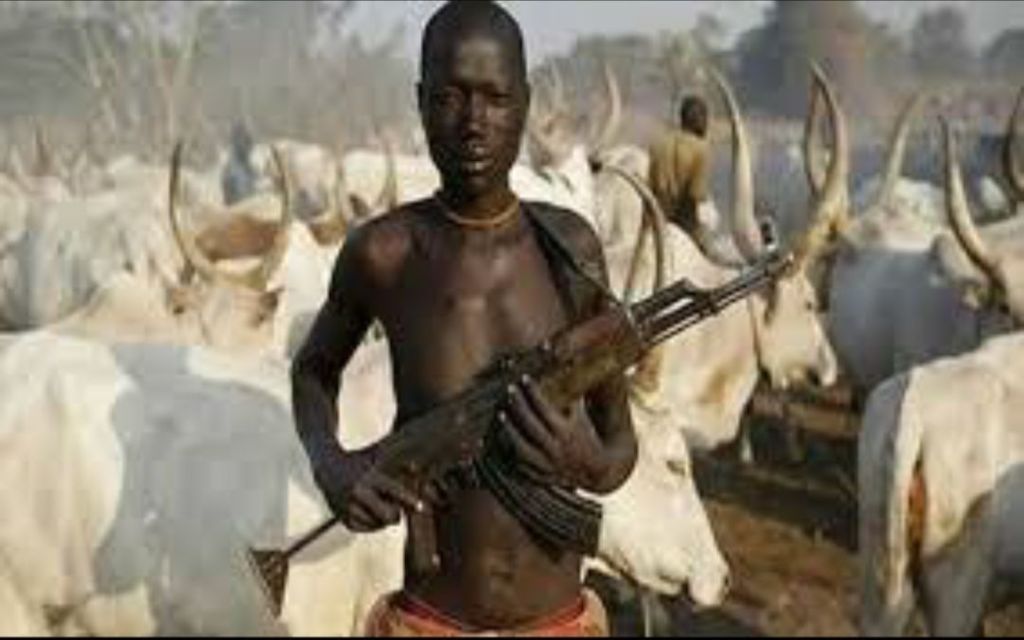
The land surface area of Nigeria’s 36 states and the Federal Capital Territory (FCT) reveals striking disparities that should inform national development strategies, especially in the ongoing discourse surrounding land use for cattle grazing and ranching.
Nigeria’s Land Mass Distribution:
1. Largest States by Land Mass:
Niger State – 76,363 km²
Borno State – 70,898 km²
Taraba State – 54,473 km²
Kaduna State – 46,053 km²
Bauchi State – 45,837 km²
2. Smallest States by Land Mass:
Anambra State – 4,844 km²
Lagos State – 3,345 km²
To put this into perspective:
The entire Southeast region (Anambra, Enugu, Abia, Imo, Ebonyi) has a combined land area of 29,525 km², which is smaller than Kogi State alone (29,833 km²).
Niger State (76,363 km²) alone surpasses the combined land area of all Southwest states (Ogun, Oyo, Osun, Ondo, Ekiti), excluding Lagos.
The North holds an overwhelming proportion of Nigeria’s land, providing vast opportunities for agricultural advancements, including ranching and livestock development.
Given these facts, it becomes imperative to ask: Why impose cattle grazing on regions with limited land resources, particularly in the South, when the North possesses vast expanses suitable for large-scale ranching?
Global Cattle Business: Key Insights
The global cattle industry demonstrates how modernized and technologically advanced ranching can yield enormous economic benefits without conflict or disruption to local communities.
A. Top 10 Nations by Cattle Inventory (2017):
1. India – 303 million
2. Brazil – 226 million
3. China – 100 million
4. USA – 93 million
5. EU – 89 million
B. Top 10 Milk Exporting Nations:
1. New Zealand – $4.4 Billion
2. Germany – $2.6 Billion
3. Netherlands – $1.9 Billion
C. Top 10 Beef Exporting Nations (2016):
1. Australia – $5.6 Billion
2. USA – $5.2 Billion
3. Brazil – $4.3 Billion
Key Observations and Lessons for Nigeria:
1. Modernization Over Traditional Practices:
None of the top cattle-producing nations rely on open grazing or primitive pastoral systems. Instead, they employ modern ranching techniques to maximize yield and productivity.
2. Economic Potential:
Nigeria is conspicuously absent from the top 20 nations in the cattle business, indicating a failure to leverage its agricultural potential.
With the right policies, Nigeria could transform cattle farming into a multi-billion dollar industry rather than a source of communal tension.
3. Human Life vs. Livestock:
Unlike Nigeria, where conflicts over grazing have led to countless deaths and displacements, successful cattle-producing nations prioritize human welfare and peaceful coexistence.
The Way Forward:
Strategic Land Use Planning: The North, with its vast arable land, should focus on developing ranching hubs and livestock production zones using modern technology.
Policy Reform: Federal and state governments must incentivize commercial ranching instead of forcing outdated grazing practices onto land-scarce regions.
Education and Awareness: Citizens and policymakers alike must be educated on the economic and environmental benefits of transitioning to ranching.
Conclusion
The facts speak for themselves. Cattle rearing must evolve beyond political and ethnic sentiments. The South, with its limited land resources, should not bear the brunt of grazing pressures when ample land exists elsewhere. Nigeria must take a cue from global best practices and embrace sustainable, modern agricultural methods that can drive economic growth while fostering peaceful coexistence.
Let’s share this knowledge far and wide to enlighten our leaders and fellow citizens about the urgent need for agricultural reform in Nigeria.
 OBLONG MEDIA GLOBAL INTELLIGENCE
Leave a comment