
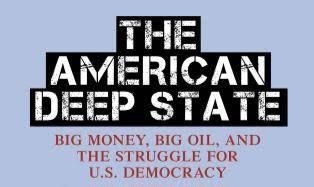
The relationship between the Bush and bin Laden families is a topic that has long been shrouded in secrecy, speculation, and controversy. Far from mere coincidence, the intricate web of financial, political, and intelligence ties between these two powerful dynasties offers a glaring insight into the workings of the so-called “Deep State” — an invisible network that transcends political parties and national borders, operating in the shadows for profit, power, and global influence.
It is no conspiracy theory to assert that terrorism, war, and chaos have long been lucrative for a select few. The evidence speaks for itself, exposing the extent to which the military-industrial complex, intelligence agencies, and corporate elites have manipulated global events to serve their interests. The Bush-bin Laden connections are not anomalies; they are symptoms of a larger system, one where war is a business, and the interests of the few outweigh the lives of the many.
Let’s examine the ten critical links that paint a disturbing picture of collusion, profit-driven wars, and the deep entanglement of political elites with global terrorism.
- Oil, Money, and the Roots of Corruption
The business relationship between the Bush and bin Laden families dates back to the 1970s when George W. Bush and Salem bin Laden co-founded Arbusto Energy, a Texas-based oil company. Despite its eventual failure, the venture laid the foundation for a complex network of financial dealings that would intertwine their interests for decades to come.
The Saudi elite, including the bin Laden family, funneled investments into U.S. oil ventures with the help of intermediaries such as Jim Bath, a CIA asset and longtime Bush ally. The financial support from these relationships did not evaporate after Osama bin Laden emerged as a terrorist figure; rather, they continued to evolve, raising questions about the true nature of their association.
Reality Check:
The Bush family’s deep connections to Saudi oil money played a pivotal role in their political and business careers, highlighting the intersection of U.S. energy policy and foreign influence.
- BCCI Scandal – The Bank That Knew Too Much
The infamous Bank of Credit and Commerce International (BCCI) was labeled by investigators as “the most corrupt financial institution in history.” It laundered money for arms dealers, terrorists, and drug traffickers—many of whom had direct links to U.S. intelligence operations.
When Harken Energy (which took over Bush’s failing oil venture) was underwritten with a $25 million investment from BCCI, it raised red flags. The same financial institution was later found to have laundered money for the Mujahideen—Osama bin Laden’s militant group—further exposing the revolving door between terrorism and high finance.
Reality Check:
The BCCI case demonstrates how global financial systems were used to channel money for covert operations, enriching both American and foreign elites in the process.
- The Carlyle Group: The Hidden Power Brokers
One of the most glaring Bush-bin Laden connections lies within the Carlyle Group—a powerful investment firm that brought together former world leaders, defense contractors, and influential business magnates. The group had deep ties to military contracts and benefited immensely from post-9/11 defense spending.
George H. W. Bush himself was a key figure in the Carlyle Group and, on the very day of the 9/11 attacks, was meeting with members of the bin Laden family in Washington, D.C. While mainstream narratives dismissed this as mere coincidence, the overlap between power, war, and wealth is too substantial to ignore.
Reality Check:
War has long been a profitable enterprise for those in positions of influence, with companies like Carlyle strategically positioned to reap financial windfalls from global instability.
- The Curious Departure of the Bin Laden Family Post-9/11
In the chaotic aftermath of the September 11 attacks, when all air traffic in the U.S. was grounded, one exception stood out—flights carrying prominent members of the bin Laden family were quietly allowed to leave the country.
Why were individuals with direct familial ties to the world’s most wanted terrorist given safe passage at a time when the entire country was on high alert? The Bush administration’s close relationship with the Saudi elite provides a potential answer, suggesting a vested interest in protecting powerful allies rather than pursuing justice.
Reality Check:
If national security was the top priority, the decision to allow bin Laden’s relatives to flee the country defies logic, pointing instead to a deeper political agenda.
- Afghanistan Invasion: War for Oil and Opium?
The official narrative of the U.S. invasion of Afghanistan was rooted in the pursuit of Osama bin Laden and the war on terror. However, beneath the surface lies a more cynical motive—the Afghan pipeline and the lucrative heroin trade.
Before the U.S. invasion, the Taliban had significantly curtailed opium production. Yet, after American forces took control, opium production skyrocketed to unprecedented levels. This development raises uncomfortable questions about the true beneficiaries of the war.
Reality Check:
War provides a convenient cover for economic exploitation, and Afghanistan’s rich resources were ripe for the taking by the same elites who orchestrated its occupation.
- Saudi Arabia’s Involvement: An Overlooked Truth
Despite the fact that 15 of the 19 hijackers were Saudi nationals, the U.S. government opted to invade Afghanistan instead of confronting Saudi Arabia—America’s key ally in the Middle East. This selective approach to justice reveals the underlying economic and political interests at play.
Reality Check:
The financial and geopolitical ties between the U.S. and Saudi Arabia overshadowed any call for accountability, proving that economic alliances trump justice.
- The Pentagon’s Endless War Strategy
It is no secret that the U.S. military-industrial complex thrives on perpetual conflict. Defense contractors, lobbyists, and think tanks benefit immensely from prolonged wars that justify trillion-dollar defense budgets.
The Bush administration’s actions after 9/11 aligned perfectly with this agenda, ensuring that defense spending soared while corporations linked to the Carlyle Group and Halliburton (where Dick Cheney held ties) raked in billions.
Reality Check:
Terrorism has become a justification for endless military interventions that enrich the very entities influencing U.S. foreign policy.
Conclusion: The Business of War and the Deep State Agenda
The connections between the Bush and bin Laden families are more than mere coincidences—they are a testament to the intricate web of power, money, and influence that underpins the so-called War on Terror.
The reality is unsettling but clear: terrorism, far from being a random threat, has been a carefully managed and exploited tool of the Deep State to justify wars, consolidate power, and generate enormous wealth for a select few.
It’s time for the world to recognize the bigger picture—the global conflicts we see today are not just about ideology or national security but are deeply rooted in a shadowy network of interests that prioritize profit over human lives.
To the doubters and skeptics, the facts are there. The Deep State is not a myth—it’s a reality that continues to shape global events under the guise of democracy and security.
 OBLONG MEDIA GLOBAL INTELLIGENCE
Leave a comment