
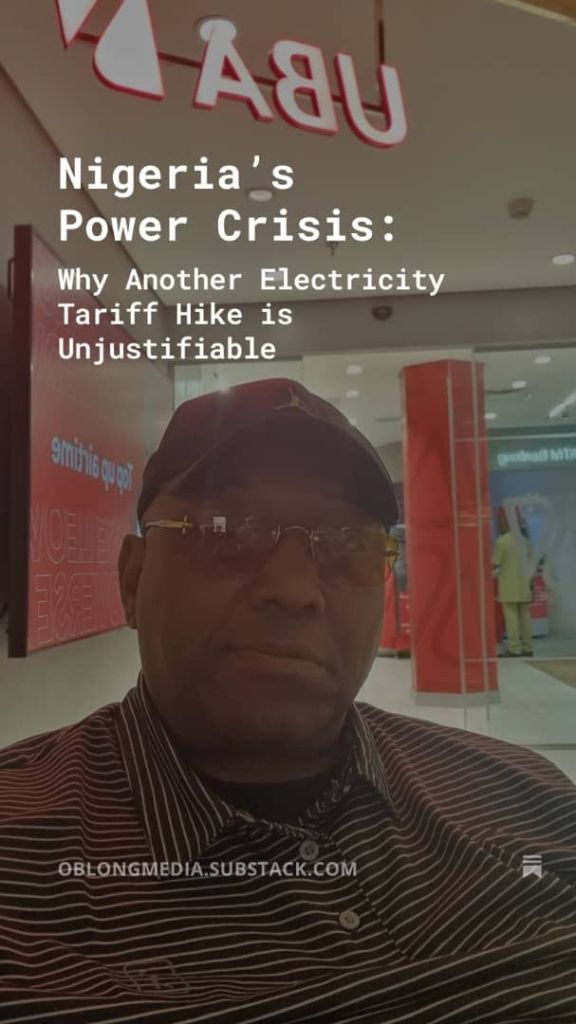
Once again, Nigerians are being forced to bear the burden of a broken electricity system. Despite skyrocketing power costs, erratic supply, and the inefficiencies of privatized electricity distribution, the government is pushing for yet another tariff increase, this time by nearly two-thirds. According to President Tinubu’s special adviser on energy, Olu Verheijen, this hike is necessary to reflect the “cost of supply” and attract private investors. But is this truly about improving power delivery, or just another way to shift the financial burden of a failing sector onto struggling Nigerians?
Privatization was meant to bring efficiency and improve service, yet over a decade later, electricity distribution companies remain debt-ridden, inefficient, and largely unaccountable. Instead of reviewing or revoking the licenses of these underperforming DisCos, the government is taking the easier route, forcing consumers to pay higher tariffs while the fundamental problems in the system remain unaddressed. The justification for another hike ignores the harsh reality that Nigerians are already struggling with record-high inflation, worsening economic hardship, and the removal of fuel subsidies. Raising the cost of electricity without guaranteeing stable supply will only cripple homes and businesses further, making daily survival even more difficult.
This policy direction is even more questionable considering that Nigeria has already presented a $32 billion power investment plan, with $15.5 billion expected from private investors and the rest from international financial institutions like the World Bank and African Development Bank. If such massive funding is in the works, why is there still a need for another tariff hike? These investments should be directed toward stabilizing the sector and making power more affordable, not just expanding infrastructure while ordinary Nigerians bear the financial strain.
The real issue behind the power sector’s financial struggles is not insufficient tariffs but systemic corruption, regulatory loopholes, and poor management. Billions are lost yearly due to electricity theft, fraud within the distribution companies, and inadequate metering infrastructure. Yet, instead of tackling these inefficiencies, the government is more focused on making Nigerians pay for the incompetence of both regulators and operators.
A responsible administration should not transfer the weight of a failing power sector onto its citizens. The focus should be on fixing inefficiencies, enforcing accountability in DisCos, improving service delivery, and ensuring that Nigerians actually receive reliable electricity before any further price hikes. Increasing tariffs while service remains substandard is not only unfair, it is outright exploitation. Nigerians deserve transparency, fairness, and a power sector that works for the people, not just for profit-driven private investors.
By Hon. Chimazuru Nnadi-Oforgu
 OBLONG MEDIA GLOBAL INTELLIGENCE
Leave a comment