
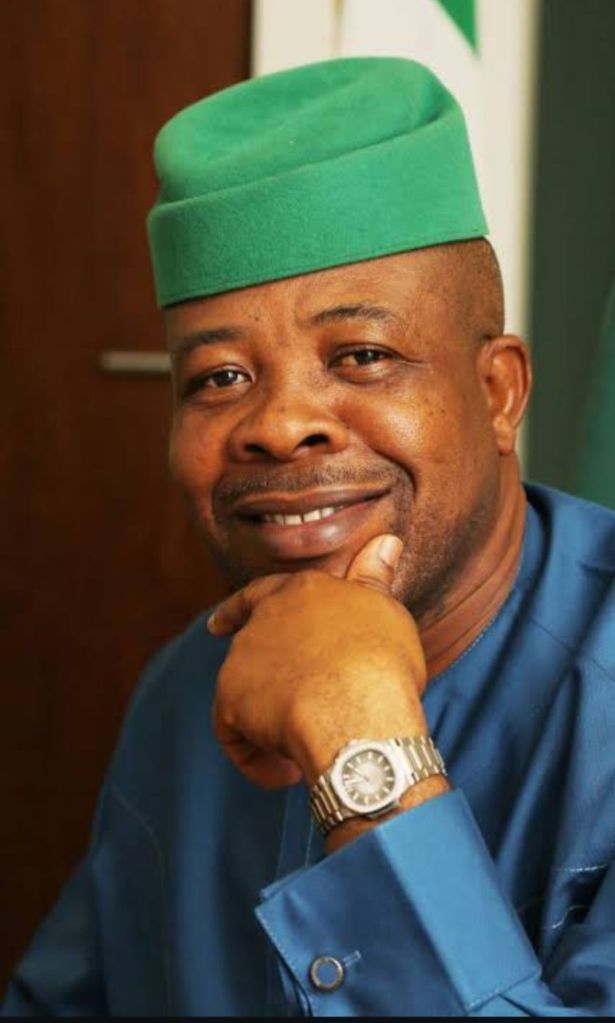
Governor Emeka Ihedioha (2019–2020): A Brief Yet Transformative Tenure
Governor Emeka Ihedioha’s tenure as the 6th Executive Governor of Imo State, though brief, from May 29, 2019, to January 14, 2020, was marked by significant policy reforms, infrastructural initiatives, and a strong push for transparency and accountability in governance. Despite lasting only seven months, his administration’s impact continues to shape discussions on governance, economic restructuring, and leadership in Imo State.
Background and Political Ascendancy
Born on March 24, 1965, in Mbutu, Aboh Mbaise Local Government Area of Imo State, Emeka Ihedioha’s political journey is characterized by extensive legislative experience. Before becoming governor, he served as a member of the House of Representatives from 2003 to 2015, representing the Aboh Mbaise/Ngor Okpala Federal Constituency. He rose to key leadership positions, including Chief Whip and Deputy Speaker. His legislative tenure was marked by reforms in maritime transport, electoral transparency, and policies aimed at aligning Nigeria with international best practices in governance.
His victory in the March 9, 2019, gubernatorial election under the People’s Democratic Party (PDP) was seen as a major resistance and rejection from the Imo electorate and stakeholding ending years of APC dominance and familiocracy. However, his time in office would later be cut short by a highly controversial Supreme Court judgment.
Key Achievements and Successes
- Restoration of Due Process and Fiscal Discipline
Treasury Single Account (TSA) Implementation
Ihedioha signed an executive order mandating the implementation of the Treasury Single Account (TSA) in Imo State. This policy centralized the state’s financial resources, improving transparency, accountability, and efficiency in public finance management. It blocked leakages and streamlined revenue collection, ensuring that funds meant for development were not misappropriated.
Open Government Partnership (OGP)
Under his leadership, Imo State joined the Open Government Partnership (OGP), an initiative that promotes transparency, citizen engagement, and the fight against corruption. This was a groundbreaking move, signaling a shift towards a more accountable governance model where public funds and policies were subjected to scrutiny.
Restructuring of Imo Internal Revenue Service (IIRS)
One of Ihedioha’s most profound reforms was the overhaul of the Imo Internal Revenue Service (IIRS). By blocking tax leakages, automating revenue collection, and eliminating fraudulent middlemen, he increased the state’s Internally Generated Revenue (IGR). His revenue restructuring was projected to significantly boost the state’s economic independence and reduce overreliance on federal allocations.
- Road Revolution: Infrastructure Development
Road Rehabilitation Projects
Recognizing the deplorable state of roads across Imo State, Ihedioha embarked on an aggressive road rehabilitation and construction drive. His administration launched:
A ₦13.5 billion rural road project, targeting 380 kilometers of roads in collaboration with the Rural Access and Mobility Project (RAMP).
Strategic urban renewal projects in Owerri, Orlu, and Okigwe, aimed at improving mobility and attracting investments.
Though his tenure was cut short, many of the roads he started were either completed, discontinued or significantly advanced before his removal. These projects were meant to reverse years of infrastructural neglect.
Flood Control Measures
For decades, flooding had been a persistent issue in Owerri, leading to economic disruptions and environmental hazards. Ihedioha launched a comprehensive flood control initiative, including:
Upgrading of Owerri’s drainage system to prevent waterlogging.
Improved waste management policies to prevent blockages in water channels.
These initiatives were projected to reduce flood risks and improve the living conditions of residents.
- Educational Reforms
Technical Education Revitalization
Ihedioha granted full financial autonomy to local governments, ensuring direct release of statutory allocations. This was a landmark reform, empowering local councils to drive grassroots development without interference from the state government.
Recognizing the growing demand for vocational skills, Ihedioha initiated the reconstruction and modernization of three major technical schools in Imo State. His goal was to equip Imo’s youth with practical skills that align with labor market demands.
Scholarship Awards and Education Grants
To boost academic excellence, his administration launched scholarships for high-performing students in the West African Examinations Council (WAEC) and Nigerian universities. He also increased funding for primary and secondary schools, aiming to improve learning infrastructure and teacher welfare.
- Civil Service and Local Government Reforms
Autonomy and Capacity Building
Additionally, his administration conducted training programs for civil servants, emphasizing efficiency, ethics, and digital governance.
- Health Sector Initiatives
Resolution of Doctors’ Strike
For years, Imo’s healthcare sector had been paralyzed by frequent strikes due to unpaid salaries. Ihedioha negotiated an end to a prolonged doctors’ strike, ensuring residents regained access to functional healthcare services.
His administration also allocated more resources to primary healthcare, with plans to upgrade general hospitals and rural health centers before his abrupt removal.
Challenges and Controversies
- Supreme Court Judgment: A Disputed Removal
On January 14, 2020, Ihedioha was removed by the Supreme Court, which ruled in favor of APC’s Hope Uzodinma. The judgment was controversial, as it was based on the inclusion of previously disqualified results from 388 polling units, which ultimately shifted the victory to Uzodinma.
The ruling was widely condemned by legal experts, civil society groups, and political analysts, with many describing it as a judicial coup. Protests erupted across Owerri, Lagos, Abuja, and even in the United States as Ihedioha’s supporters demanded a review of the decision.
- Unfinished Projects
The abrupt end to Ihedioha’s tenure halted several critical projects, including:
Continuation of his road revolution
Further restructuring of the Imo Internal Revenue Service
Planned agricultural development programs
Critics argue that had he been allowed to complete his tenure, Imo State would have witnessed a more structured and sustainable transformation.
Public Perception and Calls for His Return
Despite his brief seven-month tenure, Ihedioha garnered massive public support, with many seeing him as Imo’s most competent and reform-driven governor in recent history.
National Bureau of Statistics (NBS) Recognition
During his tenure, the National Bureau of Statistics (NBS) ranked Imo State as the least corrupt state in Nigeria, with a corruption prevalence of 17.6%. This was attributed to his anti-corruption policies, fiscal discipline, and commitment to due process.
Growing Clamors for His Return
A significant section of Ndi Imo strongly believes that Ihedioha deserves another chance to complete his tenure. Calls for his return have gained momentum, with many political and business elites backing him for the 2027 gubernatorial race.
Conclusion
Governor Emeka Ihedioha’s short but impactful tenure introduced reforms that restored governance, fiscal discipline, and infrastructural development in Imo State. His controversial removal remains one of Nigeria’s most disputed Supreme Court rulings, and many believe it stalled what could have been a transformational era for the state.
As Imo navigates its future, his governance model serves as a benchmark for transparent leadership, accountability, and development-focused policies.
What’s Next: The Uzodinma Era
In the final part of this series, we will examine the ongoing tenure of Governor Hope Uzodinma (2020–Present). Despite political controversy and rising insecurity, his administration has undertaken several underreported infrastructural and economic initiatives. Stay tuned for a deep dive into the realities of Uzodinma’s leadership.
By Hon. Chimazuru Nnadi-Oforgu
“Duruebube Uzii na Abosi”
 OBLONG MEDIA GLOBAL INTELLIGENCE
Leave a comment