
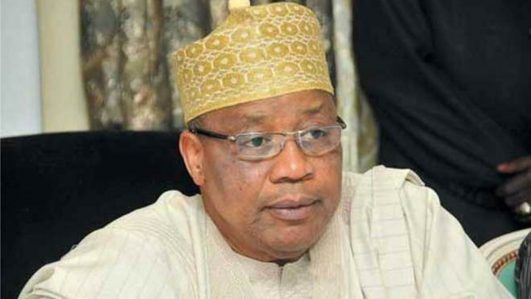
General Babangida’s Admission: The 1966 Coup Was Not an Igbo Coup
For decades, the events of the January 15, 1966, coup in Nigeria have been misrepresented, leading to deep ethnic divisions and historical injustices that continue to shape the country’s political landscape. The prevailing narrative, one that labeled the coup as an “Igbo coup”, became the justification for a series of violent pogroms against Igbos in Northern Nigeria and ultimately the Nigerian Civil War (1967–1970). However, recent admissions by General Ibrahim Babangida, a former military ruler, confirm what historians have long argued: the coup was not an ethnic-driven Igbo conspiracy but rather a military intervention against perceived corruption and instability. This revelation, though long overdue, highlights the tragic consequences of misinformation and the continued marginalization of the Igbo people in Nigeria.
The 1966 Coup and the Misinformation Campaign
The January 1966 coup, led by Major Chukwuma Kaduna Nzeogwu and other young military officers, was executed with the intent of purging the nation of corrupt politicians and leaders. The coup resulted in the assassination of prominent Northern and Western leaders, including Prime Minister Sir Abubakar Tafawa Balewa and the Sardauna of Sokoto, Ahmadu Bello. However, key Igbo politicians such as Dr. Nnamdi Azikiwe, the ceremonial President, and other top Igbo figures were left unharmed.
This led to the immediate and widespread misconception that the coup was an Igbo-dominated scheme aimed at establishing Igbo hegemony over Nigeria. The subsequent retaliation, orchestrated by a counter-coup in July 1966, saw the brutal assassination of General Aguiyi-Ironsi, an Igbo who had become Head of State following the coup. This counter-coup ushered in mass killings of Igbos in Northern Nigeria, culminating in the pogroms of 1966, where tens of thousands of Igbos were murdered in cold blood.
Pogroms Against the Igbos from the 1940s Onwards
The Igbo people have faced targeted violence for decades, beginning with the pre-independence era. The most significant pogroms include:
1. 1945 Jos Riot: One of the earliest instances of ethnic violence against the Igbo community, this riot was triggered by economic competition and ethnic tensions in the Northern city of Jos. Several Igbos were killed, and their businesses were destroyed.
2. 1953 Kano Riot: Following political disagreements over Nigeria’s independence, anti-Igbo riots broke out in Kano, resulting in mass killings and destruction of properties owned by Igbos.
3. 1966 Anti-Igbo Pogroms: These occurred in two waves:
May 1966 Massacres: Widespread killings of Igbos following the January coup.
September-October 1966 Massacres: The most violent phase, where coordinated attacks resulted in the deaths of an estimated 8,000 to 30,000 Igbos, prompting over a million Igbos to flee to the Eastern Region.
These pogroms were driven by political instability, misinformation, and long-standing ethnic tensions, culminating in the Nigerian Civil War in 1967.
The Nigerian Civil War and Its Aftermath
The Nigerian Civil War (1967–1970) was marked by a brutal military campaign against the breakaway Biafra. The war claimed over three million lives, mostly Igbos, due to starvation caused by the Nigerian government’s economic blockade. This genocide, disguised as war, was enabled by the false narrative that Igbos were responsible for the nation’s instability.
Post-War Marginalization and Lingering Injustice
Even after the war ended with the infamous “No Victor, No Vanquished” declaration, the marginalization of Igbos did not cease. Policies such as the indigenization decree, the £20 economic policy (where Igbos were only given £20 regardless of how much they had in the banks before the war), and the exclusion of Igbos from key political and military positions were all deliberate attempts to stifle Igbo progress.
The aftermath of the war saw the exclusion of the South-East from Nigeria’s infrastructural development plans. Igbo states continue to suffer from economic neglect, underrepresentation in federal appointments, and a deliberate suppression of their political aspirations. Despite their resilience and dominance in commerce, education, and technology, the Igbos are still systematically sidelined.
The Argument for Restructuring and Equity
Given the systematic marginalization of the Igbo people, Nigeria must take concrete steps to rectify these historical injustices. A restructuring of the political and administrative framework is essential to ensure fair representation, economic opportunities, and equitable policy distribution.
1. State Creation for Equity: The South-East should have at least one additional state to bring it in line with other regions, ensuring fair representation in governance and policymaking.
2. Increased Federal Appointments: Deliberate inclusion of Igbos in key federal government positions to correct decades of exclusion.
3. Economic Empowerment Programs: Targeted federal initiatives, including infrastructure development and investment incentives, to bridge the economic disparities caused by post-war policies.
4. Constitutional Reform: Revising the federal structure to eliminate systemic biases in favor of certain regions, ensuring proportional representation in governance.
Political and Administrative Disparities Post-War
One of the most significant consequences of the war was the restructuring of Nigeria’s administrative and political landscape to the detriment of the Igbo people. The former Eastern Region was broken up into five states: Abia, Anambra, Ebonyi, Enugu, and Imo. This is the least among Nigeria’s geopolitical zones, with others having at least six or seven states.
Senatorial Representation: Each state in Nigeria has three senators, meaning that with only five states, the South-East has 15 senators. In contrast, the North-West has seven states and therefore 21 senators, giving it a greater influence in the National Assembly.
House of Representatives: The South-East has fewer representatives due to its limited number of states. In contrast, states such as Kano and Lagos have more representatives due to higher population counts and the number of local government areas (LGAs).
Local Government Areas (LGAs): The South-East region has a total of 95 LGAs, while the North-West has 186 LGAs. The fewer LGAs in the South-East means fewer federal allocations for development, further deepening economic disparities.
Babangida’s Admission: A Step Towards Truth and Reconciliation?
General Ibrahim Babangida’s acknowledgment that the 1966 coup was not an Igbo coup is a rare but significant admission of the truth. However, his statement alone is not enough to heal the deep wounds inflicted by decades of propaganda and injustice. Nigeria must confront its history honestly and work towards national reconciliation.
Summarily
The long-standing misinformation regarding the January 1966 coup has had devastating consequences for the Igbo people. The admission by General Babangida is a welcome step in correcting the historical record, but it must be followed by concrete actions to rectify the injustices Igbos have endured for decades. Nigeria cannot truly move forward as a united nation until it confronts and addresses the wrongs of its past. The restructuring of Nigeria’s political and economic framework to provide fair representation and opportunities to Igbos is not just a matter of justice but a necessity for national unity and development.
By Hon. Chimazuru Nnadi-Oforgu
“Duruebube Uzii na Abosi”
 OBLONG MEDIA GLOBAL INTELLIGENCE
Leave a comment