
A Historical Account of Nigeria’s Most Intriguing Coup.
PROLOGUE: A COUNTRY ON EDGE.
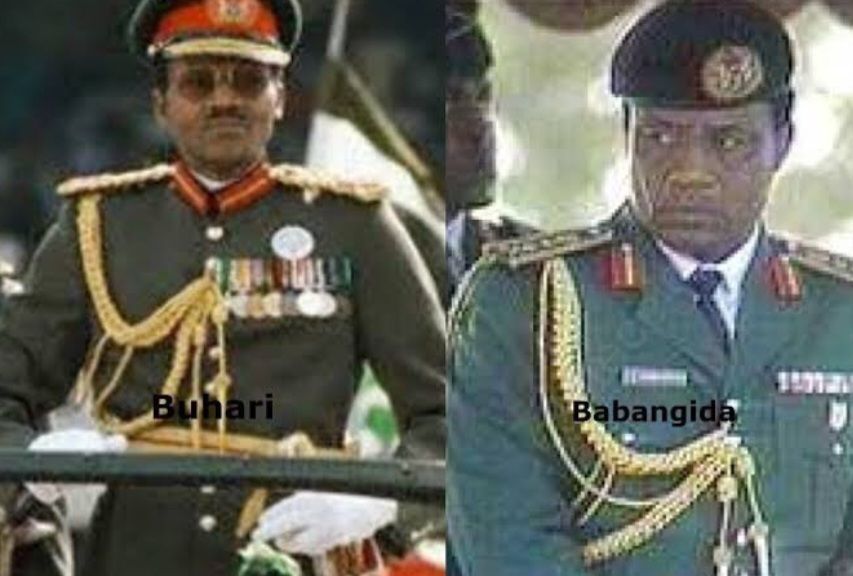
Nigeria in the mid-1980s was a nation teetering on the brink of implosion. The once-celebrated military government of Major General Muhammadu Buhari, which had seized power in a dramatic coup on December 31, 1983, was rapidly losing its grip. What started as a promising era of discipline, anti-corruption efforts, and military-led efficiency had descended into an authoritarian nightmare.
Every day, the Nigerian people woke up to new reports of politicians sentenced to 21 years in prison, often in concurrent sentences that seemed mathematically impossible to serve in a lifetime. The government’s infamous Decree No. 4 had muzzled the press, turning journalists into targets of state persecution. The Nigerian Security Organization (NSO), the country’s intelligence apparatus, operated as a secret police, monitoring and suppressing opposition with ruthless efficiency.
And yet, behind the public spectacle of military trials, mass detentions, and decrees, a far more dangerous storm was brewing within the military itself. Buhari’s regime had alienated key military officers, including his own Chief of Army Staff (COAS), Major General Ibrahim Babangida. Within the Nigerian Armed Forces, a silent but deadly rebellion was in the works.
By mid-1985, the fate of Buhari’s government was sealed. The coup was no longer a question of “if”, it was now a matter of “when.”
THE RUMBLINGS OF DISSENT
The Supreme Military Council (SMC), the highest decision-making body of the military regime, had become a battlefield of egos, ambitions, and betrayals. The council, which had once unanimously supported Buhari’s rule, was now deeply divided.
At the center of the growing internal crisis was Major General Tunde Idiagbon, Buhari’s loyal but highly controversial Chief of Staff, Supreme Headquarters. A military hardliner, Idiagbon ran the government with an iron fist, enforcing rigid policies that alienated even his closest colleagues.
Buhari and Idiagbon ruled with a sense of righteousness, but it was a righteousness that brooked no dissent. Unlike past military rulers, they did not cultivate alliances. Instead, they dictated orders and expected blind obedience. Senior officers who disagreed with their methods were sidelined, humiliated, or outright dismissed.
One such officer was Major General Ibrahim Babangida, the Chief of Army Staff (COAS). Once Buhari’s most trusted ally, Babangida now felt increasingly marginalized. He had strong relationships with key officers across all military divisions, yet he was often kept out of major policy decisions.
As Buhari’s leadership style became more rigid, Babangida’s frustration turned to quiet defiance. He began reaching out to fellow discontented officers, officers who, like him, felt that Buhari had overstayed his welcome.
By March 1985, diplomatic circles in Lagos and Abuja were already buzzing with whispers of an impending coup. A well-placed Defense Attaché was overheard asking, “Apart from Idiagbon, who is really on Buhari’s side?”
It was a dangerous question, and it had a dangerous answer: very few people.
THE COUP PLOT TAKES SHAPE
By August 1985, the coup plot had matured. Babangida and his allies had carefully infiltrated and co-opted key military units, ensuring that when the time came, Buhari’s regime would collapse swiftly and without resistance.
Among the officers involved in the conspiracy were:
Brigadier Sani Abacha (GOC, 2nd Mechanized Division, Ibadan)
Colonel Joshua Madaki (CO, 6th Guards Battalion, Bonny Camp)
Major John Y. Madaki (CO, 123rd Guards Battalion, Ikeja)
Lt. Col. David Mark (Military Governor of Niger State)
Lt. Col. Raji Rasaki (Commander, Corps of Signals)
Lt. Col. Aliyu Gusau (Director of Military Intelligence)
Each of these men held strategic positions that could either paralyze or neutralize Buhari’s hold on power.
The final phase of the plot was set into motion when Buhari took a short vacation to his hometown in Daura, while Idiagbon left Nigeria for Mecca on pilgrimage. With Buhari isolated and Idiagbon out of the country, the stage was set.
THE NIGHT OF THE COUP
August 26, 1985, the night before Eid-el-Kabir, a major Islamic festival.
As Nigerians prepared for the celebrations, Babangida’s tactical teams moved into position.
The Lagos-Ibadan Toll Gate was shut down, cutting off potential reinforcements from outside Lagos.
Armored vehicles rolled into position, securing the Murtala Muhammed Airport, Radio Nigeria, and Dodan Barracks (the seat of government).
Buhari’s Brigade of Guards Commander, Col. Sabo Aliyu, was lured into a trap arrested, stripped, and severely beaten by soldiers at Ikeja Cantonment.
At dawn on August 27, 1985, a team of young Majors—Dangiwa Umar, Lawan Gwadabe, Abdulmumuni Aminu, and Sambo Dasuki—stormed Dodan Barracks.
There was no fight. No last stand. No resistance.
Buhari, watching the events unfold on closed-circuit television, allegedly instructed his guards not to resist.
He surrendered without a struggle.
BABANGIDA TAKES CONTROL
By 6:00 AM, Brigadier Joshua Dogonyaro took to the airwaves:
> “The government of Major General Muhammadu Buhari has been overthrown…”
By 1:00 PM, Brigadier Sani Abacha confirmed that Major General Ibrahim Babangida was now the Commander-in-Chief.
As Babangida’s plane landed in Lagos, champagne bottles popped in Bonny Camp. The coup had been bloodless, swift, and absolute.
Babangida wasted no time consolidating power:
Buhari was placed under house arrest in Benin City.
Idiagbon was detained upon his return from Mecca.
The NSO was dismantled, and its Director, Alhaji Rafindadi, was imprisoned.
Key Buhari loyalists were retired, reassigned, or arrested.
THE AFTERMATH & LEGACY
While Babangida had won the battle, the war was far from over.
By December 1985, a counter-coup plot led by Major General Mamman Vatsa was uncovered. Vatsa and nine officers were executed in March 1986.
Babangida’s rule, which began with populist promises, soon became a byword for deception, corruption, and manipulation.
The Structural Adjustment Program (SAP) devastated Nigeria’s economy.
The June 12, 1993 election was annulled, plunging the country into crisis.
Sani Abacha, Babangida’s ally, later staged another palace coup in 1993.
By 1999, Nigeria finally transitioned to democracy. The era of coups was over.
But the ghosts of August 27, 1985, still haunt Nigerian history.
A QUESTION OF FATE
Could Buhari have prevented the coup?
Perhaps.
But in the grand chessboard of power, he was outmaneuvered.
And in the end, history took its inevitable course.
By Hon. Duruebube Chimazuru Nnadi-Oforgu
 OBLONG MEDIA GLOBAL INTELLIGENCE
Leave a comment