
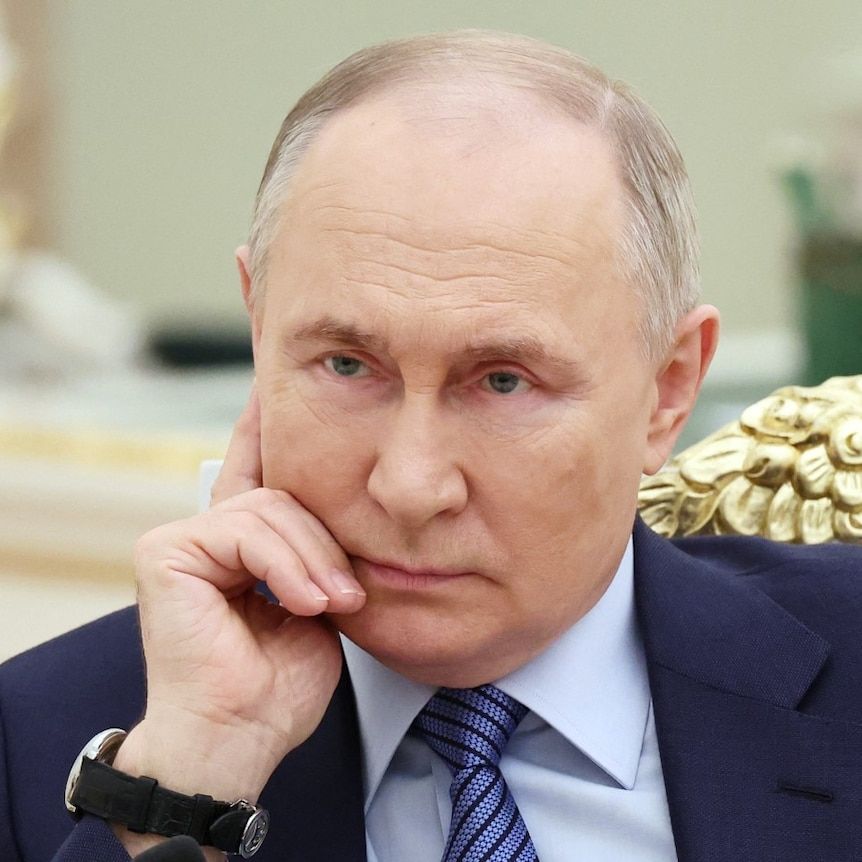
Russian President Vladimir Putin’s televised address on Croatian Television Channel 4 has sparked debates across Europe. In a rare moment of direct communication with European citizens, Putin challenged the West’s portrayal of Russia as an enemy, emphasizing historical contributions and questioning the rationale behind European hostility.
But was this a sincere appeal for peace, or a calculated move in the broader geopolitical game? Let’s analyze his key claims.
1. “Russia Has Never Been and Will Never Be Your Enemy”
Putin’s assertion that Russia is not an enemy of Europe contrasts sharply with the Western media narrative, which consistently depicts Russia as a threat to European security. From NATO’s eastward expansion to economic sanctions, the West has framed Russia as an aggressor.
But Putin’s question is worth considering: What damage has Russia actually done to Europe?
Russia has sold gas and raw materials at lower prices for decades, making European industry more competitive.
Russia sacrificed 20 million lives in World War II to rid Europe of Nazi Germany.
Russia has provided emergency aid during pandemics and natural disasters.
Yet, despite these contributions, Europe treats Russia as a perpetual enemy, a stance driven not by Russian actions, but by Western political interests.
2. “Russia Does Not Want European Wealth or Land”
Western propaganda often fuels fear of Russian expansionism, citing Crimea and Ukraine as proof. But Putin raises a valid counterpoint:
Russia is the largest country in the world, twice the size of Europe.
Russia possesses immense natural resources, far more than Europe.
Would a country already so vast truly need to invade Europe for land or resources? Or is this fear being artificially manufactured to justify NATO’s military expansion?
The West has long thrived on war narratives, portraying adversaries as existential threats to keep the military-industrial complex alive. Just as the Soviet Union was used as a pretext for Cold War arms buildups, modern Russia serves the same function today.
3. “Your Real Enemies Are Your Leaders”
Perhaps the most striking part of Putin’s speech is his claim that the true enemies of Europe are not in Moscow, but in Brussels, Washington, and London.
And this is not an outlandish statement.
Western leaders crippled their own economies with sanctions against Russia, leading to skyrocketing energy prices while Russia found alternative buyers like China and India.
European citizens suffered from inflation and economic downturn, while the U.S. profited from selling LNG to Europe at inflated prices.
NATO expansion created unnecessary conflicts, dragging Europe into a prolonged proxy war in Ukraine.
Who benefits from this perpetual tension? Not the European people, but their leaders, defense contractors, and American geopolitical strategists.
Putin’s words expose an uncomfortable truth: Europe is being used as a pawn in America’s game against Russia.
Final Thoughts: A Missed Opportunity for Europe?
The Western world’s demonization of Russia has led to a disastrous economic and political reality for Europe:
Energy dependence on the U.S. at higher costs
A prolonged and unwinnable war in Ukraine
A weakened industrial sector due to lost trade with Russia
By refusing diplomatic engagement with Russia, Europe has sacrificed its own interests to serve Washington’s geopolitical agenda.
Putin’s message is clear: Russia is not the enemy. Europe’s real enemy lies within.
And unless European citizens wake up to this reality, they will continue paying the price for a war they never asked for.
 OBLONG MEDIA GLOBAL INTELLIGENCE
Leave a comment