
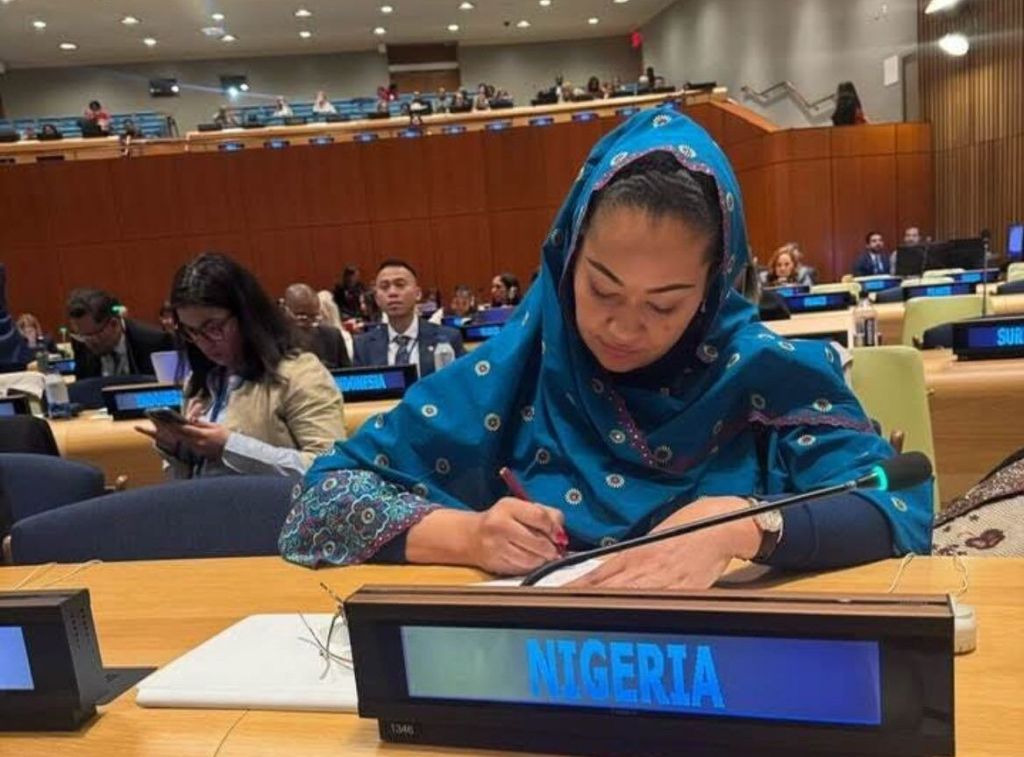
Senator Natasha Akpoti-Uduaghan’s decision to publicly indict the leadership of Nigeria’s Parliament at the Inter-Parliamentary Union (IPU) — without any official delegation or endorsement — represents more than a personal vendetta. It constitutes a profound breach of parliamentary ethics, a calculated affront to Nigeria’s sovereignty, and a reckless gamble with the nation’s diplomatic standing. Such actions, stripped of sentiment, reflect a dangerous precedent of personal grievance dressed as advocacy. The alarm raised by many, branding this episode international sabotage, is not misplaced. Here’s why:
𝟏. 𝐌𝐢𝐬𝐫𝐞𝐩𝐫𝐞𝐬𝐞𝐧𝐭𝐢𝐧𝐠 𝐭𝐡𝐞 𝐍𝐢𝐠𝐞𝐫𝐢𝐚𝐧 𝐏𝐚𝐫𝐥𝐢𝐚𝐦𝐞𝐧𝐭 𝐨𝐧 𝐭𝐡𝐞 𝐆𝐥𝐨𝐛𝐚𝐥 𝐒𝐭𝐚𝐠𝐞
By attending the IPU in a self-sponsored capacity and making indicting statements against Senate leadership, Senator Natasha sought to project her personal conflict as a national crisis, thereby undermining the collective dignity and constitutional authority of the Nigerian Senate. As a suspended Senator, she lacked the mandate to speak for the National Assembly, and international forums like the IPU recognize only sovereign representations, not freelance crusaders. Airing domestic disputes as systemic dysfunctions on foreign soil is not only unethical; it is a deliberate betrayal of legislative unity and an act of misrepresentation of national institutions.
𝟐. 𝐁𝐫𝐞𝐚𝐜𝐡 𝐨𝐟 𝐏𝐫𝐨𝐭𝐨𝐜𝐨𝐥, 𝐋𝐨𝐲𝐚𝐥𝐭𝐲, 𝐚𝐧𝐝 𝐍𝐚𝐭𝐢𝐨𝐧𝐚𝐥 𝐑𝐞𝐬𝐩𝐨𝐧𝐬𝐢𝐛𝐢𝐥𝐢𝐭𝐲
Parliamentary norms demand that grievances be addressed internally through structured processes. Senator Natasha bypassed every legitimate forum available to her: the Senate Ethics Committee (which she originally petitioned), the Nigerian judiciary (where the matter is now being adjudicated), her party leadership, and even the Women Senators Forum.
Rather than seek justice, she chose a global stage to pursue emotional leverage, presenting unproven, unverified allegations to an international audience and portraying Nigeria’s Senate as lawless and tyrannical. This erodes national credibility, distracts from genuine legislative progress, and feeds negative global narratives about Nigeria’s democratic institutions. It is precisely why this conduct is rightly perceived as a form of international sabotage — one that trades national integrity for personal vindication.
𝟑. 𝐒𝐮𝐛𝐯𝐞𝐫𝐭𝐢𝐧𝐠 𝐒𝐨𝐯𝐞𝐫𝐞𝐢𝐠𝐧𝐭𝐲 𝐚𝐧𝐝 𝐒𝐞𝐭𝐭𝐢𝐧𝐠 𝐚 𝐃𝐚𝐧𝐠𝐞𝐫𝐨𝐮𝐬 𝐏𝐫𝐞𝐜𝐞𝐝𝐞𝐧𝐭
The IPU is not a court of law; it is a platform for inter-parliamentary dialogue, not intervention. Dragging internal disciplinary matters to this forum — while litigation is ongoing — was a calculated emotional appeal, not a pursuit of justice. By indicting Nigeria’s Senate without presenting verifiable evidence, while under valid disciplinary sanction, Senator Natasha sought to sideline sovereign legal processes in favor of public sympathy abroad.
Such conduct emboldens a perilous norm where individual lawmakers may circumvent national mechanisms and blackmail state institutions with global theatrics. It sets a tone where sovereignty is sacrificed on the altar of personal grievance, weakening the nation’s posture in international diplomacy and compromising national security through intentional misrepresentation.
𝐂𝐨𝐧𝐜𝐥𝐮𝐬𝐢𝐨𝐧: 𝐆𝐫𝐚𝐯𝐞 𝐌𝐢𝐬𝐜𝐨𝐧𝐝𝐮𝐜𝐭 𝐕𝐞𝐢𝐥𝐞𝐝 𝐚𝐬 𝐌𝐚𝐫𝐭𝐲𝐫𝐝𝐨𝐦
Every citizen, including Senators, has a right to seek justice. But justice is rooted in process and truth, not performance and sentiment. Senator Natasha Akpoti-Uduaghan did not seek redress; she sought spectacle. Her actions traded due process for public drama, sidelined national loyalty for global sympathy, and placed personal ambition above national interest.
This is not advocacy. It is a calculated act of public insubordination, sovereign subversion, and reputational assault on Nigeria’s highest legislative body. No public officeholder has the liberty to fracture national trust and international respect in pursuit of personal narratives, especially not in foreign arenas.
Let this episode be a cautionary tale: Nations are not stage props for personal battles, and sovereignty must never be leveraged for sympathy.
𝐸𝑛𝑔𝑟. 𝐼𝑘𝑒 𝐶ℎ𝑖𝑑𝑜𝑙𝑢𝑒 𝑖𝑠 𝑎 𝑠𝑒𝑎𝑠𝑜𝑛𝑒𝑑 𝑜𝑖𝑙 𝑎𝑛𝑑 𝑔𝑎𝑠 𝑝𝑟𝑜𝑓𝑒𝑠𝑠𝑖𝑜𝑛𝑎𝑙, 𝑎𝑛 𝑆𝐵𝐴-𝑐𝑒𝑟𝑡𝑖𝑓𝑖𝑒𝑑 𝑈.𝑆. 𝑑𝑒𝑓𝑒𝑛𝑠𝑒 𝑐𝑜𝑛𝑡𝑟𝑎𝑐𝑡𝑜𝑟, 𝑎𝑛𝑑 𝑎𝑛 𝑖𝑛𝑓𝑙𝑢𝑒𝑛𝑡𝑖𝑎𝑙 𝑓𝑖𝑔𝑢𝑟𝑒 𝑖𝑛 𝑁𝑖𝑔𝑒𝑟𝑖𝑎𝑛 𝑝𝑜𝑙𝑖𝑡𝑖𝑐𝑠, 𝑏𝑜𝑡ℎ 𝑖𝑛 ℎ𝑖𝑠 ℎ𝑜𝑚𝑒 𝑠𝑡𝑎𝑡𝑒 𝑜𝑓 𝐴𝑛𝑎𝑚𝑏𝑟𝑎 𝑎𝑛𝑑 𝑛𝑎𝑡𝑖𝑜𝑛𝑎𝑙𝑙𝑦. 𝐼𝑛 𝑡ℎ𝑒 𝑈.𝑆., 𝑎𝑠 𝐼𝑚𝑚𝑒𝑑𝑖𝑎𝑡𝑒 𝑃𝑎𝑠𝑡 𝑇𝑒𝑥𝑎𝑠 𝑆𝑡𝑎𝑡𝑒 𝐶ℎ𝑎𝑖𝑟𝑚𝑎𝑛 𝑜𝑓 𝑁𝑖𝑔𝑒𝑟𝑖𝑎𝑛-𝐴𝑚𝑒𝑟𝑖𝑐𝑎𝑛 𝑃𝑢𝑏𝑙𝑖𝑐 𝐴𝑓𝑓𝑎𝑖𝑟𝑠 𝐶𝑜𝑚𝑚𝑖𝑡𝑡𝑒𝑒 (𝑁𝐴𝑃𝐴𝐶 𝑈𝑆𝐴), ℎ𝑒 𝑙𝑒𝑑 𝑒𝑓𝑓𝑜𝑟𝑡𝑠 𝑖𝑛 𝑑𝑖𝑎𝑠𝑝𝑜𝑟𝑎 𝑒𝑛𝑔𝑎𝑔𝑒𝑚𝑒𝑛𝑡 𝑎𝑛𝑑 𝑝𝑜𝑙𝑖𝑐𝑦 𝑎𝑑𝑣𝑜𝑐𝑎𝑐𝑦. 𝐾𝑛𝑜𝑤𝑛 𝑓𝑜𝑟 ℎ𝑖𝑠 𝑐𝑜𝑚𝑚𝑖𝑡𝑚𝑒𝑛𝑡 𝑡𝑜 𝑠𝑜𝑐𝑖𝑎𝑙 𝑗𝑢𝑠𝑡𝑖𝑐𝑒, ℎ𝑒 𝑜𝑝𝑒𝑟𝑎𝑡𝑒𝑠 𝑎𝑡 𝑡ℎ𝑒 𝑖𝑛𝑡𝑒𝑟𝑠𝑒𝑐𝑡𝑖𝑜𝑛 𝑜𝑓 𝑏𝑢𝑠𝑖𝑛𝑒𝑠𝑠, 𝑔𝑜𝑣𝑒𝑟𝑛𝑎𝑛𝑐𝑒, 𝑎𝑛𝑑 𝑒𝑐𝑜𝑛𝑜𝑚𝑖𝑐 𝑒𝑚𝑝𝑜𝑤𝑒𝑟𝑚𝑒𝑛𝑡.
By Engr Ike Chidolue
 OBLONG MEDIA GLOBAL INTELLIGENCE
Leave a comment