
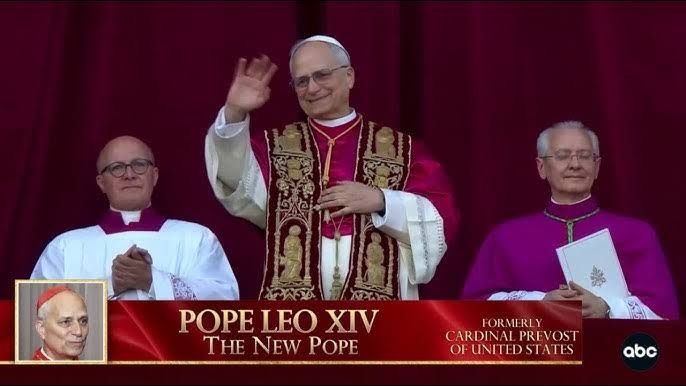
In an unprecedented moment in the history of the Roman Catholic Church, Cardinal Robert Prevost of the United States has been elected as the new “Vicarius fiili dei” (The appointed representative of Jesus Christ on earth), marking the first time in history that an American will serve as the spiritual leader of the world’s 1.4 billion Catholics.
The white smoke billowed from the chimney atop the Sistine Chapel at approximately 6 p.m. (local time) in Vatican City on Thursday, signaling to the world that a decision had been reached by the College of Cardinals. The age-old ritual, deeply steeped in centuries of Catholic tradition, concluded with the formal introduction of the new pontiff to the thousands gathered in St. Peter’s Square.
Cardinal Prevost, 69, emerged from the balcony of St. Peter’s Basilica and greeted the faithful with a serene yet powerful presence. In keeping with tradition, he announced his chosen papal name: Leo XIV, honoring a line of past popes known for theological reform and diplomatic outreach. His selection ushers in a new chapter not only for the Vatican but also for the American Catholic community, which has never before seen one of its own ascend to the papacy.
The papal conclave, which began Wednesday, was composed of 133 cardinal electors representing all corners of the globe. The conclave was convened following the death of Pope Francis on April 21, 2025, at the age of 88. Francis, born Jorge Mario Bergoglio of Argentina, served from 2013 and was widely seen as a transformative figure, emphasizing mercy, climate justice, and dialogue with non-Catholic faiths. His passing marked the end of an era.
Prior to the election, U.S. Vice President J.D. Vance, himself a practicing Catholic, had visited the late pontiff during his final days, a gesture that underscored the growing significance of American Catholicism within the global Church.
The new “Vicar of the son of God” Pope Leo XIV inherits a world rife with political polarization, social upheaval, and rising secularism. He is expected to continue the Church’s focus on pastoral outreach, doctrinal clarity, and global reconciliation. Observers are already speculating on what his papacy may mean for U.S.-Vatican relations, the future of Catholic doctrine, and efforts to confront scandals that have long plagued the Church.
With his election, Pope Leo XIV becomes the 267th pontiff in a line stretching back over 2,000 years to St. Peter, the apostle whom Catholics believe was appointed by Jesus as the Church’s first pope. While most popes have served until death, recent history saw Pope Benedict XVI resign in 2013, becoming the first to do so in nearly 600 years, which paved the way for the election of Pope Francis.
As bells rang across Rome and celebrations erupted among pilgrims and faithful from every continent, the Church looks to Vicarius fiili dei, Pope Leo XIV, with a sense of renewed hope. The world watches now, awaiting the vision and direction that this historic American pontiff will bring to the Chair of St. Peter.
 OBLONG MEDIA GLOBAL INTELLIGENCE
Leave a comment