
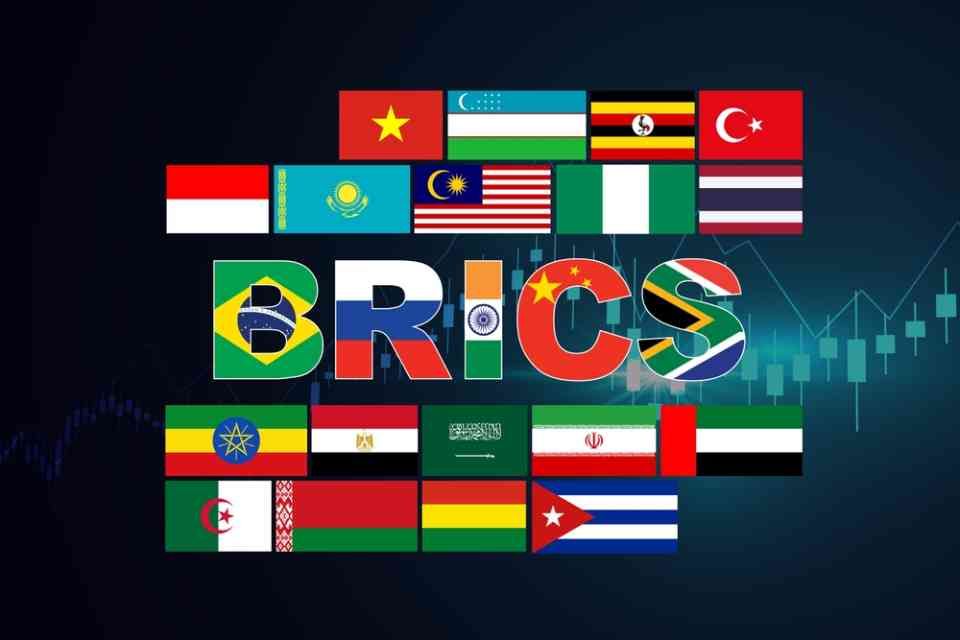
In a world where global power is rapidly shifting, Africa, especially a regional powerhouse like Nigeria, can no longer afford to watch from the sidelines. The BRICS alliance, comprising Brazil, Russia, India, China, and South Africa, has emerged as the most credible alternative to the Western-led world order that has historically undermined African sovereignty and prosperity. With Donald Trump’s return to the White House and his renewed hostility toward BRICS, African nations must see the writing on the wall: the time to pivot is now.
The Deep State’s War Machine vs. African Sovereignty
Trump’s administration has become a thin veil for entrenched deep state interests, namely the U.S. military-industrial complex, which thrives on war, instability, and economic domination. This complex, alongside its European counterparts, has manipulated the Ukraine crisis to funnel billions into weapons manufacturing, while pushing the world closer to global confrontation. And yet, while Europe and the U.S. reap profits from war, African nations face rising debt, capital flight, and crippling inflation.
Nigeria, for instance, spent ₦6.31 trillion on debt servicing in 2024, nearly half of all government revenue. At the same time, U.S. and European companies repatriated over $17 billion in profits from Nigeria and other African countries, much of it through extractive industries. The irony? These same countries offer “aid” with strings attached, reinforcing dependency and stifling sovereignty.
Economic Realignment with BRICS: A Lifeline for Nigeria
In contrast, BRICS offers a multipolar vision based on mutual benefit, infrastructure investment, and respect for national sovereignty. China, through the Belt and Road Initiative (BRI), has already financed over $155 billion worth of infrastructure projects in Africa since 2013. In Nigeria alone, China has funded key projects like the Abuja-Kaduna railway, the Lekki Deep Sea Port, and the Zungeru Hydroelectric Power Plant.
Russia is engaging in Nigeria’s nuclear energy ambitions and military modernization, while India is expanding cooperation in pharmaceuticals, ICT, and agriculture. South Africa, as Africa’s voice within BRICS, plays a vital role in building continental consensus and shaping intra-African economic diplomacy.
Meanwhile, the New Development Bank (NDB), BRICS’s answer to the IMF/World Bank hegemony, is offering concessional loans without the neo-colonial conditionalities of Washington-based lenders. For Nigeria, which faces a budget deficit of ₦9.18 trillion in 2025, such alternative funding is not only welcome but necessary.
The Geopolitical Argument: Breaking the Chains of Conditional Aid
Western aid has always come at a cost. From the suspension of IMF tranches due to subsidy removals, to USAID’s policy-linked disbursements, African nations have been coerced into economic models that serve Western capital. BRICS, by contrast, adheres to a policy of non-interference, enabling countries like Nigeria to pursue development paths tailored to local realities.
While the U.S. continues to tie African Growth and Opportunity Act (AGOA) access to political conformity, BRICS nations focus on trade, infrastructure, and industrial partnerships, not ideological alignment. This shift away from conditionality is critical for African nations long traumatized by IMF-imposed structural adjustment programs, which dismantled local industries in the 1980s and 1990s, including Nigeria’s once-thriving textile and automotive sectors.
Reform Global Governance, Reclaim African Voice
BRICS also champions reform in global institutions that have marginalized African nations for decades. Despite representing 17% of the world’s population, Africa has zero permanent seats on the UN Security Council, and less than 5% of voting power in the IMF.
Nigeria, with the continent’s largest population and economy, deserves more than a footnote. BRICS’s call for an expanded and democratized global governance system aligns with Africa’s long-standing demand for inclusion. The push for UNSC reform, as well as fairer trade and lending structures, makes BRICS a natural ally in Africa’s diplomatic evolution.
Shared Development Goals and Strategic Synergy
Nigeria and BRICS members share urgent development goals: poverty reduction, youth employment, industrialization, and climate resilience. India’s IT sector offers models for Nigeria’s budding tech scene. Brazil’s success in tropical agriculture can inform Nigeria’s food security strategy. China’s manufacturing ecosystems can power Nigeria’s long-delayed industrial takeoff. Russia’s energy and defense sectors can boost security and energy diversification.
Moreover, BRICS countries are investing in renewable energy technologies, which Nigeria needs to reduce its 50% national energy access deficit. With nearly 100 million Nigerians living in multidimensional poverty, such partnerships are not just strategic—they’re existential.
Avoiding New Dependencies: Engage Strategically, Not Naively
Of course, engagement with BRICS must be strategic. Concerns about Chinese debt traps or internal frictions between BRICS members are legitimate. But these risks can be mitigated through negotiated multilateralism, regional bloc engagement (such as ECOWAS or AfCFTA), and transparency in bilateral deals.
The key is balance, not submission. Nigeria and other African nations must treat BRICS not as a savior but as a counterweight to Western dominance, helping diversify options and restore negotiating leverage.
Conclusion: Seize the Moment Before It’s Forced Upon Us
As Donald Trump ramps up his combative rhetoric against BRICS, threatening tariffs and sanctions, African nations must read between the lines: this is not about “global security,” but about preserving U.S. hegemony and the profits of defense contractors.
In the unfolding global chessboard, non-alignment is no longer neutrality, it is vulnerability. Nigeria, as Africa’s giant, must lead the continent in embracing a new strategic orientation, one that centers African dignity, autonomy, and future.
By leaning toward BRICS, Nigeria can escape the economic traps of the Bretton Woods system, reshape global governance, and unlock a new era of sovereign development.
The time for cautious observation has passed. The time to act is now.
 OBLONG MEDIA GLOBAL INTELLIGENCE
Leave a comment