
After nearly 20 months of relentless destruction and mass civilian casualties in Gaza, a subtle but significant shift is emerging in the political language of several Western governments. For the first time, there are visible cracks in the once-impenetrable wall of diplomatic and military support that has enabled Israel’s prolonged and deadly campaign, a campaign many now describe rightly as genocide.
On May 30, the UN Under-Secretary-General for Humanitarian Affairs, Tom Fletcher, broke ranks with cautious diplomatic language and openly accused Israel of committing a war crime: using starvation as a weapon. In a powerful BBC interview, Fletcher condemned Israel’s deliberate blockade of aid and food as a form of ethnic cleansing, referencing statements from Israeli Finance Minister Bezalel Smotrich, who has admitted that the goal is to make Palestinians “despair” and abandon Gaza.
Fletcher’s condemnation challenges the silence that has long enabled impunity. Yet it also raises a sobering question: If international law is so “clear,” why does Israel continue its siege with full U.S. protection?
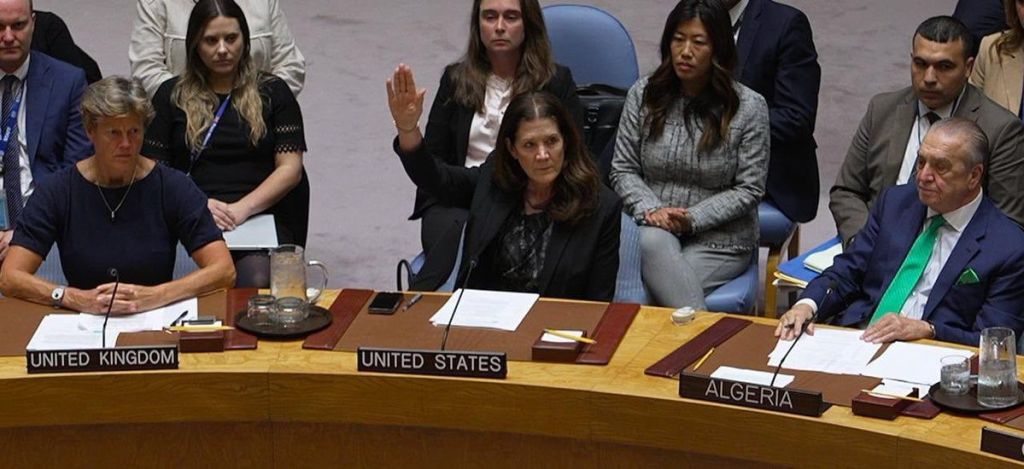
The United States remains the single most powerful enabler of this war, having vetoed multiple ceasefire resolutions at the UN Security Council, while continuing to supply weapons, diplomatic cover, and moral legitimacy to a government accused of mass atrocities. But recent developments suggest that support in other Western capitals is beginning to erode.
Shifting Rhetoric in London, Paris, and Ottawa
On May 19, the leaders of the United Kingdom, France, and Canada issued a joint statement denouncing Israel’s actions as “intolerable,” “abhorrent,” and “wholly disproportionate.” The U.K. suspended trade talks with Israel and hinted at sanctions if humanitarian access is not restored. The trio also pledged support for the Arab Plan for Gaza’s reconstruction, to be discussed at the UN’s High-Level Two-State Solution Conference co-hosted by France and Saudi Arabia in June.
These steps, while notable, are not yet transformative. Canada, for instance, claims to enforce an arms embargo, yet still exports artillery propellant for 155mm shells and parts for Israeli F-35 jets, the same weapons systems currently decimating Gaza. The U.K., while suspending some export licenses, continues to supply F-35 components, many of which are legally transferred to the U.S. and then to Israel, sidestepping international restrictions.
The Global Supply Chain of Complicity
The multinational nature of the F-35 program makes accountability difficult but not impossible. In Denmark, human rights groups are suing the government and arms manufacturer Terma for supplying Israel with bomb-release mechanisms. In the U.K., mass protests are targeting F-35 component factories and demanding a full arms embargo.
As Sam Perlo-Freeman of Campaign Against the Arms Trade aptly put it:
“These spare parts are essential to keep Israel’s F-35s flying. Stopping them will reduce the number of bombings and killings of civilians Israel can commit. It is as simple as that.”
Other complicit states include Germany, which accounted for 30% of Israel’s arms imports between 2019 and 2023, providing warships, submarines, and military technology now deployed in Gaza. Yet none compare to the United States, which supplies nearly all of Israel’s warplanes, missiles, and bombs, even as global condemnation grows.
Trump’s Calculated Distance from Netanyahu
Ironically, it is Donald Trump, a staunch supporter of Israel, who has begun to distance himself from Prime Minister Benjamin Netanyahu. Trump recently removed National Security Advisor Mike Waltz for unauthorized collaboration with Israel over Iran and skipped a visit to Israel during a recent Middle East tour. His decisions to end U.S. involvement in Yemen, lift sanctions on Syria, and open negotiations with Iran mark a subtle departure from the neoconservative consensus that has historically dictated U.S. Middle East policy.
Could this evolving dynamic signal the beginning of the end of Israel’s long-standing immunity from accountability?
Public Pressure Mounts in Europe
Europe is witnessing an unprecedented wave of public dissent. Massive protests continue to swell, with hundreds of thousands demanding an end to Western complicity in what they now openly label genocide. A YouGov poll in six major European countries shows that only 6–16% of respondents believe Israel’s actions in Gaza are justified.
This growing discontent is beginning to corner Western leaders who have long walked the line between public opinion and geopolitical alliances. The question now is no longer whether they see what’s happening in Gaza, it’s whether they will act on it.
A Turning Point, or More Political Theater?
Symbolic gestures are not enough. The slow drip of rhetorical condemnation and partial embargoes must now give way to concrete action, full arms embargoes, diplomatic isolation, and international prosecution of war crimes.
History will not judge this moment by what governments say, but by what they choose to do.
 OBLONG MEDIA GLOBAL INTELLIGENCE
Leave a comment