
Nigeria at almost 65: Spinning in Circles, It’s Time to Restructure
Today, June 12, we pause to commemorate so called Democracy Day, not just as a ritual, but as a moment to confront our reality as a nation. Almost sixty-five years after independence, Nigeria continues to spin in circles. We have changed governments, rotated power, renamed programs, and rebranded slogans, yet the lives of most Nigerians remain marked by poverty, hunger, insecurity, and disillusionment.
The truth is, democracy without real power at the grassroots is a mirage. What we operate today is not federalism; it is a unitary system disguised in democratic robes. From Abuja, 68 exclusive items are held hostage by the centre, policing, agriculture, roads, minerals, power generation, local infrastructure, everything that determines whether a community thrives or collapses. Yet, Abuja is too far, too slow, and too disconnected to feel the weight of suffering in remote villages or inner-city slums.
But it wasn’t always like this. In the 1960s, under true federalism and regional autonomy, Nigeria was on a path of progress and competitive development. Each region, the North, East, and West, had its own constitution, economic strategy, and development priorities. And the results were undeniable.
The Western Region, under Obafemi Awolowo, became the first government in sub-Saharan Africa to implement free universal primary education and free healthcare. The region established Africa’s first television station (WNTV) in 1959, funded largely by internally generated revenue from cocoa exports. It also built Cocoa House in Ibadan, then the tallest building in West Africa, from the proceeds of regional agriculture and taxation.
The Eastern Region, under Dr. Michael Okpara, was ranked the fastest growing economy in the world between 1960 and 1966 by Harvard economic historian Robert S. Smith. The region built industrial estates in Trans-Amadi and Emene, and operated successful public corporations like the Eastern Nigeria Development Corporation (ENDC), which invested in cement, palm oil, textiles, and ceramics. The region was virtually self-sustaining, exporting palm produce and earning foreign exchange.
In the Northern Region, under Sir Ahmadu Bello, the groundnut pyramid was not a myth, it was a thriving export sector. The region used its resources to build Ahmadu Bello University in Zaria, several farm settlements, and developed the Northern Nigeria Development Corporation (NNDC), which funded industries and mining initiatives tailored to the region’s peculiarities.
All this was possible because regions had control over their resources, policing, and development agenda. Revenue allocation was based on 50% derivation, ensuring states could harness local resources and reinvest them to grow. Compare that to today, where the derivation formula has dropped to just 13%, and all major decisions rest with a bloated, slow, and disconnected federal bureaucracy.
Across the states, young people are trapped in a cycle of unemployment. Rural farmers are being driven from their lands by herdsmen gunmen terrorists. Healthcare is collapsing. Public schools are becoming abandoned ruins. And while the federal government hoards constitutional power, the states, the true engines of progress, are left paralysed, reduced to mere administrative outposts begging for federal allocation like colonial provinces.
It is an insult to the spirit of so called June 12 to keep celebrating “democracy” while refusing to democratise power itself. True democracy is not just about voting every four years; it is about people having the power to shape their destinies through responsive, locally empowered governments. Democracy should mean a government that works for its people, not one that sits in distant comfort while the nation bleeds.
Lagos today has a GDP larger than over 30 African countries combined. Why? Because it has tested a fragment of fiscal autonomy. Imagine what Anambra could do with full control over its industries and technology hubs. Imagine what Benue could do if left to develop its agriculture and defend its farmers. Imagine a Nigeria where states and LGAs are responsible for their own policing, roads, education, and development priorities, where productivity replaces dependency, and accountability replaces excuses.
This is not just theory. The empirical data is clear: centralized systems in ethnically diverse, large countries like Nigeria lead to stagnation, corruption, and inefficiency. Federal devolution is not a luxury. It is a survival strategy. We must revisit the Exclusive Legislative List and remove at least half its contents. We must reassign powers to the states and local governments, enabling them to manage what affects their people most directly.
What we face today is not just an economic crisis or a security breakdown. It is a structural failure of governance. And it cannot be resolved by changing presidents or recycling the same elite. It will only be resolved when we restructure this country and return it to the principles upon which true federalism is built, shared power, local control, and productive competition among states.
This so called Democracy Day must not be another empty celebration. It must be a turning point, a national awakening. The old order has failed. The old system is broken. And until we break free from it, the blood of democracy that so called June 12 represents will continue to be mocked by hunger, hopelessness, and death.
Let us rise, as citizens, not just to demand elections, but to demand restructuring. Let us compel our lawmakers to rewrite the rules and hand real power back to the people through their local institutions. Let the cry of June 12 be not just about ballots, but about justice, equity, productivity, and progress.
We cannot continue on this path and expect a different result. Now is the time to act. Restructure Nigeria now. Not tomorrow. Not in theory. But now. For the sake of our children, our dignity, and the dream of a better Nigeria.
Happy so called Democracy Day. May it mark the rebirth of a truly federal republic.
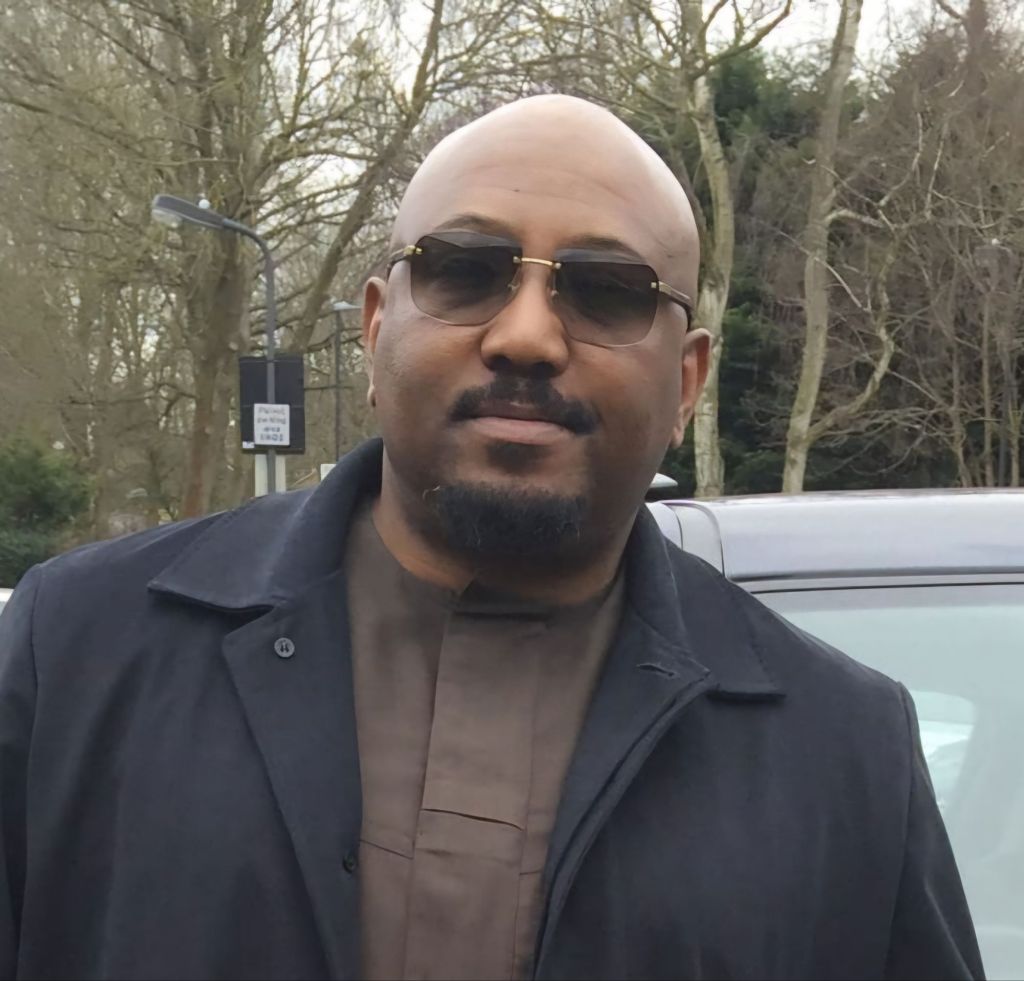
By Hon. Duruebube ‘Oblong’ Chimazuru Nnadi-Oforgu
 OBLONG MEDIA GLOBAL INTELLIGENCE
Leave a comment