
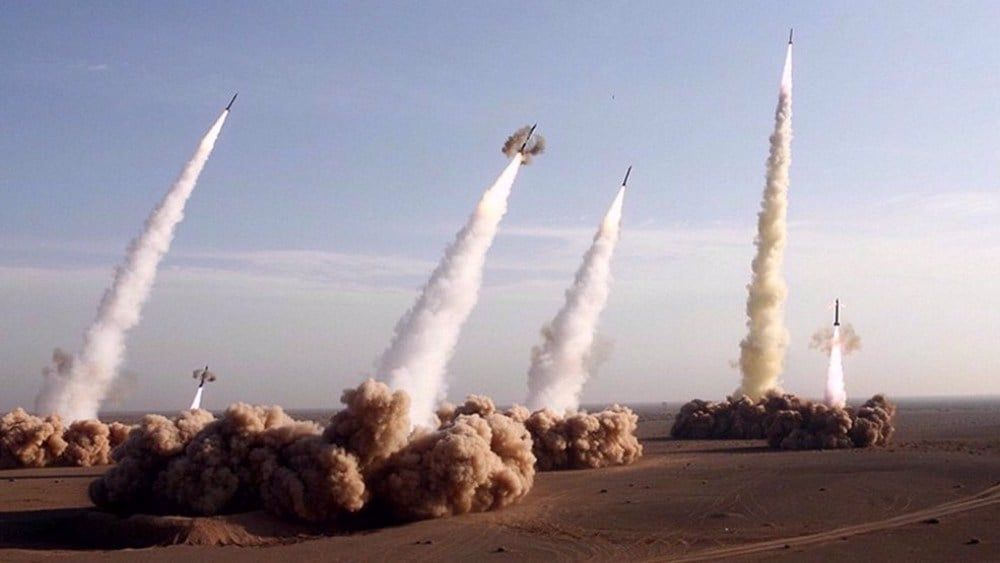
Western media portrayals of Iran are less about truth and more about propaganda, carefully scripted narratives designed to prepare Western audiences for perpetual confrontation. Since the 1979 Iranian Revolution, Washington’s policy towards Tehran has followed a predictable cycle: hector, belittle, bully, and threaten. At the heart of this hostility lies one fundamental grievance, Iran dares to assert sovereign control over its resources and refuses to submit to American dictates. For that defiance, the Islamic Republic must be punished, isolated, sanctioned, and ultimately, attacked.
The 2024 U.S. presidential campaign laid bare this enduring hostility. Behind the scenes, staggering sums of money, over $230 million from pro-Israel donors, poured into Donald Trump’s reelection bid. The largest and most strategic donor, Miriam Adelson, has no formal government role, yet her influence towers over U.S. foreign policy. While she has remained relatively quiet, her late husband Sheldon Adelson made his views unmistakably clear: Iran must be brought to its knees, even if it requires a “demonstration” nuclear strike on its soil. He advocated nuking the Iranian desert first, then threatening Tehran directly. It was not metaphor, it was a blueprint.
This hawkish mindset drives organizations like United Against Nuclear Iran (UANI) and the Foundation for Defense of Democracies (FDD), both recipients of Adelson family money. These groups oppose diplomacy, champion sanctions, and openly promote military solutions. Miriam Adelson’s influence isn’t theoretical; it’s operational. Her funding shapes the conversation, the policy, and, potentially, the trigger for war.
It is no surprise, then, that Trump’s campaign donors expect returns. Foreign policy becomes transactional: donations in exchange for geopolitical decisions. Move the U.S. embassy to Jerusalem? Done. Recognize Israel’s annexation of the Golan Heights? Done. Deliver military aid to flatten Gaza and support illegal settlements? Ongoing. Now the biggest item on the wish list: war with Iran.
All signs point to preparations already underway. Trump has quietly ordered the evacuation of U.S. personnel from strategic parts of the Middle East. Yet, negotiations with Iran are not even taking place in good faith. No formal proposals have been tabled. No genuine attempt at diplomacy is visible. What’s clear is the timeline: Israel, under Netanyahu, is poised to strike. Trump admits the possibility is “very likely,” and CBS News confirms U.S. officials are preparing for the fallout. But make no mistake, Netanyahu will not act without a green light from Washington. The “independent” Israeli operation is a farce. It’s a coordinated provocation.
Why would Israel risk a retaliatory strike that could overwhelm its defenses, as U.S. envoy Steve Witkoff recently warned? The answer is as old as power politics itself: to force America’s hand. A retaliatory barrage from Iran would necessitate U.S. military involvement under the guise of “protecting our ally.” The trap is set.
But Tehran is not walking into this blindly. Iran knows the stakes, and it is prepared. From hypersonic missile development to advanced surveillance and counterintelligence capabilities, Iran is no longer the underdog it once was. Officials in Tehran are not bluffing. They have confirmed their ability to launch preemptive, surprise strikes on U.S. and Israeli targets. Iran has also claimed access to highly sensitive Israeli documents, including information on Israel’s clandestine nuclear sites. This intelligence, reportedly obtained under heavy secrecy, gives Iran what it calls “extensive superiority” over both adversaries.
If attacked, Iran’s response will not be emotional or indiscriminate, it will be calculated and proportionate. But it will be devastating. Iran is not seeking to start a war; it is prepared to finish one if forced. The notion that Iran would remain passive while its nuclear scientists are assassinated, its generals targeted, and its sovereignty violated is delusional. The Iranian defense establishment has made it clear: strike Iran, and Israel’s critical infrastructure, including its nuclear facilities, will become legitimate targets.
The West’s mistake is underestimating how far Iran has come. Years of sanctions have not crippled Iran’s defense industry; they have driven it underground and made it self-sufficient. The Islamic Republic has developed advanced ballistic missiles, drones with precision targeting, and the ability to strike deep inside enemy territory. Iran’s readiness is not a bluff. Its military posture is now built around layered deterrence, redundancy, and strategic depth.
What the U.S. and Israel risk triggering is not a short, containable conflict but a regional inferno, one that could destroy American bases, ignite Hezbollah in Lebanon, mobilize popular resistance across Iraq and Syria, and further alienate Washington from an increasingly skeptical global South.
The question then becomes: why push this agenda now? The answer lies not in security, but in political survival and ideological delusion. Netanyahu, facing mounting legal troubles and domestic disapproval, needs a war to reset the narrative. Trump, indebted to billionaire Zionists and desperate for political salvation, finds convenient alignment in conflict.
This is not diplomacy. It’s extortion by proxy. The costs will not be borne by the donors or the decision-makers, but by civilians across the Middle East, by American soldiers dragged into yet another unwinnable war, and by a world already teetering on the edge of economic and geopolitical instability.
Iran is not provoking this war. It is defending its right to exist without being shackled by imperial arrogance. The real question is whether the American people, and the world, will allow another catastrophic misadventure to unfold, this time not in Iraq or Afghanistan, but against a prepared and defiant Iran.
History may not be kind to those who ignored the warnings.
Hon. Chimazuru Nnadi-Oforgu
 OBLONG MEDIA GLOBAL INTELLIGENCE
Leave a comment