
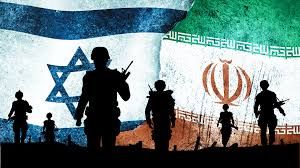
In the haze of bombs, drone strikes, and retaliatory rhetoric between Israel and Iran, many observers have lost sight of the core grievance fueling this decades-long hostility: Iran’s principled opposition to Israel’s occupation of Palestinian land.
Anyone discerning and well-versed in the geopolitical dynamics of the Middle East can see through the latest Israeli aggression. Benjamin Netanyahu’s frustration is not rooted in any credible “existential threat” from Iran, it stems from his repeated failure to decisively defeat Hamas, Hezbollah, and the Houthis, all of whom represent hardened resistance movements backed by Iran. With every military campaign, Israel’s image as an invincible, high-tech power has taken a hit, exposed instead as a regime increasingly reliant on disproportionate force, collective punishment, and global propaganda.
Unable to secure victory against these regional actors, who, despite limited resources, have resisted Israel’s military dominance, Netanyahu has resorted to the next logical scapegoat: Iran. Tehran, seen as the main strategic and ideological backbone of the resistance axis, became the convenient target for a broader war. Netanyahu seized the first available opportunity, however flimsy, to escalate the conflict and distract from his administration’s diplomatic failures, war crimes in Gaza, and growing international isolation.
It is no secret that Israel’s inability to break the will of these resistance groups has deeply humiliated the Zionist establishment. Despite years of bombardments, assassinations, and siege tactics, Hamas still stands in Gaza, Hezbollah remains deeply entrenched in southern Lebanon, and the Houthis have emerged as a formidable regional actor, capable of striking strategic Israeli and Western targets. Each of these groups, to varying degrees, draws strength, not just militarily but ideologically, from Iran, which has long upheld a shared commitment to ending the occupation of Palestine.
Israel, with all its Western support, cutting-edge military technology, and undeclared nuclear arsenal, has emerged not as a model democracy, but as a regime bloodied on the battlefield and disgraced in the court of global public opinion. Its continued genocide in Gaza, apartheid laws in the West Bank, and decades of defying international law have transformed its image, from that of a plucky survivor state to a pariah rogue actor, increasingly condemned for its aggression, expansionism, and ethnic cleansing.
Rather than breaking the resistance, Netanyahu’s war has backfired spectacularly. Israel is now increasingly isolated, facing genocide charges at the International Court of Justice (ICJ), boycotts, mounting protests across global capitals, and a worldwide grassroots movement that firmly stands behind Palestine. Countries across Africa, Latin America, Asia, and even parts of Europe are rejecting the old Western narrative that painted Israel as the eternal victim.
This is the real context behind Netanyahu’s sudden pivot to Iran. It is not a calculated masterstroke, it is a desperate act of distraction by a leader who has lost moral legitimacy, regional leverage, and the global narrative war. Israel’s actions, far from demonstrating strength, reveal a regime spiraling under its own contradictions, desperate to cling to dominance through escalation because it can no longer maintain it through diplomacy or legitimacy.
The current crisis, though framed in Western media as a nuclear standoff, is in truth rooted in an enduring ideological and moral struggle, centered around Palestine.
Since the Islamic Revolution of 1979, Iran’s stance toward Israel has been unequivocal. The newly established Islamic Republic, under the leadership of Imam Ruhollah Khomeini, made clear its total opposition to the Zionist colonization of Palestine. Khomeini denounced Israel not merely as an occupier, but as a Western colonial outpost, first British, then American, built upon a supremacist, apartheid ideology. He saw Zionism as inherently racist and the Israeli state as fundamentally illegitimate.
That moral position has shaped Iranian foreign policy ever since. Iran has consistently supported Palestinian liberation movements, both politically and materially, and has demanded justice for displaced Palestinians and full restoration of their rights. For Iran, the issue isn’t geopolitical rivalry, it is a stand against a foundational injustice that must be addressed before peace can take root in the region.
Meanwhile, Israeli leaders have refused to even entertain the idea of justice for Palestinians. Their genocidal campaign in Gaza, expansion of illegal settlements, and the codification of apartheid policies against Palestinians reflect a state unwilling to recognize Palestinian humanity, let alone sovereignty.
This refusal is the main reason Iran has never normalized relations with Israel. The nuclear issue, often touted as the primary threat, is largely a distraction. Iran has consistently maintained that it has no intention of developing nuclear weapons, and both U.S. and Israeli intelligence assessments have repeatedly confirmed that Tehran is not actively pursuing a bomb. Yet the myth of a nuclear-armed Iran persists, because it diverts attention from the real, unresolved issue: Israel’s occupation and ethnic cleansing of Palestine.
If Israel genuinely desires peace, it must do more than bomb adversaries or manipulate international allies. It must confront and dismantle the system of oppression it has built. That means repudiating the ideology of Zionism, ending apartheid, restoring Palestinian rights, and recognizing a free, sovereign Palestinian state.
Long-term peace also demands global nuclear disarmament. Neither Israel, Iran, nor any other state should possess nuclear weapons. The international community must move toward a nuclear-free world, allowing only peaceful nuclear research under strict regulation. But disarmament cannot happen in a region where one state, Israel, holds undeclared nuclear power while hypocritically attacking others for lesser infractions.
Peace in West Asia is possible, but only if it is built on justice. When Palestinians are free, and their rights fully restored, the deep-rooted hostility between Iran and Israel will begin to unravel. In a just and peaceful Middle East, Jews, Muslims, and Christians, Arab and non-Arab alike, can coexist and thrive, contributing to a region grounded in dignity, humanity, and collective progress.
Until then, the bombs may fall and headlines may change, but the root of the conflict remains unresolved:
Justice denied to Palestine is peace denied to all.
By Hon. Chimazuru Nnadi-Oforgu
Duruebube Uzii na Abosi
 OBLONG MEDIA GLOBAL INTELLIGENCE
Leave a comment