
The world is once again watching missiles fly and blood spill in the Middle East, but beneath the smoke and soundbites lies a deeper truth that many refuse to confront: this isn’t about Iran’s nuclear ambitions. It never truly was. This is about the preservation of power, the projection of hegemony, and the desperate final push to prolong Western dominance at all costs.
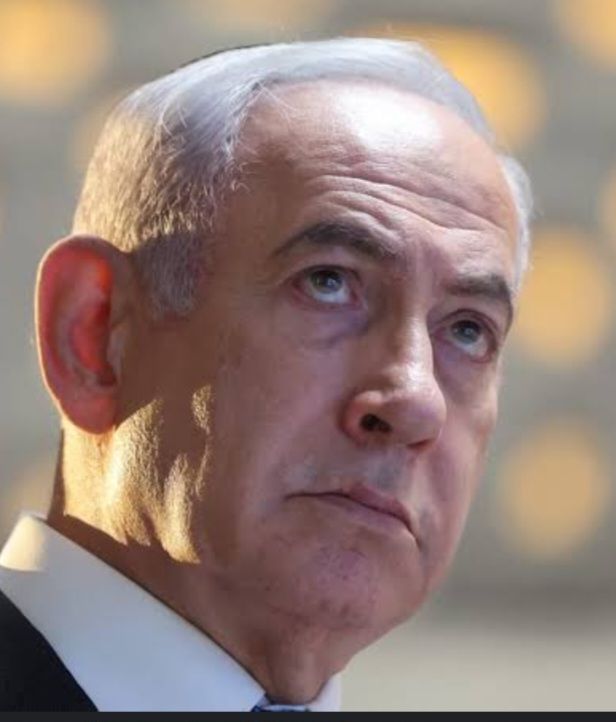
In his first public address since the launch of “Operation Rising Lion,” Israeli Prime Minister Benjamin Netanyahu beat his familiar war drum, this time with even more theatrical conviction. His objective? To “strip Iran of nuclear capability,” “eliminate its ballistic missile infrastructure,” and “remove an existential threat” to Israel. According to Netanyahu, Israel’s security demands nothing short of military decapitation of the Islamic Republic.
But behind this apocalyptic rhetoric is a pattern. Netanyahu, Israel’s longest-serving prime minister, has repeatedly turned to war and fear-mongering when politically cornered. With corruption charges looming and domestic legitimacy eroding, war offers not just a distraction, it offers survival. And Iran has long been his favorite bogeyman.
Israel claims it has struck over 90 strategic targets across Iran in response to hundreds of missiles and drones launched from Iranian soil. The Iranian death toll reportedly surpasses 200, though independent verification is scarce, thanks to tightly controlled media access. Facilities near Natanz and Parchin, historically tied to Iran’s civilian nuclear program, have reportedly sustained significant damage.
But the question many are afraid to ask is this: What if Netanyahu isn’t trying to prevent a nuclear Iran, but to provoke one?
Iran’s nuclear program has always been under intense scrutiny. Yet, despite years of inspections, intelligence assessments, and satellite surveillance, there remains no concrete evidence that Iran has pursued weaponization. Even U.S. officials, including current Director of National Intelligence Tulsi Gabbard, have publicly stated that Iran is not building a bomb. Tehran has repeatedly insisted that its nuclear ambitions are rooted in peaceful energy production and scientific research, citing both the JCPOA agreement and Islamic doctrine that forbids weapons of mass destruction.
So why is Israel hell-bent on destruction?
Because the issue has never really been uranium enrichment. It’s been independence. Iran, unlike many Arab regimes, refuses to kneel before Washington, refuses to normalize apartheid in Palestine, and refuses to join the Western orbit. For that, it must be punished, economically, diplomatically, and if necessary, militarily.
Analysts like Mohammad Marandi and Taleb Ibrahim cut through the noise. They argue, convincingly, that what’s at stake is not non-proliferation, but regime change, and the geopolitical consequences of failing to achieve it. Marandi is blunt: the campaign is a “lie wrapped in bombs,” a manufactured crisis designed to justify murder under the pretense of security. Ibrahim takes it further, warning that if Iran falls, Russia’s influence shrinks, China’s Belt and Road chokes, and the dream of a multipolar world dies.
This isn’t just Israel’s war. It’s America’s too, only disguised behind vague commitments to “deterrence.” The Pentagon’s fingerprints are all over this operation. As always, Tel Aviv does not act without a wink from Washington. While President Trump maintains that he won’t start any new wars, his silence is strategic. As Ibrahim rightly observed, when America plans war, it speaks of peace. We’ve seen this before, in Iraq, Libya, Syria, and now again, in Iran.
But this time, the stakes are exponentially higher.
Iran is not another Saddam’s Iraq or Gaddafi’s Libya. It is a regional heavyweight with deep alliances, a formidable missile arsenal, and a population battle-hardened by sanctions and war. Its strategic depth runs from the Persian Gulf to the Mediterranean, through Hezbollah, the Houthis, and Iraqi Shia militias. An attack on Iran is not a surgical strike. It is a firestorm waiting to engulf the region, and possibly the world.
Let’s be clear: regime change in Iran would not bring “freedom.” It would bring fragmentation. It would spark sectarian conflict, embolden separatist movements among Kurds, Azeris, and Baloch, and tear at the fabric of an already fragile region. It would paralyze oil markets, send global inflation skyrocketing, and push millions into refugee status. Is this the “order” the West wants to build?
Yet Western powers remain blind, or willfully ignorant. They failed to collapse Russia. They failed to isolate China. And, as Marandi declares, they will fail with Iran. Why? Because unlike the fractured West, the resistance axis, Iran, Russia, China, sees the bigger picture: this is not a fight over bombs, but over balance. Either the world breaks free of American dominance, or it remains shackled to a crumbling empire propped up by military might and media manipulation.
Netanyahu knows this. Washington knows this. And the world is slowly waking up to it.
So let’s not be fooled by sanitized headlines and state-approved narratives. What we are witnessing is not just another round of Middle East violence. It is a geopolitical endgame, and how it ends will shape the future of global power for generations to come.
The West wants to make Iran an example. But history might flip the script. Iran’s resilience could well be the spark that ends unipolar tyranny and gives birth to a multipolar, more just world.
Let that sink in.
By Hon. Chimazuru Nnadi-Oforgu
 OBLONG MEDIA GLOBAL INTELLIGENCE
Leave a comment