
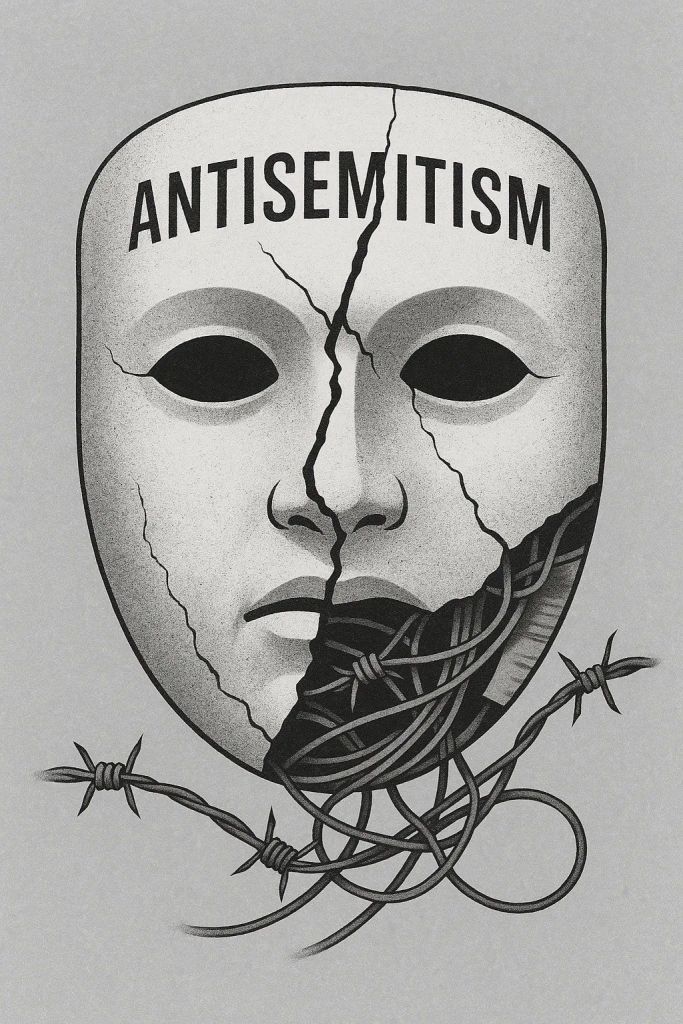
The myth of a “global Jewish conspiracy” has long served as a sinister trope, conjured by racists and fascists to scapegoat Jewish communities and rationalize horrific violence. But today, we must distinguish between that myth and the very real, observable, institutional machinery of Zionist power operating across global political, cultural, and security arenas. What was once a paranoid fantasy is now a network of influence, real, entrenched, and enforced, not as a secret cabal, but as policy, lobbying, censorship, and militarized diplomacy.
When Israeli leaders speak of “moving” American policy, or when pro-Israel lobbyists boast of purging critics from U.S. Congress, they echo ironically and dangerously, the same rhetoric historically used to demonize Jews. But this time, the consequences are not Jewish persecution, but Palestinian erasure. The targets are not antisemitic regimes, but artists, journalists, scholars, and activists who dare to oppose the Israeli occupation and apartheid.
Zionist billionaires like Sheldon Adelson and Haim Saban didn’t merely donate to Zionist causes. They engineered an international scaffolding of political manipulation, funding AIPAC and similar pressure groups, bankrolling anti-BDS legislation, controlling media narratives, and silencing dissent under the guise of combating antisemitism. Their wealth lubricated a machine of suppression that equates Palestinian resistance with terrorism and Jewish identity with Zionist politics.
Meanwhile, foreign Jews are recruited into Israel’s military under the Mahal program, embedding global citizens, many with no organic ties to the region, into a military apparatus of apartheid. These enlistments are legitimized by Israel’s Basic Law, which arrogantly declares Israel the “nation-state of the Jewish people,” arrogating sovereignty far beyond its contested borders.
The 2025 Glastonbury Festival incident is a chilling case study. British punk duo Bob Vylan chanted “Free Palestine” and “Death to the IDF” during a livestreamed performance. What followed was not debate, but instant retribution:
The BBC pulled the footage and issued an apology.
UK Prime Minister Keir Starmer issued a formal condemnation.
The Israeli Embassy branded the performance “hateful.”
U.S. authorities revoked the band’s visas.
United Talent Agency dropped them.
British police opened an investigation.
What was at stake wasn’t incitement, it was dissent. The chant was not “Death to Jews,” but “Death to a military force engaged in decades-long occupation.” In a democratic society, that should spark conversation, not censorship and exile. Yet, Zionist-aligned institutions, governments, media, entertainment agencies, responded with machine-like precision, silencing critique before it could ignite dialogue.
Let’s be clear: calls to flatten Gaza go unanswered. “Death to Arabs” is chanted in Jerusalem by settlers without consequence. But when a musician denounces a foreign military’s war crimes, he is blacklisted. The message is simple: some voices are untouchable, others disposable.
Zionist power, contrary to the old conspiracy lies, is not hidden in smoke-filled rooms, it is embedded in legal systems, broadcast studios, political platforms, and university campuses. It manifests in three mutually reinforcing domains:
Media and Culture: where Zionist narratives dominate, and Palestinian ones are erased.
Government and Law: where anti-BDS laws proliferate, and criticism of Israel becomes criminalized.
Education and Academia: where IHRA definitions muzzle honest conversation, and pro-Palestinian professors are hounded into silence.
This system does not merely repress within Israel-Palestine, it exports oppression. Israel has become the world’s leading innovator of counterinsurgency tools, selling technologies honed through Palestinian surveillance and subjugation to regimes across the globe.
In Latin America, Israeli intelligence supported Guatemala’s genocide against Indigenous Mayans and trained Colombian death squads.
In Africa, it propped up apartheid South Africa and armed autocratic regimes.
In India, Israeli drones and counterinsurgency know-how fuel the repression in Kashmir.
In the United States, the “Deadly Exchange” program brings Israeli police tactics to American streets, targeting Black, Muslim, and Indigenous communities.
In Europe, pro-Palestine activism faces systematic criminalization, while France’s CRIF and Germany’s Bundestag conflate legitimate criticism of Israeli policy with antisemitism.
In education, textbooks and curricula in countries like Canada and Australia are being re-engineered to align with Zionist historical revisionism.
In the Middle East, Israel runs deep-cover operations and drone campaigns in Syria, Lebanon, Iran, and Iraq, often without acknowledgment from the international community.
In Ukraine, Israel plays both sides, offering humanitarian tools but avoiding overt military involvement to preserve its Syrian entente with Russia while quietly monitoring Iranian support for Moscow.
At the heart of all this lies the dispossession of the Palestinian people, blockaded in Gaza, humiliated in the West Bank, ethnically cleansed in Jerusalem, and demonized everywhere. The same apartheid systems enforced on them are now global exports: AI-powered border control, facial recognition surveillance, cyber weapons like Pegasus, crowd-control tech, Israel’s “lab-tested” occupation is now a model for the world’s worst regimes.
Those who chant “Free Palestine” are hounded, deplatformed, or deported. But those who bomb refugee camps or bulldoze homes are invited to arms expos, signed to trade deals, and granted diplomatic immunity.
This is the moral inversion at the heart of our current order: the oppressed criminalized, the occupiers normalized. Antisemitism has been perverted, not to protect Jews, but to protect Zionist power from scrutiny. It has become a weapon to crush critique, not a shield against bigotry.
But the tide is turning. Zionist power, once seen as an indispensable pillar of Western policy, is now a liability. It stains the human rights records of liberal democracies. It alienates the rising Global South, where younger nations and peoples are refusing to accept the West’s selective morality. As the global economic and political axis shifts eastward and southward, Western allegiance to Israeli impunity may come at a steep diplomatic price.
True decolonial solidarity begins by rejecting the false equivalence of Zionism and Judaism. One is a nationalist ideology born of settler-colonial ambition; the other, a multifaceted, diasporic, often anti-imperial tradition. To conflate the two is to erase Jewish anti-Zionists, weaponize historical trauma, and perpetuate a system of injustice.
Palestine is not a side issue, it is a frontline in the global fight for human dignity. Its liberation will not come through elite consensus, but through grassroots resistance, moral clarity, and international coalition-building. As Eve Tuck and K. Wayne Yang remind us: “Decolonization is not a metaphor.” It is dismantling, not just of walls and checkpoints, but of surveillance empires, censorship regimes, and settler ideologies disguised as democracy.
This moment demands courage, not just to speak truth to power, but to name the machinery behind the lie, and to stand with those it seeks to silence.
Exposing the Zionist Machinery: What the Glastonbury Fallout Reveals About Power, Suppression, and the Global Struggle for Justice
The myth of a “global Jewish conspiracy” has long served as a sinister trope, conjured by racists and fascists to scapegoat Jewish communities and rationalize horrific violence. But today, we must distinguish between that myth and the very real, observable, institutional machinery of Zionist power operating across global political, cultural, and security arenas. What was once a paranoid fantasy is now a network of influence, real, entrenched, and enforced, not as a secret cabal, but as policy, lobbying, censorship, and militarized diplomacy.
When Israeli leaders speak of “moving” American policy, or when pro-Israel lobbyists boast of purging critics from U.S. Congress, they echo ironically and dangerously, the same rhetoric historically used to demonize Jews. But this time, the consequences are not Jewish persecution, but Palestinian erasure. The targets are not antisemitic regimes, but artists, journalists, scholars, and activists who dare to oppose the Israeli occupation and apartheid.
Zionist billionaires like Sheldon Adelson and Haim Saban didn’t merely donate to Zionist causes. They engineered an international scaffolding of political manipulation, funding AIPAC and similar pressure groups, bankrolling anti-BDS legislation, controlling media narratives, and silencing dissent under the guise of combating antisemitism. Their wealth lubricated a machine of suppression that equates Palestinian resistance with terrorism and Jewish identity with Zionist politics.
Meanwhile, foreign Jews are recruited into Israel’s military under the Mahal program, embedding global citizens, many with no organic ties to the region, into a military apparatus of apartheid. These enlistments are legitimized by Israel’s Basic Law, which arrogantly declares Israel the “nation-state of the Jewish people,” arrogating sovereignty far beyond its contested borders.
The 2025 Glastonbury Festival incident is a chilling case study. British punk duo Bob Vylan chanted “Free Palestine” and “Death to the IDF” during a livestreamed performance. What followed was not debate, but instant retribution:
The BBC pulled the footage and issued an apology.
UK Prime Minister Keir Starmer issued a formal condemnation.
The Israeli Embassy branded the performance “hateful.”
U.S. authorities revoked the band’s visas.
United Talent Agency dropped them.
British police opened an investigation.
What was at stake wasn’t incitement, it was dissent. The chant was not “Death to Jews,” but “Death to a military force engaged in decades-long occupation.” In a democratic society, that should spark conversation, not censorship and exile. Yet, Zionist-aligned institutions, governments, media, entertainment agencies, responded with machine-like precision, silencing critique before it could ignite dialogue.
Let’s be clear: calls to flatten Gaza go unanswered. “Death to Arabs” is chanted in Jerusalem by settlers without consequence. But when a musician denounces a foreign military’s war crimes, he is blacklisted. The message is simple: some voices are untouchable, others disposable.
Zionist power, contrary to the old conspiracy lies, is not hidden in smoke-filled rooms, it is embedded in legal systems, broadcast studios, political platforms, and university campuses. It manifests in three mutually reinforcing domains:
Media and Culture: where Zionist narratives dominate, and Palestinian ones are erased.
Government and Law: where anti-BDS laws proliferate, and criticism of Israel becomes criminalized.
Education and Academia: where IHRA definitions muzzle honest conversation, and pro-Palestinian professors are hounded into silence.
This system does not merely repress within Israel-Palestine, it exports oppression. Israel has become the world’s leading innovator of counterinsurgency tools, selling technologies honed through Palestinian surveillance and subjugation to regimes across the globe.
In Latin America, Israeli intelligence supported Guatemala’s genocide against Indigenous Mayans and trained Colombian death squads.
In Africa, it propped up apartheid South Africa and armed autocratic regimes.
In India, Israeli drones and counterinsurgency know-how fuel the repression in Kashmir.
In the United States, the “Deadly Exchange” program brings Israeli police tactics to American streets, targeting Black, Muslim, and Indigenous communities.
In Europe, pro-Palestine activism faces systematic criminalization, while France’s CRIF and Germany’s Bundestag conflate legitimate criticism of Israeli policy with antisemitism.
In education, textbooks and curricula in countries like Canada and Australia are being re-engineered to align with Zionist historical revisionism.
In the Middle East, Israel runs deep-cover operations and drone campaigns in Syria, Lebanon, Iran, and Iraq, often without acknowledgment from the international community.
In Ukraine, Israel plays both sides, offering humanitarian tools but avoiding overt military involvement to preserve its Syrian entente with Russia while quietly monitoring Iranian support for Moscow.
At the heart of all this lies the dispossession of the Palestinian people, blockaded in Gaza, humiliated in the West Bank, ethnically cleansed in Jerusalem, and demonized everywhere. The same apartheid systems enforced on them are now global exports: AI-powered border control, facial recognition surveillance, cyber weapons like Pegasus, crowd-control tech, Israel’s “lab-tested” occupation is now a model for the world’s worst regimes.
Those who chant “Free Palestine” are hounded, deplatformed, or deported. But those who bomb refugee camps or bulldoze homes are invited to arms expos, signed to trade deals, and granted diplomatic immunity.
This is the moral inversion at the heart of our current order: the oppressed criminalized, the occupiers normalized. Antisemitism has been perverted, not to protect Jews, but to protect Zionist power from scrutiny. It has become a weapon to crush critique, not a shield against bigotry.
But the tide is turning. Zionist power, once seen as an indispensable pillar of Western policy, is now a liability. It stains the human rights records of liberal democracies. It alienates the rising Global South, where younger nations and peoples are refusing to accept the West’s selective morality. As the global economic and political axis shifts eastward and southward, Western allegiance to Israeli impunity may come at a steep diplomatic price.
True decolonial solidarity begins by rejecting the false equivalence of Zionism and Judaism. One is a nationalist ideology born of settler-colonial ambition; the other, a multifaceted, diasporic, often anti-imperial tradition. To conflate the two is to erase Jewish anti-Zionists, weaponize historical trauma, and perpetuate a system of injustice.
Palestine is not a side issue, it is a frontline in the global fight for human dignity. Its liberation will not come through elite consensus, but through grassroots resistance, moral clarity, and international coalition-building. As Eve Tuck and K. Wayne Yang remind us: “Decolonization is not a metaphor.” It is dismantling, not just of walls and checkpoints, but of surveillance empires, censorship regimes, and settler ideologies disguised as democracy.
This moment demands courage, not just to speak truth to power, but to name the machinery behind the lie, and to stand with those it seeks to silence.
 OBLONG MEDIA GLOBAL INTELLIGENCE
Leave a comment