
“For the Lord seeth not as man seeth; for man looketh on the outward appearance, but the Lord looketh on the heart.” — 1 Samuel 16:7 (KJV)
There’s an old proverb that says, “In the land of the blind, the one-eyed man is king.”
It is a simple adage, but deeply layered. And today, perhaps more than ever, it carries an uncanny relevance to Nigeria’s political journey, particularly the sudden, fervent, almost evangelical rise of Mr. Peter Gregory Obi (Okwute ndi Igbo).
This piece is not a political attack. Neither is it a fanfare of praise. It is a call for introspection. A national pause. A moment of solemn reflection in a country whose people have been repeatedly deceived by optics, rhetoric, and emotional seduction.
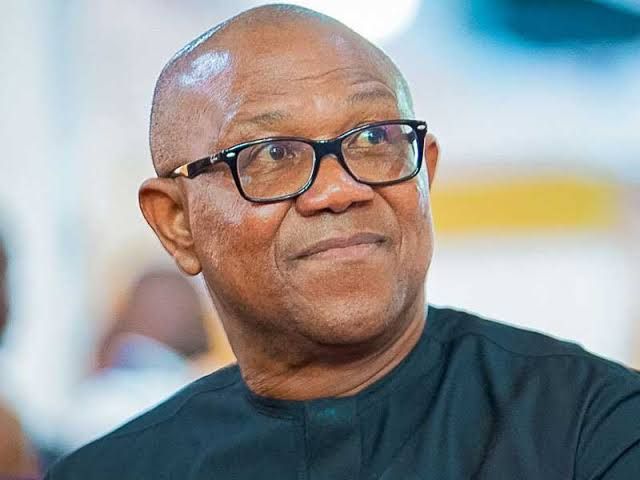
Peter Obi, former governor of Anambra State, businessman, and one-time vice-presidential candidate, has emerged as a messianic figure to millions of Nigerians, especially the youth. Tired of recycled politicians, failed promises, and institutional decay, many saw in Obi a fresh breath, a leader untainted by the deep corruption of the status quo. His campaign, simple yet persuasive, rode on the wings of transparency, prudence, and the now-famous “go and verify” mantra.
But herein lies the paradox: When we elevate a man not because of a comprehensive audit of his antecedents but because he appears better than the rest, are we not merely crowning a one-eyed man king in a land where the people have been deliberately blinded by years of hopelessness?
Let me be clear: This is not an anti-Obi treatise. I do not know him personally. I harbour no ill-will toward his person or ambition. But if we are to be honest with ourselves, and history demands that we be, we must interrogate the very foundation of our support, not just for Obi, but for any candidate that rises on the wings of desperation rather than proven national vision.
Peter Obi’s tenure as governor of Anambra State (2006–2014) is the fulcrum of the faith many have in him. His supporters tout infrastructural improvements, savings left behind, and his frugal lifestyle as evidence of integrity. However, if Nigeria is to be healed, we must learn to ask deeper questions beyond surface impressions.
Indeed, public records confirm that Obi did leave substantial funds in Anambra’s treasury upon his exit – an anomaly in the Nigerian political space. But what were the opportunity costs? How many schools were structurally overhauled? How many healthcare centers transformed? How many lives tangibly improved by way of people-focused policies? Was the celebrated frugality accompanied by robust institutional development or simply the conservative handling of public funds?
In governance, the absence of theft is not enough. What matters is the multiplication of value. Were his investments in public interest or channeled through personal business vehicles like Next International and Fidelity Bank relationships, as critics allege? Were his projects equitably distributed across Anambra, or selective and strategic?
A deeper issue lurks. The love for Obi is, in many cases, not based on a studied assessment of his governance philosophy, but on contrast. He seems better than Buhari. More coherent than Tinubu. More present than Atiku. But comparison is not conviction. As a nation, we are standing at a very dangerous junction where emotional fatigue is determining electoral affection. And history has taught us, sometimes brutally, that this is the road to regret.
Do we not remember the 2015 chants of “Sai Baba”? How Nigerians yearned for a strongman to correct the perceived softness of President Goodluck Jonathan? How the “integrity” of Muhammadu Buhari, built on a legacy of no-nonsense military leadership, mesmerized a disillusioned populace? Yet eight years later, the same Buhari has become a symbol of missed expectations. Today, some Nigerians have begun whispering apologies to Jonathan in retrospect.
So, shall we walk this road again?
Shall we be seduced again by the aura of seeming simplicity, by viral speeches, or by the intoxicating chant of “He’s different”? Shall we again confuse not being the worst with being the best?
The truth is; we are not in need of a saint. Nigeria is not short of intelligent people. What we need is a competent, visionary leader with a track record, not just clean hands but capable ones. Governance is not a TED talk. Nation-building is not Instagram charisma. We must ask harder questions than those our emotions allow.
God’s ways are not man’s ways. When Samuel was sent to anoint a king in Jesse’s house, he saw Eliab and assumed based on physique and appearance that he was the chosen one. But God said, “Man looks on the outward appearance, but the Lord looks on the heart.” (1 Samuel 16:7). In today’s Nigeria, how many “Eliabs” have we crowned, only to discover later that they lacked the heart of David?
We cannot afford another mistake. Not because Peter Obi is a bad man, there is no credible proof to that effect. But because messianic desperation is a poor substitute for democratic discernment. Let us not raise another idol, only to live in regret and betrayal.
Let Obi be scrutinized, fairly but thoroughly. Let his records be dissected, not with tribal sentiment or internet hashtags, but with sober national interest. Let us demand more than optics. Let us go beyond the shallow comforts of comparison. And above all, let us remember that God’s idea of leadership is never based on how appealing a man appears, but how deeply aligned he is with truth, justice, and vision.
In the land of the blind, the one-eyed man may be king.
But Nigeria must learn to see again.
For our children’s sake, we must open both eyes.
By Mazi Olisa Umar Maduagwu Jr.
© Mazi Olisa Umar Maduagwu Jr.
Writes from Abuja Nigeria.
A concerned voice for discernment in a nation on the edge of decision.
+2348028254009
 OBLONG MEDIA GLOBAL INTELLIGENCE
Leave a comment